Chinese Knives Guide
An Independent Guide
Introduction
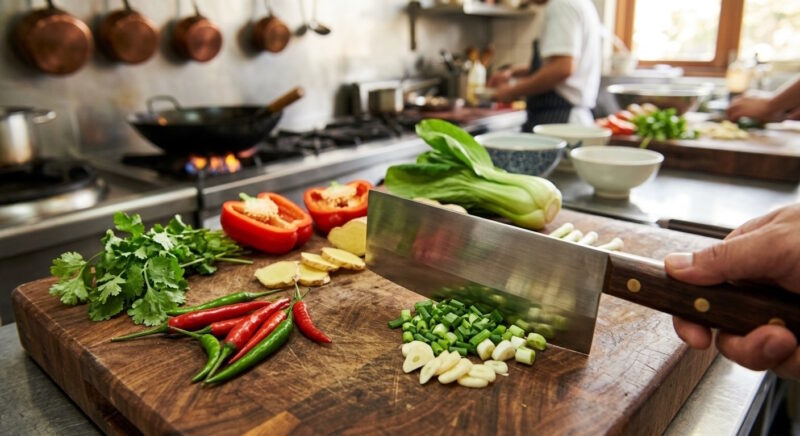
Chinese kitchen knives have earned a reputation for being some of the most versatile cooking tools in the world. While many people mistakenly refer to them as “cleavers,” most Chinese chef knives are actually precision kitchen knives designed for slicing, chopping, mincing, crushing garlic, transferring ingredients, and performing dozens of everyday kitchen tasks.
Whether you’re a home cook looking for your first Chinese chef knife or an experienced chef wanting to understand the differences between traditional and modern designs, this complete Chinese knives guide explains everything you need to know.
In this guide you’ll learn:
- Different types of Chinese knives
- Blade shapes and sizes
- Steel options
- Handle materials
- How to choose the right knife
- Maintenance tips
- Frequently asked questions
- Buying recommendations
If you’ve ever wondered why so many professional chefs rely on Chinese knives every day, this guide will help you understand exactly what makes them so popular.
Quick Comparison Table
| Feature | Chinese Chef Knife | Meat Cleaver | Vegetable Cleaver |
|---|---|---|---|
| Main Use | General cooking | Heavy chopping | Vegetables |
| Blade Thickness | Medium | Very thick | Thin |
| Weight | Medium | Heavy | Light |
| Meat | Excellent | Excellent | Good |
| Vegetables | Excellent | Fair | Outstanding |
| Herbs | Excellent | Fair | Excellent |
| Fish | Excellent | Good | Excellent |
| Bone Cutting | No | Yes | No |
What Is a Chinese Knife?
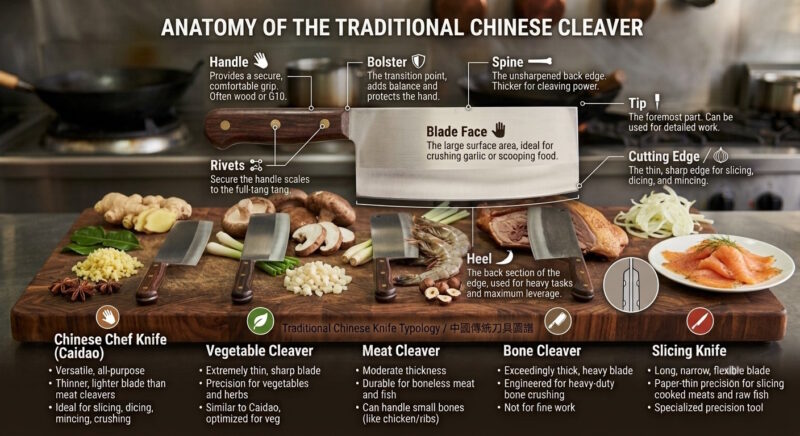
The term Chinese knife covers several different kitchen knives used throughout Chinese cuisine.
The most common type is the Chinese chef knife, also called a Chinese chef’s cleaver.
Despite its rectangular appearance, it is not intended for chopping bones.
Instead, it functions much like a Western chef knife while offering several additional advantages:
- Large cutting surface
- Excellent balance
- Easy food transfer
- Superior slicing control
- Multiple grip options
Professional chefs often use one knife for nearly every kitchen task.
Why Chinese Knives Are So Popular
Chinese chef knives have been used for centuries because they simplify food preparation.
Instead of switching between several different knives, cooks can perform nearly every task using a single blade.
Benefits include:
Excellent Versatility
One knife can:
- Slice meat
- Dice onions
- Chop herbs
- Mince garlic
- Cut fish
- Prepare vegetables
- Crush ginger
- Scoop ingredients
This versatility makes the knife ideal for busy kitchens.
Large Blade Surface
Unlike narrow chef knives, the tall blade offers a practical advantage.
After chopping vegetables, you can simply use the side of the blade to transfer ingredients directly into a pan or bowl.
This saves time and reduces mess.
Comfortable Cutting Motion
The broad blade naturally encourages efficient chopping techniques.
Many users discover they experience less wrist fatigue during long cooking sessions.
Excellent Control
The flat profile allows more of the edge to contact the cutting board.
This creates smoother cuts compared with curved Western chef knives.
Types of Chinese Kitchen Knives
Not every rectangular knife serves the same purpose.
Understanding the differences prevents buying the wrong knife.
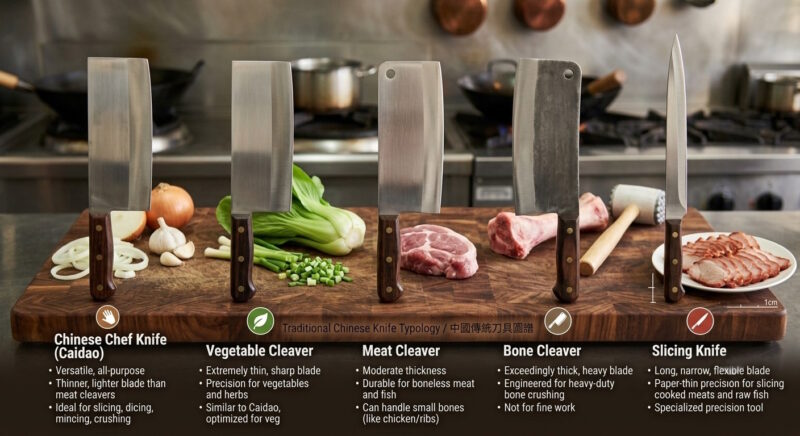
Chinese Chef Knife
This is the most common style.
Ideal for:
- Vegetables
- Meat
- Fish
- Herbs
- Fruits
Typical characteristics:
Blade length:
180–220 mm
Weight:
250–450 g
Thickness:
2–3 mm
This is the best choice for most home cooks.
Vegetable Cleaver
Sometimes called a slicer.
Features:
- Very thin blade
- Extremely light
- Outstanding slicing ability
Perfect for:
- Herbs
- Tomatoes
- Onions
- Cabbage
- Carrots
- Cucumbers
Not suitable for frozen foods or bones.
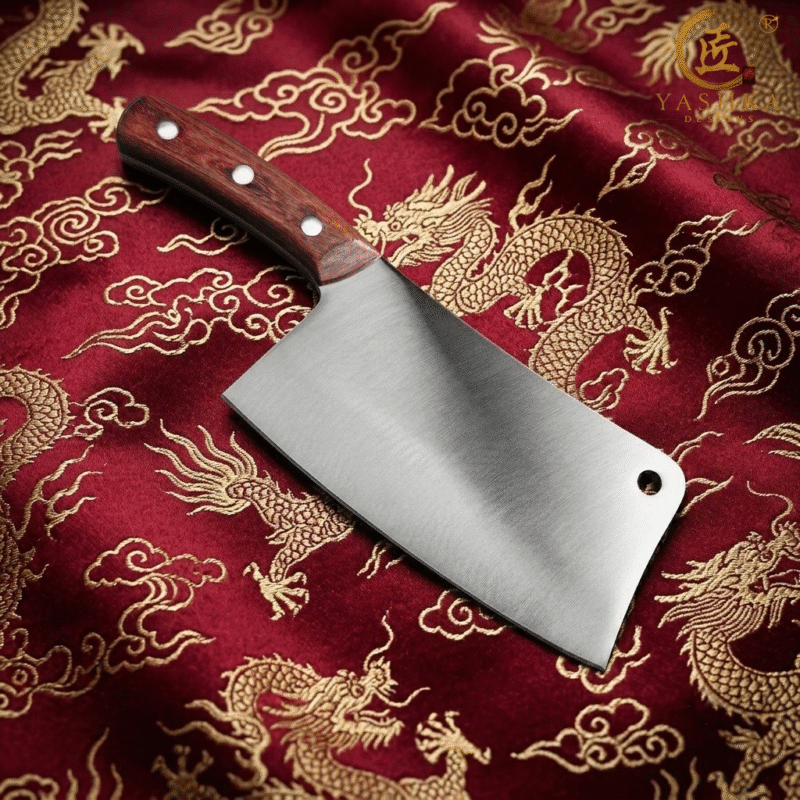
Bone Cleaver
This is the heavy-duty version.
Features:
- Thick blade
- Heavy weight
- Reinforced edge
Designed for:
- Poultry bones
- Pork bones
- Large cuts of meat
It should never be confused with a Chinese chef knife.
https://yashkadesigns.com/chinese-cleaver-chef-knife-bones-chopping
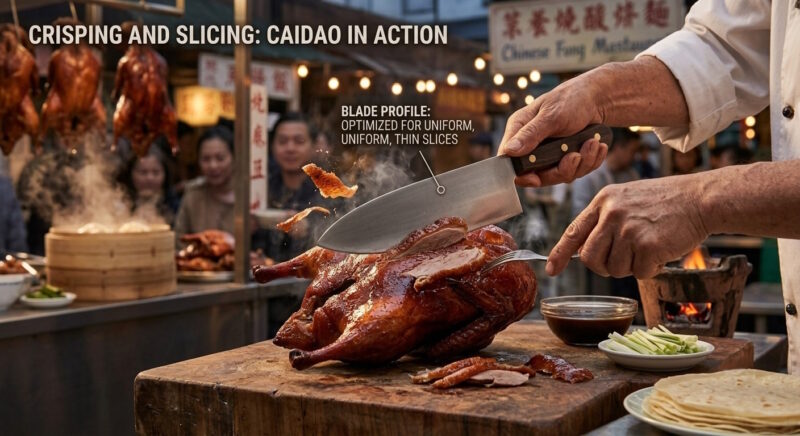
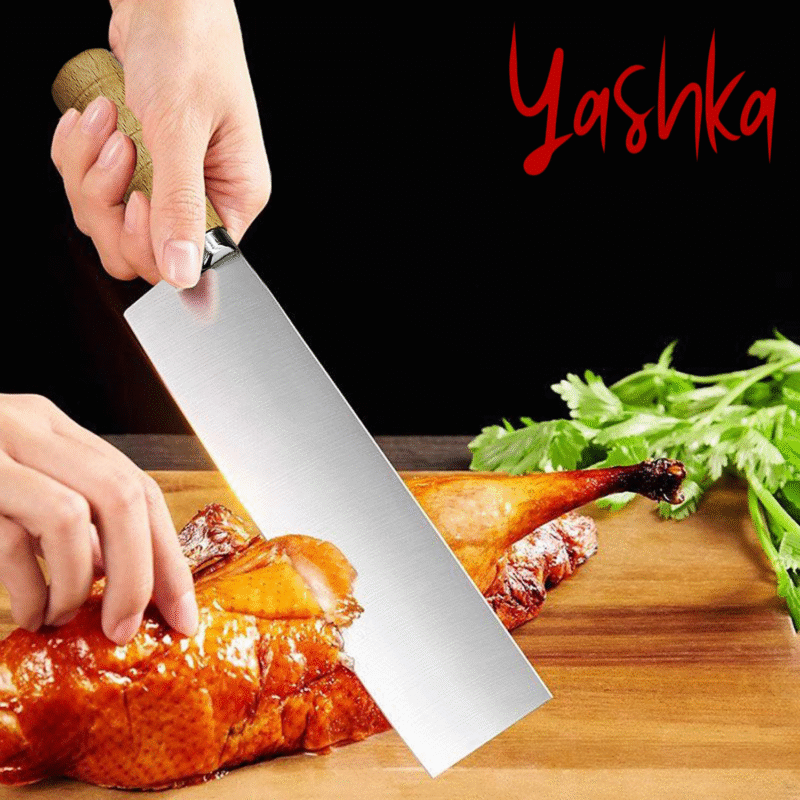
Duck Knife
Used in restaurants preparing roasted duck.
Longer blade.
Thin profile.
Excellent slicing performance.
https://yashkadesigns.com/chinese-carving-kitchen-knife-peking-duck-slicing-knife
Multipurpose Chinese Knife
Many modern manufacturers combine features from several traditional styles.
These knives work well in both Asian and Western kitchens.
Blade Shape Explained
One reason Chinese knives perform so well is their blade geometry.
Unlike Western chef knives, Chinese blades are:
- Taller
- Straighter
- Wider
- More rectangular
This allows:
- Better push cutting
- Efficient chopping
- Easy ingredient transfer
- Improved knuckle clearance
The extra blade height also provides more room for your guiding hand.
Blade Size Guide
Common sizes include:
6-inch
Ideal for:
- Small kitchens
- Beginners
- Home cooking
7-inch
Excellent all-around size.
Offers good balance between agility and cutting power.
8-inch
Most popular choice.
Suitable for:
- Meat
- Vegetables
- Fish
- Herbs
9-inch
Preferred by professionals.
Excellent for larger ingredients.
Blade Thickness
Chinese knives vary considerably in thickness.
Thin Blade
Best for:
- Vegetables
- Herbs
- Fine slicing
Advantages:
- Lightweight
- Extremely sharp
- Fast cutting
Check Our Guide Best Blade Thickness for Different Uses
Medium Blade
The most versatile option.
Suitable for:
- Daily cooking
- Meat
- Fish
- Vegetables
Most buyers should choose this type.
Thick Blade
Designed specifically for:
- Bones
- Hard squash
- Tough ingredients
Not recommended for delicate slicing.
Steel Types Used in Chinese Knives
The blade steel has a major impact on performance, maintenance, and edge retention.
The most common options include:
High Carbon Steel
Advantages:
- Extremely sharp edge
- Easy sharpening
- Excellent cutting feel
Disadvantages:
- Requires regular drying
- Can develop a patina over time
- More maintenance than stainless steel
Many traditional Chinese kitchen knives use high carbon steel because of its outstanding cutting performance.
Stainless Steel
A popular choice for everyday kitchens.
Benefits include:
- Rust resistance
- Easy maintenance
- Durable performance
- Suitable for humid environments
Many home cooks prefer stainless steel because it requires less care than high carbon steel.
Check Our Guide Carbon Steel vs Stainless Steel Knives: Which Is Better?

Powder Metallurgy Steels
Premium Chinese knives may use advanced powder metallurgy steels that offer:
- Excellent edge retention
- High wear resistance
- Superior corrosion resistance
- Long service life
These steels are typically found on higher-end knives designed for enthusiasts and professionals.
Check Our Guide Powder Steels for Kitchen Knives
Chinese Knife Steel Guide
One of the biggest misconceptions is that all Chinese knives are made from the same type of steel. In reality, manufacturers produce blades from dozens of different alloys, ranging from inexpensive stainless steel to some of the world’s highest-performing powder metallurgy steels.
The steel used determines how long the edge stays sharp, how resistant the knife is to rust, how easy it is to sharpen, and how durable it will be over years of use.
Stainless Steel
Stainless steel remains the most common material used in kitchen knives because it provides excellent corrosion resistance with relatively easy maintenance.
Popular stainless steels include:
- 420HC
- 440A
- 440C
- 9Cr18MoV
- 10Cr15CoMoV
- AUS-8
- VG10
- 14C28N
Advantages:
- Rust resistant
- Easy to maintain
- Food-safe
- Easy sharpening
- Affordable
Disadvantages:
- Lower-end versions lose their edge faster
- Softer steels can roll during heavy chopping
For most home cooks, stainless steel offers the best balance of performance and maintenance.
Check Our Guide 14C28N and Other Swedish Knife Steels Review
High Carbon Steel
Traditional Chinese carbon steel knives remain favorites among professional chefs.
Unlike stainless steel, carbon steel contains less chromium, allowing it to develop a very aggressive edge.
Advantages include:
- Extremely sharp
- Easy to sharpen
- Excellent cutting feel
- Long history in Chinese kitchens
Disadvantages include:
- Rusts easily
- Requires drying immediately after use
- Develops a natural patina
- Can discolor acidic foods
Many professional vegetable chefs still prefer carbon steel because of its exceptional cutting performance.
Powder Metallurgy Steels
Modern premium Chinese knives increasingly use powder metallurgy steels.
These steels feature an extremely fine carbide structure, resulting in better edge retention and improved toughness.
Examples include:
- M390
- MagnaCut
- S35VN
- S45VN
- S90V
- Elmax
- Vanax
- LC200N
Benefits:
- Outstanding wear resistance
- Long-lasting sharpness
- Excellent corrosion resistance
- Superior edge stability
Drawbacks:
- Higher price
- More difficult sharpening
- Usually found on premium knives
Blade Geometry
Steel alone doesn’t determine cutting performance.
Blade geometry often plays an even larger role.
Chinese knives generally fall into several geometry categories.
Thin Laser Grind
Laser-style blades are incredibly thin behind the edge.
Advantages:
- Incredible slicing
- Low cutting resistance
- Clean vegetable cuts
Best for:
- Vegetables
- Herbs
- Fruit
- Boneless meat
Medium Grind
The most versatile option.
Advantages:
- Balanced durability
- Excellent food release
- Suitable for nearly all kitchen work
Ideal for:
- Home cooks
- Daily meal preparation
- Mixed ingredients
Heavy Cleaver Grind
Traditional Chinese cleavers often feature thicker spines while maintaining surprisingly thin cutting edges.
Advantages:
- Handles larger ingredients
- Excellent momentum
- Durable
Best suited for:
- Cabbage
- Pumpkins
- Large vegetables
- Meat preparation
Handle Materials
A comfortable handle is essential for long cooking sessions.
Chinese knives now come with a wide range of handle materials.
Wood
Popular species include:
- Rosewood
- Walnut
- Olive wood
- Ebony
- Pakka wood
Benefits:
- Beautiful appearance
- Comfortable grip
- Warm feel
- Traditional style
Pakka Wood
Pakka wood is among the most popular premium materials.
It combines real wood with resin under high pressure.
Advantages:
- Water resistant
- Stable
- Durable
- Attractive grain
G10
A fiberglass composite.
Benefits:
- Waterproof
- Highly durable
- Excellent grip
- Resistant to temperature changes
Common in professional kitchens.
Micarta
Made from resin-infused fabric.
Advantages:
- Comfortable texture
- Durable
- Excellent grip
- Premium appearance
Stainless Steel Handles
Popular in modern minimalist kitchens.
Advantages:
- Hygienic
- Waterproof
- Durable
Disadvantages:
- Can become slippery when wet
- Heavier
What Makes a High-Quality Chinese Knife?
Many buyers assume price alone determines quality.
Instead, evaluate the following features.
Thin Behind the Edge
A knife that is thin behind the cutting edge slices more efficiently.
Thin geometry usually matters more than blade thickness at the spine.
Consistent Heat Treatment
Proper heat treatment determines:
- Hardness
- Toughness
- Edge retention
- Durability
Poor heat treatment can ruin even premium steel.
Even Grind
Inspect both sides of the blade.
Look for:
- Symmetrical bevels
- Straight edge
- Consistent finish
Comfortable Ergonomics
A quality knife should feel secure during extended use.
Look for:
- Rounded spine
- Rounded choil
- Comfortable handle contour
- Balanced weight
Good Fit and Finish
Premium knives usually feature:
- Smooth transitions
- Flush handle scales
- No sharp corners
- Polished spine
- Fine finishing
These details improve comfort significantly.
How to Choose the Right Chinese Knife
Different cooks require different knives.
For Beginners
Choose:
- Stainless steel
- Medium grind
- 7–8 inch chef knife
- Comfortable handle
Easy maintenance is more important than premium steel.
For Professional Chefs
Priorities include:
- Long edge retention
- Excellent geometry
- Superior balance
- Reliable heat treatment
Professionals often benefit from higher-end steels because they sharpen less frequently.
For Vegetable Preparation
Recommended features:
- Thin blade
- Tall profile
- Excellent food release
- Fine edge
For Meat Preparation
Choose:
- Slightly thicker edge
- Durable steel
- Comfortable grip
- Good edge stability
For Home Kitchens
Look for balance instead of chasing maximum hardness.
An easy-to-maintain stainless steel knife usually offers the best value.
Check Our Guide Best Kitchen Knives for Groomsmen Gifts
Common Myths About Chinese Knives
Myth 1: Chinese knives are low quality.
Reality:
China manufactures everything from inexpensive budget knives to world-class premium blades.
Quality depends on design, materials, and craftsmanship—not country of origin.
Myth 2: Chinese cleavers are only for chopping bones.
Reality:
Most Chinese chef’s knives are designed for slicing vegetables and boneless meats.
Bone cleavers are a separate category with much thicker blades.
Myth 3: Harder steel is always better.
Reality:
Higher hardness usually improves edge retention but often reduces toughness.
The best knife balances hardness, toughness, corrosion resistance, and ease of sharpening.
Myth 4: Expensive steel guarantees a better knife.
Reality:
Blade geometry, heat treatment, and craftsmanship often matter more than steel alone.
A well-made knife with mid-range steel can outperform a poorly designed knife made from premium steel.
Maintenance Tips
Proper care greatly extends the life of any knife.
Follow these simple practices:
- Wash by hand only.
- Dry immediately after cleaning.
- Avoid dishwashers.
- Use wooden or plastic cutting boards.
- Store knives on a magnetic strip or in a blade guard.
- Hone the edge regularly.
- Sharpen before the knife becomes excessively dull.
Good maintenance keeps even budget knives performing well for years.
Frequently Asked Questions
Are Chinese knives good for beginners?
Yes. Many offer excellent performance, comfortable ergonomics, and outstanding value, making them ideal for new cooks.
What is the difference between a Chinese chef’s knife and a cleaver?
A Chinese chef’s knife is designed for slicing and chopping vegetables, meat, and herbs. A heavy cleaver is specifically intended for cutting through bones and very hard materials.
Do Chinese knives rust?
Stainless steel knives resist rust very well. Carbon steel knives require more care and should be dried immediately after washing.
Are Chinese knives difficult to sharpen?
Not necessarily. Most stainless and carbon steels are relatively easy to sharpen. Some premium powder metallurgy steels require higher-quality sharpening stones and more time.
Which blade shape is best for vegetables?
A thin, tall Chinese chef’s knife provides excellent control, efficient slicing, and ample knuckle clearance for vegetable preparation.
Can one Chinese knife replace several Western knives?
For many home cooks, yes. A versatile Chinese chef’s knife can handle chopping, slicing, dicing, mincing, and general food preparation, reducing the need for multiple specialized knives.
How often should I sharpen my knife?
It depends on usage. Home cooks may only need sharpening every few months, while professional chefs may sharpen or touch up their knives much more frequently.
Is a carbon steel knife better than stainless steel?
Carbon steel often takes a finer edge and is easier to sharpen, while stainless steel offers superior corrosion resistance and requires less maintenance. The better choice depends on your preferences and maintenance habits.
Chinese Knives vs Japanese Knives
One of the most common questions buyers ask is whether they should choose a Chinese knife or a Japanese knife. While both styles are capable of excellent performance, they are designed with different philosophies and excel in different kitchen tasks.
Blade Shape
Chinese chef’s knives have a tall rectangular blade that offers a large cutting surface. This design makes it easy to scoop chopped vegetables directly from the cutting board and transfer them to a pan or bowl.
Japanese chef’s knives, especially the Gyuto, have a more pointed tip and a curved edge. This shape favors rocking motions and precision slicing.
Chinese Knife Advantages
- Larger blade surface
- Easier ingredient transfer
- Excellent knuckle clearance
- More versatile for chopping
Japanese Knife Advantages
- Finer tip for detailed work
- More precise slicing
- Better for delicate ingredients
- Elegant cutting feel
Weight
Chinese knives are generally heavier.
The additional weight helps cut through dense vegetables without requiring excessive force.
Japanese knives are often lighter, making them comfortable during long prep sessions.
Cutting Technique
Chinese knives favor:
- Push cutting
- Up-and-down chopping
- Straight slicing
Japanese knives commonly favor:
- Push cuts
- Pull cuts
- Rock chopping
Food Release
One advantage of Chinese chef’s knives is their tall blade.
Ingredients tend to fall away more easily, reducing food sticking during chopping.
Versatility
A Chinese chef’s knife can perform nearly every kitchen task except cutting through bones.
It can:
- Dice onions
- Slice carrots
- Mince herbs
- Portion meat
- Crush garlic
- Transfer ingredients
Many professional chefs use one Chinese knife for 90% of kitchen preparation.
Chinese Knives vs Western Chef’s Knives
Western chef’s knives remain the most common kitchen knife worldwide.
Both styles are excellent, but they offer different experiences.
| Feature | Chinese Chef Knife | Western Chef Knife |
|---|---|---|
| Blade Height | Very tall | Medium |
| Weight | Medium to heavy | Medium |
| Food Transfer | Excellent | Average |
| Rock Chopping | Moderate | Excellent |
| Vegetable Prep | Outstanding | Excellent |
| Precision Tip Work | Good | Excellent |
| Ingredient Scooping | Outstanding | Limited |
Which One Feels Easier?
Many beginners adapt quickly to Chinese chef’s knives because the blade naturally guides straight cuts.
Western chef’s knives often feel more familiar to users accustomed to European cooking techniques.
Neither style is objectively better—it depends on your cutting habits and preferences.
Pros and Cons of Chinese Knives
Pros
✓ Extremely versatile
✓ Excellent vegetable performance
✓ Large cutting surface
✓ Efficient ingredient transfer
✓ Comfortable knuckle clearance
✓ Available at every price level
✓ Suitable for beginners and professionals
✓ Excellent balance of performance and value
Cons
✗ Larger blade can feel intimidating at first
✗ Not designed for cutting hard bones (unless it’s a dedicated bone cleaver)
✗ Some very thin blades require careful handling
✗ Premium models can be expensive
Best Chinese Knives for Different Users
Best for Beginners
Look for:
- Stainless steel
- Comfortable handle
- Medium-weight blade
- Easy sharpening
- Moderate hardness
The goal is easy maintenance with dependable everyday performance.
Best for Home Cooks
Ideal features include:
- 7–8 inch blade
- Stainless steel
- Balanced weight
- Durable edge
- Comfortable grip
A versatile chef’s knife can handle nearly every daily kitchen task.
Best for Professional Chefs
Professionals often prioritize:
- Exceptional edge retention
- Fine blade geometry
- Excellent heat treatment
- Long-term durability
- Comfortable ergonomics for extended use
Best for Vegetable Preparation
Choose:
- Thin blade
- Tall profile
- Excellent food release
- Fine edge geometry
These features make repetitive chopping faster and more enjoyable.
Best for Meat Preparation
Recommended characteristics:
- Strong edge stability
- Slightly thicker geometry
- Comfortable handle
- Good corrosion resistance
These knives perform well when trimming, slicing, and portioning meat.
Buying Guide
Choosing the right knife involves more than comparing prices. Consider the following factors before making a purchase.
1. Blade Size
Common sizes include:
- 6 inches – Compact and easy to control
- 7 inches – Great for smaller kitchens
- 8 inches – The most versatile option
- 9–10 inches – Better for large ingredients and professional use
Most home cooks will find an 8-inch blade ideal.
2. Steel Type
Think about your priorities.
Choose stainless steel if you want:
- Low maintenance
- Rust resistance
- Everyday convenience
Choose carbon steel if you want:
- Maximum sharpness
- Easy sharpening
- Traditional cutting performance
Choose premium powder metallurgy steel if you want:
- Long edge retention
- Excellent wear resistance
- High-end performance
3. Handle Material
Look for a handle that feels secure and comfortable.
Popular choices include:
- Pakka wood
- Walnut
- Olive wood
- G10
- Micarta
- Stainless steel
Comfort matters more than appearance during long cooking sessions.
Check Our Guide Knife Handle Materials Explained
4. Blade Geometry
Thin blades:
- Slice more efficiently
- Produce cleaner cuts
- Require more careful handling
Thicker blades:
- Offer greater durability
- Handle tougher ingredients
- Sacrifice some slicing performance
5. Balance
A well-balanced knife reduces hand fatigue.
The balance point should generally sit near the bolster or where the blade meets the handle.
6. Fit and Finish
Inspect:
- Handle alignment
- Spine smoothness
- Choil comfort
- Even bevels
- Overall craftsmanship
Attention to detail often reflects the overall quality of the knife.
Final Verdict
Chinese chef’s knives have evolved into some of the most versatile kitchen tools available. Their tall blades, excellent cutting efficiency, and outstanding practicality make them a favorite among home cooks and professional chefs alike.
Whether you’re preparing vegetables, slicing meat, mincing herbs, or handling everyday meal prep, a quality Chinese knife can replace several specialized knives and simplify your workflow.
The best choice depends on your needs. Beginners often benefit from an easy-to-maintain stainless steel model, while experienced users may appreciate the enhanced performance of premium steels and thinner blade geometries.
When selecting a knife, remember that steel is only one part of the equation. Heat treatment, blade geometry, balance, ergonomics, and craftsmanship all contribute to real-world performance. A well-designed knife with good construction will often outperform a more expensive knife made from premium steel but poorly executed.
If you choose carefully and maintain it properly, a high-quality Chinese knife can provide years of reliable service and become one of the most valuable tools in your kitchen.
Additional Frequently Asked Questions
Can a Chinese chef’s knife replace a santoku?
Yes. Many cooks find a Chinese chef’s knife even more versatile due to its taller blade and larger cutting surface.
Are Chinese knives suitable for left-handed users?
Most double-bevel Chinese knives work equally well for both right- and left-handed users.
Should I choose a polished or matte blade finish?
This is largely a matter of preference. Matte finishes can hide scratches better, while polished blades are easier to clean.
Can I use a Chinese knife on a glass cutting board?
No. Glass, ceramic, and stone cutting boards dull knife edges quickly. Wooden or quality plastic boards are much better choices.
Are expensive Chinese knives worth the investment?
Premium knives often offer better steel, superior heat treatment, finer geometry, and improved craftsmanship. For frequent cooks, the added performance can justify the higher cost.
How should I store my Chinese knife?
Store it on a magnetic knife strip, in a knife block, or with a blade guard to protect the edge and improve safety.
Can I sharpen a Chinese knife at home?
Yes. Most Chinese knives can be sharpened effectively with whetstones or guided sharpening systems, provided the correct angle and technique are used.
How long can a quality Chinese knife last?
With proper care, regular sharpening, and correct storage, a well-made Chinese knife can remain a dependable kitchen tool for decades.
This article is for independent informational purposes only and is not affiliated with, sponsored by, or endorsed by any steel manufacturer. All product names, trademarks, and registered trademarks are the property of their respective owners.