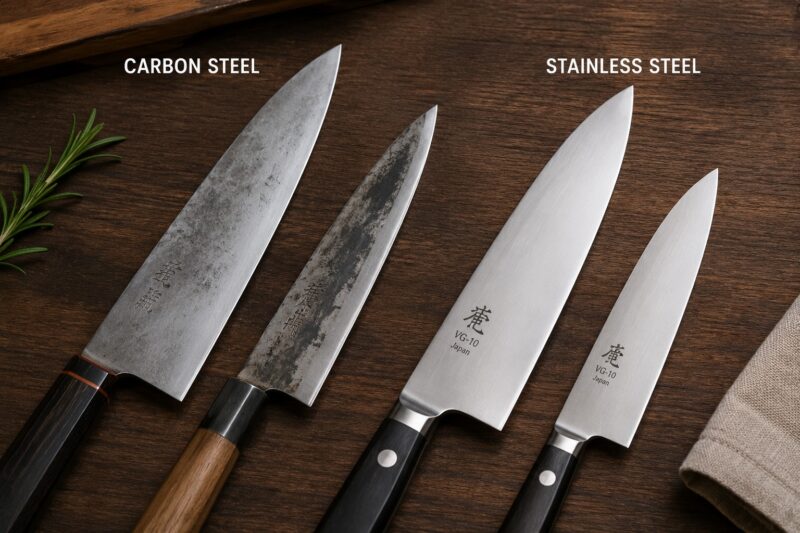
Carbon Steel vs Stainless Steel Knives: Complete Comparison Guide
An Independent Guide
Quick Answer:
Carbon steel offers superior sharpness, toughness, and ease of sharpening, while stainless steel provides excellent corrosion resistance and lower maintenance. The best choice depends on whether cutting performance or rust resistance is your priority.
When choosing a quality knife, one of the most important decisions is the type of steel used in the blade. Whether you’re shopping for a chef’s knife, hunting knife, bushcraft knife, fishing knife, or custom handmade blade, you’ll inevitably encounter the debate: Carbon Steel vs Stainless Steel.
Both materials have passionate supporters. Some knife enthusiasts swear by the incredible sharpness of carbon steel, while others prefer the convenience and corrosion resistance of stainless steel.
The truth is that neither steel is universally better. Each has advantages, disadvantages, and ideal applications.
In this comprehensive guide, we’ll compare carbon steel and stainless steel in detail, including sharpness, edge retention, durability, corrosion resistance, maintenance requirements, outdoor performance, kitchen use, and how to choose the best option for your needs.
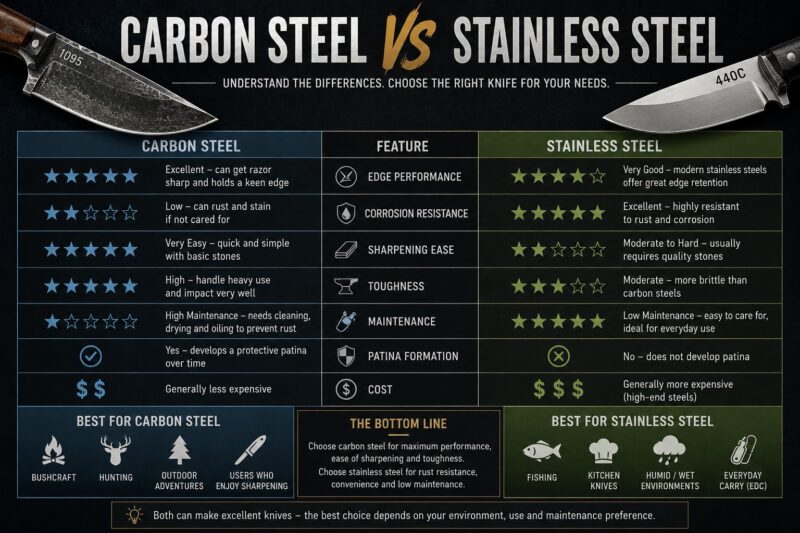
| Feature | Carbon Steel | Stainless Steel |
|---|---|---|
| Edge Retention | Very Good | Good to Excellent |
| Corrosion Resistance | Low | Excellent |
| Sharpening Ease | Easy | Moderate |
| Toughness | High | Moderate |
| Maintenance | High | Low |
| Patina Formation | Yes | No |
| Rust Resistance | Low | High |
| Best For | Bushcraft, Hunting | Kitchen, Fishing, EDC |
Understanding Knife Steel
Before comparing the two categories, it’s important to understand what steel actually is.
Steel is primarily made from:
- Iron
- Carbon
- Additional alloying elements
The amount of carbon and alloying materials determines how the steel behaves.
These characteristics influence:
- Hardness
- Toughness
- Corrosion resistance
- Edge retention
- Ease of sharpening
The biggest distinction comes from chromium content.
Generally:
- Carbon steel contains little or no chromium.
- Stainless steel contains at least 10.5% chromium.
This chromium forms a protective oxide layer that helps prevent rust.
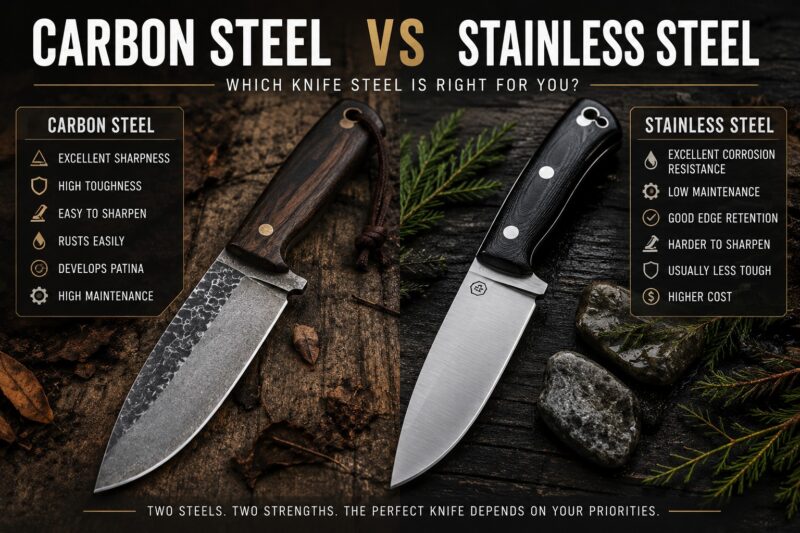
Performance Ratings
Carbon Steel
★★★★★ Sharpness
★★★★★ Toughness
★★★★★ Sharpening Ease
★★☆☆☆ Corrosion Resistance
Stainless Steel
★★★★☆ Sharpness
★★★★☆ Toughness
★★☆☆☆ Sharpening Ease
★★★★★ Corrosion Resistance
What Is Carbon Steel?
Carbon steel is one of the oldest blade materials in knife making.
Traditional knife makers and blacksmiths have used carbon steel for centuries because of its exceptional cutting performance.
Common carbon steels include:
- 1095
- 1084
- White Steel (Shirogami)
- Blue Steel (Aogami)
- O1 Tool Steel
- 52100
These steels contain relatively high carbon content and minimal corrosion-resistant alloying elements.
Advantages of Carbon Steel
Exceptional Sharpness
One of the biggest reasons knife enthusiasts love carbon steel is its ability to take an extremely fine edge.
Carbon steel often achieves:
- Razor-like sharpness
- Excellent cutting performance
- Superior slicing ability
Many professional sharpeners consider carbon steel easier to sharpen than stainless steel.
Easy Sharpening
Carbon steel typically responds very well to whetstones.
Benefits include:
- Faster sharpening
- Easier burr formation
- Simpler edge refinement
For users who sharpen regularly, carbon steel is often a pleasure to maintain.
Excellent Edge Stability
Carbon steel can support very thin edge geometry.
This allows:
- Cleaner cuts
- Better food release
- Improved slicing efficiency
This characteristic makes carbon steel especially popular among chefs.
Traditional Craftsmanship
Many handmade knives use carbon steel because it reflects traditional knife-making techniques.
Carbon steel has a strong connection to:
- Japanese knife making
- Scandinavian knives
- Traditional hunting knives
- Custom blacksmith work
Many collectors appreciate this heritage.
Disadvantages of Carbon Steel
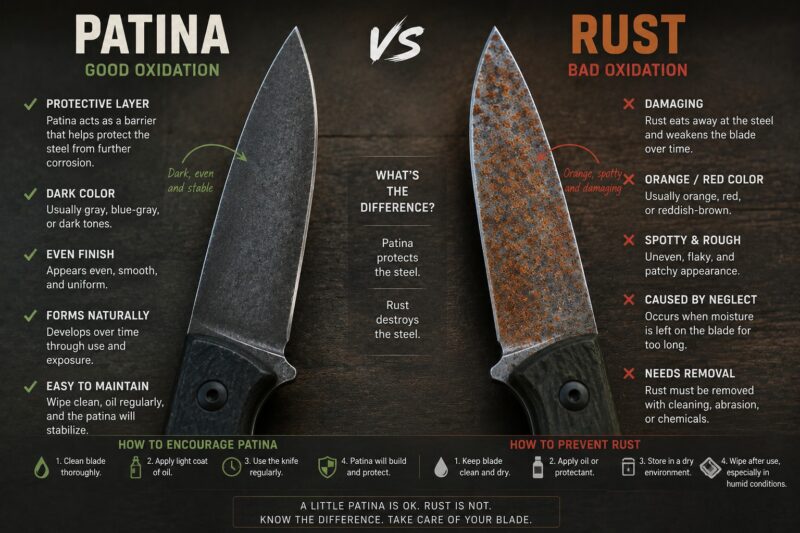
Rust Susceptibility
The biggest drawback of carbon steel is corrosion.
Carbon steel can develop:
- Surface rust
- Patina
- Staining
If neglected, rust may damage the blade.
Requires More Maintenance
Carbon steel demands regular care.
Users must:
- Clean after use
- Dry immediately
- Store properly
- Apply oil when necessary
For some people, this maintenance is part of the enjoyment.
For others, it can be inconvenient.
Reactivity with Foods
Acidic foods can react with carbon steel.
Examples include:
- Tomatoes
- Citrus fruits
- Vinegar
- Onions
This reaction may cause discoloration and patina formation.
What Is Stainless Steel?
Stainless steel was developed to solve corrosion problems associated with traditional steels.
Modern stainless steels contain chromium that creates a protective layer on the blade surface.
Popular knife stainless steels include:
- VG10
- AUS-10
- 14C28N
- 440C
- N690
- CPM S35VN
- CPM MagnaCut
- CPM S45VN
Today’s premium stainless steels are dramatically better than early stainless steels.
Advantages of Stainless Steel
Excellent Corrosion Resistance
The primary benefit of stainless steel is rust resistance.
This makes stainless steel ideal for:
- Humid climates
- Marine environments
- Fishing
- Kitchen use
Many users appreciate the low-maintenance nature of stainless steel.
Easier Ownership
Stainless steel requires less attention.
Most stainless knives can tolerate:
- Moisture
- Food acids
- Outdoor conditions
Although care is still recommended, stainless steel is generally more forgiving.
Wide Range of Premium Options
Modern metallurgy has produced remarkable stainless steels.
Premium stainless options now offer:
- Excellent edge retention
- High toughness
- Outstanding corrosion resistance
Some modern stainless steels rival or exceed carbon steel in many categories.
Better for Beginners
New knife owners often find stainless steel easier to manage.
There is less concern about:
- Rust
- Patina
- Constant maintenance
This makes stainless steel a practical choice for everyday users.
Disadvantages of Stainless Steel
Harder to Sharpen
Many stainless steels are more abrasion resistant.
This can make sharpening:
- Slower
- More demanding
- More equipment-intensive
High-performance stainless steels may require quality sharpening stones.
Less Traditional Feel
Some knife enthusiasts prefer the classic character of carbon steel.
Stainless steel often lacks:
- Natural patina development
- Traditional appearance
- Historical craftsmanship appeal
This is largely a matter of personal preference.
Carbon Steel vs Stainless Steel: Sharpness
When discussing pure sharpness, carbon steel often receives the advantage.
Carbon steel typically:
- Sharpens more easily
- Supports finer edges
- Produces excellent cutting feel
However, modern premium stainless steels have narrowed the gap significantly.
For most users, the difference may be difficult to notice.
Winner: Slight Advantage to Carbon Steel
Carbon Steel vs Stainless Steel: Edge Retention
Edge retention varies greatly depending on specific steel composition.
Historically:
Carbon steel often held an advantage.
Today:
Premium stainless steels like:
- MagnaCut
- S35VN
- S45VN
- SG2
Can outperform many traditional carbon steels.
Winner: Depends on Specific Steel
Carbon Steel vs Stainless Steel: Toughness
Toughness refers to resistance against chipping and breaking.
Many carbon steels offer excellent toughness.
Examples include:
- 1095
- 52100
- O1
Some stainless steels can also be extremely tough.
Modern metallurgy continues to improve stainless performance.
Winner: Generally Carbon Steel
Carbon Steel vs Stainless Steel: Corrosion Resistance
This category is easy.
Stainless steel was designed specifically to resist corrosion.
Carbon steel requires significantly more care.
Winner: Stainless Steel
Carbon Steel Pros
✔ Easy sharpening
✔ Excellent toughness
✔ Razor sharp edge
✔ Traditional steel
Carbon Steel Cons
✘ Rusts easily
✘ Requires maintenance
✘ Develops patina
Stainless Steel Pros
✔ Rust resistant
✔ Low maintenance
✔ Better for humid environments
✔ Great for kitchens
Stainless Steel Cons
✘ Harder to sharpen
✘ Usually lower toughness
✘ Premium stainless steels can be expensive
Carbon Steel vs Stainless Steel for Kitchen Knives
Kitchen environments expose knives to:
- Water
- Salt
- Acids
- Frequent cleaning
Carbon Steel Kitchen Knives
Pros:
- Exceptional sharpness
- Easy sharpening
- Traditional Japanese performance
Cons:
- Requires careful maintenance
- Can discolor
Stainless Kitchen Knives
Pros:
- Rust resistant
- Easier maintenance
- Excellent daily use
Cons:
- Some steels are harder to sharpen
For most home cooks, stainless steel is the practical choice.
For enthusiasts and professionals, carbon steel remains highly respected.
Common Carbon Steels
- 1095
- 1075
- 1084
- 52100
Common Stainless Steels
- 440C
- VG10
- AUS-10
- 14C28N
- 1095 Steel Review
- D2 Steel Review
- 440C Steel Review
- What Is San Mai Steel?
- Best Hunting Knife Features
- Best Blade Thickness for Different Uses
Carbon Steel vs Stainless Steel for Hunting Knives
Hunters need:
- Reliability
- Edge retention
- Outdoor durability
Carbon steel excels in field performance and ease of sharpening.
However, exposure to blood and moisture can accelerate corrosion.
Stainless steel offers better protection during extended outdoor use.
Winner: Depends on conditions and maintenance habits.
Carbon Steel vs Stainless Steel for Bushcraft
Bushcraft users often prioritize toughness and field maintenance.
Carbon steel remains extremely popular because:
- It sharpens easily in the field.
- It develops fewer issues when using simple sharpening equipment.
Many experienced bushcrafters still prefer carbon steel.
Carbon Steel vs Stainless Steel for Fishing
Fishing environments involve:
- Water
- Humidity
- Salt exposure
Corrosion resistance becomes critical.
Stainless steel is generally the better choice.
Especially:
- 14C28N
- MagnaCut
- VG10
- N690
Winner: Stainless Steel
The Role of Patina
One unique characteristic of carbon steel is patina.
Patina is a protective oxidation layer that develops over time.
Benefits include:
- Unique appearance
- Some protection against rust
- Personal character
Many knife enthusiasts enjoy watching patina develop.
Others prefer the clean appearance of stainless steel.
Common Myths About Carbon Steel and Stainless Steel
Myth #1: Stainless Steel Cannot Get Sharp
False.
Modern stainless steels can become extremely sharp.
Myth #2: Carbon Steel Is Always Better
False.
Many premium stainless steels outperform traditional carbon steels in several categories.
Myth #3: Stainless Steel Never Rusts
False.
Stainless means stain-resistant, not stain-proof.
Neglect can still cause corrosion.
Myth #4: Carbon Steel Is Fragile
False.
Many carbon steels are exceptionally tough and durable.
Buying Guide: Which Steel Should You Choose?
Choose Carbon Steel If:
- You enjoy knife maintenance.
- You appreciate traditional craftsmanship.
- Maximum sharpness is your priority.
- You don’t mind developing a patina.
Choose Stainless Steel If:
- You want low maintenance.
- You fish or live in humid climates.
- You prioritize corrosion resistance.
- You need a practical everyday knife.
Final Verdict
Carbon Steel vs Stainless Steel Knives
The carbon steel versus stainless steel debate has no universal winner.
Both materials have earned their place in the knife world.
Carbon steel offers:
- Exceptional sharpness
- Easy sharpening
- Traditional appeal
- Outstanding cutting performance
Stainless steel offers:
- Superior corrosion resistance
- Lower maintenance
- Modern performance
- Greater convenience
The best choice depends on how you use your knife, how much maintenance you’re willing to perform, and what characteristics matter most to you.
For many enthusiasts, the answer is simple: own both and enjoy the strengths of each.
FAQ
Carbon Steel vs Stainless Steel Knives
Q: Is carbon steel better than stainless steel for knives?
A: Neither is universally better. Carbon steel offers exceptional sharpness and easy sharpening, while stainless steel provides superior corrosion resistance and easier maintenance.
Q: Does carbon steel rust easily?
A: Carbon steel can rust if not properly cleaned and dried after use.
Q: Can stainless steel knives become razor sharp?
A: Yes. Modern stainless steels can achieve extremely sharp edges.
Q: Which steel is best for hunting knives?
A: Both can work well. Carbon steel offers easy field sharpening, while stainless steel provides better corrosion resistance.
Q: Which steel is best for fishing knives?
A: Stainless steel is generally preferred because of its resistance to water and corrosion.
Q: Why do chefs use carbon steel knives?
A: Many chefs appreciate carbon steel for its sharpness, edge stability, and ease of sharpening.
Q: What is patina on a carbon steel knife?
A: Patina is a natural oxidation layer that develops over time and can provide some protection against rust.
Q: Does stainless steel require maintenance?
A: Yes. While stainless steel is more corrosion resistant, it still benefits from proper cleaning and storage.
Carbon Steel vs Stainless Steel Knives
Carbon Steel vs Stainless Steel Knives
https://en.wikipedia.org/wiki/Carbon_steel
Carbon Steel vs Stainless Steel Knives
This article is for independent informational purposes only and is not affiliated with, sponsored by, or endorsed by any steel manufacturer. All product names, trademarks, and registered trademarks are the property of their respective owners.