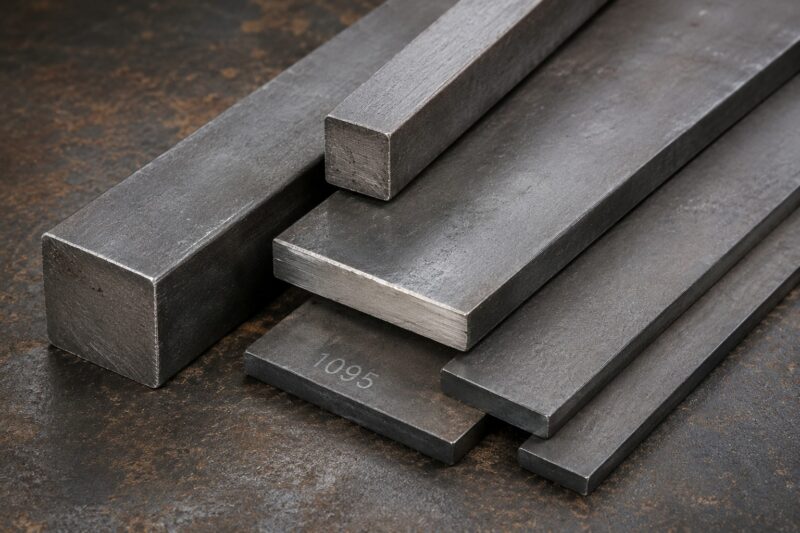
1095 Steel Review
An Independent Guide
Introduction
In a knife industry increasingly dominated by premium stainless steels and advanced powder metallurgy alloys, 1095 steel continues to maintain a loyal following among hunters, bushcrafters, survivalists, and custom knife makers.
Despite being one of the oldest knife steels still widely used today, 1095 remains relevant because it excels in the characteristics that matter most in real-world outdoor use: toughness, ease of sharpening, reliability, and affordability.
Some of the most respected survival knives ever produced have been made from 1095 steel. From military field knives to bushcraft blades and hunting knives, this high-carbon steel has proven itself for decades in some of the harshest environments imaginable.
But is 1095 steel still worth buying in 2026? How does it compare to modern steels like D2, CPM 3V, MagnaCut, and S35VN?
In this comprehensive review, we’ll examine everything you need to know about 1095 steel, including its composition, performance, advantages, disadvantages, maintenance requirements, and ideal applications.
One area where 1095 differs significantly from modern steels is corrosion resistance. If you’re deciding between carbon and stainless options, read our guide on Carbon Steel vs Stainless Steel.
Comparison table
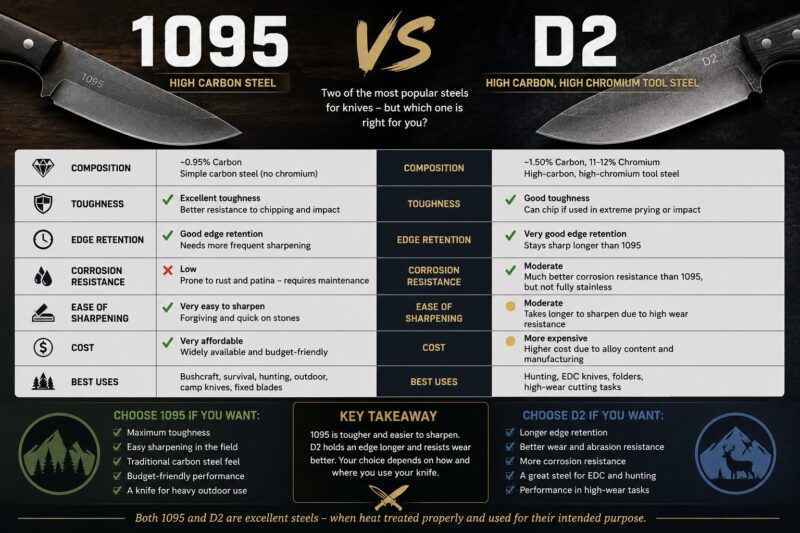
| Steel | Toughness | Edge Retention | Corrosion Resistance | Sharpening |
|---|---|---|---|---|
| 1095 | Excellent | Good | Low | Very Easy |
| D2 | Good | Very Good | Medium | Moderate |
| S35VN | Good | Excellent | Excellent | Moderate |
| MagnaCut | Excellent | Excellent | Excellent | Moderate |
What Is 1095 Steel?
1095 is a high-carbon steel belonging to the 10XX family of simple carbon steels.
The name indicates its approximate carbon content:
- 10 = Plain carbon steel
- 95 = Approximately 0.95% carbon
Typical chemical composition:
- Carbon: 0.90–1.03%
- Manganese: 0.30–0.50%
- Phosphorus: ≤ 0.04%
- Sulfur: ≤ 0.05%
Unlike many modern knife steels, 1095 contains virtually no chromium, vanadium, molybdenum, or other alloying elements.
This simple composition is actually one of its greatest strengths.
Because there are fewer alloying elements, the steel responds predictably to heat treatment and is relatively easy for knife makers to work with.
Why Knife Makers Love 1095 Steel
Many custom knife makers continue to choose 1095 because it offers:
- Excellent toughness
- Fine grain structure
- Easy sharpening
- Consistent heat treatment
- Affordable cost
- Proven field performance
Unlike some highly alloyed steels that require specialized equipment and complicated heat-treatment protocols, 1095 can be optimized by skilled craftsmen using traditional methods.
This simplicity contributes significantly to its popularity.
Hardness of 1095 Steel
Most knife makers heat treat 1095 to a hardness range between:
58–60 HRC
Some custom makers may push hardness slightly higher, while heavy-duty outdoor knives may be tempered slightly softer to maximize toughness.
At these hardness levels, 1095 achieves an excellent balance between:
- Edge retention
- Toughness
- Ease of sharpening
This balance makes it particularly attractive for outdoor knives.
Edge Retention
One criticism often directed at 1095 is that it doesn’t retain an edge as long as premium modern steels.
Technically, this is true.
Compared with:
- D2
- S35VN
- M390
- MagnaCut
- CPM 20CV
1095 loses its razor edge sooner.
However, edge retention alone doesn’t tell the whole story.
Many users prefer a steel that sharpens quickly rather than one that stays sharp longer but requires extensive effort to restore.
In practical outdoor use, the ability to easily touch up a blade can be more valuable than extreme wear resistance.
Toughness: The Real Strength of 1095
Toughness is where 1095 truly shines.
Toughness refers to a steel’s ability to resist:
- Chipping
- Cracking
- Breaking
- Impact damage
1095 is significantly tougher than many stainless steels.
This makes it an excellent choice for:
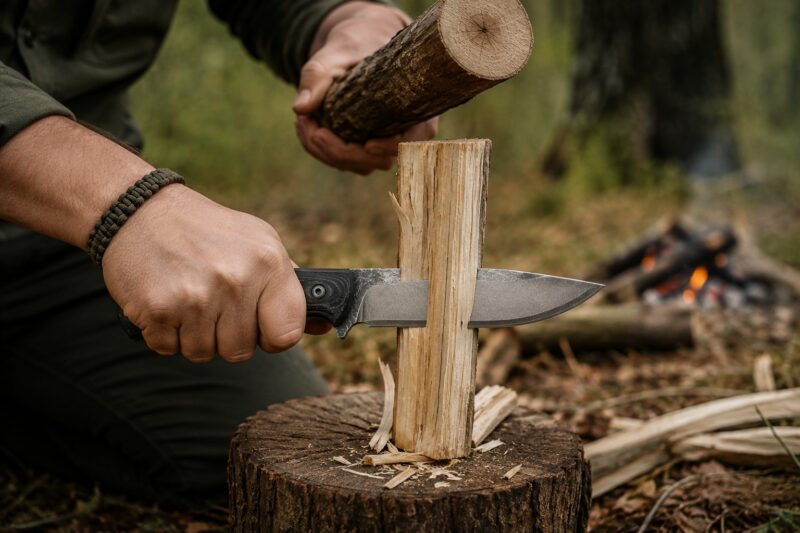
- Batoning wood
- Bushcraft
- Survival tasks
- Heavy outdoor use
When subjected to repeated impacts, 1095 often survives abuse that might chip harder steels.
Read our guide on Best hunting knives features explained
Fine Grain Structure
Another reason knife enthusiasts appreciate 1095 is its extremely fine grain structure.
Fine grain steel offers several benefits:
Sharper Edge
1095 can take a very fine edge.
Cleaner Cuts
The edge feels aggressive and precise.
Easier Sharpening
Less effort is required to restore sharpness.
Better Carving Performance
Woodworkers and bushcrafters often notice superior control during detailed carving.
This fine-grained structure is one reason many traditional bushcraft knives use 1095.
Corrosion Resistance
This is the area where 1095 performs the worst.
Because it contains almost no chromium, 1095 is not stainless.
In humid conditions it can:
- Rust
- Stain
- Develop patina
- Corrode if neglected
For some users, this is a major disadvantage.
For others, it’s simply part of owning a carbon steel knife.
Fortunately, corrosion can be easily controlled through proper maintenance.
Unlike stainless steels, 1095 steel contains very little chromium and can rust when exposed to moisture. However, many knife enthusiasts appreciate the dark patina that develops through regular use. Patina differs from rust because it forms a stable protective layer that slows further oxidation.
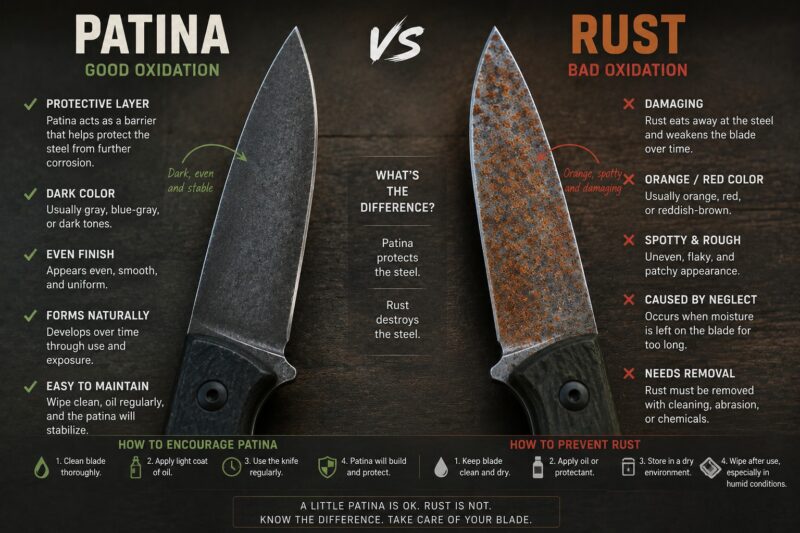
A common misconception is that all discoloration on carbon steel is harmful. In reality, a gray, blue, or dark patina is generally beneficial, while orange or red rust should be removed immediately.
Patina Formation
One unique characteristic of 1095 is its ability to develop a patina.
A patina is a darkened surface layer that forms through oxidation.
Many knife enthusiasts intentionally develop patinas because:
- They reduce future corrosion
- Add character
- Create a traditional appearance
Patina is different from rust.
Patina is generally harmless, while rust can damage the blade.
1095 Steel for Hunting Knives
1095 has been used in hunting knives for generations.
Hunters appreciate:
- Excellent toughness
- Easy field sharpening
- Reliable cutting performance
- Ability to handle tough outdoor conditions
A hunter carrying a sharpening stone can quickly restore a 1095 edge in the field.
This practical advantage often outweighs its lower wear resistance.
1095 for Skinning Knives
Skinning requires:
- Fine edge geometry
- Control
- Easy maintenance
1095 performs very well in this role.
Its fine grain structure allows exceptionally sharp edges that glide through hide and connective tissue.
Many traditional skinning knives continue to use 1095 for exactly this reason.
Read our guide How to Choose a Skinning Knife
1095 for Bushcraft Knives
Few steels have achieved the bushcraft reputation of 1095.
Popular bushcraft knife manufacturers have relied on it for decades.
Bushcraft tasks include:
- Feather sticking
- Carving
- Fire preparation
- Shelter construction
- Food preparation
1095 handles all of these tasks exceptionally well.
Its toughness and sharpening characteristics make it ideal for wilderness use.
Read our guide What is San Mai Steel
1095 for Survival Knives
Survival knives experience abuse that exceeds normal cutting.
Tasks may include:
- Batoning
- Digging
- Chopping
- Prying
- Emergency use
The toughness of 1095 makes it one of the best survival knife steels ever produced.
Many military and survival knife designs continue to use it today.
1095 for EDC Knives
Everyday carry users have mixed opinions about 1095.
Advantages:
- Easy sharpening
- Excellent cutting feel
- Toughness
Disadvantages:
- Requires maintenance
- Less corrosion resistance
- Shorter edge retention
For users willing to maintain their knives, 1095 remains a practical EDC steel.
Why Many Survival Experts Still Recommend 1095
Modern steels are impressive, but survival situations prioritize reliability.
Many survival instructors continue recommending 1095 because:
- Easy to sharpen anywhere
- Tough under abuse
- Predictable performance
- Affordable replacement cost
When equipment failure isn’t an option, simplicity often wins.
Coated 1095 Blades
Many manufacturers apply protective coatings to 1095 knives.
Common coatings include:
- Cerakote
- Powder coating
- Epoxy coating
- Phosphate finishes
Benefits:
- Increased corrosion resistance
- Reduced maintenance
- Improved durability
The cutting edge itself remains exposed but most of the blade receives protection.
Heat Treatment Matters More Than Steel
An often-overlooked fact is that heat treatment matters tremendously.
A well-treated 1095 blade can outperform a poorly treated premium steel.
When buying a knife, consider:
- Maker reputation
- Heat-treatment quality
- Intended use
Steel composition alone doesn’t determine performance.
Why Custom Makers Continue Using 1095
Custom knife makers frequently choose 1095 because:
- Predictable heat treatment
- Excellent forging characteristics
- Reliable results
- Affordable material costs
- Traditional appeal
Many handcrafted knives use 1095 because it allows makers to focus on craftsmanship rather than expensive materials.
Is 1095 Steel Outdated?
Some enthusiasts assume newer steels have made 1095 obsolete.
This isn’t true.
Modern steels may surpass 1095 in:
- Corrosion resistance
- Wear resistance
- Edge retention
However, few steels equal its combination of:
- Toughness
- Sharpenability
- Simplicity
- Affordability
This is why 1095 continues to thrive despite decades of technological advancement.
1095 Steel vs D2 Steel
One of the most common comparisons is 1095 versus D2.
1095 Advantages
- Easier to sharpen
- Tougher under impact
- Better for batoning and heavy outdoor use
- Less likely to chip
- Usually less expensive
D2 Advantages
- Better edge retention
- Higher wear resistance
- Greater corrosion resistance
- Requires less frequent sharpening
Winner?
For hunting, survival, and bushcraft, many users still prefer 1095.
For EDC and prolonged cutting tasks, D2 often has the advantage.
Read our guide D2 Steel review
1095 Steel vs CPM 3V
CPM 3V is considered one of the toughest modern knife steels.
1095
- Affordable
- Easy sharpening
- Traditional carbon steel feel
CPM 3V
- Extreme toughness
- Better edge retention
- Higher performance overall
- Significantly more expensive
For budget-conscious buyers, 1095 remains one of the best values available.
1095 Steel vs S35VN
S35VN is a premium stainless steel commonly used in high-end knives.
1095
- Tougher than many people expect
- Easier to sharpen
- Lower cost
S35VN
- Excellent corrosion resistance
- Better edge retention
- More modern steel technology
For users near water or humid climates, S35VN may be preferable.
For hard-use outdoor knives, many still favor 1095.
1095 Steel vs MagnaCut
MagnaCut has become one of the most talked-about knife steels.
Advantages of MagnaCut:
- Outstanding corrosion resistance
- Excellent toughness
- Superior edge retention
Advantages of 1095:
- Lower price
- Easier sharpening
- Traditional carbon steel character
MagnaCut is objectively more advanced, but many users still appreciate the simplicity and reliability of 1095.
Sharpening 1095 Steel
One of the greatest benefits of 1095 is how easy it is to sharpen.
Unlike highly wear-resistant steels, 1095 responds quickly to sharpening stones.
Most users can achieve a shaving-sharp edge using:
- Diamond stones
- Water stones
- Ceramic stones
- Guided sharpening systems
Even beginners often find 1095 easier to sharpen than D2 or premium stainless steels.
Recommended Sharpening Angles
Hunting Knives
18–20 degrees per side
Bushcraft Knives
20–22 degrees per side
Kitchen Knives
15–18 degrees per side
Skinning Knives
17–20 degrees per side
The proper angle depends on intended use and desired durability.
Maintenance and Rust Prevention
Because 1095 is not stainless, maintenance is essential.
Fortunately, maintenance is simple.
After Each Use
- Wash with warm water
- Dry thoroughly
- Never leave wet
Long-Term Storage
Apply a thin coat of:
- Mineral oil
- Food-safe oil
- Knife protectant
This greatly reduces corrosion risk.
Best Oils for 1095 Steel
Popular options include:
- Mineral oil
- Camellia oil
- Ballistol
- Food-grade knife oils
For kitchen knives, food-safe mineral oil is usually the preferred choice.
Can 1095 Rust?
Yes.
1095 can rust if neglected.
Common causes include:
- Saltwater exposure
- High humidity
- Wet leather sheaths
- Improper storage
However, with basic maintenance, rust problems are easily avoided.
Patina vs Rust
Many beginners confuse patina with rust.
Patina
- Gray or dark coloration
- Protective layer
- Generally harmless
Rust
- Orange or red oxidation
- Damages steel
- Must be removed
Most 1095 knives naturally develop some patina over time.
Many users actually enjoy this appearance.
Best Applications for 1095 Steel
1095 excels in several categories.
Bushcraft Knives
Arguably the best application.
Ideal for:
- Feather sticks
- Carving
- Fire preparation
- Camp tasks
Survival Knives
Excellent toughness makes 1095 a favorite among survival instructors.
Suitable for:
- Batoning
- Chopping
- Emergency use
Hunting Knives
1095 remains one of the most trusted hunting steels available.
Perfect for:
- Field dressing
- Skinning
- Camp processing
Read our guide How to Choose a Hunting Knife For Fishing
Looking for a hunting knife? Browse our hunting knives collection.
Outdoor Utility Knives
Reliable performance and easy sharpening make 1095 ideal for general outdoor use.
Applications Where 1095 May Not Be Ideal
Although versatile, 1095 is not perfect for every situation.
Saltwater Fishing
Corrosion can become problematic.
Marine Environments
Stainless steels generally perform better.
Extremely Wet Climates
Frequent maintenance may be required.
Low-Maintenance Users
If you dislike knife care, stainless steel may be a better choice.
Common Myths About 1095 Steel
Myth #1: 1095 Is Outdated
False.
Age does not determine performance.
Many modern knife makers still choose 1095 because it performs exceptionally well.
Myth #2: 1095 Rusts Instantly
False.
While it can rust, basic maintenance prevents most problems.
Myth #3: Cheap Steel Means Poor Performance
False.
Price and performance are not always connected.
Many premium custom knives use 1095.
Myth #4: 1095 Cannot Hold an Edge
False.
It may not match modern super steels, but it still provides excellent practical edge retention.
Myth #5: Stainless Steel Is Always Better
False.
Every steel involves trade-offs.
Many outdoor users intentionally choose 1095 over stainless options.
Buying Guide: What to Look for in a 1095 Knife
Not all 1095 knives are equal.
Consider:
Heat Treatment
Most important factor.
Blade Geometry
Affects cutting performance significantly.
Handle Materials
Popular options include:
- Walnut
- Micarta
- G10
- Stabilized wood
Blade Coating
Useful for corrosion protection.
Maker Reputation
Choose established brands or trusted custom makers.
Is 1095 Steel Worth It in 2026?
Absolutely.
Despite competition from modern super steels, 1095 remains one of the most practical knife steels ever created.
It offers:
✓ Excellent toughness
✓ Easy sharpening
✓ Proven reliability
✓ Affordable pricing
✓ Outstanding outdoor performance
✓ Decades of field-tested success
For hunters, bushcrafters, survivalists, and traditional knife enthusiasts, 1095 continues to be an excellent choice.
Final Verdict
1095 steel may not be the newest steel on the market, but it remains one of the most respected.
Its combination of toughness, ease of maintenance, field sharpenability, and affordability makes it a favorite among serious knife users worldwide.
If you need a knife for hunting, bushcraft, survival, or hard outdoor use and don’t mind basic maintenance, a well-made 1095 blade remains one of the best investments you can make.
Modern super steels have their place, but 1095 has earned its legendary reputation through decades of proven real-world performance.
FAQ
Is 1095 steel good for knives?
Yes. 1095 is widely considered one of the best carbon steels for hunting, bushcraft, and survival knives.
Does 1095 steel rust easily?
It can rust if neglected, but regular cleaning and oiling provide excellent protection.
Is 1095 better than D2?
Neither is universally better. 1095 offers greater toughness and easier sharpening, while D2 provides better edge retention.
Can beginners sharpen 1095 steel?
Yes. One of the biggest advantages of 1095 is how easily it sharpens.
Is 1095 steel good for bushcraft?
Absolutely. Many bushcraft experts consider it one of the best steels available for wilderness use.
How long does a 1095 edge last?
Edge life depends on use, but it generally holds an edge well while remaining easy to restore.
Is 1095 steel stainless?
No. 1095 is a high-carbon steel and requires basic maintenance to prevent rust.
Why do survival knives often use 1095?
Because it combines toughness, reliability, and easy field sharpening better than many alternative steels.
https://en.wikipedia.org/wiki/Carbon_steel
https://yashkadesigns.com/boning-knives
Yashka Designs has been producing knives and kitchen cutlery for customers worldwide since 2015. Our articles are based on practical knife-making experience and real-world use.
This article is for independent informational purposes only and is not affiliated with, sponsored by, or endorsed by any steel manufacturer. All product names, trademarks, and registered trademarks are the property of their respective owners.