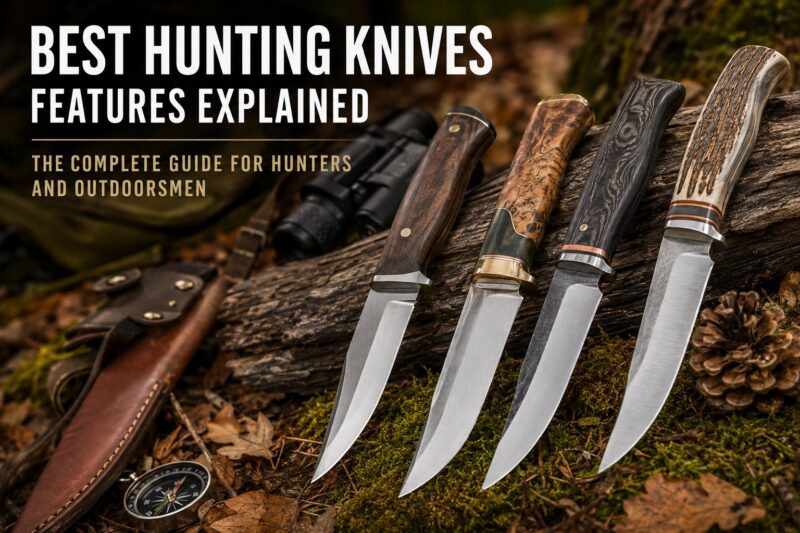
Best Hunting Knife Features Explained
A hunting knife is one of the most important tools an outdoorsman can own. Whether you’re field dressing game, skinning animals, preparing camp meals, or handling general wilderness tasks, the right knife can make every job easier, safer, and more efficient.
However, choosing a hunting knife isn’t always simple. Modern knife makers offer countless blade steels, handle materials, blade shapes, grinds, and construction methods. Many hunters find themselves overwhelmed by technical specifications and marketing claims.
The truth is that the best hunting knife isn’t necessarily the most expensive one. Instead, it’s the knife that combines the right features for your specific hunting style and outdoor needs.
In this guide, we’ll explain the most important hunting knife features and show you what truly matters when selecting a quality hunting knife.
🔪 Looking for a Professional-Grade Hunting Knives?
https://yashkadesigns.com/hunting-knives
Why Hunting Knife Features Matter
A hunting knife isn’t just another piece of gear.
Unlike many tools that stay in your pack, a hunting knife often becomes your primary tool in the field. It may be used for:
- Field dressing game
- Skinning animals
- Quartering meat
- Preparing food
- Cutting rope
- Camp chores
- Emergency situations
The right features can dramatically improve performance while reducing fatigue and increasing safety.
Blade Steel: The Heart of Every Hunting Knife
The blade steel determines much of a knife’s performance.
Many hunters focus on blade shape or appearance, but steel quality often has the biggest impact on real-world use.
The three main qualities of blade steel are:
Edge Retention
How long the knife stays sharp.
Toughness
Resistance to chipping or breaking.
Corrosion Resistance
Ability to resist rust and staining.
No steel excels equally in all three categories.
Carbon Steel vs Stainless Steel
One of the most common debates among hunters is carbon steel versus stainless steel.
Carbon Steel Advantages
Carbon steel is known for:
- Excellent edge retention
- Easy sharpening
- Superior toughness
Many traditional hunters love carbon steel because it develops character over time and performs exceptionally well in demanding conditions.
Carbon Steel Drawbacks
Carbon steel requires maintenance.
Without proper care it can:
- Rust
- Stain
- Develop patina
Hunters who choose carbon steel should be prepared to clean and oil their knives regularly.
Stainless Steel Advantages
Modern stainless steels offer:
- Excellent corrosion resistance
- Lower maintenance
- Reliable performance
This makes stainless steel especially attractive for hunters who frequently encounter moisture, snow, rain, or humid conditions.
Stainless Steel Drawbacks
Some stainless steels can be more difficult to sharpen compared to carbon steel.
However, modern premium stainless steels have significantly narrowed the performance gap.
Blade Shape Explained
Blade shape affects how efficiently a hunting knife performs various tasks.
Let’s examine the most popular options.
Drop Point Blade
The drop point is arguably the most popular hunting blade shape in the world.
Characteristics include:
- Curved spine
- Strong tip
- Large belly
Advantages:
- Excellent control
- Strong point
- Ideal for skinning
- Versatile performance
For most hunters, a drop-point blade is the safest and most practical choice.
Clip Point Blade
A clip-point blade features a spine that appears “clipped” near the tip.
Advantages:
- Fine control
- Sharp point
- Detailed work
Many hunters appreciate clip-point knives for precision cutting.
However, the thinner tip can be somewhat less durable than a drop point.
Skinner Blade
Designed specifically for skinning game.
Characteristics include:
- Large belly
- Sweeping curve
- Reduced chance of puncturing hides
If your primary goal is processing harvested animals, a skinning blade can be highly effective.
Trailing Point Blade
Trailing-point blades feature an upward-curving spine.
Benefits:
- Long cutting edge
- Excellent slicing ability
These blades perform particularly well during skinning tasks.
Blade Length: Finding the Sweet Spot
Many beginners assume bigger knives are better.
In reality, excessively large hunting knives often create more problems than they solve.
Small Hunting Knives
Typically:
- Under 3.5 inches
Advantages:
- Lightweight
- Easy control
- Precise cutting
Ideal for:
- Small game
- Bird hunting
- Detailed work
Medium Hunting Knives
Typically:
- 3.5 to 5 inches
Advantages:
- Versatility
- Excellent balance
- Broad range of uses
For most hunters, this range provides the best overall performance.
Large Hunting Knives
Typically:
- Over 5 inches
Advantages:
- Greater reach
- Heavy-duty capability
Useful for:
- Large game
- Survival applications
- Camp tasks
However, oversized blades may sacrifice control.
Blade Thickness
Blade thickness affects both strength and cutting performance.
Thin Blades
Advantages:
- Superior slicing
- Easier cutting
- Better game processing
Disadvantages:
- Reduced durability
Thick Blades
Advantages:
- Increased strength
- Greater durability
Disadvantages:
- Less efficient slicing
Most hunters benefit from moderate blade thickness that balances both characteristics.
Full Tang Construction
Many experienced hunters consider tang construction one of the most important features.
A tang is the portion of steel extending into the handle.
What Is a Full Tang?
A full tang extends through the entire handle.
Benefits include:
- Maximum strength
- Improved durability
- Better balance
- Increased reliability
Full-tang construction is widely regarded as the gold standard for hunting knives.
Partial Tang Construction
Partial tang knives use less steel inside the handle.
Advantages:
- Lighter weight
- Lower cost
Disadvantages:
- Reduced strength
For demanding outdoor use, full tang construction is usually preferred.
Blade Grind Explained
Blade grind refers to how the blade tapers from spine to edge.
This significantly impacts cutting performance.
Flat Grind
Characteristics:
- Consistent taper
Advantages:
- Excellent slicing
- Versatility
- Easy maintenance
Many hunters consider flat grinds ideal for field use.
Hollow Grind
Characteristics:
- Concave taper
Advantages:
- Extremely sharp edge
Disadvantages:
- Less durable edge
Best suited for light-duty cutting.
Scandi Grind
Popular among bushcraft enthusiasts.
Advantages:
- Easy sharpening
- Excellent wood carving ability
Less common on dedicated hunting knives.
Handle Materials Explained
A great blade is only part of the equation.
The handle determines comfort, grip, and long-term usability.
Wood Handles
Traditional and timeless.
Advantages:
- Beautiful appearance
- Comfortable feel
- Natural warmth
Premium hardwoods remain popular among custom knife makers.
Stabilized Wood
Stabilized wood combines natural beauty with modern durability.
Benefits:
- Moisture resistance
- Dimensional stability
- Attractive appearance
Many handmade hunting knives feature stabilized wood handles.
Micarta
Micarta is a favorite among serious outdoorsmen.
Advantages:
- Exceptional grip
- Weather resistance
- Durability
Micarta often performs even better when wet.
G10
G10 is a modern composite material.
Benefits include:
- Extreme durability
- Lightweight construction
- Resistance to moisture
It’s one of the toughest handle materials available today.
Ergonomics: The Feature Many Hunters Overlook
Even a premium knife becomes unpleasant if it feels uncomfortable in the hand.
A quality hunting knife should offer:
- Secure grip
- Comfortable contours
- Good balance
- No pressure points
Comfort becomes especially important during extended game processing sessions.
Finger Guards and Choils
Safety features deserve attention.
Finger guards help prevent the hand from sliding onto the blade.
Choils can improve control and precision.
Both features contribute to safer knife handling in the field.
Sheath Materials and Their Importance
Many hunters focus exclusively on the knife itself and overlook the sheath. However, a quality sheath is just as important as the blade.
A sheath should provide:
- Safe carry
- Easy access
- Secure retention
- Protection from the elements
- Long-term durability
The best hunting knife in the world becomes less useful if carried in a poor-quality sheath.
Leather Sheaths
Leather remains one of the most popular sheath materials.
Advantages
- Traditional appearance
- Quiet operation
- Comfortable carry
- Attractive aging over time
Many hunters appreciate the classic look of leather, especially when paired with handmade hunting knives.
Disadvantages
- Can absorb moisture
- Requires maintenance
- May soften over time
For wet environments, additional care is often necessary.
Kydex Sheaths
Kydex has become increasingly popular among modern hunters.
Advantages
- Waterproof
- Durable
- Excellent retention
- Easy cleaning
Kydex performs exceptionally well in harsh weather conditions.
Disadvantages
- Less traditional appearance
- Can be noisier than leather
Hunters who prioritize function often choose Kydex.
Edge Retention Explained
One of the most misunderstood knife characteristics is edge retention.
Edge retention refers to how long a blade remains sharp during use.
A knife with excellent edge retention:
- Requires less sharpening
- Performs longer in the field
- Maintains cutting efficiency
This becomes especially important during extended hunting trips where sharpening tools may not be readily available.
Why Extreme Edge Retention Isn’t Everything
Many knife buyers chase the steel with the longest edge retention.
However, edge retention alone doesn’t determine overall performance.
A blade that stays sharp for months but is difficult to sharpen in the field may not be ideal for every hunter.
The best hunting knives balance:
- Edge retention
- Toughness
- Ease of sharpening
- Corrosion resistance
Corrosion Resistance Matters More Than Many Hunters Realize
Hunting environments are often wet and unpredictable.
Your knife may encounter:
- Rain
- Snow
- Blood
- Humidity
- River crossings
Corrosion resistance helps protect the blade from rust and staining.
Hunters who frequently hunt in coastal regions or wet climates should pay particular attention to this feature.
Blade Finish Options
The finish applied to a blade influences appearance, maintenance, and performance.
Satin Finish
One of the most popular finishes.
Advantages include:
- Attractive appearance
- Easy maintenance
- Good corrosion resistance
Many premium hunting knives feature satin-finished blades.
Stonewashed Finish
Characteristics include:
- Matte appearance
- Excellent scratch hiding
- Rugged look
Stonewashed blades are practical for hard outdoor use.
Hand-Forged and Hammered Finishes
Common on custom and handmade knives.
Benefits include:
- Unique appearance
- Traditional craftsmanship
- One-of-a-kind character
These finishes are especially popular among collectors and enthusiasts of handmade knives.
Handle Texture and Grip
A hunting knife often becomes slippery due to:
- Blood
- Water
- Sweat
- Fat
Therefore, grip security is critical.
The best hunting knife handles provide traction without creating discomfort.
Look for:
- Mild texturing
- Ergonomic contours
- Palm-filling shape
- Secure finger placement
Weight and Balance
Many hunters assume heavier knives are stronger.
In reality, excessive weight often creates fatigue.
A properly balanced hunting knife feels almost like an extension of the hand.
Good balance improves:
- Control
- Precision
- Comfort
- Safety
Balance is often more important than overall weight.
Custom Hunting Knives vs Factory Knives
This is one of the most common questions among knife buyers.
Factory Hunting Knives
Advantages:
- Lower cost
- Consistent production
- Wide availability
Many factory knives provide excellent performance.
However, mass production often limits individuality.
Custom Hunting Knives
Custom knives offer:
- Handmade craftsmanship
- Unique designs
- Personalized features
- Premium materials
A skilled custom knife maker can optimize every aspect of the knife.
Many hunters appreciate the attention to detail found in handmade knives.
What Makes a Premium Hunting Knife?
Premium hunting knives often feature:
- Superior steel
- Better heat treatment
- Hand finishing
- Higher-quality handle materials
- Enhanced fit and finish
These factors improve both performance and longevity.
Fit and Finish Explained
Fit and finish refers to overall craftsmanship quality.
Signs of excellent fit and finish include:
- Smooth handle transitions
- Even grinds
- Precise symmetry
- Comfortable edges
- Consistent polish
These details may seem minor, but they often separate premium knives from average ones.
The Importance of Heat Treatment
Many knife enthusiasts consider heat treatment more important than steel selection.
Heat treatment determines:
- Hardness
- Toughness
- Edge retention
Even the best steel performs poorly if heat treated incorrectly.
This is one reason why reputable knife makers command higher prices.
Hunting Knife Features for Different Types of Game
Different hunting styles may benefit from different features.
Small Game Hunting
Ideal characteristics:
- Compact blade
- Lightweight construction
- Excellent control
Small game hunters often prioritize precision.
Deer Hunting
Popular features include:
- Drop-point blade
- Full tang construction
- Comfortable handle
This combination works exceptionally well for field dressing and processing.
Large Game Hunting
Hunters pursuing larger animals may prefer:
- Slightly longer blade
- Increased toughness
- Enhanced durability
Strength becomes increasingly important.
Multi-Purpose Hunting and Camping Knives
Many outdoorsmen want one knife that can do everything.
A versatile outdoor knife should handle:
- Hunting
- Camping
- Food preparation
- Fire preparation
- General chores
The most versatile design often includes:
- 4–5 inch blade
- Drop-point profile
- Full tang construction
- Durable handle material
Common Hunting Knife Buying Mistakes
Avoiding these mistakes can save money and frustration.
Buying Based Only on Appearance
A beautiful knife isn’t necessarily a good hunting knife.
Function should always come first.
Choosing a Blade That’s Too Large
Many beginners buy oversized knives.
In practice, moderate blade lengths usually offer better performance.
Ignoring Handle Comfort
Handle ergonomics dramatically affect usability.
Always prioritize comfort.
Focusing Only on Steel
Steel matters, but:
- Geometry
- Heat treatment
- Ergonomics
- Construction
are equally important.
Buying the Cheapest Option Available
A hunting knife is a long-term tool.
Investing in quality often saves money over time.
Features That Matter Most
When all marketing claims are stripped away, the best hunting knives usually share several characteristics:
Quality Steel
Reliable edge retention and toughness.
Full Tang Construction
Maximum durability.
Comfortable Handle
Secure grip and long-term comfort.
Practical Blade Shape
Drop-point blades remain among the most versatile.
Proper Heat Treatment
Critical for performance.
Durable Sheath
Safe and reliable carry.
How to Choose the Best Hunting Knife for Your Needs
Ask yourself:
What game do I hunt most often?
Will I use the knife for camping as well?
Do I hunt in wet environments?
Do I prefer traditional or modern materials?
How much maintenance am I willing to perform?
The answers help determine the ideal knife for your situation.
Why Handmade Hunting Knives Continue to Grow in Popularity
Many hunters are increasingly drawn to handmade knives because they offer:
- Individual craftsmanship
- Unique character
- Premium materials
- Personal connection to the maker
A handmade hunting knife often becomes more than a tool—it becomes a piece of equipment that can be passed down through generations.
Final Thoughts
The best hunting knife isn’t defined by flashy marketing or the highest price tag. Instead, it combines practical features that improve real-world performance in the field.
A quality hunting knife should offer excellent cutting ability, comfortable ergonomics, reliable durability, and dependable performance under demanding conditions. For most hunters, a medium-sized full-tang drop-point knife with quality steel and a comfortable handle provides the ideal balance of versatility and effectiveness.
Whether you choose a factory-produced model or a handmade custom knife, understanding the features that truly matter will help you select a blade that serves you well for many hunting seasons to come.
FAQ
What is the best blade shape for a hunting knife?
A drop-point blade is generally considered the most versatile hunting blade due to its strength, control, and skinning performance.
What blade length is best for hunting?
Most hunters prefer blades between 3.5 and 5 inches because they offer an excellent balance of control and versatility.
Is carbon steel better than stainless steel for hunting knives?
Carbon steel offers excellent edge retention and toughness, while stainless steel provides better corrosion resistance and easier maintenance.
Why is a full tang important?
Full tang construction improves strength, durability, balance, and reliability.
What handle material is best for hunting knives?
Popular options include stabilized wood, Micarta, and G10. Each offers durability and excellent grip.
Are handmade hunting knives worth the price?
Many hunters believe handmade knives offer superior craftsmanship, premium materials, and unique character compared to mass-produced alternatives.
What is the biggest mistake when buying a hunting knife?
Choosing a knife based solely on appearance rather than functionality and ergonomics.
Do I need a large hunting knife?
Not necessarily. Most hunting tasks are performed more efficiently with medium-sized blades.
How often should I sharpen my hunting knife?
Sharpening frequency depends on use, but maintaining a consistently sharp edge is important for safety and performance.
Can one hunting knife be used for camping too?
Yes. Many hunters prefer versatile knives that handle hunting, camping, food preparation, and general outdoor tasks.
https://yashkadesigns.ecrater.com/c/2444220/hunting-knives
Best Hunting Knife Features Explained