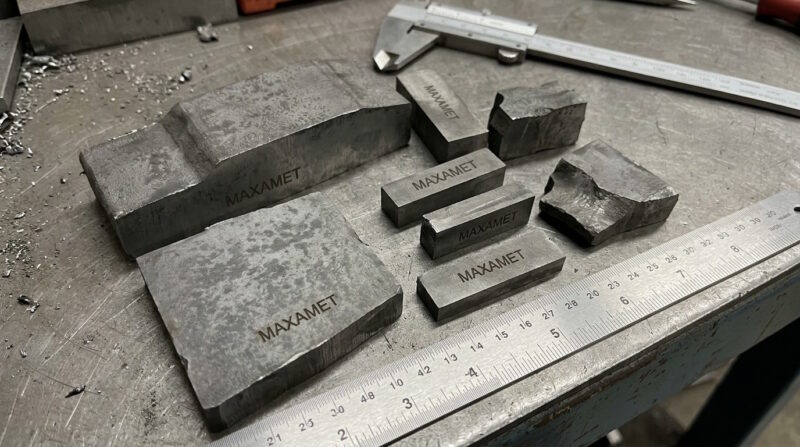
Maxamet Steel Review
An Independent Guide
When discussing elite knife steels, a few names consistently stand out for exceptional performance. Among them, Maxamet steel has earned a reputation unlike almost any other alloy available today. Known for its extraordinary edge retention and extreme hardness, it has become a favorite among knife enthusiasts who want a blade capable of maintaining razor sharpness through extended cutting tasks.
Unlike many premium stainless steels that aim to balance toughness, corrosion resistance, and edge retention, Maxamet takes a different approach. It is engineered to maximize wear resistance and cutting longevity, making it one of the most specialized knife steels on the market.
For many users, the first experience with a Maxamet blade is surprising. It continues cutting long after most premium steels have begun to dull, often requiring significantly fewer sharpening sessions. This remarkable performance comes from a unique combination of powder metallurgy, high carbide content, and exceptional hardness.
However, no steel is perfect. The same characteristics that make Maxamet incredibly wear-resistant also make it less forgiving during hard impacts and more challenging to sharpen. Understanding these strengths and limitations is essential before investing in a knife made from this remarkable alloy.
This comprehensive Maxamet steel review examines everything you need to know, including its chemical composition, hardness, edge retention, wear resistance, toughness, corrosion resistance, sharpening characteristics, heat treatment, and real-world performance. Whether you are considering an everyday carry knife, a collector’s piece, or simply want to learn more about advanced knife steels, this guide will help you decide whether Maxamet is the right choice.
Quick Overview
| Property | Rating |
|---|---|
| Hardness | ⭐⭐⭐⭐⭐+ |
| Edge Retention | ⭐⭐⭐⭐⭐+ |
| Wear Resistance | ⭐⭐⭐⭐⭐+ |
| Toughness | ⭐⭐☆☆☆ |
| Corrosion Resistance | ⭐⭐⭐☆☆ |
| Sharpening Ease | ⭐☆☆☆☆ |
| Overall Performance | ⭐⭐⭐⭐⭐ |
Best For
- Premium everyday carry knives
- Collection-quality knives
- Long cutting sessions
- Cardboard cutting
- Rope cutting
- Utility work
- Enthusiasts seeking maximum edge retention
Less Suitable For
- Heavy batoning
- Chopping
- Hard-impact bushcraft
- Saltwater environments
- Users who frequently sharpen their knives
Steel History
Maxamet was originally created as an advanced high-speed tool steel for industrial applications where cutting tools needed to withstand extreme wear while maintaining dimensional stability.
Industrial cutting equipment often operates under intense friction and continuous use, making ordinary tool steels wear out quickly. To solve this problem, engineers developed alloys capable of maintaining extremely hard cutting edges for long periods.
Because of its outstanding wear resistance, knife makers eventually recognized its potential for premium knife blades.
Today, Maxamet is considered one of the most extreme-performing knife steels available, offering edge retention that rivals or exceeds nearly every commonly available production steel.
What Is Maxamet Steel?
Maxamet is an advanced powder metallurgy tool steel designed to maximize:
- Wear resistance
- Edge retention
- High hardness
- Cutting efficiency
- Long service life
Unlike many stainless knife steels, Maxamet belongs to a category of high-alloy tool steels that prioritize cutting performance above corrosion resistance.
Its exceptionally high carbide volume creates remarkable resistance to abrasion, allowing the blade to remain sharp through thousands of cutting cycles.
This unique design philosophy explains why Maxamet has become highly respected among experienced knife enthusiasts.
Why Powder Metallurgy Matters
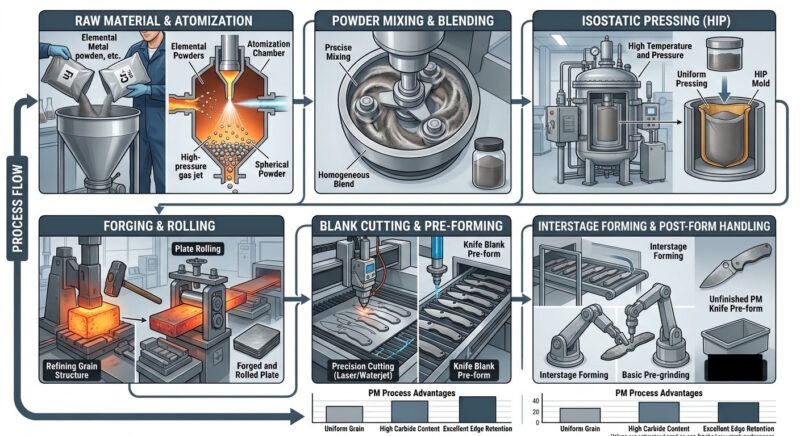
The exceptional performance of Maxamet begins with the powder metallurgy manufacturing process.
Instead of producing steel using conventional ingot casting, molten steel is atomized into microscopic powder particles.
These tiny particles are then:
- Pressed under enormous pressure
- Heated to extremely high temperatures
- Consolidated into dense steel billets
The resulting microstructure contains:
- Uniform carbide distribution
- Smaller carbides
- Reduced segregation
- Better edge stability
- Improved wear resistance
Without powder metallurgy, achieving this level of alloy complexity would be extremely difficult.
Check Our Guide Powder Steels for Kitchen Knives
Chemical Composition
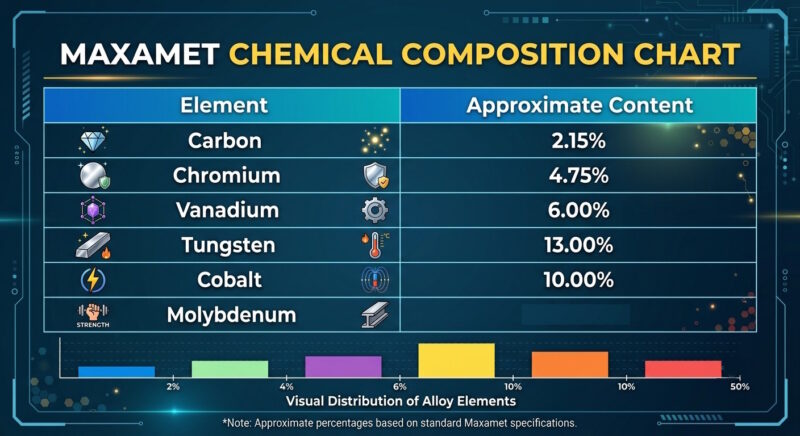
The chemical composition of Maxamet explains its extraordinary cutting performance.
| Element | Approximate Content |
|---|---|
| Carbon | 2.15% |
| Chromium | 4.75% |
| Vanadium | 6.00% |
| Tungsten | 13.00% |
| Cobalt | 10.00% |
Rather than emphasizing corrosion resistance, the alloy focuses on producing an extremely high concentration of hard carbides.
These carbides are responsible for the steel’s legendary wear resistance.
Understanding the Alloy Elements
Carbon
Carbon plays a critical role in determining hardness.
With over 2% carbon, Maxamet is capable of achieving hardness levels far beyond those of most stainless knife steels.
Benefits include:
- Higher hardness
- Better edge retention
- Increased carbide formation
- Improved wear resistance
Chromium
Unlike many stainless steels containing around 20% chromium, Maxamet contains considerably less.
This provides some corrosion resistance but not enough to classify it as a true stainless steel.
Users should expect to perform regular maintenance to prevent corrosion.
Vanadium
Vanadium forms extremely hard carbides that greatly improve abrasion resistance.
Approximately 6% vanadium contributes to:
- Outstanding edge retention
- Excellent slicing ability
- Superior wear resistance
Tungsten
One of Maxamet’s defining characteristics is its exceptionally high tungsten content.
Tungsten contributes to:
- Increased hot hardness
- Higher wear resistance
- Stable carbide formation
- Exceptional cutting longevity
Few knife steels contain such a large amount of tungsten.
Cobalt
Cobalt improves:
- High-temperature strength
- Heat-treatment response
- Hardness stability
This helps Maxamet achieve its remarkable hardness
Hardness (HRC)
Hardness is one of Maxamet’s defining characteristics.
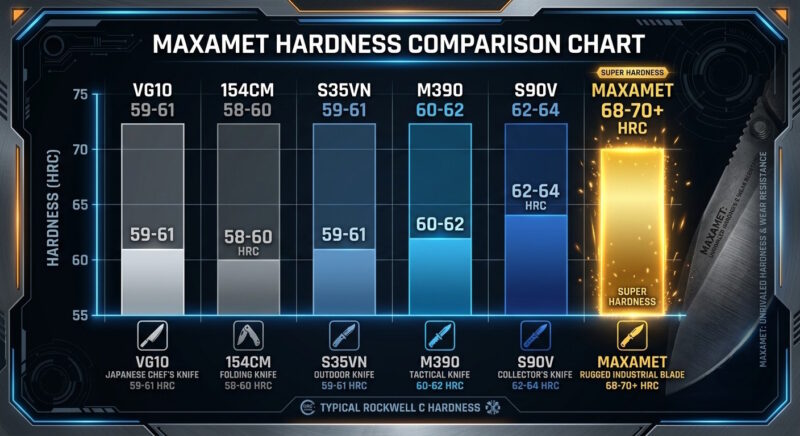
Typical production knives measure:
65–67 HRC
Premium heat treatments occasionally achieve:
68–70 HRC
These values place Maxamet among the hardest knife steels used in production knives.
For comparison:
| Steel | Typical Hardness |
|---|---|
| 440C | 58–60 HRC |
| VG10 | 60–61 HRC |
| S35VN | 59–61 HRC |
| M390 | 60–64 HRC |
| S90V | 60–64 HRC |
| Maxamet | 65–67 HRC |
The extremely high hardness contributes directly to its outstanding edge retention.
Check Our Guide What Is HRC? Understanding Rockwell Hardness
Edge Retention
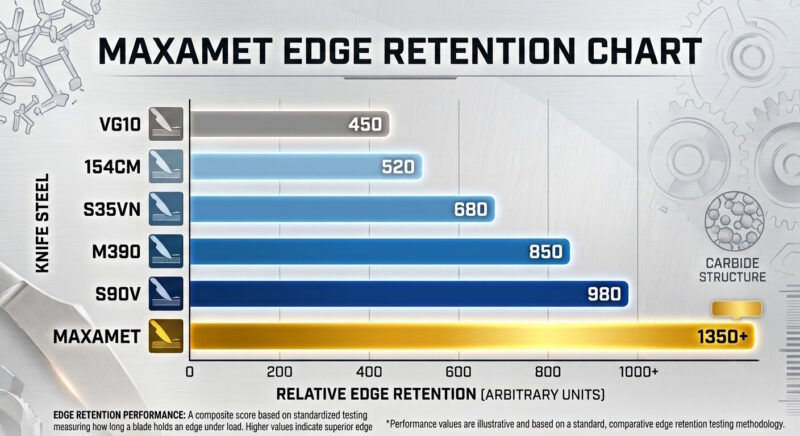
If there is one category where Maxamet truly shines, it is edge retention.
Many knife enthusiasts consider it one of the best-performing production knife steels for maintaining sharpness over extended use.
During prolonged cutting of abrasive materials such as:
- Cardboard
- Rope
- Plastic
- Carpet
- Leather
- Fiberboard
Maxamet continues cutting efficiently long after many premium steels require sharpening.
This exceptional performance is the result of:
- High hardness
- Large carbide volume
- Extremely wear-resistant microstructure
For users who dislike frequent sharpening, Maxamet can be a remarkable choice.
Wear Resistance
Wear resistance refers to the blade’s ability to resist abrasion as it cuts through material.
This is where Maxamet reaches another level.
Its carbide-rich structure provides extraordinary resistance to edge wear.
Advantages include:
- Extremely slow edge degradation
- Outstanding abrasion resistance
- Exceptional long-term cutting performance
- Reduced sharpening frequency
Many experienced users report that Maxamet can process enormous amounts of cardboard before showing noticeable dulling.
For warehouse work, utility cutting, and repetitive slicing tasks, very few steels perform better.
Toughness
The trade-off for exceptional hardness and wear resistance is reduced toughness.
Maxamet is not designed for heavy-impact applications.
Compared with more balanced premium steels, it is more susceptible to edge chipping if subjected to:
- Twisting
- Prying
- Batoning
- Chopping
- Striking hard materials
When used for its intended purpose—precision cutting and slicing—it performs exceptionally well.
However, users should avoid abusive cutting techniques that place excessive stress on the edge.
Corrosion Resistance
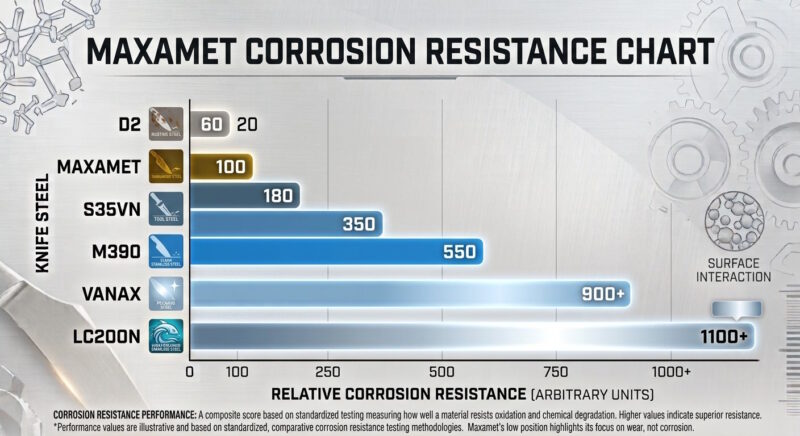
Maxamet provides moderate corrosion resistance but should not be considered a stainless knife steel.
Because it contains significantly less chromium than most premium stainless alloys, it is more vulnerable to:
- Humidity
- Saltwater
- Sweat
- Food acids
- Long-term moisture exposure
Proper maintenance is important.
Recommended care includes:
- Wiping the blade dry after use
- Cleaning after cutting acidic foods
- Applying a light coat of protective oil for long-term storage
- Avoiding prolonged exposure to moisture
With reasonable care, Maxamet performs well in everyday environments, but users in coastal or marine climates should be especially attentive to maintenance.
Sharpening
Every knife eventually becomes dull, regardless of the steel. The difference lies in how often sharpening is required and how difficult the process becomes.
This is one area where Maxamet behaves very differently from most premium knife steels.
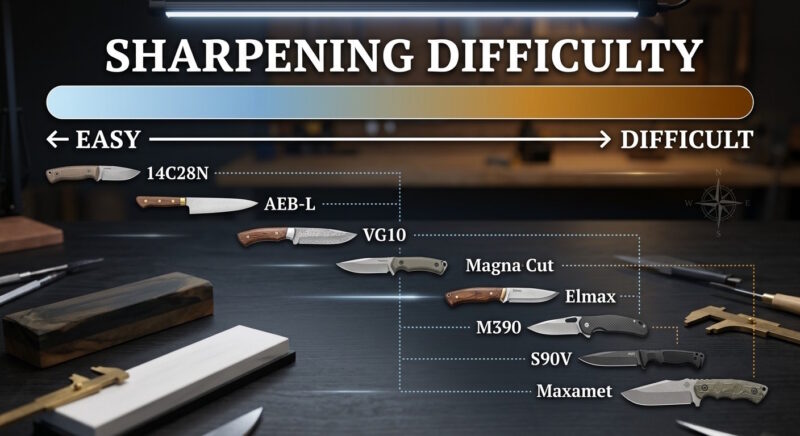
Because of its extremely high hardness and large volume of wear-resistant carbides, sharpening requires significantly more time than many other steels.
However, the good news is that sharpening sessions are needed far less frequently.
Sharpening Experience
Most users describe Maxamet as one of the most challenging production knife steels to sharpen.
Reasons include:
- Extremely high hardness
- Exceptional wear resistance
- Dense carbide structure
- Slow material removal
Unlike softer steels, traditional sharpening stones remove metal very slowly.
Diamond or CBN abrasives are highly recommended for efficient sharpening.
Recommended Sharpening Equipment
For the best results, consider using:
- Diamond sharpening stones
- CBN sharpening stones
- Guided sharpening systems
- Ceramic finishing stones
- Leather strops with diamond compound
These tools make maintaining a Maxamet edge much easier.
Can Beginners Sharpen Maxamet?
Yes—but patience is required.
Beginners should:
- Maintain a consistent sharpening angle
- Use coarse diamond stones when reprofiling
- Avoid excessive pressure
- Finish with finer abrasives for maximum sharpness
Once properly sharpened, Maxamet typically remains sharp for an impressively long time.
Heat Treatment
Heat treatment has a tremendous impact on the final performance of any knife steel.
Fortunately, Maxamet responds exceptionally well to quality heat treatment.
Typical Hardness
Production knives commonly measure:
65–67 HRC
Some premium custom heat treatments achieve:
68–70 HRC
These hardness levels are among the highest found in modern production knives.
Proper heat treatment provides:
- Exceptional edge stability
- Outstanding wear resistance
- Excellent dimensional stability
- Extremely long cutting life
Because Maxamet already operates near the upper limits of knife hardness, consistent heat treatment is essential.
Check Our Guide Cryogenic Treatment Explained
Patina & Rust Resistance
Unlike high-chromium stainless steels, Maxamet requires more attention to prevent corrosion.
Although it offers moderate corrosion resistance, prolonged exposure to moisture can eventually produce discoloration or surface oxidation.
Does Maxamet Develop Patina?
Yes.
Over time, users may notice a light gray or darker surface coloration.
A patina itself is not harmful and can even provide a small amount of additional surface protection.
Many knife enthusiasts appreciate the unique appearance that develops through regular use.
Rust Prevention
Simple maintenance greatly reduces corrosion risk.
Good habits include:
- Wipe the blade dry after each use
- Clean food residue promptly
- Avoid leaving the knife wet
- Apply a light coat of protective oil before long-term storage
- Store in a dry environment
With routine care, Maxamet remains dependable for many years.
Real-World Performance
Laboratory tests demonstrate Maxamet’s remarkable wear resistance, but real-world use is where the steel truly earns its reputation.
Everyday Carry (EDC)
For many enthusiasts, Maxamet is one of the ultimate everyday carry steels.
Typical EDC tasks include:
- Opening packages
- Cardboard
- Rope
- Plastic
- Zip ties
- Utility cutting
- General household work
Advantages
Maxamet offers:
- Extraordinary edge retention
- Extremely long sharpening intervals
- Excellent slicing performance
- Outstanding wear resistance
Users who regularly process cardboard or shipping boxes often notice that Maxamet remains sharp much longer than most other premium steels.
Considerations
Because of its lower toughness, avoid:
- Prying
- Twisting cuts
- Heavy lateral force
- Striking hard materials
Used appropriately, Maxamet provides exceptional EDC performance.
Warehouse & Utility Work
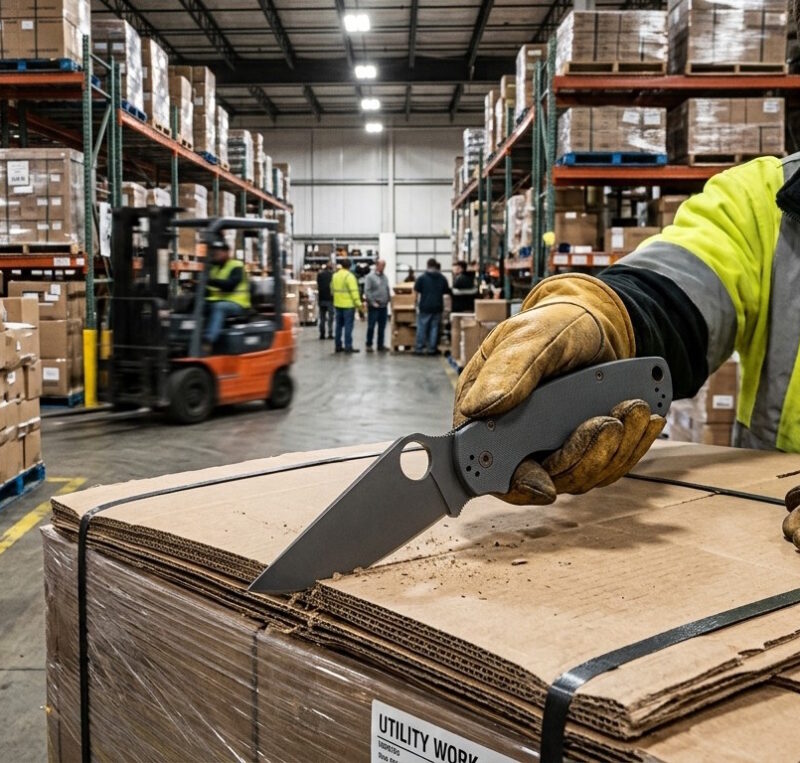
This is one area where Maxamet truly excels.
Professionals who spend hours cutting:
- Cardboard
- Packing tape
- Plastic strapping
- Paper products
- Fiberboard
often appreciate its extraordinary cutting longevity.
In repetitive slicing tasks, very few production steels perform better.
Hunting
Many hunting tasks require:
- Long edge life
- Fine slicing ability
- Precision skinning
- Corrosion resistance
Advantages
Maxamet performs well during:
- Skinning
- Meat processing
- Fine slicing
- Field preparation
Its excellent edge retention allows hunters to process substantial amounts of game before resharpening.
Limitations
Users should avoid:
- Twisting the blade through joints
- Striking bone aggressively
- Heavy chopping
Its lower toughness makes careful technique more important.
Check Our Guide How to Choose a Hunting Knife for Fishing
Bushcraft & Survival
Bushcraft places unique demands on a knife.
Common tasks include:
- Feather sticking
- Wood carving
- Fire preparation
- Batoning
- Camp chores
Is Maxamet Good for Bushcraft?
For light carving and precision cutting:
Yes.
For heavy-impact bushcraft:
Not ideal.
The steel’s high hardness and relatively low toughness increase the likelihood of edge chipping under repeated impact.
Steels with higher toughness are generally better suited for demanding survival tasks.
Check Our Guide One Knife for Hunting and Bushcraft
Kitchen Use
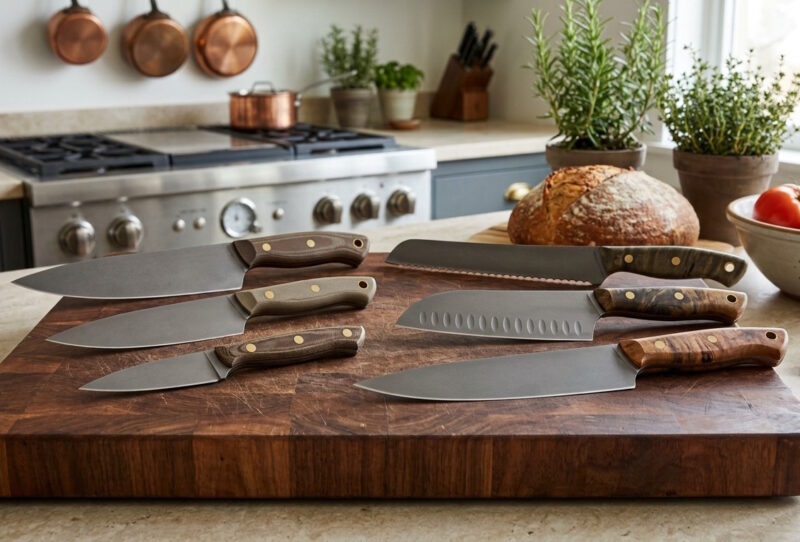
Although Maxamet is capable of excellent kitchen performance, there are several considerations.
Advantages
Its strengths include:
- Extremely long edge retention
- Outstanding slicing
- Excellent food preparation efficiency
- Fine edge geometry
Many users enjoy how long the blade remains razor sharp.
Maintenance
Because it is not fully stainless, users should:
- Wash promptly after use
- Dry immediately
- Avoid prolonged contact with acidic foods
- Store in a dry environment
For careful users, Maxamet can make an outstanding kitchen knife.
Outdoor Use
Camping, hiking, and general outdoor activities often involve a variety of cutting tasks.
Maxamet performs particularly well for:
- Food preparation
- Rope cutting
- Camp utility work
- Gear maintenance
However, repeated heavy impacts or abusive cutting should be avoided.
Best Uses
Maxamet performs best in applications requiring maximum edge retention.
Ideal uses include:
- Everyday carry
- Cardboard processing
- Utility cutting
- Warehouse work
- Rope cutting
- Collection-quality knives
- Precision slicing
- Professional cutting tasks
When to Choose Another Steel
Another steel may be a better choice if you frequently perform:
- Heavy batoning
- Chopping
- Prying
- Hard-impact bushcraft
- Marine applications
- Work in constantly wet environments
In these situations, toughness or corrosion resistance may be more important than maximum wear resistance.
Pros & Cons
Pros
- Exceptional edge retention
- Extremely high wear resistance
- Outstanding hardness
- Excellent slicing performance
- Very long sharpening intervals
- Premium powder metallurgy microstructure
- Excellent dimensional stability
Cons
- Difficult to sharpen
- Lower toughness than many premium steels
- Moderate corrosion resistance
- Requires more maintenance than stainless steels
- Premium price
- Less forgiving under abusive use
Performance Scorecard
| Property | Rating |
|---|---|
| Hardness | ⭐⭐⭐⭐⭐+ |
| Edge Retention | ⭐⭐⭐⭐⭐+ |
| Wear Resistance | ⭐⭐⭐⭐⭐+ |
| Toughness | ⭐⭐☆☆☆ |
| Corrosion Resistance | ⭐⭐⭐☆☆ |
| Sharpening Ease | ⭐☆☆☆☆ |
| Everyday Carry | ⭐⭐⭐⭐⭐ |
| Hunting | ⭐⭐⭐⭐☆ |
| Bushcraft | ⭐⭐☆☆☆ |
| Kitchen Use | ⭐⭐⭐⭐☆ |
| Utility Cutting | ⭐⭐⭐⭐⭐+ |
Maxamet vs Other Premium Knife Steels
Choosing the right knife steel always depends on your intended use. While Maxamet excels in edge retention, other premium steels may offer better toughness, corrosion resistance, or easier maintenance.
Here’s how Maxamet compares in the categories that matter most.
| Steel | Edge Retention | Toughness | Corrosion Resistance | Sharpening |
|---|---|---|---|---|
| Maxamet | ⭐⭐⭐⭐⭐+ | ⭐⭐☆☆☆ | ⭐⭐⭐☆☆ | ⭐☆☆☆☆ |
| M390 | ⭐⭐⭐⭐⭐ | ⭐⭐⭐⭐☆ | ⭐⭐⭐⭐⭐ | ⭐⭐⭐☆ |
| MagnaCut | ⭐⭐⭐⭐☆ | ⭐⭐⭐⭐⭐ | ⭐⭐⭐⭐⭐ | ⭐⭐⭐⭐☆ |
| S90V | ⭐⭐⭐⭐⭐ | ⭐⭐⭐☆☆ | ⭐⭐⭐⭐☆ | ⭐⭐☆☆☆ |
| CruWear | ⭐⭐⭐⭐☆ | ⭐⭐⭐⭐⭐ | ⭐⭐⭐☆☆ | ⭐⭐⭐☆☆ |
| Vanax | ⭐⭐⭐⭐☆ | ⭐⭐⭐⭐☆ | ⭐⭐⭐⭐⭐+ | ⭐⭐⭐⭐☆ |
Summary
- Maximum edge retention: Maxamet
- Best corrosion resistance: Vanax
- Best toughness: MagnaCut and CruWear
- Best all-around balance: MagnaCut
- Best for abrasive cutting: Maxamet
Who Should Buy a Maxamet Knife?
Maxamet isn’t designed for everyone.
Instead, it targets users who prioritize cutting performance above all else.
It is an excellent choice for:
- Everyday carry enthusiasts
- Warehouse workers
- Professional utility cutting
- Collectors
- Knife enthusiasts
- Rope cutting
- Cardboard processing
- Precision slicing
These users benefit most from Maxamet’s extraordinary wear resistance.
Who Should Choose Another Steel?
You may prefer another steel if you:
- Frequently baton wood
- Chop branches
- Pry with your knife
- Work in marine environments
- Want easier sharpening
- Prefer a low-maintenance blade
- Need maximum toughness
No knife steel is perfect for every application.
Matching the steel to your intended use always produces the best long-term experience.
Maintenance Tips
Although Maxamet is highly wear resistant, proper maintenance remains important.
Daily Care
- Wipe the blade clean after use.
- Dry it completely before storage.
- Remove fingerprints after handling.
- Avoid storing the knife while damp.
Long-Term Storage
If storing the knife for several months:
- Apply a thin coat of protective oil.
- Store in a dry environment.
- Avoid leather sheaths for long-term storage, as leather can retain moisture.
Sharpening Tips
To maintain peak performance:
- Use diamond sharpening stones whenever possible.
- Maintain a consistent sharpening angle.
- Finish with a fine ceramic stone or leather strop for a polished edge.
- Avoid removing more material than necessary.
Because Maxamet holds its edge so well, routine touch-ups are usually sufficient.
Frequently Asked Questions
1. Is Maxamet stainless?
No.
Maxamet offers moderate corrosion resistance but is not considered a fully stainless knife steel. Regular cleaning and drying are recommended.
2. Why does Maxamet stay sharp so long?
Its combination of very high hardness, a large volume of wear-resistant carbides, and powder metallurgy manufacturing allows the edge to resist abrasion exceptionally well.
3. Is Maxamet difficult to sharpen?
Yes.
It is one of the more challenging production knife steels to sharpen due to its extreme hardness and wear resistance. Diamond abrasives are strongly recommended.
4. Does Maxamet chip easily?
When used properly, it performs very well.
However, because its toughness is lower than many premium steels, heavy impacts, prying, twisting, or chopping can increase the risk of edge chipping.
5. Is Maxamet good for everyday carry?
Absolutely.
It is one of the best steels available for users who perform frequent cutting tasks and want exceptionally long edge retention.
6. Is Maxamet good for hunting?
Yes.
Its excellent slicing performance and long-lasting edge make it suitable for skinning and processing game. Care should be taken to avoid excessive impact against bone.
7. Is Maxamet good for bushcraft?
For light carving and camp tasks, yes.
For heavy batoning or chopping, tougher steels are generally a better choice.
8. Does Maxamet rust?
It can.
Without proper care, moisture, humidity, or exposure to acidic materials may eventually lead to surface oxidation.
Routine maintenance greatly reduces this risk.
9. Why is Maxamet so expensive?
The advanced powder metallurgy process, complex alloy composition, and demanding manufacturing requirements contribute to its premium price.
10. Is Maxamet worth the money?
For users who value extreme edge retention and cutting efficiency, many enthusiasts consider it well worth the investment.
Those who prioritize toughness or corrosion resistance may find a more balanced steel better suited to their needs.
11. Can Maxamet take a razor-sharp edge?
Yes.
When sharpened correctly, Maxamet can achieve an exceptionally fine and aggressive cutting edge that lasts for an impressive amount of time.
12. Is Maxamet the best knife steel?
There is no single “best” knife steel.
Maxamet is among the best for edge retention and wear resistance, but other steels may be better choices depending on whether toughness, corrosion resistance, or ease of sharpening is your priority.
Final Verdict
Maxamet occupies a unique position in the world of premium knife steels. Rather than aiming for a perfect balance of every performance category, it focuses on delivering exceptional edge retention and wear resistance. The result is a blade that remains sharp through prolonged cutting tasks that would noticeably dull many other high-end steels.
For users who spend hours cutting cardboard, rope, plastic, or other abrasive materials, Maxamet can significantly reduce the need for sharpening. Its ability to maintain a keen edge over extended periods is one of its greatest strengths and the primary reason it has earned such a strong reputation among experienced knife enthusiasts.
These advantages do come with trade-offs. Maxamet is more difficult to sharpen, less resistant to corrosion than premium stainless steels, and less forgiving during heavy-impact tasks. It rewards careful use and regular maintenance but is not the ideal choice for every environment or application.
If your priority is a tough survival knife for chopping, prying, or batoning, there are better options. If you want a highly corrosion-resistant blade for marine conditions or constant exposure to moisture, another steel may be more appropriate.
However, if your goal is to own a knife that stays sharp longer than almost anything else in regular production, Maxamet steel remains one of the most impressive choices available. For dedicated enthusiasts who value cutting performance above all else, it continues to set the benchmark for long-lasting edge retention.
This article is for independent informational purposes only and is not affiliated with, sponsored by, or endorsed by any steel manufacturer. All product names, trademarks, and registered trademarks are the property of their respective owners.