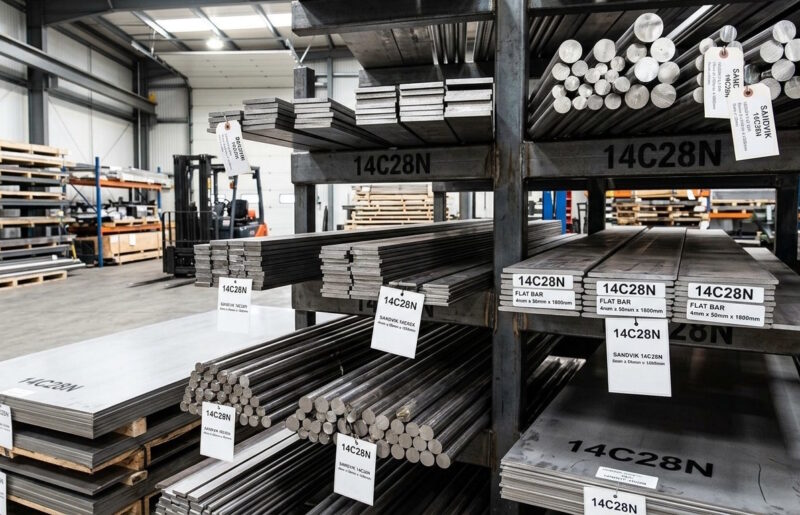
14C28N and Other Swedish Knife Steels Review
An Independent Guide
When discussing premium knife steels, attention often focuses on famous names such as VG10, S35VN, MagnaCut, or M390. However, some of the most balanced and practical knife steels in the world come from Sweden.
Swedish knife steels have earned an outstanding reputation among knife makers, professional chefs, outdoor enthusiasts, and collectors because they offer something many modern steels struggle to achieve: balance.
Rather than maximizing a single characteristic such as edge retention or corrosion resistance, Swedish steels are often engineered to provide an excellent combination of:
- Sharpness
- Toughness
- Corrosion resistance
- Ease of sharpening
- Reliability
Among these steels, 14C28N has become one of the most respected options for handmade knives and production blades alike.
In this guide, we’ll review 14C28N and compare it to other important Swedish knife steels, helping buyers understand where each steel excels and which applications they are best suited for.
Whether you’re considering a handmade chef knife, hunting knife, EDC blade, or custom knife from Yashka Designs, understanding Swedish steels can help you make a more informed decision.
Why Swedish Steels Are So Highly Respected
Sweden has a long history of steel production.
Several factors contribute to the quality of Swedish steels:
- High-purity raw materials
- Advanced metallurgy
- Strict manufacturing standards
- Consistent quality control
Many Swedish steel producers focus heavily on producing clean steels with very fine grain structures.
A fine grain structure often translates into:
- Better edge stability
- Easier sharpening
- Improved toughness
- Better cutting performance
This is one reason why Swedish steels remain popular despite increasing competition from powder metallurgy steels.
The Story Behind Sandvik
Most famous Swedish knife steels originate from Sandvik Materials Technology.
Sandvik spent decades developing steels specifically for knife applications.
Unlike some industrial steels adapted for knives later, many Sandvik steels were designed with blade performance in mind from the beginning.
Their goals included:
- Better corrosion resistance
- Improved toughness
- Consistent heat treatment
- Superior manufacturing quality
This focus helped create some of the most successful knife steels available today.
What Is 14C28N Steel?
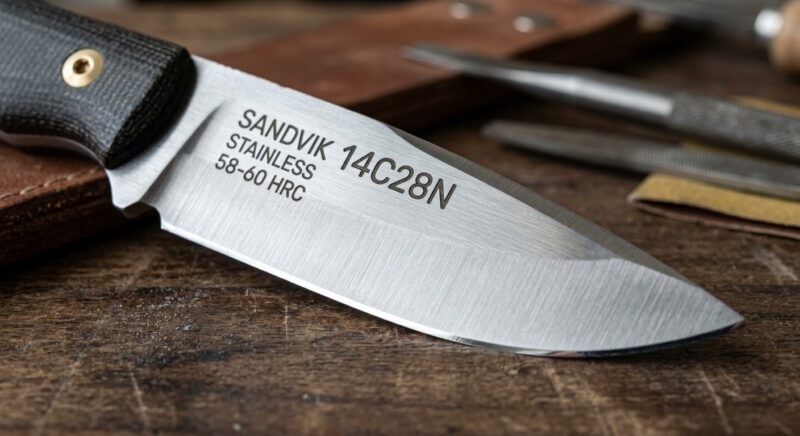
14C28N is a stainless steel developed specifically for knife blades.
It was created by Sandvik in collaboration with knife manufacturers seeking a steel that would improve upon previous generations.
Typical composition includes:
- Carbon: approximately 0.62%
- Chromium: approximately 14%
- Nitrogen additions
- Manganese
- Silicon
The addition of nitrogen is one of the key features that separates 14C28N from many earlier stainless steels.
Nitrogen helps improve:
- Corrosion resistance
- Hardness potential
- Edge stability
The result is a steel that has become extremely popular among custom makers and production knife companies.
14C28N Performance Overview
One of the reasons 14C28N is so respected is that it performs well in nearly every category.
Corrosion Resistance
Corrosion resistance is excellent.
The 14% chromium content provides strong protection against:
- Humidity
- Kitchen acids
- Food preparation environments
- Outdoor conditions
For most users, rust is rarely a concern when basic care is followed.
Toughness
Toughness is one of the strongest characteristics of 14C28N.
Compared to many high-hardness premium steels, it resists chipping remarkably well.
This makes it particularly attractive for:
- Outdoor knives
- Camping knives
- Hunting knives
- Everyday carry knives
Edge Retention
Edge retention is good rather than extreme.
It will not match super steels like:
- M390
- S90V
- S110V
However, it often provides a better balance between edge retention and sharpenability.
Sharpening
This is where many users fall in love with 14C28N.
Advantages include:
- Easy burr formation
- Fast sharpening
- Excellent stone feedback
- Quick maintenance
For many knife enthusiasts, this balance is more valuable than extreme wear resistance.
Why Knife Makers Love 14C28N
Many custom makers choose 14C28N because it is predictable.
Benefits include:
- Reliable heat treatment
- Consistent quality
- Fine grain structure
- Easy finishing
This predictability helps makers produce knives with consistent performance.
For handmade knives, consistency is incredibly important.
14C28N vs VG10
VG10 is one of the most famous Japanese stainless steels.
Let’s compare them.
VG10 Advantages
- Higher wear resistance
- Better edge retention
- Higher hardness potential
14C28N Advantages
- Better toughness
- Easier sharpening
- Lower chipping risk
- Simpler maintenance
Verdict
VG10 may hold an edge longer.
14C28N is often easier to live with.
Many users actually prefer the overall balance of 14C28N.
14C28N vs N690
N690 is another steel frequently used in premium knives.
Although Austrian rather than Swedish, it is often compared with 14C28N.
N690 Advantages
- Higher wear resistance
- Excellent corrosion resistance
- Slightly longer edge retention
14C28N Advantages
- Better toughness
- Easier sharpening
- Often lower cost
Verdict
These steels are extremely close.
The choice often comes down to heat treatment and personal preference.
14C28N vs S35VN
S35VN is considered a premium powder metallurgy steel.
S35VN Advantages
- Better wear resistance
- Longer edge retention
- Premium market reputation
14C28N Advantages
- Easier sharpening
- Better toughness in many applications
- Lower cost
- Simpler maintenance
For many users, 14C28N provides 90% of the practical performance at a lower price.
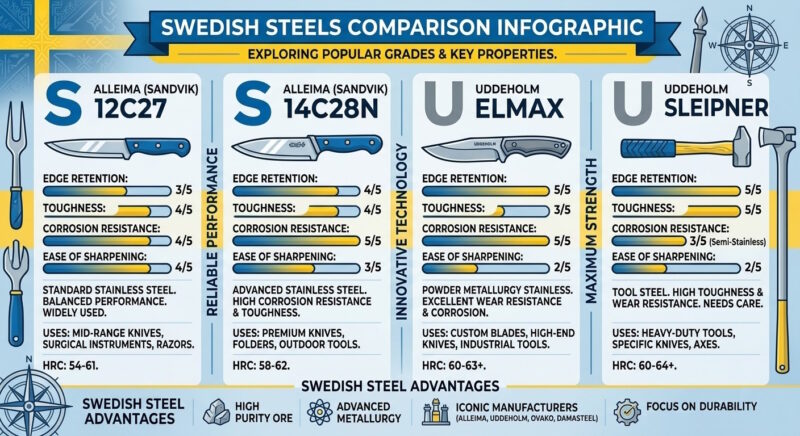
Swedish Steel #2: 12C27
12C27 is one of Sandvik’s most successful steels.
For decades it has been used in:
- Scandinavian knives
- Kitchen knives
- Outdoor knives
Strengths
- Excellent corrosion resistance
- Easy sharpening
- Fine edge capability
- Affordable pricing
Many Mora knives use variations of this steel.
Despite newer options, 12C27 remains highly respected.
Swedish Steel #3: 13C26
13C26 is often described as a stainless version of AEB-L.
It developed a reputation for:
- Outstanding edge performance
- Fine grain structure
- Excellent sharpness
Many enthusiasts still consider it one of the best-performing traditional stainless steels ever produced.
Although less common today, it remains influential.
Swedish Steel #4: Sandvik 19C27
19C27 contains increased carbon content compared to 12C27.
Benefits include:
- Higher hardness potential
- Better wear resistance
- Excellent edge retention
This makes it attractive for premium kitchen knives.
However, it is somewhat less common than 14C28N.
Swedish Steel #5: AEB-L
While technically associated with razor blade production, AEB-L has become a favorite among knife makers worldwide.
Many custom makers consider AEB-L one of the finest stainless steels available.
Advantages include:
- Extremely fine grain
- Incredible sharpness
- Outstanding toughness
- Easy sharpening
Many experts consider AEB-L one of the best kitchen knife steels ever developed.
Why Swedish Steels Excel in Kitchen Knives
Kitchen knives demand a unique combination of properties.
A chef knife must:
- Resist corrosion
- Stay sharp
- Sharpen easily
- Handle daily use
Swedish steels excel because they provide balance.
Unlike some super steels designed for extreme edge retention, Swedish steels often prioritize cutting performance and practicality.
This makes them ideal for professional kitchens.
AEB-L vs 14C28N: The Battle of Two Favorites
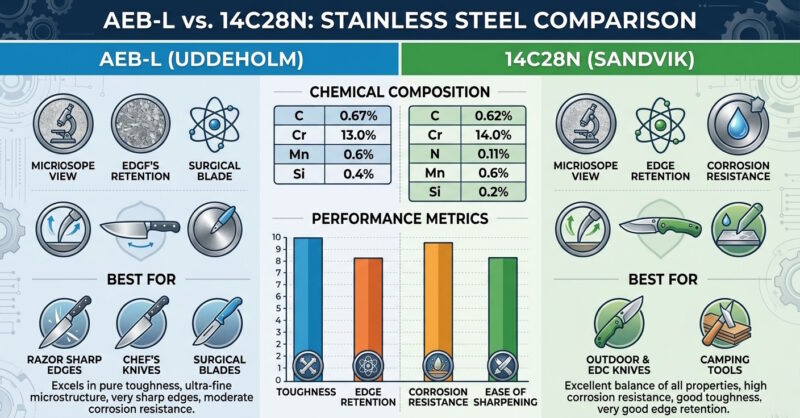
Among knife makers, few stainless steels receive as much praise as AEB-L and 14C28N.
Both have developed loyal followings because they emphasize practical performance rather than marketing hype.
AEB-L Advantages
AEB-L is famous for:
- Extremely fine grain structure
- Outstanding sharpness
- Excellent toughness
- Razor blade heritage
Many custom kitchen knife makers consider AEB-L one of the finest stainless steels available for chef knives.
Because the carbide structure is very fine, AEB-L can achieve exceptionally refined edges.
14C28N Advantages
14C28N offers:
- Better corrosion resistance
- Slightly higher hardness potential
- Excellent toughness
- Easier availability
Many knife manufacturers choose 14C28N because it provides consistent performance with relatively straightforward heat treatment.
Which Is Better?
For kitchen knives:
Many enthusiasts slightly favor AEB-L.
For general-purpose knives:
14C28N often wins due to its combination of corrosion resistance and toughness.
In reality, both steels are excellent choices.
Swedish Steels vs MagnaCut
MagnaCut has become one of the most talked-about knife steels in recent years.
Designed by metallurgist Larrin Thomas, MagnaCut attempts to balance:
- Corrosion resistance
- Toughness
- Edge retention
Unlike many older steels that sacrifice one property to improve another, MagnaCut seeks balance.
MagnaCut Advantages
- Outstanding corrosion resistance
- Exceptional toughness
- Premium wear resistance
- Modern powder metallurgy
Swedish Steel Advantages
- Easier sharpening
- Lower cost
- Simpler maintenance
- Excellent cutting feel
For many users, Swedish steels remain more practical despite MagnaCut’s impressive specifications.
Verdict
If budget is unlimited:
MagnaCut is extraordinary.
If value matters:
14C28N remains one of the best choices available.
Swedish Steels vs Japanese Steels
This comparison is particularly important for kitchen knife buyers.
Popular Japanese Steels
Common Japanese knife steels include:
- VG10
- White Steel
- Blue Steel
- SG2
- R2
Japanese knife makers often prioritize:
- Edge refinement
- Cutting performance
- Precision
Popular Swedish Steels
Swedish steels often prioritize:
- Balance
- Reliability
- Toughness
- Ease of maintenance
Kitchen Performance Comparison
| Category | Swedish Steels | Japanese Steels |
|---|---|---|
| Corrosion Resistance | Excellent | Excellent |
| Sharpening Ease | Excellent | Excellent |
| Toughness | Often Better | Moderate |
| Fine Edge Potential | Excellent | Exceptional |
| Maintenance | Easy | Varies |
Neither group is objectively superior.
Both represent some of the finest knife steels in the world.
Best Swedish Steel for Chef Knives
For kitchen applications, several Swedish steels stand out.
1. AEB-L
Many knife makers consider AEB-L nearly ideal for kitchen use.
Benefits include:
- Razor-like edges
- Excellent toughness
- Easy sharpening
- Fine grain structure
2. 14C28N
An outstanding all-around option.
Provides:
- Corrosion resistance
- Durability
- Excellent value
3. 19C27
For users wanting slightly higher hardness and wear resistance.
Chef Knife Ranking
- AEB-L
- 14C28N
- 19C27
- 12C27
Best Swedish Steel for Outdoor Knives
Outdoor knives face different demands.
Important characteristics include:
- Toughness
- Corrosion resistance
- Ease of field sharpening
Top Choices
14C28N
Possibly the best balance available.
12C27
Trusted for decades by Scandinavian outdoor users.
AEB-L
Excellent toughness and edge stability.
Best Swedish Steel for Everyday Carry (EDC)
EDC knives require:
- Corrosion resistance
- Good edge retention
- Low maintenance
Recommended Choices
14C28N
Perhaps the best all-around EDC steel available.
19C27
Offers slightly higher wear resistance.
AEB-L
A favorite among custom knife makers.
Why Swedish Steels Remain Popular Despite “Super Steels”
Knife marketing often focuses on extreme specifications.
Steels such as:
- M390
- S90V
- S110V
- Maxamet
receive significant attention.
However, many experienced users continue choosing Swedish steels.
Why?
Because real-world performance matters more than laboratory numbers.
Swedish steels often provide:
- Easier maintenance
- Faster sharpening
- Better toughness
- Lower cost
Many users discover they enjoy using a well-made 14C28N knife more than a harder-to-maintain super steel.
Heat Treatment Matters More Than Steel Names
One of the most important lessons knife buyers learn is:
Steel type is only part of the story.
Heat treatment often has a greater influence on performance.
A properly heat-treated 14C28N blade can outperform:
- Poorly treated VG10
- Poorly treated S35VN
- Poorly treated M390
Professional knife makers understand this.
This is why reputable makers focus heavily on heat treatment quality.
Check Our Guide Steel Heat Treatment Explained
Common Myths About 14C28N
Myth #1: 14C28N Is a Budget Steel
False.
While affordable, 14C28N offers performance that competes with much more expensive steels.
Myth #2: It Doesn’t Hold an Edge
False.
Edge retention is very respectable.
It simply doesn’t pursue extreme wear resistance at the expense of toughness.
Myth #3: It Is Only for Beginners
False.
Many experienced knife makers and enthusiasts actively choose 14C28N.
Myth #4: Super Steels Always Perform Better
Not necessarily.
Performance involves trade-offs.
Many users prefer the balance offered by Swedish steels.
Comparison Table
| Steel | Corrosion Resistance | Toughness | Sharpening | Edge Retention |
| 14C28N | ⭐⭐⭐⭐⭐ | ⭐⭐⭐⭐⭐ | ⭐⭐⭐⭐⭐ | ⭐⭐⭐⭐ |
| AEB-L | ⭐⭐⭐⭐ | ⭐⭐⭐⭐⭐ | ⭐⭐⭐⭐⭐ | ⭐⭐⭐⭐ |
| 12C27 | ⭐⭐⭐⭐⭐ | ⭐⭐⭐⭐ | ⭐⭐⭐⭐⭐ | ⭐⭐⭐ |
| 19C27 | ⭐⭐⭐⭐ | ⭐⭐⭐⭐ | ⭐⭐⭐⭐ | ⭐⭐⭐⭐ |
| VG10 | ⭐⭐⭐⭐ | ⭐⭐⭐ | ⭐⭐⭐ | ⭐⭐⭐⭐ |
| N690 | ⭐⭐⭐⭐⭐ | ⭐⭐⭐⭐ | ⭐⭐⭐⭐ | ⭐⭐⭐⭐ |
| MagnaCut | ⭐⭐⭐⭐⭐ | ⭐⭐⭐⭐⭐ | ⭐⭐⭐⭐ | ⭐⭐⭐⭐⭐ |
Which Swedish Steel Should You Choose?
Choose 14C28N If:
✓ You want maximum versatility
✓ You value toughness
✓ You prefer easy sharpening
✓ You want excellent corrosion resistance
✓ You want outstanding value
Choose AEB-L If:
✓ You prioritize kitchen performance
✓ You enjoy sharpening
✓ You appreciate extremely fine edges
✓ You want custom knife performance
Choose 12C27 If:
✓ Budget matters
✓ You need a reliable outdoor knife
✓ You want easy maintenance
Choose 19C27 If:
✓ You want slightly better edge retention
✓ You prefer harder stainless steels
Why We Like Swedish Steels
Swedish steels align closely with the philosophy of handmade knives.
Rather than focusing on extreme specifications, they emphasize balance.
A handmade knife should be:
- Reliable
- Easy to maintain
- Pleasant to sharpen
- Durable
- Enjoyable to use
Swedish steels excel in all these areas.
This is why they continue to be popular among both custom makers and discerning knife users worldwide.
Quick Questions and Answers
Is 14C28N a good knife steel?
Yes. It is widely considered one of the best balanced stainless steels available.
Is 14C28N better than D2?
For corrosion resistance and toughness, yes.
For wear resistance, D2 may hold an edge slightly longer.
Is 14C28N better than VG10?
Neither is universally better. VG10 offers more wear resistance, while 14C28N offers better toughness and easier sharpening.
Does 14C28N rust?
It is highly corrosion resistant, though no steel is completely rust-proof.
Is AEB-L better than 14C28N?
Many kitchen knife enthusiasts prefer AEB-L, while many outdoor users prefer 14C28N.
Why do custom knife makers like Swedish steels?
Because they provide excellent balance, consistency, and practical performance.
Final Verdict
Swedish knife steels continue to earn respect for a simple reason:
They work.
While the knife industry often focuses on increasingly exotic alloys and super steels, Swedish steels remain among the most practical and user-friendly materials available.
Among them, 14C28N stands out as one of the best-balanced stainless steels ever developed.
It offers:
- Excellent corrosion resistance
- Outstanding toughness
- Easy sharpening
- Reliable edge retention
- Exceptional value
For many users, it represents the sweet spot between performance and practicality.
Whether you’re purchasing a handmade chef knife, hunting knife, outdoor knife, or everyday carry blade, Swedish steels deserve serious consideration.
In a world filled with marketing claims and steel hype, 14C28N and its Swedish counterparts continue to prove that balance often beats extremes.
FAQ
What is 14C28N steel?
14C28N is a Swedish stainless steel developed by Sandvik specifically for knife blades, offering excellent toughness, corrosion resistance, and ease of sharpening.
Is 14C28N a premium knife steel?
Yes. Although affordable, it is widely considered one of the best-balanced stainless steels available.
What is the best Swedish knife steel?
Many enthusiasts consider 14C28N and AEB-L among the best Swedish steels for overall knife performance.
Is AEB-L better than 14C28N?
AEB-L often excels in kitchen knives, while 14C28N provides greater versatility across multiple knife categories.
Why are Swedish steels popular?
Because they combine excellent toughness, corrosion resistance, sharpening ease, and practical real-world performance.
14C28N and Other Swedish Knife Steels Review
https://yashkadesigns.ecrater.com/c/2444219/kiritsuke-knives
This article is for independent informational purposes only and is not affiliated with, sponsored by, or endorsed by any steel manufacturer. All product names, trademarks, and registered trademarks are the property of their respective owners.