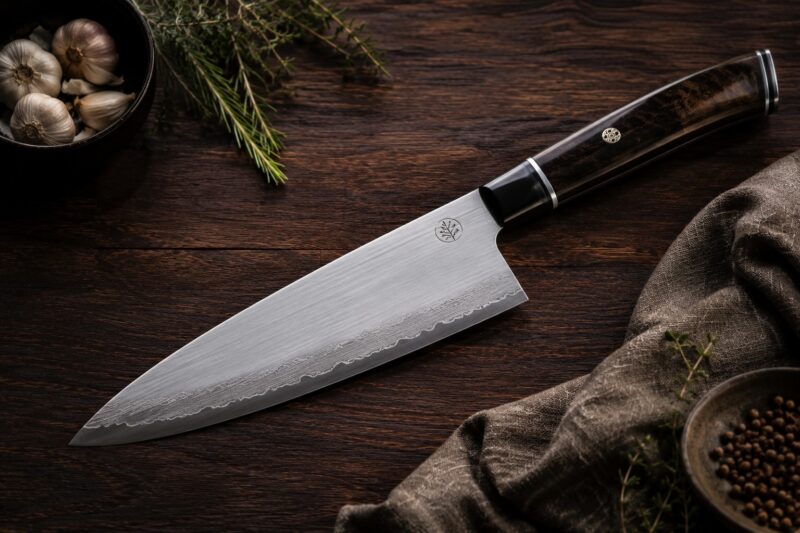
Stainless Steel Myths
An Independent Guide
Stainless steel knives are everywhere.
From home kitchens and professional restaurants to outdoor adventures and everyday carry blades, stainless steel has become the most widely used knife material in the world.
Yet despite its popularity, stainless steel remains one of the most misunderstood materials in knife making.
Many buyers believe stainless steel never rusts. Others assume it is impossible to sharpen properly. Some think stainless steel is inferior to carbon steel, while others believe modern stainless steels have made carbon steel completely obsolete.
The truth lies somewhere in the middle.
Modern stainless steels are incredibly diverse. Some are designed for corrosion resistance, some for edge retention, some for toughness, and others for premium kitchen performance.
In this guide, we’ll separate fact from fiction and debunk the most common myths surrounding stainless steel knives.
Whether you’re shopping for a chef knife, hunting knife, everyday carry blade, or handmade knife from Yashka Designs, understanding stainless steel will help you make a smarter purchasing decision.
What Is Stainless Steel?
Before discussing myths, it’s important to understand what stainless steel actually is.
A steel is generally considered “stainless” when it contains enough chromium to form a protective oxide layer on the surface.
Typically, stainless steels contain:
- Iron
- Carbon
- Chromium
- Various alloying elements
The chromium content is usually above 10.5%.
This chromium forms an invisible barrier that helps protect the steel from corrosion.
However, one of the biggest misconceptions is hidden within the word itself:
“Stainless” does not mean “stain-proof.”
It simply means “more resistant to staining and corrosion.”
Common Stainless Steels Used in Knives
Today’s knife industry uses dozens of stainless steel grades.
Some of the most popular include:
440C
A classic stainless steel known for:
- Good corrosion resistance
- Easy maintenance
- Affordable pricing
Check our Guide 440C Steel Review
VG10
A Japanese stainless steel famous for:
- Excellent edge retention
- Good corrosion resistance
- High-end kitchen knives
Check Our Guide VG10 Steel Review
AUS-8
Popular because it offers:
- Good toughness
- Easy sharpening
- Reasonable cost
Check Our Guide AUS-8 Steel Review
N690
A premium Austrian stainless steel used in many custom knives.
Benefits include:
- Excellent corrosion resistance
- Good edge retention
- Fine grain structure
14C28N
Developed specifically for knife applications.
Known for:
- Great balance
- Easy maintenance
- Excellent toughness
S35VN
A premium powder metallurgy stainless steel offering:
- Outstanding wear resistance
- Excellent edge retention
- High toughness
As you can see, stainless steel is not a single material but an entire family of steels.
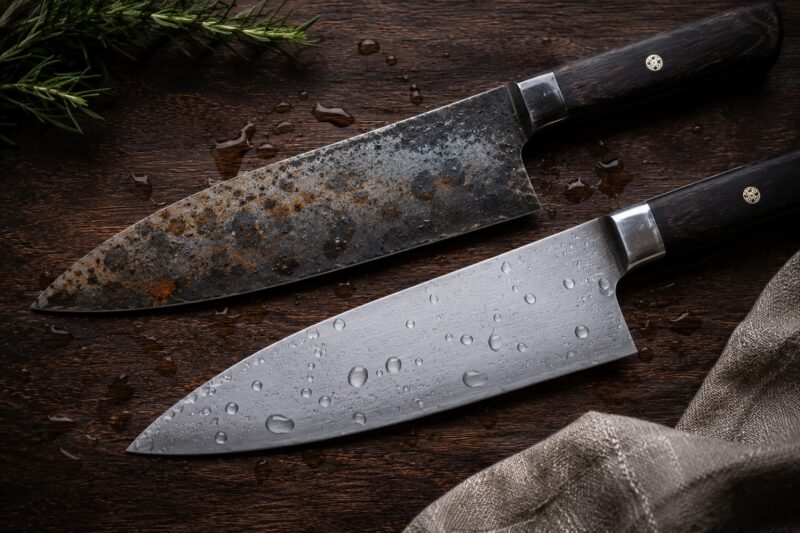
Myth #1: Stainless Steel Never Rusts
This is perhaps the biggest myth of all.
The reality:
Stainless steel can absolutely rust.
The difference is that it resists rust much better than carbon steel.
Why Stainless Steel Can Still Rust
Several factors can cause corrosion:
- Salt exposure
- High humidity
- Poor maintenance
- Acidic foods
- Chlorine exposure
Even marine-grade stainless steels can develop corrosion under extreme conditions.
Professional chefs frequently notice small rust spots when knives are left wet for extended periods.
This does not mean the steel is defective.
It simply means all steel requires reasonable care.
The Truth
Stainless steel is highly corrosion resistant.
It is not corrosion proof.
Myth #2: Stainless Steel Is Inferior to Carbon Steel
This myth has circulated among knife enthusiasts for decades.
Historically, there was some truth to it.
Early stainless steels often sacrificed edge performance for corrosion resistance.
Modern metallurgy has changed everything.
Today’s premium stainless steels can achieve:
- Outstanding hardness
- Exceptional edge retention
- Excellent toughness
- Fine grain structures
Many professional chefs now use stainless steels like:
- VG10
- SG2
- R2
- S35VN
- MagnaCut
These steels offer performance levels that were unimaginable several decades ago.
Check Out Guide Carbon Steel vs Stainless Steel Knives: Which Is Better?
Carbon Steel Still Has Advantages
Carbon steel often provides:
- Easier sharpening
- Superior sharpening feedback
- Extremely fine edge refinement
But saying stainless steel is inferior is simply outdated.
The Truth:
Modern stainless steel can rival or exceed carbon steel in many applications.
Myth #3: Stainless Steel Doesn’t Get as Sharp
This myth comes from older generations of stainless steel.
Modern stainless steels can achieve incredibly sharp edges.
The determining factors are:
- Heat treatment
- Blade geometry
- Sharpening skill
- Steel quality
A properly sharpened VG10 or SG2 knife can achieve razor-level sharpness.
Many professional sushi chefs now use high-end stainless steels without sacrificing cutting performance.
What Buyers Should Understand
Sharpness depends far more on:
- Knife maker
- Edge geometry
- Sharpening
than on whether the steel is stainless.
The Truth:
High-quality stainless steel can become extraordinarily sharp.
Myth #4: Stainless Steel Is Maintenance Free
Another dangerous misconception.
While stainless steel requires less maintenance than carbon steel, it still benefits from proper care.
Good habits include:
- Washing after use
- Drying thoroughly
- Proper storage
- Occasional sharpening
Even premium stainless steels can suffer from:
- Surface staining
- Pitting
- Corrosion spots
when neglected.
The Truth:
Stainless steel is low maintenance, not no maintenance.
Myth #5: All Stainless Steels Perform the Same
Nothing could be further from the truth.
The difference between basic stainless steel and premium stainless steel can be enormous.
Budget Stainless Steel
May offer:
- Good corrosion resistance
- Lower edge retention
- Easier manufacturing
Premium Stainless Steel
May provide:
- Exceptional wear resistance
- High hardness
- Superior edge retention
- Better overall performance
Comparing all stainless steels together is like comparing all cars together.
There are major differences between grades.
The Truth:
Steel type matters enormously.
Myth #6: Stainless Steel Is Impossible to Sharpen
Many people believe stainless steel is difficult or impossible to sharpen.
This myth comes from experience with wear-resistant steels.
The reality:
Most stainless steels sharpen quite well.
Examples:
Easy to sharpen:
- AUS-8
- 14C28N
- 440C
Moderate:
- VG10
- N690
More challenging:
- S35VN
- S90V
- M390
Even highly wear-resistant steels can be sharpened effectively using proper stones.
The Truth:
Stainless steel is not impossible to sharpen.
Some grades simply require more time.
Myth #7: Stainless Steel Knives Last Forever
No knife lasts forever without maintenance.
All knives experience:
- Edge wear
- Surface wear
- Potential corrosion
- Accidental damage
Stainless steel slows many forms of deterioration but does not eliminate them.
Proper care remains important.
The Truth:
Stainless steel improves longevity but does not guarantee immortality.
Myth #8: Professional Chefs Avoid Stainless Steel
This myth is surprisingly common.
Many professional chefs use stainless steel every day.
Why?
Because professional kitchens often involve:
- High humidity
- Long shifts
- Fast-paced environments
Stainless steel provides convenience without sacrificing performance.
Many high-end Japanese knives now combine:
- Stainless cladding
- High-performance cores
to provide the best of both worlds.
The Truth:
Professional chefs use both carbon steel and stainless steel depending on their needs.
Myth #9: Stainless Steel Is Only for Beginners
Some enthusiasts view stainless steel as a “starter steel.”
This is completely false.
Many of the most expensive knives in the world use premium stainless steels.
Examples include:
- SG2
- MagnaCut
- S35VN
- Elmax
- M390
These steels are chosen by collectors, chefs, and professionals.
The Truth:
Stainless steel serves everyone from beginners to experts.
Myth #10: Stainless Steel Always Holds an Edge Longer Than Carbon Steel
This myth sounds logical because many modern stainless steels are engineered for wear resistance.
However, edge retention is far more complicated.
Several factors affect how long a knife stays sharp:
- Steel composition
- Heat treatment
- Blade geometry
- Cutting surface
- User technique
A premium stainless steel like S35VN may outlast many carbon steels.
However, a well-made carbon steel knife can outperform lower-quality stainless steels.
The Important Difference
Many users confuse:
- Edge retention
- Edge quality
A carbon steel knife may lose its shaving sharpness sooner but still retain excellent cutting performance.
Meanwhile, a stainless steel blade may hold a working edge longer but not achieve the same level of refinement.
The Truth
Neither stainless steel nor carbon steel automatically wins.
Performance depends on the individual steel and how it is treated.
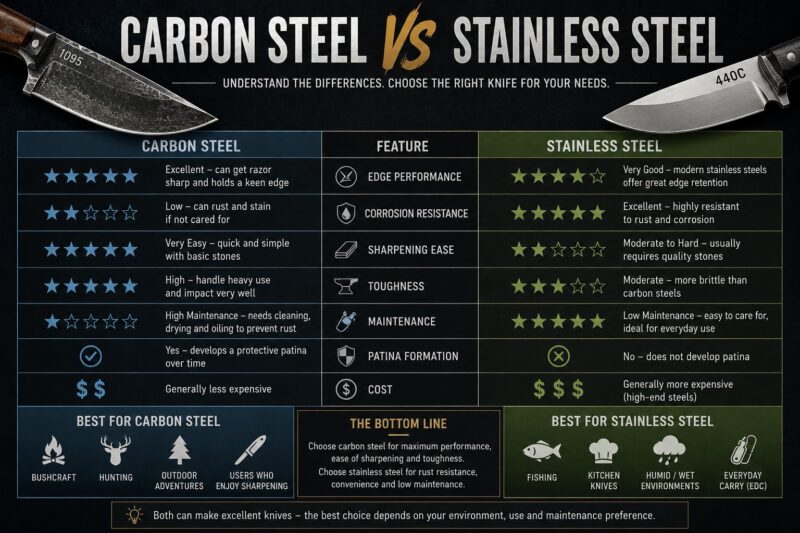
Myth #11: Stainless Steel Is Stronger Than Carbon Steel
Strength is often misunderstood.
There are several types of strength:
- Hardness
- Toughness
- Wear resistance
- Impact resistance
No steel dominates all categories.
Carbon Steel Strengths
Carbon steels often excel in:
- Toughness
- Edge stability
- Fine edge performance
Stainless Steel Strengths
Premium stainless steels often excel in:
- Corrosion resistance
- Wear resistance
- Long-term durability
The Truth
Neither category is universally stronger.
Each steel has strengths and weaknesses.
Myth #12: More Chromium Always Means Better Steel
This is a common marketing misconception.
Chromium improves corrosion resistance.
However, excessive chromium can sometimes affect:
- Toughness
- Sharpening behavior
- Edge characteristics
Knife steel design is always a balancing act.
Manufacturers must balance:
- Corrosion resistance
- Edge retention
- Toughness
- Sharpenability
The best steels achieve balance rather than maximizing one characteristic.
The Truth
More chromium does not automatically mean a better knife.
Myth #13: Expensive Stainless Steel Is Always Better
Price can be misleading.
Many buyers assume that a knife made from expensive steel automatically outperforms a knife made from a simpler steel.
Reality is different.
A properly heat-treated 14C28N blade may outperform:
- Poorly treated M390
- Poorly treated S35VN
- Poorly treated VG10
Heat treatment remains one of the most important factors in knife performance.
The Truth
The knife maker often matters more than the steel name.
Myth #14: Stainless Steel Cannot Develop Character
Many knife enthusiasts love carbon steel because of patina development.
They assume stainless steel remains visually unchanged forever.
Not true.
Over years of use, stainless steel can develop:
- Fine scratches
- Subtle wear patterns
- Handle aging
- Surface character
While it won’t develop the dramatic patina of carbon steel, stainless knives still tell a story through use.
The Truth
Stainless steel ages differently—not necessarily worse.
Myth #15: Stainless Steel Is the Best Choice for Everyone
This may be the most important myth of all.
There is no perfect steel.
Every user has different priorities.
Some prioritize:
- Maximum sharpness
Others prioritize:
- Corrosion resistance
Others care about:
- Appearance
- Collectibility
- Ease of maintenance
The ideal knife depends on the individual user.
The Truth
The best steel is the one that matches your needs.
Stainless Steel vs Carbon Steel
One of the most common debates in knife communities is stainless steel versus carbon steel.
Stainless Steel Advantages
- Better corrosion resistance
- Lower maintenance
- Excellent durability
- Great for humid environments
Carbon Steel Advantages
- Easier sharpening
- Superior sharpening feedback
- Extremely fine edges
- Traditional craftsmanship appeal
Quick Comparison Table
| Feature | Stainless Steel | Carbon Steel |
|---|---|---|
| Rust Resistance | ⭐⭐⭐⭐⭐ | ⭐⭐ |
| Ease of Sharpening | ⭐⭐⭐ | ⭐⭐⭐⭐⭐ |
| Patina Development | ❌ | ✅ |
| Maintenance | Low | Medium |
| Sharpness Potential | ⭐⭐⭐⭐ | ⭐⭐⭐⭐⭐ |
| Outdoor Use | Excellent | Good |
| Kitchen Use | Excellent | Excellent |
Stainless Steel vs Damascus Steel
Another common source of confusion is Damascus steel.
Remember:
Damascus is not a steel type.
It is usually a blade construction method.
A Damascus knife can be:
- Stainless Damascus
- Carbon Damascus
- Hybrid Damascus
Stainless Damascus
Advantages:
- Beautiful patterns
- Corrosion resistance
- Luxury appearance
Standard Stainless Steel
Advantages:
- Lower cost
- Easier manufacturing
- Excellent performance
Which Is Better?
If appearance matters:
Damascus wins.
If pure functionality matters:
Both can perform exceptionally well.
Check Our Guide What Is Damascus Steel?
Best Stainless Steels for Chef Knives
Many visitors to Yashka Designs ask:
“What is the best stainless steel for kitchen knives?”
The answer depends on priorities.
VG10
Excellent balance of:
- Sharpness
- Edge retention
- Corrosion resistance
A favorite among Japanese knife makers.
N690
One of the best all-around stainless steels.
Offers:
- Fine grain structure
- Good toughness
- Excellent corrosion resistance
14C28N
A fantastic value steel.
Benefits include:
- Easy sharpening
- Great toughness
- Outstanding balance
SG2 / R2
Premium Japanese powder steels.
Known for:
- Exceptional edge retention
- Fine cutting performance
- High hardness
MagnaCut
One of the most exciting modern steels.
Combines:
- Corrosion resistance
- Toughness
- Wear resistance
in a remarkably balanced package.
Which Stainless Steel Is Best for Handmade Knives?
For artisan knife makers, balance often matters more than extremes.
Popular choices include:
- N690
- VG10
- 14C28N
- AEB-L
- MagnaCut
These steels provide an excellent combination of:
- Performance
- Reliability
- Customer satisfaction
Buying Guide: Choosing the Right Stainless Steel Knife
Choose stainless steel if:
✓ You live in a humid climate
✓ You want lower maintenance
✓ You cook frequently
✓ You prefer corrosion resistance
✓ You want everyday practicality
Choose Carbon Steel Instead If:
✓ You enjoy sharpening
✓ You appreciate traditional craftsmanship
✓ You want maximum edge refinement
✓ You don’t mind basic maintenance
✓ You love patina development
Why Handmade Knives Matter More Than Steel Alone
Many buyers become obsessed with steel names.
But experienced knife users know something important:
Steel is only one part of the equation.
A great handmade knife requires:
- Proper heat treatment
- Excellent geometry
- Skilled grinding
- Careful finishing
An average knife made from premium steel can perform worse than a handmade knife made from a simpler steel.
This is why craftsmanship remains the heart of knife making.
Quick Q&A
Does stainless steel rust?
Yes, but it resists corrosion far better than carbon steel.
Is stainless steel good for kitchen knives?
Absolutely. Many of the world’s best kitchen knives use stainless steel.
Can stainless steel get razor sharp?
Yes. Modern stainless steels can achieve exceptional sharpness.
Is stainless steel easier to maintain?
Yes. It generally requires less maintenance than carbon steel.
What is the best stainless steel for chefs?
Popular choices include VG10, SG2, N690, MagnaCut, and 14C28N.
Is stainless steel better than carbon steel?
Neither is universally better. Each excels in different areas.
Final Verdict
Stainless steel has come a long way.
Many myths surrounding stainless steel originated decades ago when metallurgy was less advanced.
Today’s premium stainless steels offer:
- Outstanding corrosion resistance
- Excellent edge retention
- Impressive toughness
- Professional-level performance
While carbon steel continues to attract enthusiasts who appreciate sharpening ease and traditional craftsmanship, stainless steel has earned its place as one of the most practical and versatile materials available.
For most users, a quality stainless steel knife represents an excellent balance of performance, durability, and convenience.
Whether you’re a professional chef, home cook, collector, or knife enthusiast, understanding these stainless steel myths allows you to choose a knife based on facts rather than misconceptions.
At Yashka Designs, we believe the best knife is not determined by marketing claims or steel names alone—it is the knife that matches your needs, your environment, and your appreciation for craftsmanship.
FAQ
What is the biggest myth about stainless steel knives?
The biggest myth is that stainless steel never rusts. Stainless steel resists corrosion but is not completely rust-proof.
Is stainless steel good for kitchen knives?
Yes. Many premium chef knives use stainless steel because of its excellent balance of sharpness, durability, and corrosion resistance.
Can stainless steel knives get as sharp as carbon steel?
High-quality stainless steels can achieve exceptional sharpness and often rival carbon steel in real-world kitchen performance.
What is the best stainless steel for knives?
Popular choices include VG10, N690, SG2, MagnaCut, 14C28N, and S35VN.
Why do professional chefs use stainless steel?
Because it offers strong performance while requiring less maintenance in busy kitchen environments.
https://yashkadesigns.com/chefs-knives
https://yashkadesigns.ecrater.com/c/2444219/kiritsuke-knives
Stainless Steel Myths
This article is for independent informational purposes only and is not affiliated with, sponsored by, or endorsed by any steel manufacturer. All product names, trademarks, and registered trademarks are the property of their respective owners.