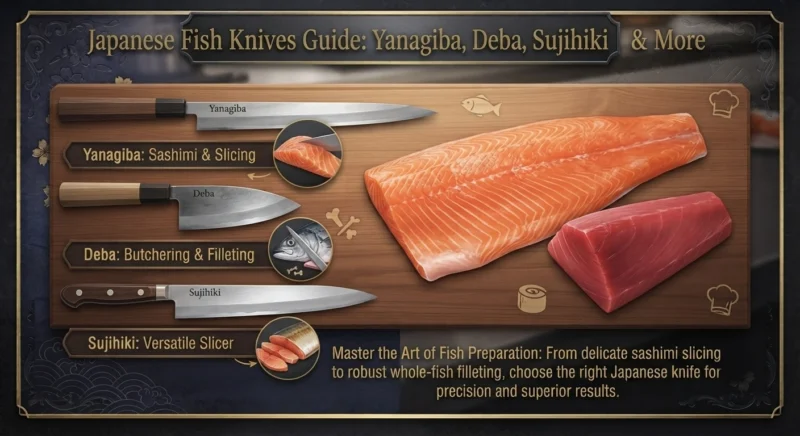
Introduction: Why Japanese Fish Knives Are Different
Japanese cuisine has a unique relationship with fish. From delicate sashimi and sushi to grilled seafood and traditional fish preparation, Japanese chefs have developed specialized knives designed for every stage of handling seafood.
Unlike general-purpose kitchen knives, Japanese fish knives are created around one simple principle:
The cleaner the cut, the better the flavor, texture, and appearance of the fish.
A properly sharpened Japanese fish knife does not crush or tear the flesh. Instead, it creates a smooth slice that preserves the natural structure of the fish.
This is especially important for raw preparations such as:
- Sushi
- Sashimi
- Nigiri
- Tartare
- Ceviche
- Crudo
- Carpaccio-style seafood dishes
Traditional Japanese fish knives are famous worldwide because of their:
- Extremely sharp edges
- Thin blade geometry
- Superior cutting precision
- High-quality Japanese steels
- Long blade profiles
- Specialized designs for different tasks
However, there is no single “best Japanese fish knife” for everyone.
A professional sushi chef preparing tuna sashimi requires a different knife than a home cook cleaning salmon or preparing ceviche.
Understanding the differences between Yanagiba, Deba, Sujihiki, Gyuto, and other Japanese fish knives helps you choose the right tool for your cooking style.
What Makes Japanese Fish Knives Unique?
1. Single-Bevel Blade Design
One of the most distinctive features of traditional Japanese fish knives is the single bevel edge.
Unlike Western knives, which usually have two sharpened sides, many Japanese traditional knives have:
- One flat side
- One angled cutting side
Examples:
- Yanagiba
- Deba
- Fuguhiki
- Usuba
This design allows extremely precise cutting.
The angled side guides the knife through the fish, while the flat side helps create a clean, straight slice.
Advantages:
- Cleaner cuts
- Less damage to delicate flesh
- Better texture preservation
- Easier production of thin slices
The disadvantage is that single-bevel knives require more skill.
They must be sharpened differently from normal double-bevel knives.
Single Bevel vs Double Bevel Japanese Fish Knives
| Feature | Single Bevel | Double Bevel |
|---|---|---|
| Sharpness | Exceptional | Excellent |
| Precision slicing | Superior | Very good |
| Learning curve | Higher | Easier |
| Maintenance | More demanding | Simpler |
| Sushi preparation | Professional standard | Suitable |
| Home cooking | Requires practice | More practical |
For professional sushi preparation, single bevel knives remain the traditional choice.
For most home cooks, a double-bevel Japanese knife may be easier.
Traditional Japanese Fish Knives Types
Japanese fish knives developed from different regional traditions and cooking methods.
Each knife has a specific purpose.
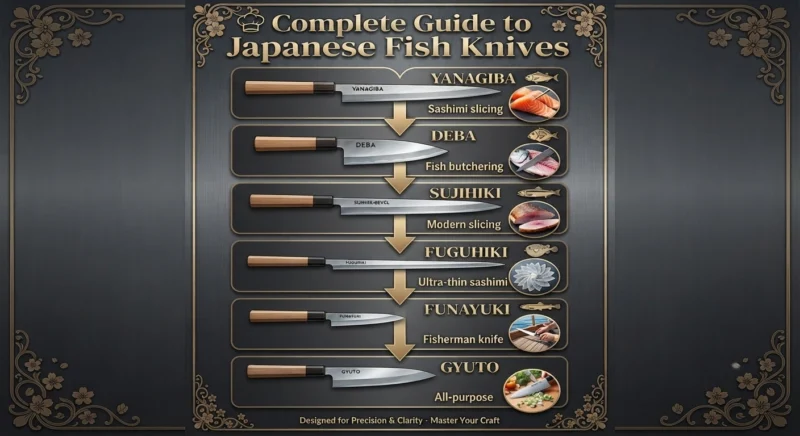
The main types include:
- Yanagiba
- Deba
- Fuguhiki
- Takohiki
- Kiritsuke Yanagiba
- Sujihiki
- Gyuto
- Usuba
- Ajikiri
- Funayuki
Let’s examine each one.
1. Yanagiba Knife (柳刃包丁)
The Ultimate Japanese Sushi and Sashimi Knife
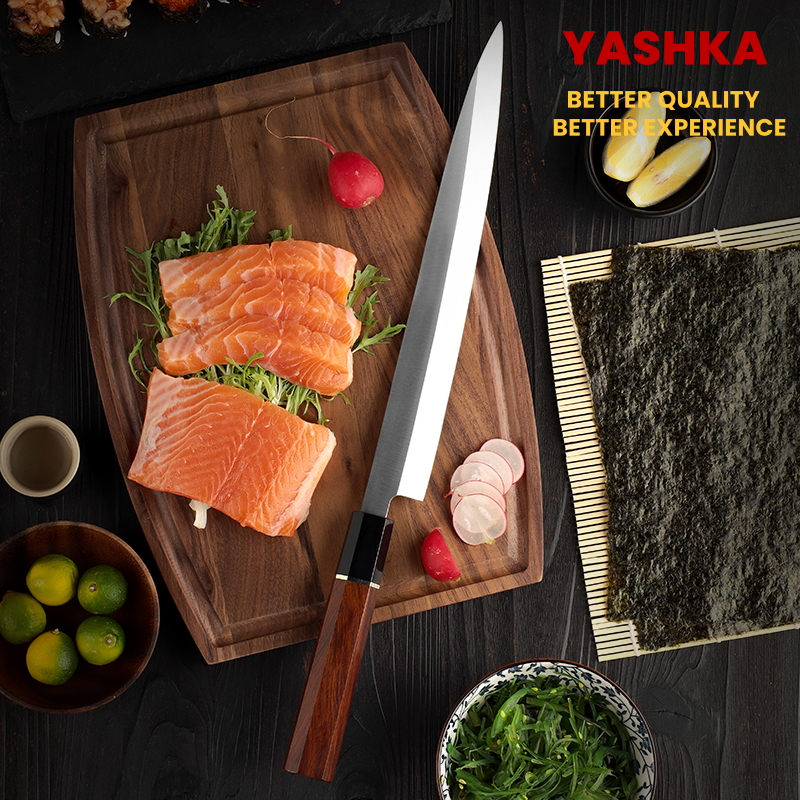
The Yanagiba is the most famous Japanese fish knife in the world.
The name means:
“Willow blade”
because the long, narrow blade resembles the shape of a willow leaf.
For many sushi professionals, the Yanagiba represents the highest level of fish slicing precision.
History of the Yanagiba Knife
The Yanagiba originated in the Kansai region of Japan, especially around Osaka.
Traditional Japanese sushi chefs developed this knife to create perfect slices of raw fish.
In Japanese cuisine, presentation is extremely important.
A sashimi slice must not only taste good — it must look perfect.
The Yanagiba was designed specifically for this purpose.
Yanagiba Blade Characteristics
Typical features:
- Long blade
- Narrow profile
- Single bevel edge
- Flat back side (ura)
- Extremely thin cutting edge
Common blade lengths:
- 240 mm
- 270 mm
- 300 mm
- 330 mm
- 360 mm
Professional sushi chefs often prefer:
- 270 mm
- 300 mm
- 330 mm
Home users usually find:
- 240 mm
- 270 mm
more practical.
How a Yanagiba Knife Works
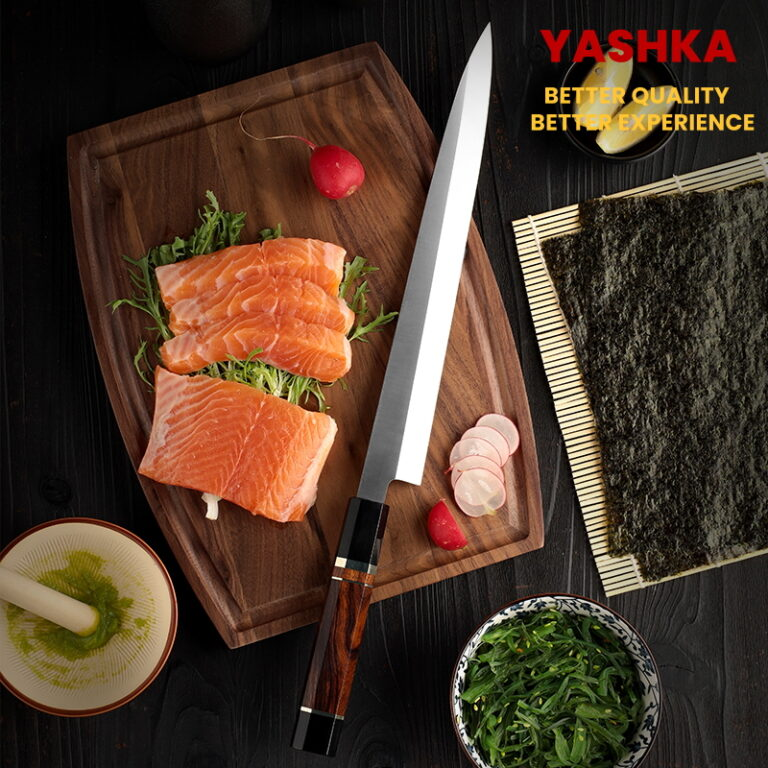
A sushi chef does not normally “saw” through fish.
Instead, the traditional technique is:
One long pulling motion from heel to tip.
This creates:
- Smooth surface
- Minimal tearing
- Beautiful texture
- Transparent sashimi slices
A poor-quality knife or incorrect cutting technique can crush fish cells, affecting:
- Appearance
- Mouthfeel
- Freshness perception
Yanagiba Edge Geometry
Traditional Yanagiba knives use a special edge structure.
Hamaguri Edge
The edge is often polished into a convex shape called:
Hamaguri (clam-shaped) edge
Benefits:
- Stronger edge
- Better cutting ability
- Smooth slicing performance
Ura (Concave Back)
The back side of a Yanagiba is slightly hollow.
This is called:
Ura
Benefits:
- Reduces friction
- Helps release food from the blade
- Makes sharpening easier
Maintaining the ura is an important part of traditional sharpening.
Check Our Guide Blade Geometry Explained
Best Uses for Yanagiba
The Yanagiba is designed for:
✓ Sashimi
✓ Sushi preparation
✓ Tuna slicing
✓ Salmon slicing
✓ Nigiri preparation
✓ Raw fish portioning
It is not designed for:
✗ Cutting bones
✗ Removing fish heads
✗ Chopping vegetables
✗ General kitchen tasks
Best Steels for Yanagiba Knives
Traditional Yanagiba knives are often made from carbon steel.
Popular choices:
White Steel #2 (Shirogami #2)
Advantages:
- Extremely sharp
- Easy to sharpen
- Traditional sushi performance
Disadvantages:
- Requires maintenance
- Can rust if neglected
Blue Steel #2 (Aogami #2)
Advantages:
- Better edge retention
- More durable
- Excellent sharpness
Blue Super (Aogami Super)
Premium carbon steel.
Advantages:
- Excellent edge retention
- High hardness
- Professional performance
Ginsan (Silver Steel)
A stainless Japanese steel.
Advantages:
- Easier maintenance
- Similar sharpening feel to carbon steel
VG10
Popular modern stainless steel.
Advantages:
- Corrosion resistant
- Good performance
- Easier for home users
Advantages of Yanagiba
Pros:
✓ One of the sharpest fish knives available
✓ Professional sushi standard
✓ Creates beautiful sashimi cuts
✓ Excellent precision
✓ Preserves fish texture
Disadvantages of Yanagiba
Cons:
✗ Expensive compared with general knives
✗ Requires sharpening knowledge
✗ Not versatile
✗ Not suitable for bones
Who Should Buy a Yanagiba?
Best for:
- Sushi enthusiasts
- Professional chefs
- Serious Japanese cooking enthusiasts
- People preparing sashimi regularly
Not ideal for:
- Beginners who need one knife for everything
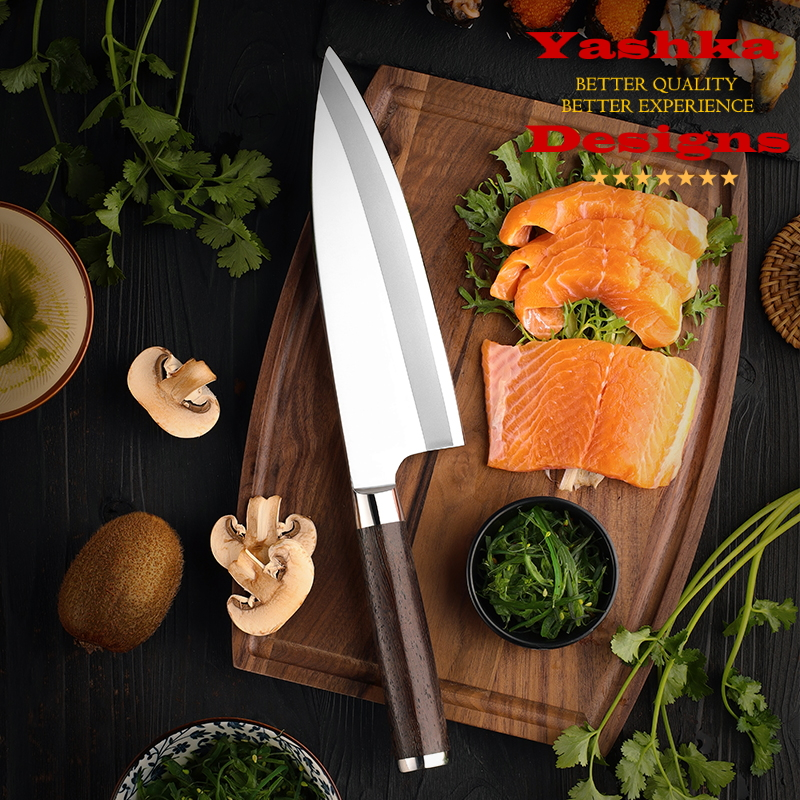
https://yashkadesigns.com/chef-knife-blank-deba-blade-diy-custom-knife-fish-cutting-tool
2. Deba Knife (出刃包丁)
The Japanese Fish Butchering Knife
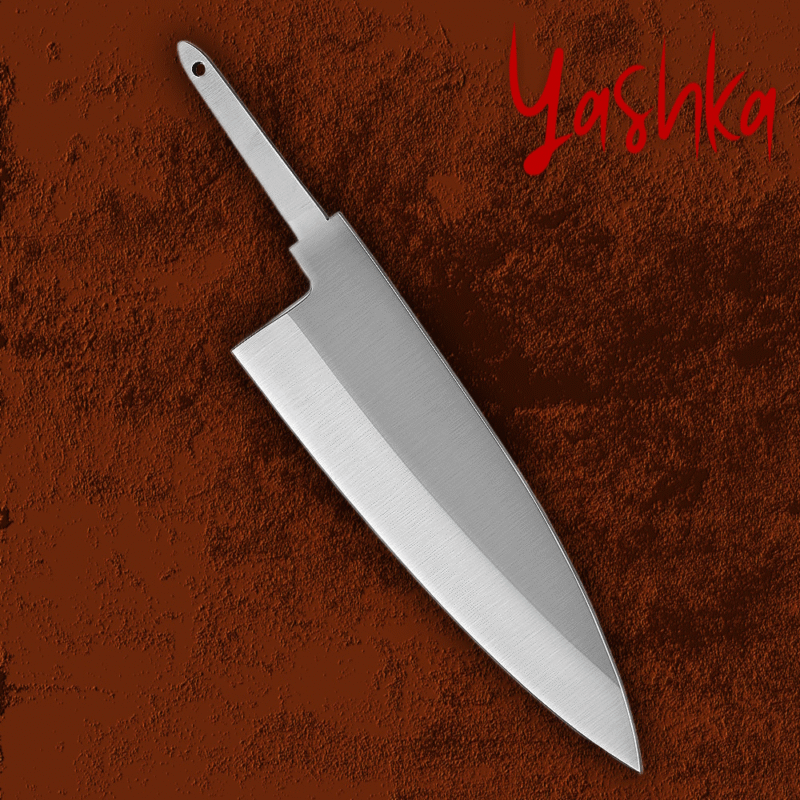
If the Yanagiba is the master of slicing, the Deba is the master of fish preparation.
The Deba is designed for:
- Cleaning whole fish
- Removing heads
- Filleting
- Cutting through joints
- Separating fish sections
It is the Japanese equivalent of a specialized fish butcher knife.
History of the Deba Knife
The Deba originated in Japan hundreds of years ago.
Originally used by fishermen and fish markets, the Deba became essential in Japanese kitchens where whole fish preparation was common.
Traditional Japanese cuisine often starts with a whole fish rather than pre-cut fillets.
The Deba was created for this demanding job.
Deba Knife Characteristics
A typical Deba has:
- Thick spine
- Heavy blade
- Strong heel
- Wide blade
- Single bevel edge
Compared with Yanagiba:
Yanagiba = slicing
Deba = breaking down fish
Deba Knife Uses
A Deba is excellent for:
✓ Removing fish heads
✓ Cutting through small bones
✓ Filleting whole fish
✓ Separating fish parts
✓ Cleaning seafood
Examples:
- Sea bass
- Mackerel
- Snapper
- Salmon
- Tuna sections
Types of Deba Knives
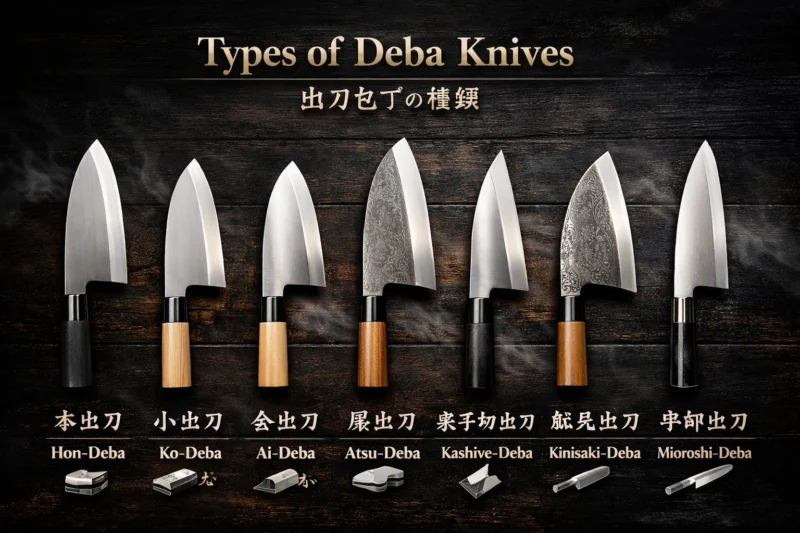
Hon-Deba
The traditional full-size Deba.
Characteristics:
- Thick
- Heavy
- Strong
Best for:
Large fish preparation.
Ko-Deba
Small Deba.
Best for:
- Small fish
- Sardines
- Small mackerel
Ai-Deba
A lighter hybrid Deba.
Designed for:
- Home cooks
- General fish preparation
Deba Steel Options
Common steels:
- White Steel #2
- Blue Steel #2
- Blue Super
- Ginsan
- VG10
For professional use:
Carbon steel remains popular because of:
- Easy sharpening
- Extreme sharpness
- Traditional feel
For home users:
Stainless steels are easier.
Check Our Guide The Complete Guide to Japanese Knives
Advantages of Deba Knife
Pros:
✓ Extremely strong
✓ Best knife for whole fish
✓ Excellent control
✓ Professional fish preparation tool
Disadvantages of Deba Knife
Cons:
✗ Heavy
✗ Not a slicing knife
✗ Requires proper technique
✗ Not suitable for chopping bones like a cleaver
Who Should Buy a Deba?
Ideal for:
- Fishermen
- Seafood lovers
- Professional cooks
- Anyone preparing whole fish
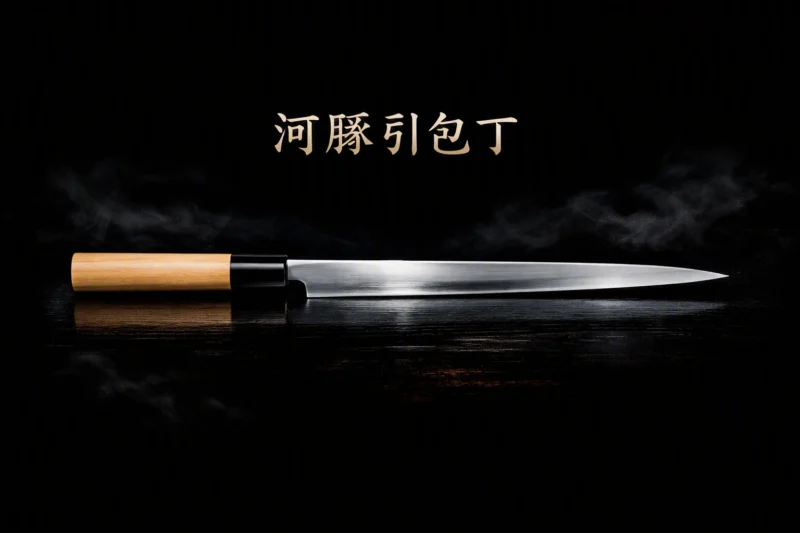
3. Fuguhiki Knife (ふぐ引き)
The Ultimate Precision Sashimi Knife
The Fuguhiki is one of the most specialized Japanese fish knives.
The name comes from:
Fugu (pufferfish) + hiki (to pull)
It was developed specifically for preparing fugu sashimi, one of the most technically demanding dishes in Japanese cuisine.
Because fugu must be sliced extremely thinly, the knife needs exceptional precision.
A properly prepared fugu slice should be almost transparent.
Fuguhiki vs Yanagiba
The Fuguhiki and Yanagiba are similar, but they have important differences.
| Feature | Fuguhiki | Yanagiba |
|---|---|---|
| Main purpose | Fugu sashimi | General sashimi |
| Blade | Longer and thinner | Wider and stronger |
| Cutting style | Ultra-thin slices | Smooth sashimi slices |
| User | Specialist chefs | Sushi chefs |
| Difficulty | Very high | High |
The Fuguhiki has a narrower blade because fugu meat requires extremely delicate cutting.
Check Our Guide Santoku vs Nakiri
Fuguhiki Blade Characteristics
Typical features:
- Long blade
- Extremely thin profile
- Single bevel edge
- Very low resistance cutting
Common sizes:
- 240 mm
- 270 mm
- 300 mm
Professional chefs often prefer longer versions because they allow a single continuous slicing motion.
Best Uses for Fuguhiki
Designed for:
✓ Fugu sashimi
✓ Extremely thin seafood slices
✓ Delicate raw fish preparation
It can also be used for:
- Tuna
- Sea bream
- Other sashimi
However, most chefs choose Yanagiba for general sashimi.
Advantages of Fuguhiki
Pros:
✓ Maximum slicing precision
✓ Creates ultra-thin cuts
✓ Minimal damage to delicate fish
✓ Professional Japanese craftsmanship
Disadvantages of Fuguhiki
Cons:
✗ Very specialized
✗ Expensive
✗ Difficult for beginners
✗ Less practical than Yanagiba
Who Should Buy a Fuguhiki?
Best for:
- Professional sushi chefs
- Advanced Japanese cooking enthusiasts
- Collectors of traditional knives
For most users, a Yanagiba is more practical.
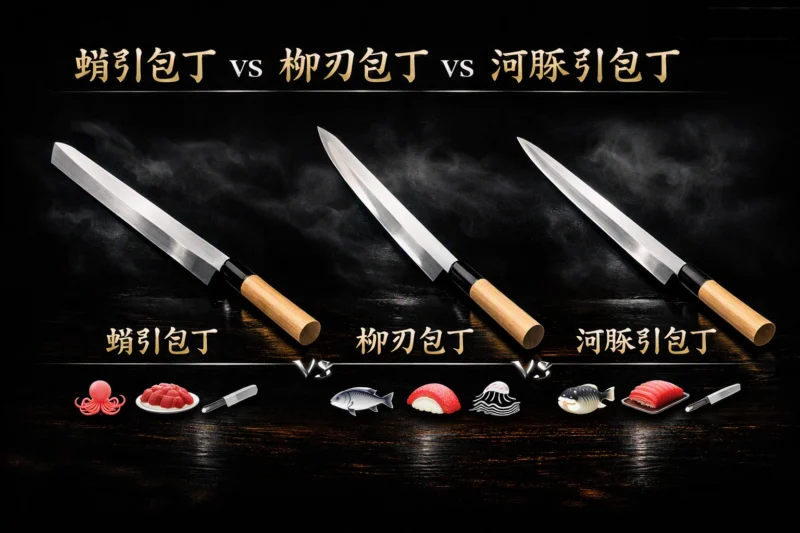
4. Takohiki Knife (蛸引)
The Tokyo-Style Sashimi Knife
The Takohiki is the traditional Edo-style alternative to the Yanagiba.
The name means:
“Octopus cutter”
because it was originally associated with preparing octopus.
Today, it is used for many types of sashimi.
Takohiki Design
The biggest difference is the blade tip.
Unlike the pointed Yanagiba:
The Takohiki has:
- Flat square tip
- Straight blade profile
- Long narrow shape
This design reflects the Tokyo (Edo) sushi tradition.
https://yashkadesigns.com/special-knives
Takohiki vs Yanagiba
| Feature | Takohiki | Yanagiba |
|---|---|---|
| Origin | Tokyo/Edo | Osaka/Kansai |
| Tip | Square | Pointed |
| Shape | Straight | Slightly curved |
| Popularity | Traditional Tokyo chefs | More common worldwide |
| Skill level | Advanced | Advanced |
Best Uses for Takohiki
Excellent for:
✓ Sashimi
✓ Octopus preparation
✓ Raw fish slicing
✓ Traditional Edomae sushi
Advantages of Takohiki
Pros:
✓ Elegant traditional design
✓ Excellent precision
✓ Beautiful craftsmanship
✓ Professional slicing ability
Disadvantages
Cons:
✗ Less common outside Japan
✗ Requires experience
✗ Not versatile
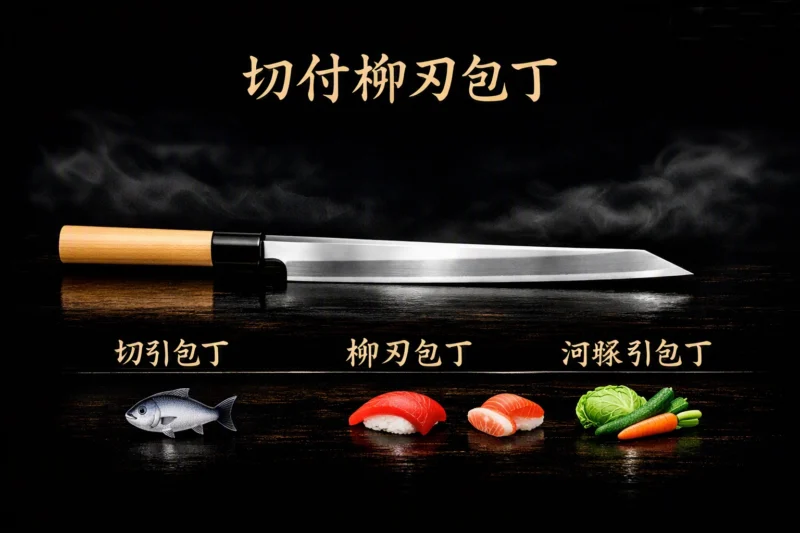
5. Kiritsuke Yanagiba
The Premium Hybrid Japanese Fish Knife
The Kiritsuke Yanagiba combines two traditional Japanese concepts:
- Yanagiba slicing ability
- Kiritsuke chef knife design
It is considered a prestigious knife among experienced Japanese chefs.
Kiritsuke Yanagiba Characteristics
Features:
- Very long blade
- Sharp angled tip
- Single bevel construction
- Elegant traditional profile
Common lengths:
- 270 mm
- 300 mm
- 330 mm
- 360 mm
Uses of Kiritsuke Yanagiba
Designed for:
✓ Sashimi
✓ Sushi preparation
✓ Large fish slicing
✓ Precision kitchen work
Because of the long blade and aggressive tip, it requires excellent knife control.
Why Kiritsuke Yanagiba Is Difficult
Traditional Japanese chefs often consider Kiritsuke knives a symbol of experience.
Reasons:
- Long blade
- Single bevel edge
- More demanding cutting angle
- Requires confidence
A beginner may find it difficult compared with a standard Yanagiba.
Advantages
Pros:
✓ Extremely versatile among traditional knives
✓ Beautiful professional appearance
✓ Excellent precision
✓ Suitable for large fish
Disadvantages
Cons:
✗ Expensive
✗ Requires skill
✗ Not beginner-friendly
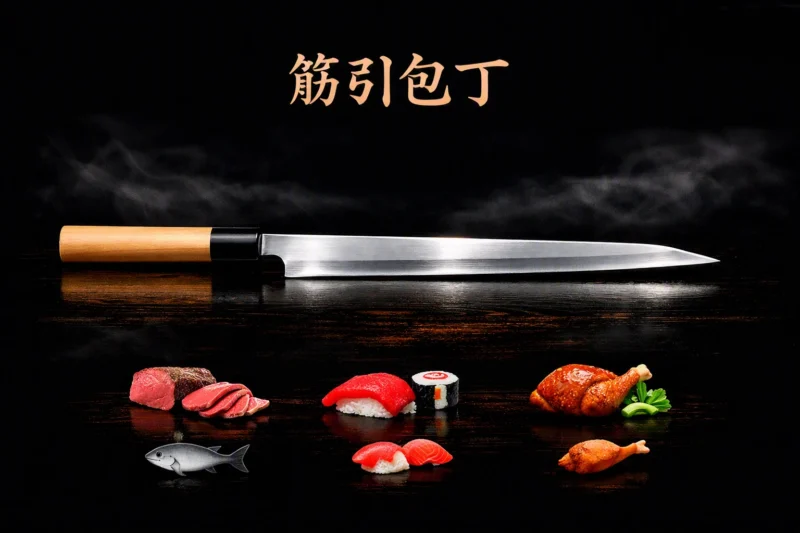
6. Sujihiki Knife (筋引)
The Modern Japanese Fish Slicing Knife
The Sujihiki is one of the best alternatives to traditional single-bevel fish knives.
It is a modern Japanese slicing knife with a double-bevel edge.
For many home cooks and professional chefs, the Sujihiki is the most practical Japanese fish knife.
Sujihiki vs Yanagiba
This is one of the most common comparisons.
| Feature | Sujihiki | Yanagiba |
|---|---|---|
| Edge | Double bevel | Single bevel |
| Difficulty | Easier | Harder |
| Maintenance | Simple | Advanced |
| Sushi | Good | Excellent |
| General fish use | Excellent | Limited |
| Home cooks | Better | More demanding |
Sujihiki Blade Characteristics
Features:
- Long narrow blade
- Double bevel edge
- Lightweight design
- Smooth slicing ability
Common lengths:
- 240 mm
- 270 mm
- 300 mm
Best Uses for Sujihiki
Excellent for:
✓ Salmon slicing
✓ Tuna portions
✓ Smoked fish
✓ Large fillets
✓ Roast meat
✓ Carpaccio
✓ Ceviche preparation
Why Sujihiki Works Well for Ceviche
Ceviche is different from traditional Japanese sashimi.
Ceviche involves:
- Acid marinades
- Citrus juice
- Herbs
- Different cutting styles
The knife needs versatility.
A Sujihiki provides:
- Clean cuts
- Easy handling
- Stainless steel options
- Less maintenance
For many home cooks, Sujihiki is a better ceviche knife than a traditional Yanagiba.
Best Steels for Sujihiki
Popular choices:
VG10
Advantages:
- Stainless
- Easy maintenance
- Excellent kitchen performance
SG2 / R2 Powder Steel
Advantages:
- High hardness
- Excellent edge retention
AUS10
Advantages:
- Tough
- Easier sharpening
AEB-L
Advantages:
- Very fine edge
- Excellent slicing ability
Advantages of Sujihiki
Pros:
✓ Extremely versatile
✓ Easy for beginners
✓ Excellent fish slicer
✓ Great for home kitchens
✓ Available in stainless steels
Disadvantages
Cons:
✗ Not traditional sushi standard
✗ Less specialized than Yanagiba
Who Should Buy a Sujihiki?
Perfect for:
- Home cooks
- Professional Western chefs
- Seafood enthusiasts
- People who prepare fish regularly
7. Gyuto Knife
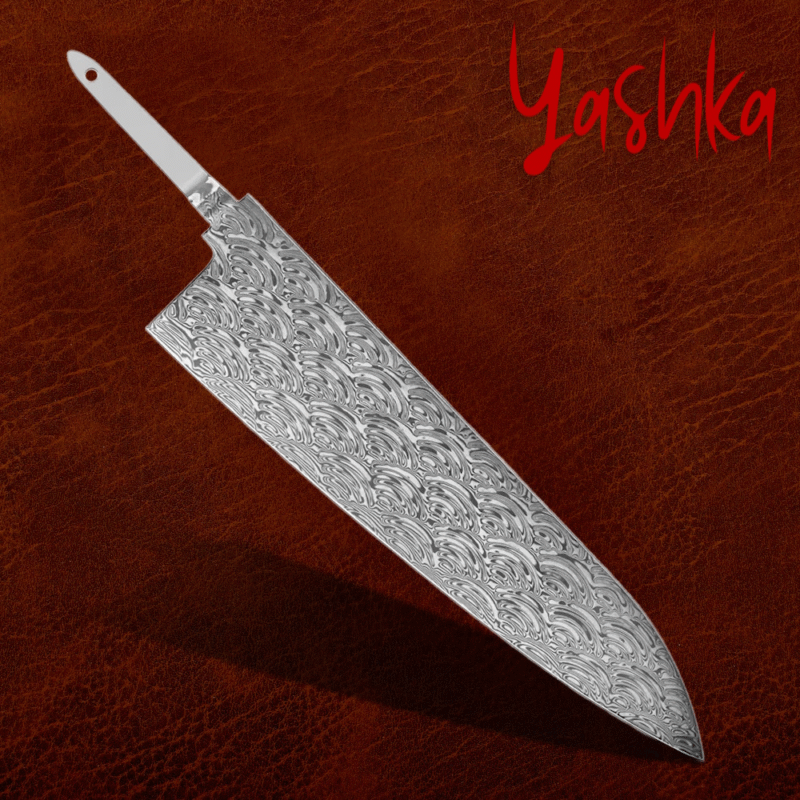
The Japanese Chef Knife for Fish Preparation
The Gyuto is Japan’s answer to the Western chef knife.
While it is not a dedicated fish knife, many cooks prefer it because of its versatility.
A Gyuto can handle:
- Fish
- Meat
- Vegetables
- Herbs
- Everyday cooking
Why Use a Gyuto for Fish?
A Gyuto works especially well for:
✓ Fish fillets
✓ Salmon preparation
✓ Portioning seafood
✓ Removing skin
✓ General kitchen tasks
Check Our Guide Japanese Gyuto Knife Guide
Gyuto vs Traditional Japanese Fish Knives
| Feature | Gyuto | Yanagiba |
|---|---|---|
| Edge | Double bevel | Single bevel |
| Versatility | Excellent | Limited |
| Sushi | Good | Best |
| Beginner friendly | Yes | No |
| Everyday use | Excellent | Poor |
Best Gyuto Sizes for Fish
Recommended:
210 mm
Best for:
- Home cooks
- Smaller kitchens
240 mm
Best for:
- Larger fish
- Professional-style cooking
Best Steels for Fish Gyuto
Popular options:
- VG10
- SG2
- Aogami Super
- Ginsan
- AUS10
- S35VN
Check Our Guide VG10 vs AUS10 Steel: Which Japanese Knife Steel Is Better?
Advantages of Gyuto
Pros:
✓ One knife solution
✓ Easy to use
✓ Versatile
✓ Available in many steels
Disadvantages
Cons:
✗ Not ideal for traditional sashimi
✗ Less precise for long slices
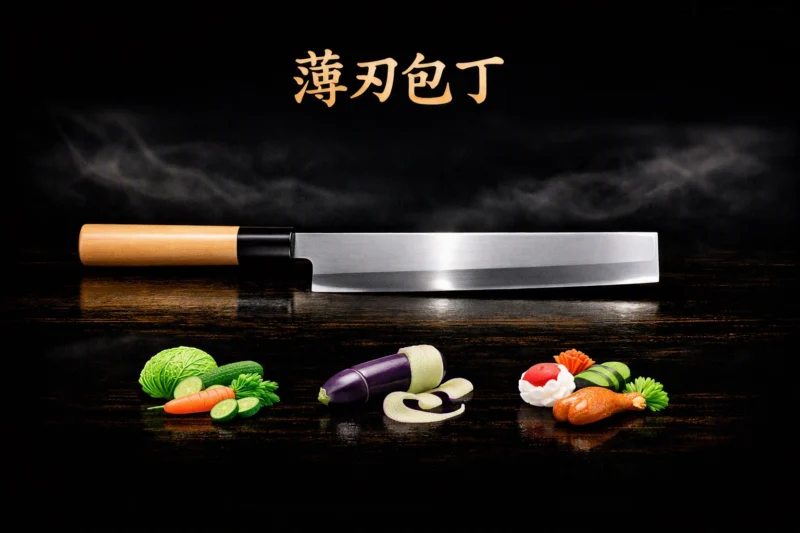
8. Usuba Knife (薄刃包丁)
The Traditional Vegetable Knife Used in Sushi Preparation
The Usuba is not technically a fish knife.
However, it plays an important role in sushi preparation.
Japanese cuisine is about balance.
Fish is often served with:
- Daikon garnish
- Decorative vegetables
- Thin vegetable sheets
The Usuba was created for these tasks.
Usuba Characteristics
Features:
- Single bevel edge
- Tall blade
- Straight cutting edge
- Extremely sharp
Types of Usuba
Edo Usuba
Traditional Tokyo style.
Features:
- Square tip
- Straight profile
Kamagata Usuba
Osaka style.
Features:
- Rounded tip
- More versatile
Usuba Uses in Sushi Preparation
Used for:
✓ Vegetable garnishes
✓ Decorative cuts
✓ Katsuramuki technique
✓ Daikon preparation
Advantages
Pros:
✓ Extremely precise
✓ Essential for traditional Japanese cuisine
✓ Beautiful craftsmanship
Disadvantages
Cons:
✗ Specialized
✗ Difficult sharpening
✗ Not for fish cutting
9. Ajikiri Knife (鯵切)
The Small Japanese Fish Knife
The Ajikiri is a smaller version of a Deba.
The name comes from:
Aji = horse mackerel
It was designed for small fish.
Ajikiri Uses
Perfect for:
✓ Sardines
✓ Small mackerel
✓ Small seafood
✓ Home fish preparation
Advantages
Pros:
✓ Easy control
✓ Lightweight
✓ Great for small fish
Disadvantages
Cons:
✗ Limited size
✗ Not suitable for large fish
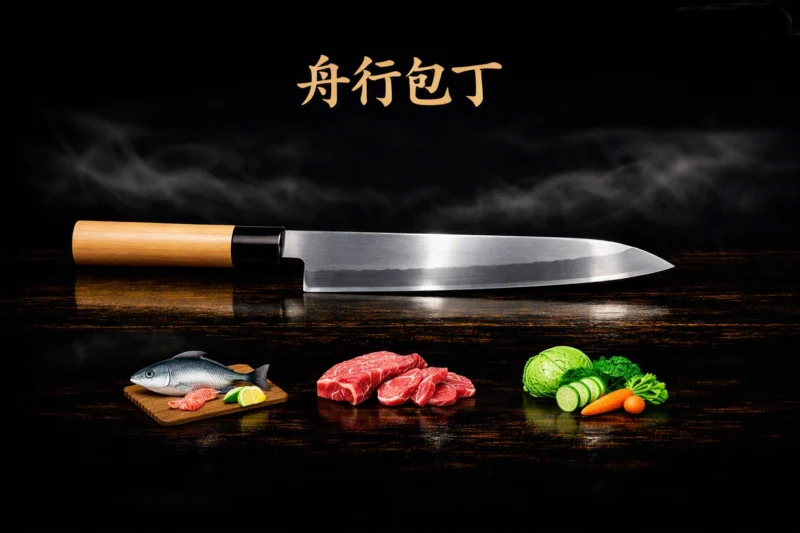
10. Funayuki Knife (舟行包丁)
The Japanese Fisherman’s Knife
The Funayuki has a fascinating history.
It was traditionally carried by Japanese fishermen.
The name means:
“Going by boat”
because it was used on fishing boats.
Funayuki Characteristics
It combines features of:
- Deba
- Utility knife
Compared with Deba:
- Lighter
- More versatile
- Easier for general tasks
Funayuki Uses
Excellent for:
✓ Cleaning fish
✓ Filleting
✓ Cutting seafood
✓ Outdoor cooking
✓ Boat fishing
Advantages
Pros:
✓ Historical Japanese design
✓ More versatile than Deba
✓ Good outdoor knife
Disadvantages
Cons:
✗ Less specialized than Deba
✗ Less common internationally
Summary: Traditional Japanese Fish Knives Comparison
| Knife | Best Use |
|---|---|
| Yanagiba | Sushi and sashimi |
| Deba | Whole fish preparation |
| Fuguhiki | Ultra-thin sashimi |
| Takohiki | Tokyo-style sashimi |
| Kiritsuke Yanagiba | Professional precision |
| Sujihiki | Modern fish slicing |
| Gyuto | General kitchen + fish |
| Usuba | Sushi vegetables |
| Ajikiri | Small fish |
| Funayuki | Fisherman-style preparation |
Best Japanese Fish Knives for Different Uses
There is no single perfect Japanese fish knife for every task.
The best choice depends on:
- What type of fish you prepare
- Whether you work with whole fish or fillets
- Sushi experience level
- How often you cook seafood
- Your sharpening skills
Below are the best Japanese knives for common fish preparation tasks.
Check Our Guide Best Kitchen Knives for Groomsmen Gifts
Best Japanese Fish Knife for Sushi
Winner: Yanagiba Knife
For traditional sushi preparation, the Yanagiba remains the gold standard.
Professional sushi chefs use it because it provides:
✓ Extremely clean slices
✓ Minimal damage to fish cells
✓ Beautiful presentation
✓ Consistent thickness
✓ Smooth texture
When preparing:
- Tuna sashimi
- Salmon sashimi
- Yellowtail
- Sea bream
- Nigiri toppings
the Yanagiba allows the chef to create precise cuts with a single pulling motion.
Best Yanagiba Size for Sushi
Home Sushi Enthusiasts
Recommended:
240 mm Yanagiba
Advantages:
- Easier control
- Lower price
- Fits most kitchens
Serious Sushi Users
Recommended:
270 mm Yanagiba
This is often considered the ideal balance between:
- Cutting power
- Control
- Blade length
Professional Sushi Chefs
Recommended:
300–330 mm Yanagiba
Advantages:
- Longer slicing motion
- Better for large fish
- Traditional professional size
Best Japanese Knife for Sashimi
Winner: Yanagiba / Fuguhiki
For classic sashimi:
🏆 Yanagiba
For extremely thin precision slices:
🏆 Fuguhiki
Why Single-Bevel Japanese Fish Knives Are Preferred for Sashimi
Sashimi is not simply cutting fish into pieces.
The goal is:
- Preserve texture
- Maintain appearance
- Avoid crushing fibers
A sharp single-bevel knife creates a cleaner surface compared with a dull or unsuitable knife.
Best Japanese Knife for Ceviche
Winner: Sujihiki or Gyuto
This requires an important distinction.
Traditional Japanese sashimi knives were designed for:
- Raw fish
- Clean slicing
- Minimal manipulation
Ceviche is different.
The fish is affected by:
- Lime or lemon juice
- Salt
- Herbs
- Spices
- Marinade time
Because ceviche requires more versatility, many cooks prefer:
Sujihiki
Advantages:
✓ Long slicing blade
✓ Double bevel edge
✓ Easy handling
✓ Stainless steel options
Gyuto
Advantages:
✓ More versatile
✓ Good for portioning fish
✓ Useful for all kitchen tasks
Best Japanese Knife for Salmon
Salmon is one of the most popular fish for home preparation.
Recommended knives:
1. Sujihiki
Best overall choice.
Why:
- Long clean slices
- Excellent for salmon portions
- Easy technique
2. Yanagiba
Best for:
- Traditional salmon sashimi
- Sushi preparation
3. Gyuto
Best for:
- Home cooks who want one knife
Best Japanese Knife for Tuna
For large fish such as tuna:
Professional choices:
- Yanagiba
- Kiritsuke Yanagiba
- Sujihiki
Large tuna blocks benefit from:
- Long blade
- Smooth pulling motion
- Extremely sharp edge
Best Japanese Knife for Whole Fish
Winner: Deba
When starting with a whole fish:
The Deba is the correct tool.
It can handle:
✓ Removing heads
✓ Opening fish
✓ Cutting through joints
✓ Filleting
A Yanagiba should not be used for these tasks.
The blade is designed for slicing, not impact.
Japanese Fish Knives Steel Guide
The steel of a Japanese fish knife strongly influences:
- Sharpness
- Edge retention
- Maintenance
- Durability
Japanese fish knives are available in:
- Carbon steel
- Stainless steel
- Powder metallurgy steel
Carbon Steel Japanese Fish Knives
Traditional sushi knives are often carbon steel.
Popular steels:
- White Steel #1
- White Steel #2
- Blue Steel #1
- Blue Steel #2
- Blue Super
White Steel (Shirogami)
White Steel #2
One of the most popular traditional steels.
Advantages:
✓ Extremely sharp
✓ Easy sharpening
✓ Excellent edge quality
✓ Traditional sushi performance
Disadvantages:
✗ Requires maintenance
✗ Can develop patina
✗ Can rust if neglected
White Steel #1
Higher carbon content than White #2.
Advantages:
✓ Higher hardness potential
✓ Excellent edge retention
Disadvantages:
✗ More demanding sharpening
Blue Steel (Aogami)
Blue steels add alloying elements for better durability.
Blue Steel #2
A favorite among professional Japanese chefs.
Advantages:
✓ Better edge retention than White Steel
✓ Good toughness
✓ Excellent sharpness
Blue Super Steel (Aogami Super)
A premium carbon steel.
Advantages:
✓ Very high hardness
✓ Long edge retention
✓ Excellent cutting performance
Disadvantages:
✗ Requires maintenance
Stainless Japanese Fish Knives Steels
Modern users often prefer stainless steels.
Advantages:
✓ Easier maintenance
✓ Rust resistance
✓ Better for home kitchens
Popular stainless steels:
VG10 Steel
One of the most popular Japanese knife steels.
Advantages:
✓ Stainless
✓ Good hardness
✓ Excellent kitchen performance
✓ Widely available
Typical hardness:
58–61 HRC
Ginsan (Silver 3)
A premium stainless steel.
Advantages:
✓ Similar sharpening feel to carbon steel
✓ Excellent corrosion resistance
✓ Very fine edge
Many professional chefs appreciate Ginsan because it combines traditional performance with easier maintenance.
AUS10 Steel
A practical Japanese stainless steel.
Advantages:
✓ Tough
✓ Easy sharpening
✓ Good corrosion resistance
Great for:
- Home cooks
- Everyday fish preparation
Check Our Guide AUS-10 Steel Review
SG2 / R2 Powder Steel
A premium powder metallurgy steel.
Advantages:
✓ Very high edge retention
✓ High hardness
✓ Excellent slicing performance
Typical hardness:
60–64 HRC
Disadvantages:
✗ More difficult sharpening
Check Our Guide SG2 Steel Review
Steel Comparison Table
| Steel | Sharpness | Edge Retention | Maintenance |
|---|---|---|---|
| White #2 | Excellent | Good | High |
| Blue #2 | Excellent | Very Good | High |
| Blue Super | Excellent | Excellent | High |
| VG10 | Very Good | Very Good | Low |
| Ginsan | Excellent | Good | Low |
| SG2/R2 | Excellent | Excellent | Low |
Blade Length Guide for Japanese Fish Knives
Blade length is very important.
Long blades allow:
- Longer slicing motion
- Fewer strokes
- Cleaner cuts
Yanagiba Sizes
210–240 mm
Best for:
- Beginners
- Home kitchens
- Small fish
270 mm
The most recommended size.
Good balance:
- Control
- Performance
- Price
300–330 mm
Best for:
- Professionals
- Large fish
- Sushi restaurants
Deba Sizes
Common sizes:
- 120 mm
- 150 mm
- 165 mm
- 180 mm
- 210 mm
Recommended:
Home cooks:
150–180 mm
Professionals:
180–210 mm
Sujihiki Sizes
Popular:
- 240 mm
- 270 mm
- 300 mm
For most home users:
270 mm is an excellent choice.
How to Sharpen Japanese Fish Knives
Sharpening is one of the most important skills for Japanese knife owners.
A premium knife cannot perform without proper maintenance.
Traditional Water Stone Sharpening
Japanese knives are usually sharpened with water stones.
Recommended progression:
1000 grit
For:
- Regular sharpening
- Restoring the edge
3000–6000 grit
For:
- Refining the edge
- Improving sharpness
8000+ grit
For:
- Polishing
- Professional finishing
Especially useful for:
- Yanagiba
- Sashimi knives
Sharpening Single-Bevel Knives
Single bevel knives require special attention.
The process:
- Sharpen the bevel side
- Remove the burr
- Maintain the ura side
- Polish the edge
Do not change the original geometry.
Check Our Guide All Kinds of Knife Sharpening Tools
Maintaining the Ura
The hollow back of traditional Japanese knives is important.
Over-polishing can damage:
- Cutting performance
- Blade geometry
Only flatten the ura when necessary.
Japanese Fish Knives Maintenance
Proper care dramatically increases knife life.
1. Hand Wash Only
Never put Japanese fish knives in a dishwasher.
Dishwashers can cause:
- Edge damage
- Corrosion
- Handle problems
2. Dry Immediately
Especially carbon steel knives.
After use:
- Wash
- Dry completely
- Store safely
3. Oil Carbon Steel Blades
For carbon steel knives:
Use:
- Camellia oil
- Food-safe mineral oil
This prevents rust.
4. Use Proper Storage
Recommended:
✓ Knife block
✓ Magnetic strip
✓ Saya wooden sheath
Avoid:
✗ Loose drawer storage
How to Choose Your First Japanese Fish Knife
If You Are a Sushi Lover
Choose:
🏆 Yanagiba
Best size:
270 mm
If You Prepare Whole Fish
Choose:
🏆 Deba
Best size:
165–180 mm
If You Want One Fish Knife for Everything
Choose:
🏆 Sujihiki
Why:
- Fish slicing
- Salmon
- Ceviche
- Smoked fish
- Meat slicing
If You Are a Beginner
Choose:
🏆 Gyuto
Reasons:
- Easier technique
- More versatile
- Double bevel edge
Are Japanese Fish Knives Worth Buying?
For seafood lovers, yes.
A quality Japanese fish knife offers:
✓ Better cutting performance
✓ Cleaner presentation
✓ More enjoyable preparation
✓ Long service life
However, the right knife matters more than the most expensive knife.
A professional Yanagiba is not automatically better than a quality Sujihiki for a home cook.
Frequently Asked Questions (FAQ)
What Japanese knife is best for sashimi?
The Yanagiba is the traditional choice for sashimi because of its long single-bevel blade and precision slicing ability.
What knife do sushi chefs use?
Professional sushi chefs commonly use:
- Yanagiba
- Deba
- Usuba
Each knife has a specific role.
What is the difference between Yanagiba and Deba?
Yanagiba:
- Slices fish
Deba:
- Breaks down whole fish
They are complementary knives.
Can a Yanagiba cut through bones?
No.
Yanagiba knives are slicing knives and should not be used for bones.
Use a Deba instead.
Is carbon steel better for sushi knives?
Carbon steel offers excellent sharpness and traditional performance, but stainless steel is easier to maintain.
What size Yanagiba should I buy?
For most users:
270 mm
For professionals:
300 mm+
Can you use a Gyuto for fish?
Yes.
A Gyuto is excellent for general fish preparation, but it cannot replace a professional Yanagiba for traditional sashimi.
What knife is best for ceviche?
A Sujihiki or Gyuto is usually better than a traditional Yanagiba because ceviche requires versatility.
What is the sharpest Japanese fish knife?
A properly sharpened Yanagiba or Fuguhiki can achieve some of the finest cuts in Japanese cuisine.
How do you sharpen a single bevel knife?
Use water stones:
- Sharpen the bevel
- Maintain the ura
- Remove burr carefully
What steel is best for Yanagiba?
Traditional choices:
- White Steel #2
- Blue Steel #2
- Blue Super
Modern options:
- Ginsan
- VG10
Final Verdict: Which Japanese Fish Knife Should You Choose?
Best Traditional Sushi Knife
🏆 Yanagiba
Best for:
Sushi and sashimi
Best Fish Butchering Knife
🏆 Deba
Best for:
Whole fish preparation
Best Precision Knife
🏆 Fuguhiki
Best for:
Ultra-thin sashimi
Best Modern Fish Knife
🏆 Sujihiki
Best for:
Most home cooks and professional kitchens
Best One-Knife Solution
🏆 Gyuto
Best for:
General cooking and fish preparation
Best Fisherman Knife
🏆 Funayuki
Best for:
Seafood and outdoor preparation
Conclusion
Japanese fish knives represent centuries of refinement in seafood preparation.
From the elegant Yanagiba used for perfect sashimi slices to the powerful Deba designed for breaking down whole fish, each knife has a specific purpose.
Choosing the right knife depends on your cooking style:
- Sushi and sashimi → Yanagiba
- Whole fish → Deba
- Ceviche and modern seafood → Sujihiki
- Everyday kitchen → Gyuto
- Professional precision → Fuguhiki or Kiritsuke Yanagiba
A Japanese fish knife is not simply a kitchen tool. It is an instrument designed to respect the ingredient and transform preparation into craftsmanship.
https://en.wikipedia.org/wiki/Deba_bōchō
Japanese Fish Knives