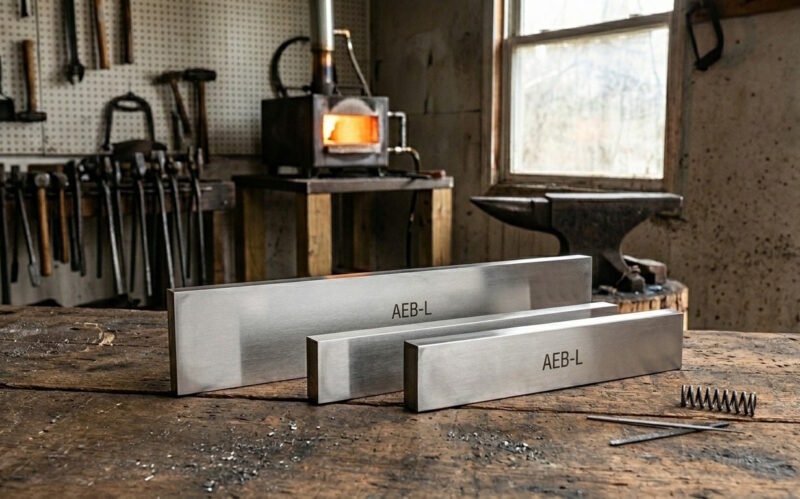
AEB-L Steel Review
An Independent Guide
If you’ve spent time researching kitchen knives, custom chef knives, or handmade knives, you’ve probably encountered steel names such as VG10, N690, MagnaCut, SG2, and 14C28N. However, among experienced knife makers and steel enthusiasts, one steel consistently receives praise despite lacking flashy marketing or exotic alloy content: AEB-L steel.
Many custom knife makers consider AEB-L one of the finest stainless knife steels ever developed. Its popularity isn’t based on extreme hardness or extraordinary wear resistance. Instead, AEB-L excels in the qualities that matter most in real-world cutting performance: toughness, edge stability, sharpenability, and fine-grain structure.
In fact, some knife makers believe AEB-L is closer to the “perfect kitchen knife steel” than many expensive powder metallurgy super steels.
But what exactly is AEB-L?
Why do so many custom makers choose it?
How does it compare to steels like 14C28N, VG10, N690, MagnaCut, and SG2?
In this comprehensive guide, we’ll examine everything you need to know about AEB-L steel and whether it’s the right choice for your next kitchen knife.
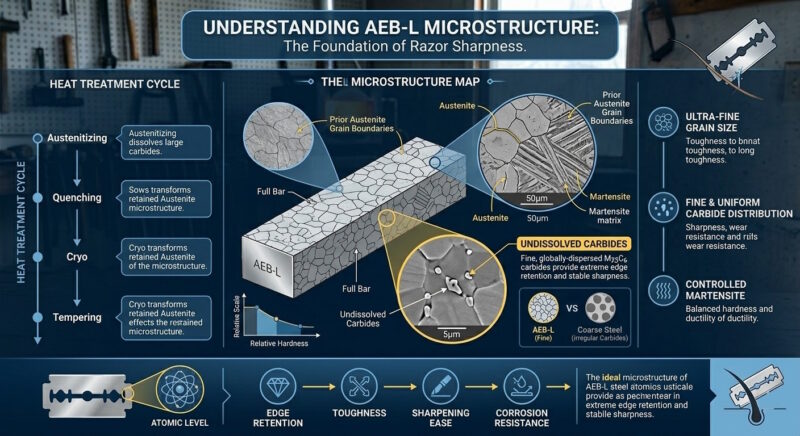
What Is AEB-L Steel?
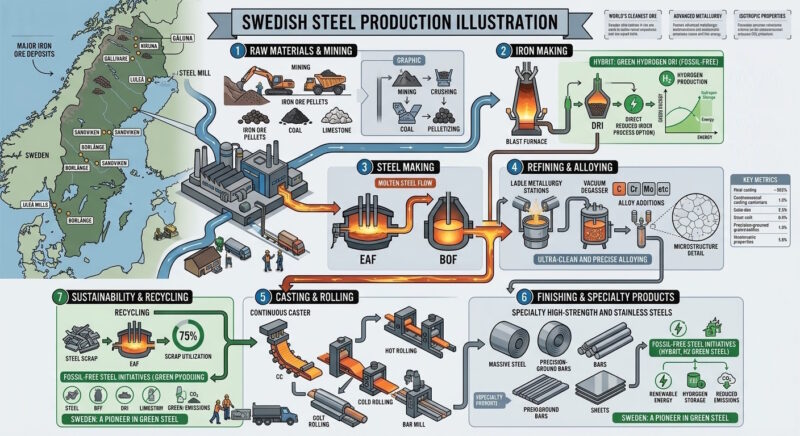
AEB-L is a stainless steel originally developed by the Swedish steel manufacturers.
Interestingly, it wasn’t originally designed for knives.
AEB-L was developed for:
- Razor blades
- Surgical cutting tools
- Precision cutting applications
These applications required:
- Extremely fine edges
- Excellent toughness
- High corrosion resistance
Those same characteristics happen to make AEB-L an exceptional knife steel.
Today, AEB-L is widely used for:
- Handmade chef knives
- Custom kitchen knives
- Hunting knives
- EDC knives
- Professional culinary tools
Its reputation continues to grow among serious knife enthusiasts.
AEB-L Steel Composition
Typical composition:
| Element | Percentage |
|---|---|
| Carbon | 0.67% |
| Chromium | 13.0% |
| Manganese | 0.6% |
| Silicon | 0.4% |
| Iron | Balance |
Compared to many modern stainless steels, AEB-L contains relatively simple alloy chemistry.
This simplicity is actually one of its greatest strengths.
Rather than relying on large volumes of carbides, AEB-L achieves performance through:
- Fine grain structure
- Balanced chemistry
- Excellent heat treatment response
Is AEB-L Stainless Steel?
Yes.
AEB-L is a true stainless steel.
Its chromium content exceeds 13%, providing excellent resistance to:
- Rust
- Corrosion
- Kitchen acids
- Moisture
For kitchen knife users, this means:
- Less maintenance
- Easier ownership
- Greater reliability
Unlike carbon steels such as 1095 or 52100, AEB-L does not require constant attention to prevent rust.
Check Our Guide Carbon Steel vs Stainless Steel Knives
Why Knife Makers Love AEB-L
Among custom knife makers, AEB-L enjoys almost legendary status.
Why?
Because it delivers a combination of characteristics that are rarely found together.
Fine Grain Structure
AEB-L is famous for its exceptionally fine grain.
Benefits include:
- Superior edge stability
- Cleaner sharpening
- Higher toughness
- Better cutting feel
Many makers compare AEB-L’s cutting characteristics to premium carbon steels.
Exceptional Toughness
AEB-L is one of the toughest stainless steels commonly used in knives.
Advantages include:
- Reduced chipping
- Better edge durability
- Greater reliability
This toughness allows knife makers to grind blades thinner without sacrificing performance.
Thin geometry is often more important than steel selection alone.
Easy Sharpening
One reason many professional chefs love AEB-L is its sharpening behavior.
Compared with wear-resistant steels like:
- M390
- S90V
- SG2
AEB-L sharpens significantly easier.
Benefits include:
- Faster sharpening
- Less stone wear
- Easier burr removal
- Exceptional edge refinement
Many users can achieve razor-level sharpness relatively quickly.
Typical Hardness of AEB-L
Most knives operate between:
58–63 HRC
Common ranges:
| Knife Type | Typical HRC |
|---|---|
| Kitchen Knife | 60–63 |
| Hunting Knife | 59–61 |
| EDC Knife | 60–62 |
| Custom Chef Knife | 61–63 |
At these hardness levels, AEB-L balances toughness and edge retention remarkably well.
Edge Retention
One area where buyers often misunderstand AEB-L is edge retention.
AEB-L does not compete with:
- M390
- S90V
- S110V
- Maxamet
in pure wear resistance.
However, edge retention is more complicated than wear resistance alone.
Because AEB-L has:
- Fine grain
- Excellent toughness
- Stable edges
it often performs better in real-world kitchen use than expected.
Many chefs report excellent working edge retention.
Cutting Performance
This is where AEB-L truly shines.
Knife enthusiasts frequently describe AEB-L as:
- Smooth
- Aggressive
- Precise
- Responsive
AEB-L can support extremely thin edge geometry.
This often results in superior cutting performance compared to harder but less stable steels.
Corrosion Resistance
Kitchen environments are demanding.
Knives encounter:
- Water
- Salt
- Citrus
- Tomatoes
- Vinegar
Fortunately, AEB-L performs exceptionally well.
Benefits include:
- Excellent rust resistance
- Easy maintenance
- Reliable performance
For most kitchen users, corrosion is rarely a concern.
Check Our Guide Kitchen Knife Care
AEB-L for Kitchen Knives
Many custom makers consider AEB-L one of the best kitchen knife steels available.
Why?
Because kitchen knives benefit most from:
- Fine edges
- Toughness
- Easy sharpening
- Corrosion resistance
AEB-L excels in all four categories.
For serious cooks, this combination is difficult to beat.
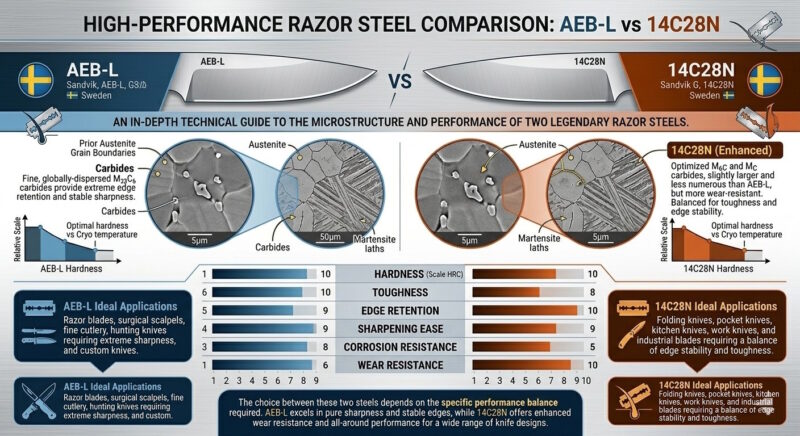
AEB-L vs 14C28N
This is one of the most common comparisons.
Both steels originate from Scandinavia.
AEB-L Advantages
- Slightly finer grain
- Excellent edge stability
- Traditional custom knife reputation
14C28N Advantages
- Slightly better corrosion resistance
- Slightly higher wear resistance
- Broader commercial availability
For kitchen knives, performance differences are often minimal.
Both are excellent choices.
Check Our Guide 14C28N and Other Swedish Knife Steels Review
AEB-L vs VG10
VG10 is extremely popular in Japanese kitchen knives.
VG10 Advantages
- Better wear resistance
- Longer edge retention
- Higher achievable hardness
AEB-L Advantages
- Better toughness
- Easier sharpening
- Finer edge stability
Many professional sharpeners actually prefer AEB-L.
Check Our Guide VG10 Steel Review
AEB-L vs N690
N690 is a favorite among European knife makers.
N690 Advantages
- Better wear resistance
- Strong corrosion resistance
AEB-L Advantages
- Better toughness
- Easier sharpening
- Finer cutting characteristics
Both steels perform very well in kitchen applications.
AEB-L vs SG2 (R2)
SG2 is a premium powder metallurgy steel.
SG2 Advantages
- Significantly longer edge retention
- Higher hardness
- Premium reputation
AEB-L Advantages
- Much easier sharpening
- Better toughness
- Lower cost
- Less chipping risk
For many cooks, AEB-L offers a more practical experience.
Check Our Guide Powder Steels for Kitchen Knives
AEB-L vs MagnaCut
This is a fascinating comparison.
MagnaCut Advantages
- Better wear resistance
- Better corrosion resistance
- Excellent toughness
AEB-L Advantages
- Easier sharpening
- Lower cost
- Proven track record
MagnaCut may represent the future of stainless steels, but AEB-L remains one of the best values available.
Common Myths About AEB-L
Myth #1: AEB-L Is Too Simple
False.
Its simple chemistry is one of its strengths.
Myth #2: Modern Powder Steels Are Always Better
False.
Many custom makers still prefer AEB-L for kitchen knives.
Myth #3: AEB-L Has Poor Edge Retention
False.
While not a super steel, it performs exceptionally well in practical cutting.
Myth #4: AEB-L Is Only for Beginners
False.
Many high-end custom knives use AEB-L.
Best Uses for AEB-L
Excellent for:
- Chef knives
- Santoku knives
- Bunka knives
- Gyuto knives
- Petty knives
- EDC knives
- Hunting knives
Less ideal for:
- Users seeking maximum edge retention
- Marketing-focused “super steel” buyers
AEB-L Performance Ratings
| Property | Rating |
|---|---|
| Toughness | 9/10 |
| Corrosion Resistance | 9/10 |
| Sharpenability | 10/10 |
| Edge Retention | 7/10 |
| Edge Stability | 10/10 |
| Kitchen Performance | 10/10 |
Quick Questions and Answers
Is AEB-L a good knife steel?
Yes. Many experts consider it one of the best stainless steels for kitchen knives.
Is AEB-L stainless?
Yes. It offers excellent corrosion resistance.
Does AEB-L hold an edge well?
Yes. While not a super steel, it provides strong real-world edge retention.
Is AEB-L easy to sharpen?
Absolutely. It is one of the easiest premium stainless steels to sharpen.
Is AEB-L better than VG10?
Neither is universally better. AEB-L offers greater toughness and easier sharpening, while VG10 provides more wear resistance.
Is AEB-L good for chef knives?
Many custom makers consider it one of the best chef knife steels available.
Final Verdict
AEB-L may not have the marketing appeal of modern powder metallurgy super steels, but it remains one of the most respected knife steels in the industry.
Its combination of:
- Fine grain structure
- Exceptional toughness
- Excellent corrosion resistance
- Easy sharpening
- Outstanding cutting performance
makes it a superb choice for kitchen knives.
For cooks who value real-world performance over specification sheets, AEB-L offers an outstanding balance of characteristics that few steels can match.
More than half a century after its development, AEB-L continues to prove that thoughtful metallurgy and practical performance often matter more than flashy alloy names.
FAQ
What is AEB-L steel?
AEB-L is a Swedish stainless steel originally developed for razor blades and now widely used in high-performance knives.
Is AEB-L good for kitchen knives?
Yes. It offers excellent toughness, corrosion resistance, and sharpening characteristics.
Is AEB-L stainless steel?
Yes. AEB-L contains sufficient chromium to provide strong corrosion resistance.
How does AEB-L compare to 14C28N?
Both are excellent steels. AEB-L offers slightly finer grain structure, while 14C28N offers slightly greater corrosion resistance.
Is AEB-L better than VG10?
AEB-L provides greater toughness and easier sharpening, while VG10 generally offers longer edge retention.
Why do custom knife makers use AEB-L?
Because it combines fine grain structure, toughness, corrosion resistance, and exceptional cutting performance.
https://yashkadesigns.com/exclusive-chef-knives
This article is for independent informational purposes only and is not affiliated with, sponsored by, or endorsed by any steel manufacturer. All product names, trademarks, and registered trademarks are the property of their respective owners.
aeb-l-steel-review