Seafood Recipes
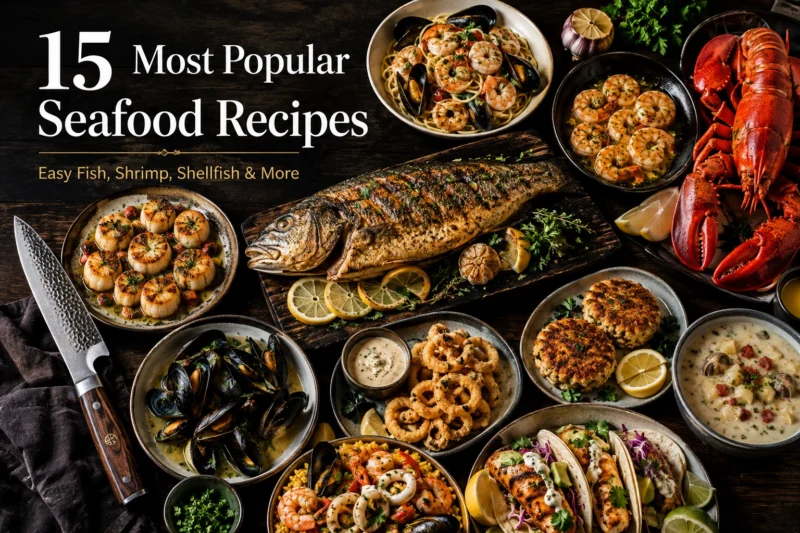
Seafood is one of the most versatile ingredients in the kitchen. From simple pan-seared salmon and garlic butter shrimp to classic seafood pasta, grilled lobster, crispy calamari, and comforting fish stew, there are countless ways to prepare fish and shellfish.
The best seafood recipes often have something in common: they don’t require complicated ingredients or elaborate techniques. Fresh seafood, a few complementary seasonings, the right cooking temperature, and proper preparation can produce restaurant-quality results at home.
This collection of 15 popular seafood recipes covers a wide variety of fish, crustaceans, mollusks, and shellfish. You’ll find quick weeknight meals, elegant dishes for entertaining, Mediterranean-inspired recipes, classic comfort food, and recipes perfect for grilling or outdoor cooking.
Before cooking, it is worth learning how to properly clean, portion, fillet, and prepare seafood. For detailed preparation techniques, see our complete How to Prepare and Cut Seafood guide, which covers fish, shrimp, crab, lobster, mussels, oysters, squid, scallops, and other seafood.
Whether you’re cooking salmon for dinner, making garlic butter shrimp, preparing a seafood pasta, or grilling lobster for a special occasion, these recipes will help you get the most from fresh seafood.
If you regularly prepare fish for sushi, sashimi, ceviche, or other seafood dishes, choosing the right specialized knife can make a significant difference in precision and control. For a detailed comparison of Japanese fish knives, their different blade styles, and the best options for specific preparation techniques, see our Japanese Fish Knives: Complete Guide to the Best Knives for Sushi, Sashimi, Ceviche & Fish Preparation.
1. Garlic Butter Shrimp
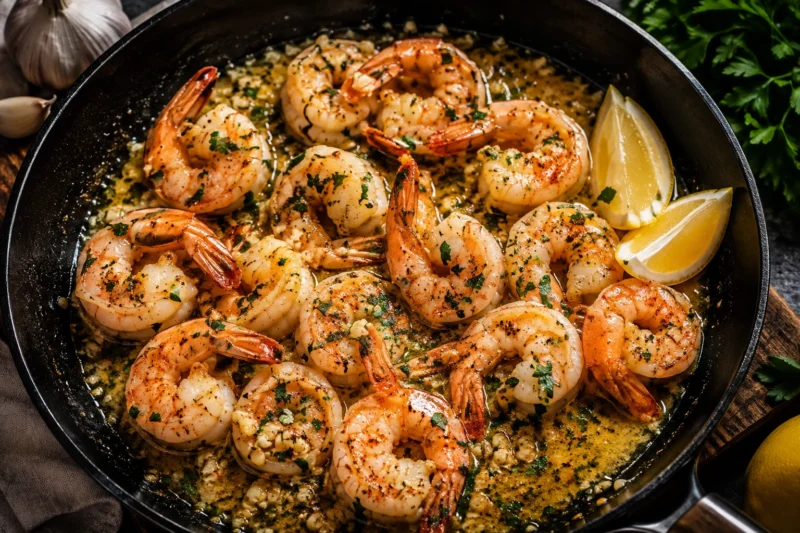
Garlic butter shrimp is one of the easiest and most popular seafood recipes to make at home. Shrimp cook in only a few minutes, making this dish ideal for a quick weeknight dinner.
The combination of butter, garlic, lemon, and fresh herbs creates a rich but bright sauce that works beautifully with shrimp.
Ingredients
- 450 g large shrimp, peeled and deveined
- 4 tablespoons butter
- 4–5 garlic cloves, finely minced
- 1 tablespoon olive oil
- 1 tablespoon fresh lemon juice
- 2 tablespoons chopped parsley
- ½ teaspoon paprika
- Salt
- Freshly ground black pepper
- Lemon wedges for serving
Instructions
Pat the shrimp dry with paper towels. Removing excess moisture helps them sear rather than steam.
Heat the olive oil and half of the butter in a large skillet over medium-high heat. Add the shrimp in a single layer.
Cook for approximately 1–2 minutes on the first side. Turn the shrimp and add the garlic, remaining butter, and paprika.
Continue cooking until the shrimp are opaque and just cooked through. Avoid overcooking them because shrimp can become rubbery surprisingly quickly.
Remove the skillet from the heat and add lemon juice and parsley.
Season with salt and freshly ground black pepper and serve immediately.
Serving Ideas
Garlic butter shrimp are excellent with:
- crusty bread
- steamed rice
- pasta
- roasted vegetables
- couscous
- a fresh green salad
For a richer meal, spoon the garlic butter sauce over pasta or rice.
2. Classic Fish and Chips
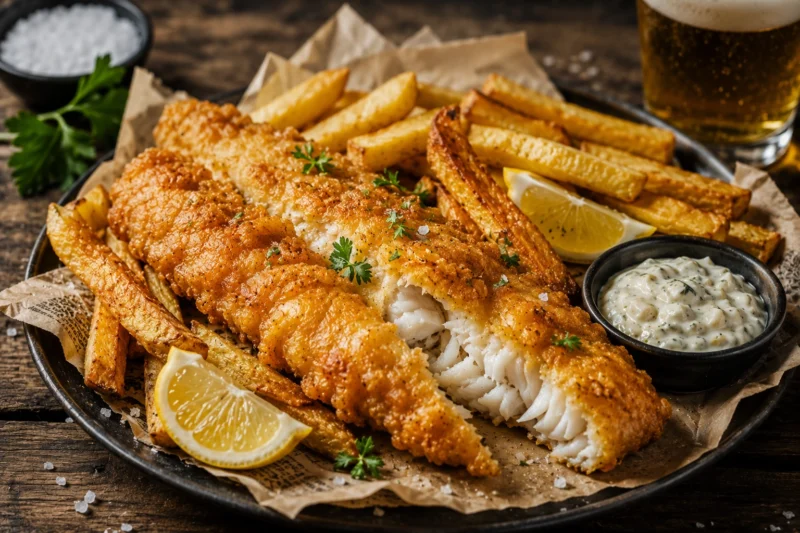
Fish and chips is one of the world’s best-known seafood dishes. The traditional version combines a tender white fish fillet with a crisp, golden batter and fries.
Cod is a classic choice, but haddock, pollock, or another firm white fish can also work.
Ingredients
For the fish:
- 4 white fish fillets
- 1 cup all-purpose flour
- ½ cup cornstarch
- 1 teaspoon baking powder
- 1 cup cold sparkling water or beer
- Salt
- Black pepper
- Oil for frying
For the fries:
- 4 large potatoes
- Salt
- Oil for frying
Instructions
Cut the fish into manageable portions and pat them thoroughly dry.
Combine flour, cornstarch, baking powder, salt, and pepper. Gradually whisk in the cold sparkling water or beer until a smooth batter forms.
Cut the potatoes into thick fries and rinse them in cold water. Dry thoroughly.
Heat frying oil to approximately 175–180°C.
Lightly coat each fish fillet with flour, then dip it into the batter. Carefully place it into the hot oil.
Fry until the exterior is crisp and golden and the fish is cooked through.
Fry the potatoes separately until golden and crisp.
Serve immediately with lemon wedges, tartar sauce, and malt vinegar if desired.
The Secret to Crisp Batter
The batter should remain cold while the oil is hot. This temperature contrast helps create a lighter and crispier crust.
3. Classic Seafood Pasta
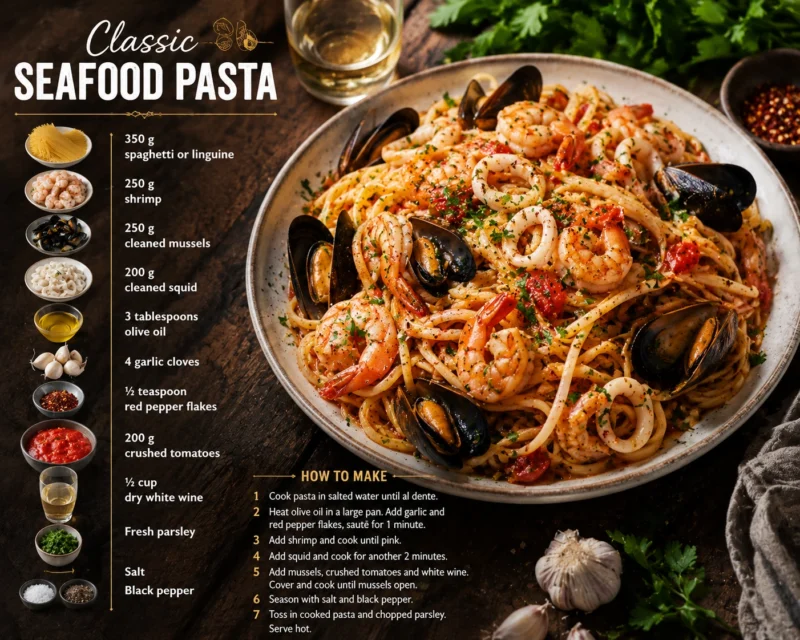
Seafood pasta is an elegant dish that can be prepared surprisingly quickly. Shrimp, mussels, clams, squid, and scallops can all work together in a tomato, garlic, or white-wine sauce.
This version uses a combination of shrimp, mussels, and squid.
Ingredients
- 350 g spaghetti or linguine
- 250 g shrimp
- 250 g cleaned mussels
- 200 g cleaned squid
- 3 tablespoons olive oil
- 4 garlic cloves
- ½ teaspoon red pepper flakes
- 200 g crushed tomatoes
- ½ cup dry white wine
- Fresh parsley
- Salt
- Black pepper
Instructions
Cook the pasta in salted water until just shy of al dente. Reserve approximately 1 cup of pasta water before draining.
Heat olive oil in a large skillet. Add garlic and red pepper flakes and cook briefly.
Add the white wine and tomatoes. Simmer for several minutes.
Add the mussels and cover the pan. Cook until the shells open.
Add the shrimp and sliced squid. Cook for several minutes until the seafood is just cooked.
Add the drained pasta and toss everything together.
Use a small amount of reserved pasta water to loosen the sauce if necessary.
Finish with fresh parsley and a drizzle of olive oil.
Important Tip
Different seafood cooks at different speeds. Add delicate ingredients according to their cooking time rather than putting everything into the pan simultaneously.
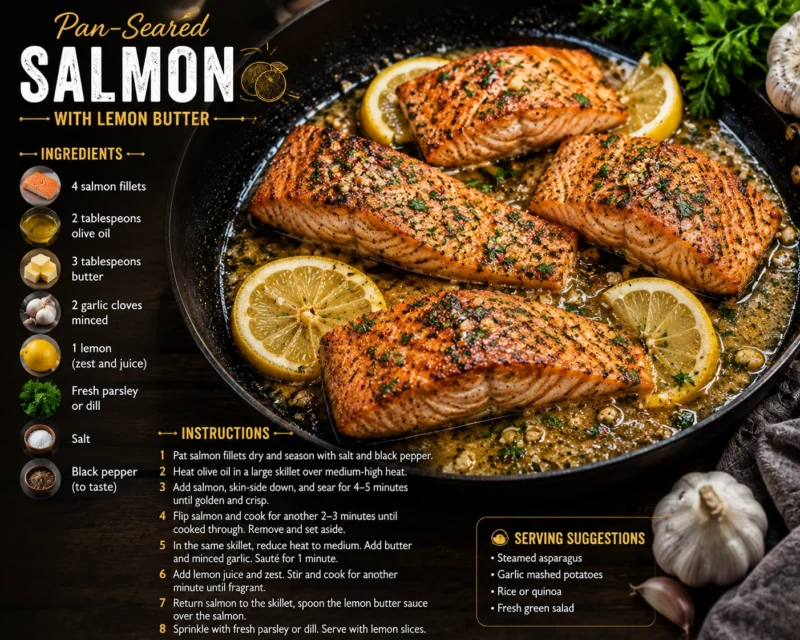
4. Pan-Seared Salmon with Lemon Butter
Pan-seared salmon is one of the simplest ways to prepare fish while producing a beautifully browned exterior and tender center.
Ingredients
- 4 salmon fillets
- 2 tablespoons olive oil
- 3 tablespoons butter
- 2 garlic cloves
- 1 lemon
- Fresh parsley or dill
- Salt
- Black pepper
Instructions
Pat the salmon dry and season both sides with salt and pepper.
Heat olive oil in a skillet over medium-high heat.
Place the salmon skin-side down if the fillets have skin. Press gently with a spatula for the first few seconds to prevent curling.
Cook until the skin becomes crisp and the salmon is mostly cooked from the bottom upward.
Turn the fillets and add butter and garlic.
Spoon the melted butter over the salmon repeatedly while it finishes cooking.
Add fresh lemon juice and herbs just before serving.
What to Serve with Salmon
Try serving it with roasted potatoes, asparagus, green beans, rice, or a simple cucumber salad.
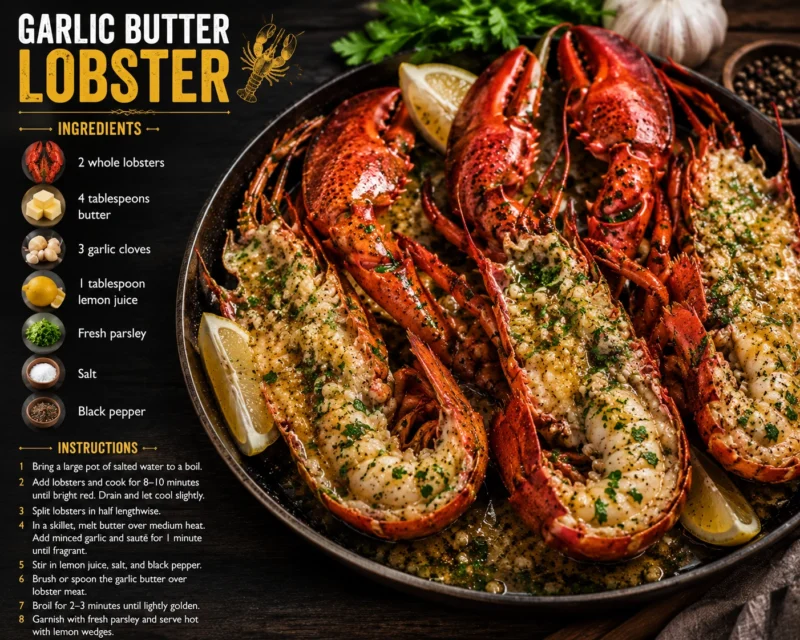
5. Garlic Butter Lobster
Lobster is often associated with special occasions, but a simple garlic butter preparation allows the natural sweetness of the meat to remain the focus.
Ingredients
- 2 whole lobsters
- 4 tablespoons butter
- 3 garlic cloves
- 1 tablespoon lemon juice
- Fresh parsley
- Salt
- Black pepper
Instructions
Split the lobster carefully and expose the meat.
Melt butter in a small saucepan and add minced garlic. Cook gently until fragrant.
Brush the lobster meat generously with garlic butter.
Grill or broil until the meat becomes opaque and lightly browned.
Finish with lemon juice, parsley, and additional melted butter.
Cooking Tip
Lobster meat can become tough when overcooked. Watch it carefully during grilling or broiling and remove it as soon as it is cooked through.
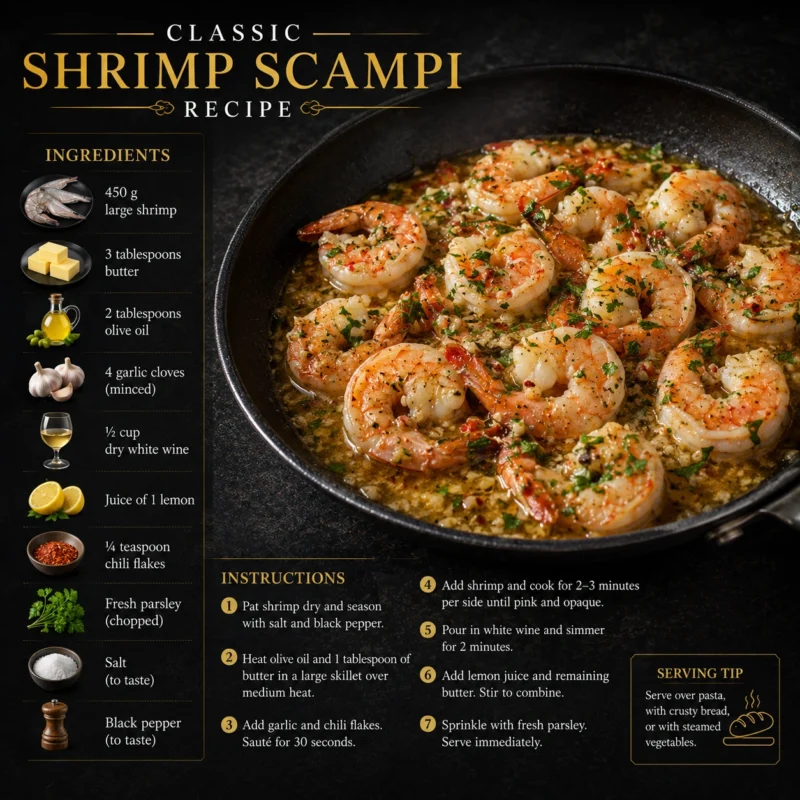
6. Classic Shrimp Scampi
Shrimp scampi combines shrimp with butter, garlic, lemon, white wine, and parsley. It is one of the best recipes when you want a restaurant-style seafood dinner without spending hours in the kitchen.
Ingredients
- 450 g large shrimp
- 3 tablespoons butter
- 2 tablespoons olive oil
- 4 garlic cloves
- ½ cup dry white wine
- Juice of 1 lemon
- ¼ teaspoon chili flakes
- Fresh parsley
- Salt
- Black pepper
Instructions
Heat olive oil and one tablespoon of butter in a skillet.
Add shrimp and cook briefly on both sides.
Remove the shrimp and set aside.
Add garlic and chili flakes to the skillet. Cook for approximately 30 seconds.
Pour in the white wine and lemon juice. Simmer for several minutes.
Add the remaining butter and stir until the sauce becomes glossy.
Return the shrimp to the pan and toss with the sauce.
Finish with parsley and serve over pasta, rice, or toasted bread.
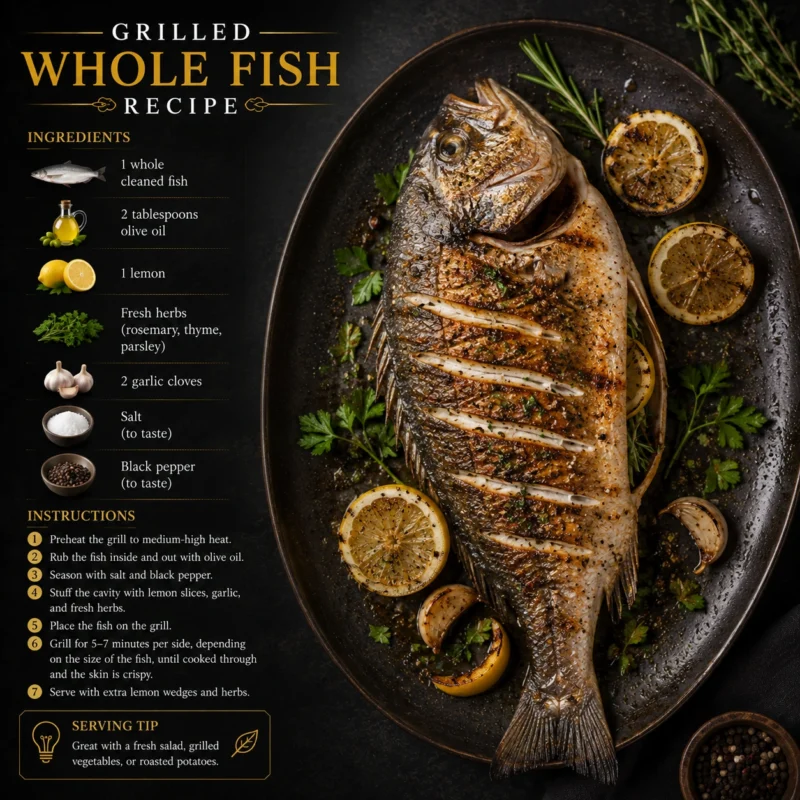
7. Grilled Whole Fish
Grilling a whole fish is an excellent way to showcase fresh seafood. Cooking the fish whole helps protect the flesh and produces an impressive presentation.
Sea bass, sea bream, branzino, snapper, and similar fish work particularly well.
Ingredients
- 1 whole cleaned fish
- 2 tablespoons olive oil
- 1 lemon
- Fresh herbs
- 2 garlic cloves
- Salt
- Black pepper
Instructions
Make several diagonal cuts through the skin and into the flesh on both sides of the fish.
Rub the fish with olive oil, salt, and pepper.
Place lemon slices, garlic, and herbs inside the cavity.
Preheat the grill and oil the grates.
Grill the fish until the skin is crisp and the flesh is cooked through, turning carefully when necessary.
Serve with fresh lemon and olive oil.
Preparation Tip
Properly scaling and gutting the fish before grilling makes the finished dish much easier to eat. For detailed instructions, see our seafood preparation guide.
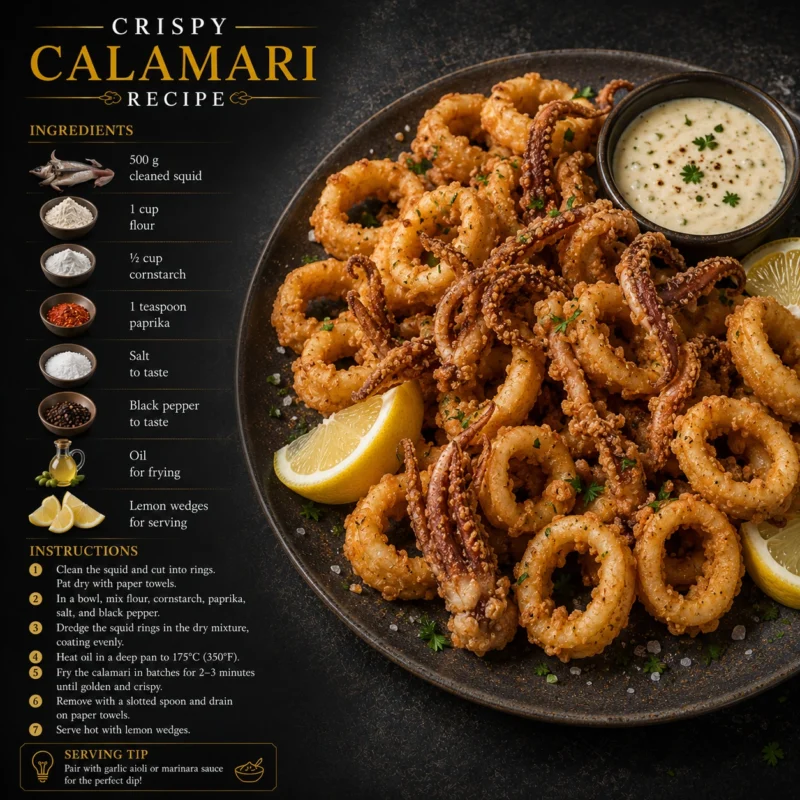
8. Crispy Calamari
Crispy fried calamari is a popular appetizer that is particularly good when served immediately with lemon and a dipping sauce.
Ingredients
- 500 g cleaned squid
- 1 cup flour
- ½ cup cornstarch
- 1 teaspoon paprika
- Salt
- Black pepper
- Oil for frying
- Lemon wedges
Instructions
Cut the cleaned squid tubes into rings and leave the tentacles whole or cut them into smaller pieces.
Pat the squid extremely dry.
Combine flour, cornstarch, paprika, salt, and pepper.
Toss the squid in the flour mixture and shake off excess coating.
Heat oil to approximately 175–180°C.
Fry the squid in small batches until crisp and lightly golden.
Drain on a rack or paper towels and season immediately.
Serve with lemon wedges and your favorite dipping sauce.
Avoiding Rubbery Calamari
Squid generally benefits from either very quick cooking or much longer slow cooking. For fried calamari, high heat and short cooking time are the goal.
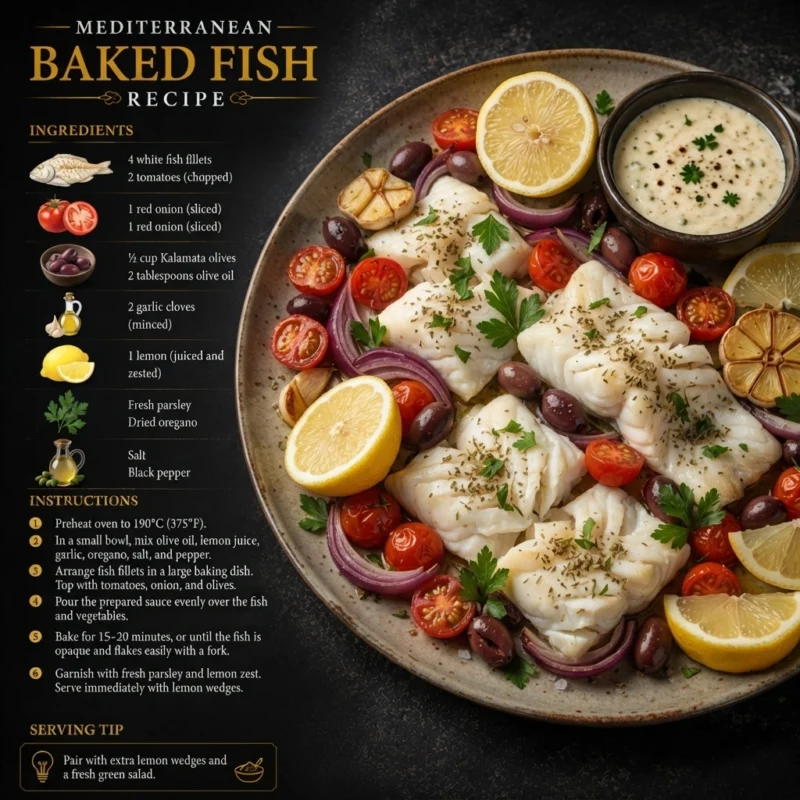
9. Mediterranean Baked Fish
Mediterranean-style baked fish is simple, healthy, and full of fresh flavors.
Ingredients
- 4 white fish fillets
- 2 tomatoes
- 1 red onion
- ½ cup olives
- 2 tablespoons olive oil
- 2 garlic cloves
- 1 lemon
- Fresh parsley
- Dried oregano
- Salt
- Black pepper
Instructions
Preheat the oven to approximately 200°C.
Place sliced tomatoes and onion in a baking dish.
Season the fish with salt, pepper, and oregano.
Place the fillets over the vegetables.
Add garlic, olives, lemon slices, and olive oil.
Bake until the fish is opaque and flakes easily with a fork.
Finish with fresh parsley and lemon juice.
This recipe works particularly well with sea bass, cod, snapper, sea bream, or other firm white fish.
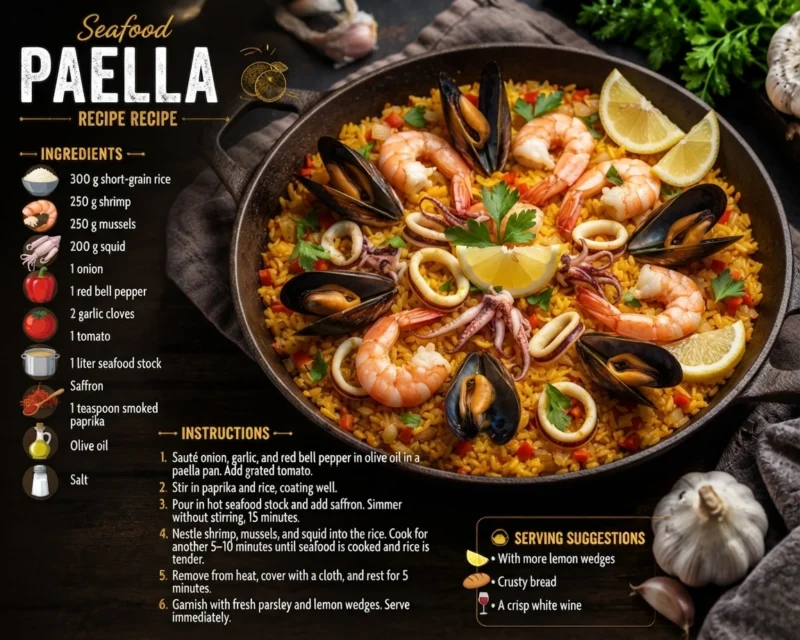
10. Seafood Paella
Paella is one of the most recognizable seafood dishes and an excellent choice when you’re cooking for a group.
The combination of rice, seafood, saffron, vegetables, and aromatic stock produces a deeply flavorful one-pan meal.
Ingredients
- 300 g short-grain rice
- 250 g shrimp
- 250 g mussels
- 200 g squid
- 1 onion
- 1 red bell pepper
- 2 garlic cloves
- 1 tomato
- 1 liter seafood stock
- Saffron
- 1 teaspoon smoked paprika
- Olive oil
- Salt
- Parsley
- Lemon
Instructions
Heat olive oil in a wide paella pan.
Add onion and bell pepper and cook until softened.
Add garlic, tomato, and smoked paprika.
Stir in the rice and coat it with the aromatic mixture.
Add hot seafood stock and saffron.
Arrange the seafood over the rice.
Cook without excessive stirring until the rice absorbs the stock and develops a flavorful crust on the bottom.
Rest the paella for several minutes before serving.
Garnish with parsley and lemon wedges.
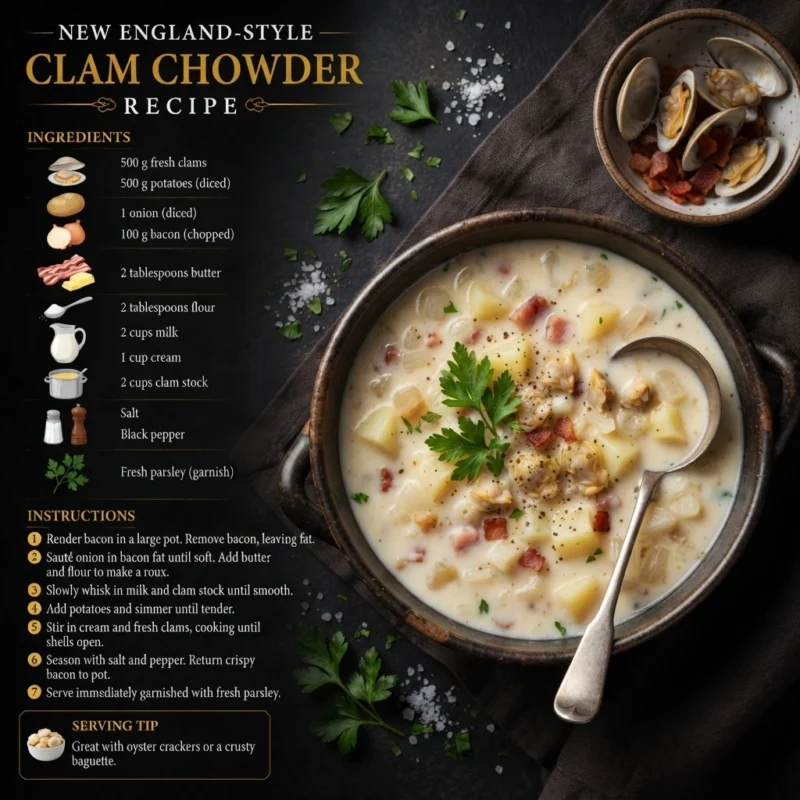
11. New England-Style Clam Chowder
Clam chowder is a comforting seafood soup made with clams, potatoes, onions, and a creamy broth.
Ingredients
- 500 g fresh clams
- 500 g potatoes
- 1 onion
- 100 g bacon
- 2 tablespoons butter
- 2 tablespoons flour
- 2 cups milk
- 1 cup cream
- 2 cups clam stock
- Salt
- Black pepper
- Fresh parsley
Instructions
Cook the bacon in a large pot until crisp.
Remove some bacon for garnish and leave the rendered fat in the pot.
Add onion and butter and cook until softened.
Sprinkle in the flour and stir to form a light roux.
Gradually add clam stock, stirring constantly.
Add diced potatoes and simmer until tender.
Add milk and cream.
Finally, add the cleaned clams and cook until they open and are cooked through.
Season with salt and pepper.
Serve hot with parsley and crispy bacon.
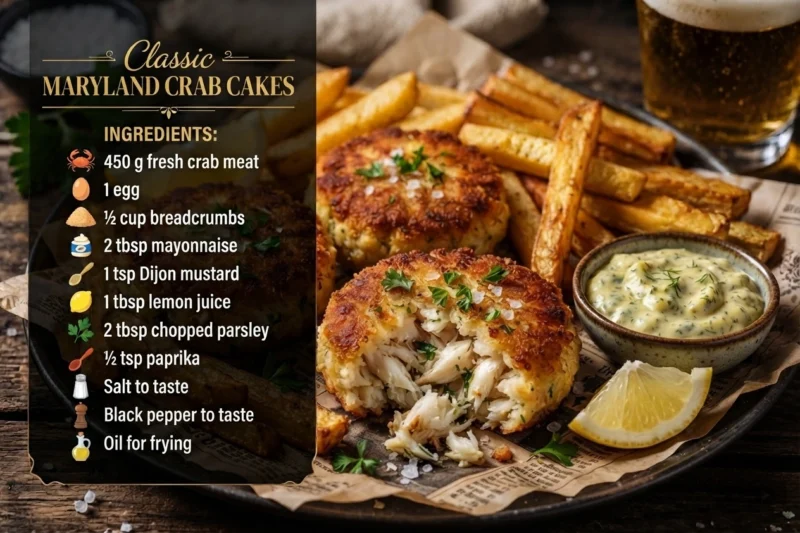
12. Crab Cakes
Crab cakes are an excellent way to turn fresh crab meat into a crisp, flavorful appetizer or main course.
Ingredients
- 450 g fresh crab meat
- 1 egg
- ½ cup breadcrumbs
- 2 tablespoons mayonnaise
- 1 teaspoon Dijon mustard
- 1 tablespoon lemon juice
- 2 tablespoons chopped parsley
- ½ teaspoon paprika
- Salt
- Black pepper
- Oil for frying
Instructions
Gently combine crab meat, egg, breadcrumbs, mayonnaise, mustard, lemon juice, parsley, and paprika.
Avoid overmixing because keeping some larger pieces of crab intact creates a better texture.
Form the mixture into small patties.
Refrigerate for approximately 20–30 minutes to help them hold their shape.
Heat a small amount of oil in a skillet.
Cook the crab cakes until golden brown on both sides and heated through.
Serve with lemon wedges, salad, or a creamy dipping sauce.
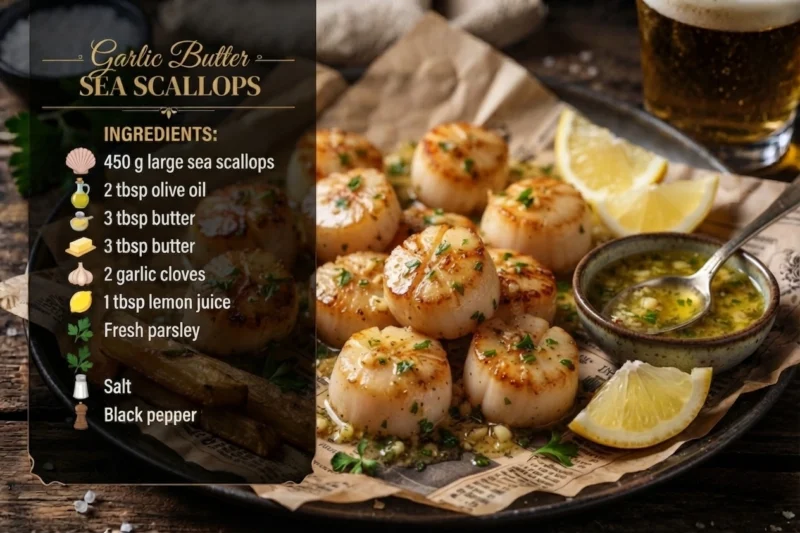
13. Garlic Butter Scallops
Scallops cook quickly and are particularly good when seared at high heat.
The goal is a deeply browned exterior with a tender, delicate center.
Ingredients
- 450 g large sea scallops
- 2 tablespoons olive oil
- 3 tablespoons butter
- 2 garlic cloves
- 1 tablespoon lemon juice
- Fresh parsley
- Salt
- Black pepper
Instructions
Pat the scallops extremely dry.
Season with salt and pepper.
Heat olive oil in a skillet over medium-high to high heat.
Place the scallops in the pan without overcrowding.
Sear until a deep golden crust develops.
Turn and add butter and garlic.
Baste the scallops with the melted butter until cooked through.
Finish with lemon juice and parsley.
The Most Important Scallop Tip
Moisture is the enemy of a good sear. Drying the scallops thoroughly before cooking is one of the most important steps.
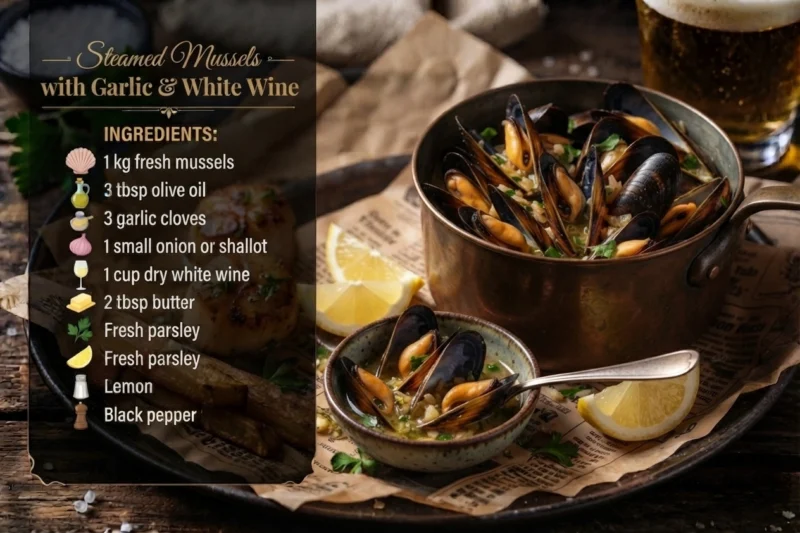
14. Steamed Mussels with Garlic and White Wine
Steamed mussels are fast, inexpensive compared with many other seafood options, and perfect for serving with crusty bread.
Ingredients
- 1 kg fresh mussels
- 3 tablespoons olive oil
- 3 garlic cloves
- 1 small onion or shallot
- 1 cup dry white wine
- 2 tablespoons butter
- Fresh parsley
- Lemon
- Black pepper
Instructions
Clean the mussels and remove the beards.
Heat olive oil in a large pot.
Add onion and garlic and cook until fragrant.
Pour in the white wine.
Add the mussels and cover immediately.
Steam for several minutes until the shells open.
Discard any mussels that remain closed after cooking.
Stir in butter and fresh parsley.
Serve immediately with toasted bread for dipping into the flavorful broth.
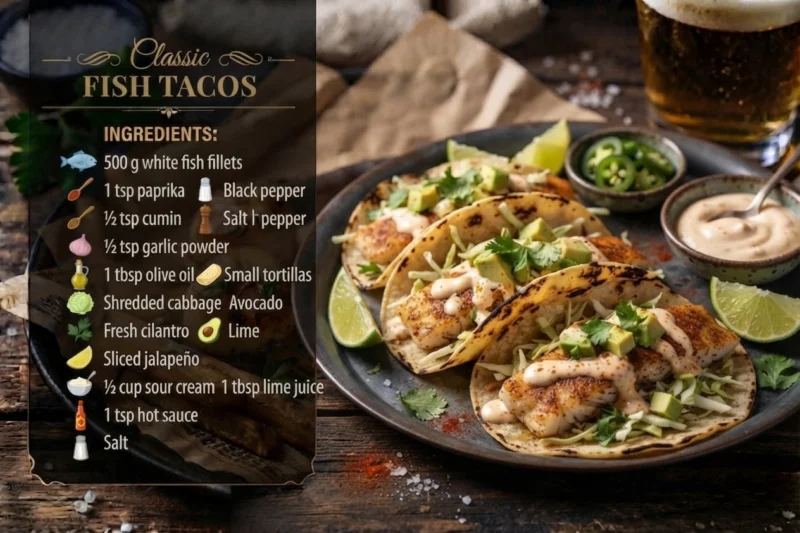
15. Classic Fish Tacos
Fish tacos combine crispy or grilled fish with fresh vegetables, lime, herbs, and a creamy sauce.
They’re versatile enough for a quick family dinner but impressive enough for entertaining.
Ingredients
For the fish:
- 500 g white fish fillets
- 1 teaspoon paprika
- ½ teaspoon cumin
- ½ teaspoon garlic powder
- Salt
- Black pepper
- 1 tablespoon olive oil
For serving:
- Small tortillas
- Shredded cabbage
- Avocado
- Fresh cilantro
- Lime
- Sliced jalapeño
Simple sauce:
- ½ cup sour cream
- 1 tablespoon lime juice
- 1 teaspoon hot sauce
- Salt
Instructions
Cut the fish into manageable portions.
Combine paprika, cumin, garlic powder, salt, and pepper.
Coat the fish with the seasoning mixture.
Heat olive oil in a skillet and cook the fish until browned and cooked through.
Break the fish into large pieces.
Warm the tortillas.
Fill each tortilla with fish, cabbage, avocado, cilantro, and jalapeño.
Mix the sauce ingredients and drizzle over the tacos.
Finish with fresh lime juice.
How to Choose Seafood for These Recipes
The quality of the seafood can have as much influence on the final dish as the recipe itself.
When buying fresh fish, look for firm flesh, a clean fresh smell, and bright, clear eyes when purchasing whole fish. The skin should appear moist and naturally vibrant rather than dull or excessively dry.
For shrimp, shells should generally appear firm and intact. Avoid seafood with a strong unpleasant odor.
Fresh mussels and clams should be alive before cooking. Their shells should be closed or close when tapped. Any shellfish that remains open and does not respond should be discarded.
When buying scallops, look for a fresh, clean aroma and firm texture.
For squid, the body should be firm and the skin should appear fresh and moist.
Good seafood preparation starts before the cooking process. Proper cleaning, trimming, portioning, and cutting can make cooking significantly easier.
Check Our Guide How to Prepare Fish for Sushi, Sashimi & Ceviche
Essential Knife Skills for Seafood Recipes
A good seafood recipe begins with proper preparation.
Different seafood requires different cutting techniques. A chef’s knife can handle many general tasks, while a flexible fillet knife is better suited to removing fish fillets. A petty knife can be useful for smaller ingredients and detail work, while a boning knife can help with trimming.
For seafood preparation, some of the most useful skills include:
- scaling whole fish
- gutting fish
- removing fins
- filleting fish
- portioning fish
- removing shrimp shells
- deveining shrimp
- cleaning squid
- trimming scallops
- cleaning mussels
- preparing crab
- splitting lobster
If you are preparing whole fish or several types of seafood at home, keeping your knives properly sharpened is particularly important. A sharp knife provides greater control and makes precise cuts easier.
For a detailed step-by-step explanation, see our How to Prepare and Cut Seafood guide.
Seafood Cooking Tips
Don’t Overcook Seafood
One of the biggest mistakes when preparing seafood is cooking it for too long.
Shrimp, scallops, squid, and fish can all become dry or rubbery when exposed to excessive heat.
Pay attention to texture rather than simply following a timer.
Dry Seafood Before Searing
Moisture prevents browning.
Before pan-searing fish, scallops, or shrimp, pat them thoroughly dry with paper towels.
This allows the surface to develop a much better crust.
Don’t Overcrowd the Pan
Too much seafood in a pan lowers the temperature and creates steam.
Cook seafood in batches when necessary.
This is particularly important when preparing scallops, shrimp, and calamari.
Use Acid to Brighten Seafood
Lemon, lime, vinegar, and other acidic ingredients can help balance rich seafood dishes.
A small amount of lemon juice can transform garlic butter shrimp, grilled fish, scallops, and lobster.
Let the Seafood Be the Star
Seafood generally doesn’t require an enormous number of spices.
Garlic, lemon, herbs, olive oil, butter, chili, paprika, and black pepper are enough to create many excellent dishes.
Seafood Cooking Methods: 7 Best Ways to Cook Fish and Shellfish
The cooking method you choose can dramatically change the texture, flavor, and appearance of seafood. Delicate fish, firm shellfish, shrimp, scallops, squid, and lobster all respond differently to heat. Understanding the basic cooking methods makes it easier to choose the right technique for each seafood recipe.
1. Pan-Searing
Pan-searing is one of the best methods for fish fillets, scallops, shrimp, and other seafood that benefits from a browned exterior.
The key is to start with a hot pan and properly dried seafood. Excess moisture creates steam and prevents the surface from developing a golden crust.
For fish, heat a small amount of oil in a skillet over medium-high heat. Place the fish skin-side down when applicable and allow it to cook without moving it too much. Once the surface develops a good crust, turn the fish and finish cooking.
Scallops benefit particularly well from high-heat searing. Pat them completely dry before placing them in the pan and avoid overcrowding. A golden-brown crust combined with a tender center is the goal.
Butter, garlic, lemon, herbs, and olive oil can be added near the end of cooking to create a flavorful finishing sauce.
2. Baking
Baking is an easy and reliable method for cooking fish, especially when preparing several portions at once.
Salmon, cod, sea bass, snapper, halibut, and other firm fish can all be baked with excellent results.
Place the fish in a lightly oiled baking dish and season with salt, pepper, herbs, garlic, lemon, or spices. Vegetables such as tomatoes, onions, peppers, and zucchini can be added around the fish to create a complete meal.
Baking at a moderate temperature helps the fish cook evenly without requiring constant attention.
This method is particularly useful for beginners because it is relatively forgiving and easy to combine with marinades, sauces, and vegetables.
3. Grilling
Grilling gives seafood a distinctive smoky flavor and attractive charred surface.
Whole fish, fish steaks, salmon, shrimp, lobster, and firm seafood are especially suitable for grilling. Whole fish can be stuffed with lemon, garlic, and herbs before being placed on the grill.
Always make sure the grill grates are clean and properly oiled. Seafood can stick easily, particularly when the surface is delicate.
Use medium-high heat for most seafood and avoid turning it unnecessarily. A wide spatula or appropriate grilling tools can make turning fish much easier.
Shrimp and scallops can also be cooked on skewers, while lobster can be split and grilled with garlic butter.
4. Steaming
Steaming is a gentle cooking method that preserves the natural moisture and delicate flavor of seafood.
Mussels, clams, whole fish, fish fillets, and shellfish are excellent candidates for steaming.
One of the most popular examples is steamed mussels cooked with garlic, white wine, butter, and parsley. As the shells open, they release flavorful juices that combine with the cooking liquid to create an excellent broth.
When steaming live mussels or clams, discard any shells that remain closed after cooking.
Steaming is also useful when you want a lighter preparation without adding much oil or butter.
5. Frying
Frying creates a crisp exterior while keeping the interior tender. It is especially popular for calamari, fish and chips, shrimp, crab cakes, and other seafood dishes.
For the best results, maintain a consistent oil temperature. If the oil is too cool, seafood can absorb excessive oil and become greasy. If it is too hot, the coating can burn before the seafood is cooked.
Pat seafood dry before coating it. Flour, cornstarch, breadcrumbs, and batter can all be used to create different textures.
Calamari is particularly important to cook correctly. It should generally be fried quickly at high heat to prevent the squid from becoming tough and rubbery.
6. Poaching
Poaching cooks seafood gently in a flavorful liquid rather than exposing it directly to intense heat.
Fish fillets are particularly well suited to poaching. The liquid can contain water, fish stock, wine, milk, herbs, vegetables, lemon, or spices.
Keep the liquid below a vigorous boil. Gentle heat helps delicate fish remain tender and prevents the exterior from breaking apart.
Poached fish can be served with vegetables, rice, potatoes, or a light cream or herb sauce.
This method is an excellent choice when the goal is tender, moist fish rather than a browned crust.
7. Broiling
Broiling uses intense heat from above and can create a beautifully browned surface in a short amount of time.
Salmon, lobster, shrimp, scallops, and firm fish fillets can all be broiled.
Place seafood on a suitable baking tray and position it under the preheated broiler. Keep a close eye on the food because broiling can move from perfectly browned to burned very quickly.
Garlic butter, herbs, breadcrumbs, Parmesan, paprika, and lemon are excellent toppings for broiled seafood.
Which Seafood Cooking Method Should You Choose?
The best method depends on the seafood and the result you want.
- Fish fillets: pan-searing, baking, grilling, poaching, or broiling
- Whole fish: grilling, baking, or steaming
- Shrimp: pan-searing, grilling, steaming, or frying
- Scallops: pan-searing or broiling
- Lobster: grilling, steaming, or broiling
- Mussels and clams: steaming or poaching
- Squid: quick frying, grilling, or fast pan-searing
- Crab: steaming, baking, grilling, or frying
The most important rule is to avoid overcooking. Seafood generally cooks faster than meat, and the difference between tender and overcooked can be only a few minutes.
Best Side Dishes for Seafood
A great seafood meal is about more than the main ingredient. The right side dishes can balance rich seafood, complement delicate fish, and turn a simple recipe into a complete meal.
Rice
Rice is one of the most versatile sides for seafood. Plain steamed rice works particularly well with grilled fish, shrimp, and saucy seafood dishes.
For something more flavorful, try lemon rice, herb rice, coconut rice, or saffron rice. Seafood paella and other rice-based dishes can also become complete one-pan meals.
Rice is especially useful for soaking up sauces from garlic butter shrimp, seafood stews, and steamed mussels.
Pasta
Pasta pairs naturally with shrimp, mussels, clams, squid, scallops, and fish.
Spaghetti and linguine are particularly popular with seafood because their long strands work well with light olive-oil, tomato, garlic, and white-wine sauces.
For creamy seafood dishes, shorter pasta shapes can also work well.
A simple combination of pasta, garlic, olive oil, lemon, parsley, and shrimp can create a fast weeknight meal.
Potatoes
Potatoes are a classic companion to seafood. Roasted potatoes, mashed potatoes, French fries, and boiled potatoes can all work depending on the recipe.
Crispy roasted potatoes pair particularly well with grilled or baked fish, while fries are an obvious choice for traditional fish and chips.
For a lighter meal, try boiled baby potatoes with olive oil, parsley, and lemon.
Vegetables
Fresh vegetables provide color, texture, and balance.
Asparagus, green beans, broccoli, zucchini, bell peppers, tomatoes, spinach, and roasted root vegetables all pair well with seafood.
Grilled vegetables are particularly good with grilled fish and shrimp, while steamed vegetables complement delicate baked or poached fish.
Salads
A crisp salad can balance rich seafood dishes such as fried calamari, crab cakes, lobster, and garlic butter shrimp.
Try a simple green salad with lemon vinaigrette, a Mediterranean tomato and cucumber salad, or a cabbage slaw for fish tacos.
Fresh citrus, herbs, cucumber, and leafy greens work especially well because their freshness contrasts with rich sauces and fried seafood.
Bread
Good bread is particularly useful with seafood dishes that contain flavorful sauces or broths.
Crusty baguette, sourdough, garlic bread, or toasted rustic bread can be served alongside mussels, clams, shrimp scampi, seafood pasta, and chowder.
For steamed mussels, bread is almost essential for soaking up the garlic, wine, butter, and seafood broth.
Sauces
The right sauce can completely change a seafood dish.
Popular choices include:
- Lemon butter sauce
- Garlic butter
- Tartar sauce
- Aioli
- Cocktail sauce
- Herb and olive oil sauce
- Chimichurri
- Creamy dill sauce
- Spicy mayonnaise
- Lemon-caper sauce
When choosing a sauce, consider the richness of the seafood. Delicate fish often benefits from light lemon and herb sauces, while fried seafood can handle stronger creamy or spicy sauces.
Ultimately, the best side dishes should complement rather than overpower the seafood. Fresh herbs, lemon, vegetables, simple grains, and light sauces allow the natural flavor of high-quality fish and shellfish to remain the focus.
Frequently Asked Questions About Seafood Recipes
What is the easiest seafood recipe for beginners?
Garlic butter shrimp is one of the easiest seafood recipes for beginners because shrimp cook quickly and require very little preparation.
Pan-seared salmon is another excellent starting point.
What seafood cooks the fastest?
Shrimp, scallops, and thin fish fillets generally cook very quickly. Squid can also cook rapidly when prepared correctly.
The important thing is to avoid overcooking delicate seafood.
What is the best fish for baking?
Firm white fish such as cod, sea bass, sea bream, snapper, and similar varieties work well for baking.
Salmon is also excellent when baked with herbs, lemon, and olive oil.
What seafood is best for grilling?
Whole fish, salmon, shrimp, lobster, and firm fish steaks are particularly suitable for grilling.
Whole fish can be especially impressive because it creates a dramatic presentation while helping protect the flesh during cooking.
How do you keep shrimp from becoming rubbery?
Avoid cooking shrimp for too long. Use relatively high heat and remove them as soon as they become opaque and reach the desired doneness.
Should scallops be washed before cooking?
If necessary, rinse scallops briefly and then dry them extremely well. Excess surface moisture makes it difficult to achieve the golden-brown crust that makes seared scallops so appealing.
How do you make crispy calamari?
The most important factors are dry squid, hot oil, and short cooking time.
Coating the squid with a mixture containing flour and cornstarch can also help create a crisp exterior.
Final Thoughts
These 15 popular seafood recipes demonstrate just how versatile fish and shellfish can be. From a five-minute skillet of garlic butter shrimp to an impressive seafood paella, there is a seafood dish for almost every occasion.
For a quick dinner, try garlic butter shrimp, shrimp scampi, pan-seared salmon, or fish tacos.
For entertaining, grilled whole fish, garlic butter lobster, seafood pasta, crab cakes, or paella can make an impressive centerpiece.
For something comforting, fish and chips, clam chowder, and Mediterranean baked fish are excellent choices.
The most important step, however, comes before the cooking begins. Proper seafood preparation allows you to work more efficiently and get better results from every recipe.
Learning how to scale and gut a whole fish, remove clean fillets, portion seafood, peel and devein shrimp, clean squid, prepare scallops, and clean shellfish gives you much greater control in the kitchen.
If you regularly cook seafood, investing in quality kitchen knives is equally important. A sharp, well-balanced chef knife, fillet knife, petty knife, or boning knife can make detailed preparation significantly easier.
For a complete step-by-step guide to preparing seafood before cooking, continue with our How to Prepare and Cut Seafood guide, covering fish, shrimp, crab, lobster, mussels, oysters, squid, scallops, and other popular seafood.
With good ingredients, proper preparation, and a few reliable techniques, these classic seafood recipes can become staples in your kitchen.
https://www.fda.gov/food/buy-store-serve-safe-food/safe-food-handling?utm_source=chatgpt.com