VG10 vs SG2 Steel Comparison
An Independent Guide
Introduction
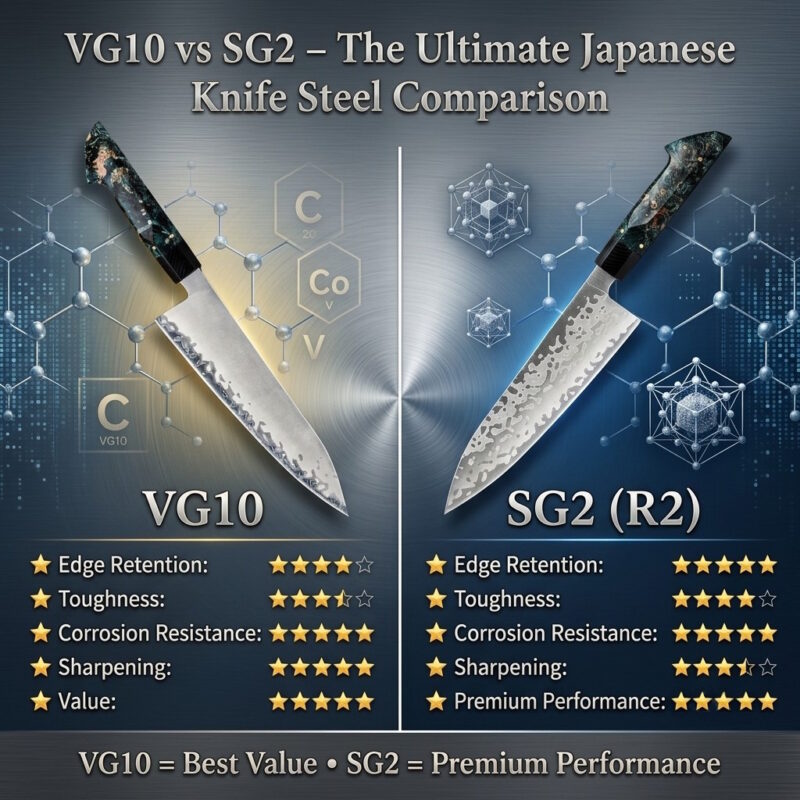
When shopping for a premium Japanese kitchen knife, two steel names appear more often than almost any others: VG10 and SG2, also known as R2 steel. Both are premium stainless steels developed in Japan, both are capable of taking an incredibly sharp edge, and both are found in knives made by some of the world’s most respected manufacturers.
However, despite their similarities, VG10 and SG2 are designed with different priorities.
VG10 has been one of the most popular Japanese knife steels for decades. It offers an excellent balance of hardness, corrosion resistance, toughness, and ease of maintenance, making it a favorite among both home cooks and professional chefs.
SG2 (R2) represents the next generation of Japanese knife steel technology. Manufactured using powder metallurgy, SG2 delivers higher hardness, superior wear resistance, and longer edge retention than VG10, making it one of the most sought-after steels for premium chef knives.
So, which steel is better?
The answer depends on your cooking style, sharpening skills, and budget.
If you cook occasionally at home, VG10 may provide everything you need at a more affordable price. If you’re a serious enthusiast or professional chef who values exceptional edge retention and precision cutting, SG2 may justify its premium cost.
In this detailed comparison, we’ll examine every aspect of these two steels, including their composition, hardness, wear resistance, toughness, corrosion resistance, sharpening characteristics, and real-world kitchen performance.
By the end of this guide, you’ll know exactly which steel best suits your cooking needs.
Meet the Contenders
What Is VG10 Steel?
VG10 steel is a premium stainless cutlery steel.
Introduced specifically for high-quality kitchen knives, VG10 quickly became famous for combining excellent sharpness, corrosion resistance, and durability.
Today, VG10 is one of the most widely used premium Japanese knife steels.
VG10 is especially popular because it offers premium performance while remaining relatively easy to sharpen and maintain.
Its balanced characteristics have made it one of the benchmark steels for Japanese kitchen knives.
Check our Guide VG10 Steel Review
What Is SG2 (R2) Steel?
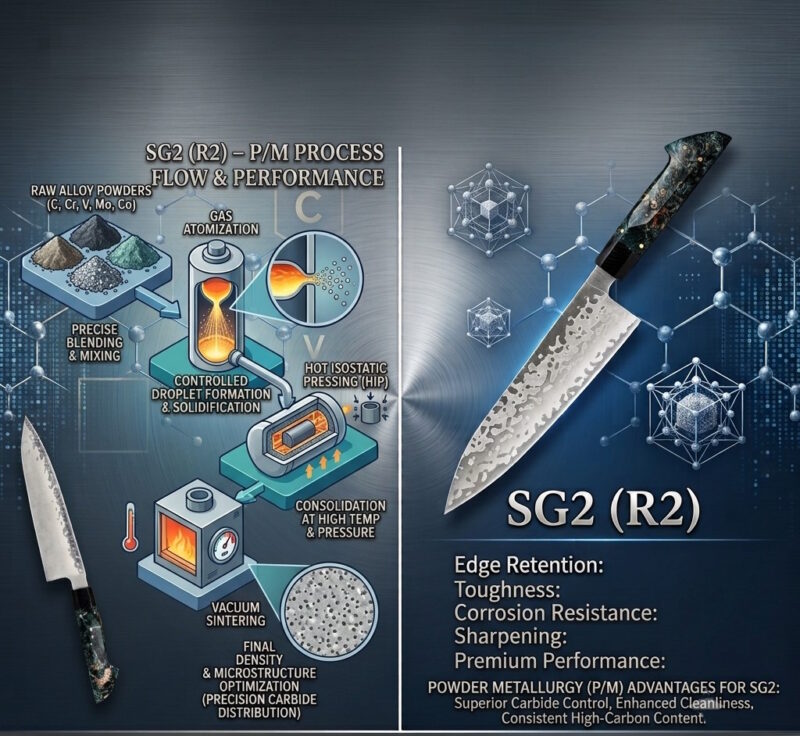
SG2 steel, also marketed as R2 steel, is a premium powder metallurgy stainless steel.
Unlike VG10, SG2 is manufactured using powder metallurgy (PM), allowing for a much finer carbide structure and significantly higher hardness.
SG2 is commonly found in high-end Japanese knives.
Because of its exceptional hardness and edge retention, SG2 has become one of the most desirable steels for professional chefs and knife enthusiasts.
Check Our Guide SG2 Steel Review
History of Both Steels
VG10
VG10 was developed during the late twentieth century to provide a premium stainless steel capable of competing with traditional carbon steels while requiring much less maintenance.
It quickly gained popularity because it offered:
- Excellent corrosion resistance
- High hardness
- Good toughness
- Outstanding cutting performance
Even today, VG10 remains one of Japan’s most successful knife steels.
SG2 (R2)
SG2 was introduced later as powder metallurgy technology became more widely available.
Rather than improving conventional steel, SG2 represented a completely new manufacturing approach.
Its goals included:
- Higher hardness
- Longer edge retention
- Better wear resistance
- More refined carbide distribution
Today, SG2 is considered one of the finest stainless steels available for premium Japanese kitchen knives.
Powder Metallurgy: Why SG2 Is Different
One of the biggest differences between VG10 and SG2 is how they are manufactured.
VG10 is produced using traditional ingot metallurgy.
SG2 uses powder metallurgy, which involves:
- Melting the alloy.
- Atomizing the molten steel into microscopic powder particles.
- Compressing the powder under extreme pressure.
- Hot isostatic pressing into solid billets.
Benefits include:
- Much finer carbides
- Better edge stability
- Higher attainable hardness
- Improved wear resistance
- More consistent quality
This advanced manufacturing process is one of the main reasons SG2 commands a higher price.
Check Our Guide Powder Steels for Kitchen Knives
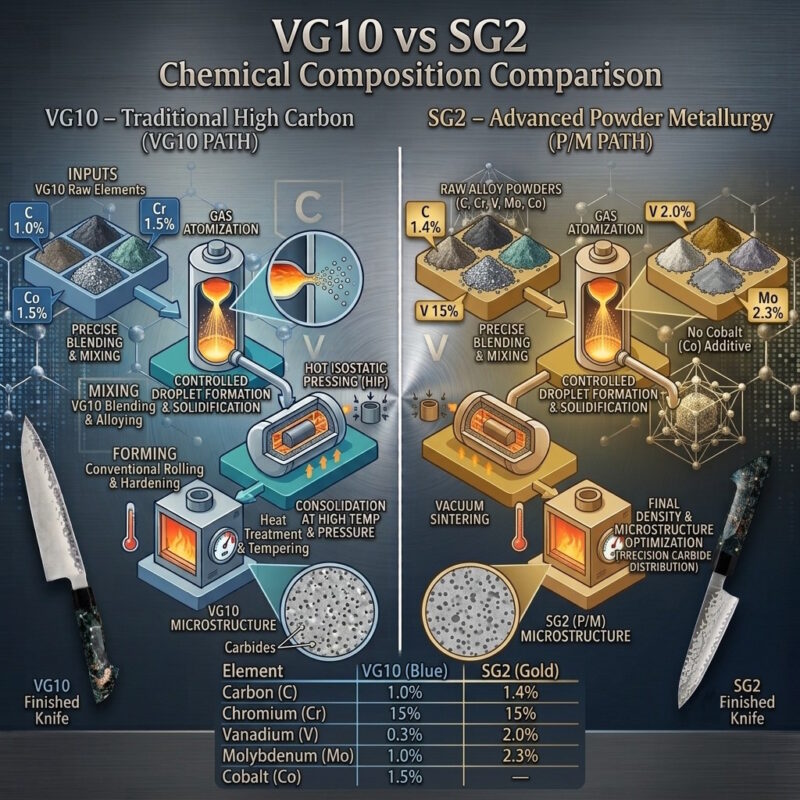
Chemical Composition Comparison
| Element | VG10 | SG2 (R2) |
|---|---|---|
| Carbon | 1.00% | 1.40% |
| Chromium | 15.00% | 15.00% |
| Vanadium | 0.30% | 2.00% |
| Molybdenum | 1.00% | 2.30% |
| Cobalt | 1.50% | — |
Although chromium content is similar, SG2 contains significantly more vanadium and molybdenum, which greatly improve wear resistance and edge retention.
Understanding the Alloy Elements
Carbon
Carbon directly influences hardness and carbide formation.
VG10
Approximately 1.0% carbon
Provides:
- High hardness
- Excellent sharpness
- Good toughness
SG2
Approximately 1.4% carbon
Higher carbon allows:
- Increased hardness
- Better wear resistance
- Longer-lasting cutting edge
However, higher carbon can also reduce toughness if not properly heat treated.
Chromium
Both steels contain roughly 15% chromium, making them true stainless steels.
Benefits include:
- Excellent rust resistance
- Low maintenance
- Food safety
- Stain resistance
For kitchen use, both steels perform exceptionally well.
Vanadium
This is one of the biggest differences.
VG10
Contains only about 0.3% vanadium.
SG2
Contains roughly 2% vanadium, creating much harder vanadium carbides.
Advantages include:
- Better edge retention
- Higher wear resistance
- Improved slicing longevity
Molybdenum
SG2 also contains considerably more molybdenum.
This improves:
- Strength
- Wear resistance
- Corrosion resistance
- High-temperature stability during heat treatment
Hardness (HRC)
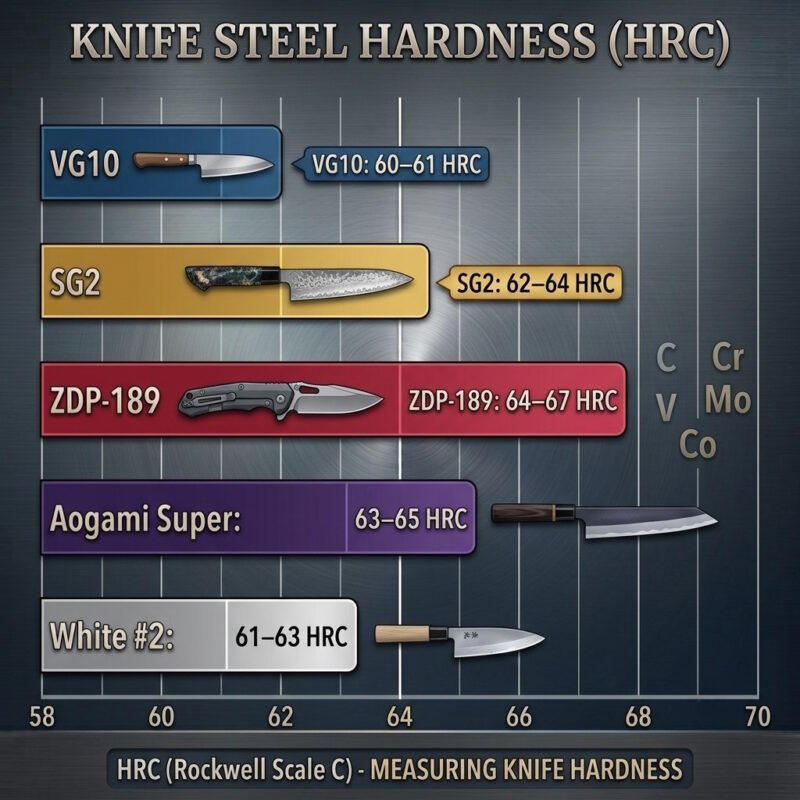
Typical hardness:
| Steel | HRC |
| VG10 | 60–61 |
| SG2 | 62–64 |
Some custom Japanese makers harden SG2 to approximately 65 HRC.
Higher hardness generally improves:
- Edge retention
- Cutting efficiency
- Fine edge performance
However, extremely hard blades require careful use.
Check Our Guide What Is HRC? Understanding Rockwell Hardness in Kitchen Knives
Edge Retention
Edge Retention Comparison
VG10
⭐⭐⭐⭐
SG2
⭐⭐⭐⭐⭐
ZDP-189
⭐⭐⭐⭐⭐⭐
MagnaCut
⭐⭐⭐⭐☆
M390
⭐⭐⭐⭐⭐☆
Edge retention is often the deciding factor for buyers choosing between VG10 and SG2.
VG10
VG10 offers very good edge retention compared with most stainless steels.
Advantages include:
- Holds a sharp edge through everyday meal preparation
- Easy touch-up sharpening
- Reliable long-term performance
Most home cooks will be highly satisfied with VG10’s cutting longevity.
SG2
SG2 is widely regarded as one of the best Japanese stainless steels for edge retention.
Its powder metallurgy structure produces:
- Extremely fine carbides
- Outstanding abrasion resistance
- Exceptional cutting longevity
Professional chefs often appreciate SG2 because it requires less frequent sharpening during heavy daily use.
Wear Resistance
Wear resistance measures how well a steel resists abrasion over time.
VG10
VG10 provides solid wear resistance suitable for:
- Home kitchens
- Moderate professional use
- Daily meal preparation
SG2
Thanks to higher hardness and greater carbide volume, SG2 clearly outperforms VG10 during prolonged cutting.
This is especially noticeable when slicing:
- Dense vegetables
- Large quantities of meat
- Herbs
- Root vegetables
Toughness
Toughness Comparison
VG10
⭐⭐⭐⭐☆
SG2
⭐⭐⭐⭐
AEB-L
⭐⭐⭐⭐⭐
MagnaCut
⭐⭐⭐⭐⭐
ZDP-189
⭐⭐⭐
Toughness measures resistance to chipping and cracking.
VG10
VG10 offers good toughness for a hard stainless steel.
It tolerates minor twisting and occasional mistakes better than many harder steels.
This makes VG10 an excellent choice for home users.
SG2
SG2 sacrifices a small amount of toughness in exchange for superior hardness.
Although still durable, it requires more careful cutting technique.
Avoid:
- Twisting cuts
- Frozen foods
- Bones
- Hard pits
Professional chefs generally have no difficulty using SG2 correctly.
Corrosion Resistance
Corrosion Resistance
White Steel #2
⭐⭐
Blue Steel #2
⭐⭐☆
VG10
⭐⭐⭐⭐⭐
SG2
⭐⭐⭐⭐⭐
LC200N
⭐⭐⭐⭐⭐⭐
Vanax
⭐⭐⭐⭐⭐⭐
Kitchen knives frequently encounter:
- Water
- Salt
- Acids
- Citrus
- Tomatoes
- Onions
Fortunately, both steels perform exceptionally well.
VG10
VG10 has long been recognized for excellent corrosion resistance.
With basic cleaning and drying after use, rust is rarely an issue.
SG2
SG2 offers similarly excellent corrosion resistance.
Despite its higher hardness, it remains extremely stainless and suitable for busy professional kitchens.
Both steels require very little maintenance beyond normal cleaning.
Performance Summary So Far
After examining the metallurgy and core properties of both steels, a clear pattern begins to emerge.
VG10 remains one of the best-balanced traditional Japanese stainless steels. It offers excellent corrosion resistance, good toughness, respectable edge retention, and easy maintenance, making it an ideal choice for home cooks and anyone seeking dependable performance without a steep learning curve.
SG2 (R2), however, pushes performance further through powder metallurgy. Its higher hardness, superior wear resistance, and exceptional edge retention make it a favorite among professionals and serious enthusiasts who demand maximum cutting performance.
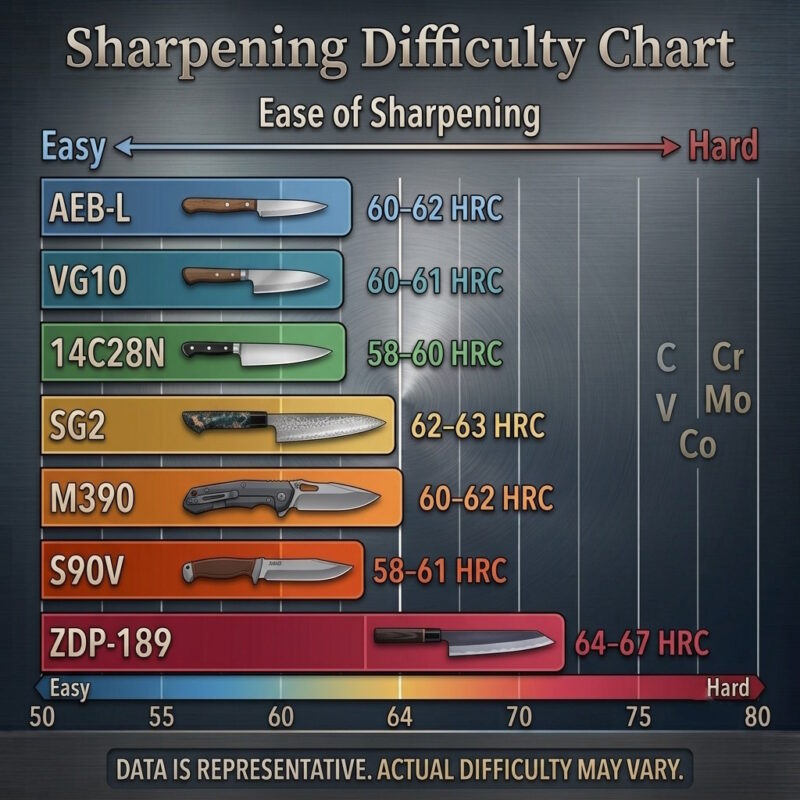
Sharpening: Which Steel Is Easier to Maintain?
Even the finest kitchen knife eventually needs sharpening. While edge retention is important, the amount of time and effort required to restore a razor-sharp edge can significantly affect your overall experience.
This is one of the biggest practical differences between VG10 and SG2.
Sharpening VG10
VG10 has earned an excellent reputation as one of the easiest premium Japanese stainless steels to sharpen.
Advantages include:
- Forms a burr quickly
- Responds well to water stones
- Easy to deburr
- Produces an extremely fine polished edge
- Beginner-friendly
Most home cooks can achieve excellent results using:
- 1000-grit water stone
- 3000-grit finishing stone
- 6000–8000 grit polishing stone (optional)
VG10 is forgiving, making it an excellent steel for people learning freehand sharpening.
Sharpening SG2
SG2 requires a little more patience.
Its higher hardness and greater wear resistance mean steel is removed more slowly.
However, because SG2 has an extremely fine powder metallurgy grain structure, it still sharpens better than many high-carbide Western “super steels.”
Diamond plates or premium ceramic stones speed up the process considerably.
Advantages include:
- Extremely refined edge
- Outstanding polish
- Excellent edge stability
- Longer intervals between sharpening sessions
Sharpening Verdict
| Property | Winner |
|---|---|
| Beginner Friendliness | VG10 |
| Speed of Sharpening | VG10 |
| Ultimate Edge Quality | SG2 |
| Edge Stability | SG2 |
For most users:
VG10 = easier
SG2 = sharper for longer
Heat Treatment
Steel composition tells only part of the story.
Proper heat treatment determines:
- Final hardness
- Toughness
- Edge retention
- Corrosion resistance
A well heat-treated VG10 knife can outperform a poorly heat-treated SG2 knife.
Always buy from reputable manufacturers.
Check Our Guide Steel Heat Treatment Explained
VG10 Heat Treatment
Typical hardness:
60–61 HRC
Many Japanese makers intentionally keep VG10 around 60–61 HRC because it provides an excellent balance between:
- Toughness
- Edge retention
- Ease of sharpening
SG2 Heat Treatment
Typical hardness:
62–64 HRC
Premium Japanese makers often harden SG2 between 63 and 64 HRC.
This gives:
- Outstanding edge retention
- Incredible slicing ability
- Long service intervals
The trade-off is slightly lower toughness compared to VG10.
Real-World Kitchen Performance
Laboratory testing is useful, but what matters most is how the knife performs on the cutting board.
Vegetable Preparation
VG10
VG10 slices vegetables cleanly with little resistance.
Excellent for:
- Tomatoes
- Cucumbers
- Bell peppers
- Herbs
- Carrots
SG2
SG2 feels even more effortless.
Its superior edge retention allows it to glide through large quantities of vegetables while maintaining exceptional sharpness.
Professional prep cooks especially appreciate this advantage.
Winner: SG2
Meat Preparation
VG10
Excellent for:
- Chicken
- Beef
- Pork
- Fish
Maintains a sharp edge throughout normal home meal preparation.
SG2
SG2 continues cutting efficiently through prolonged meat preparation.
Professional butchers and chefs processing large volumes benefit from the reduced need for sharpening.
Winner: SG2
Fish and Sushi
Japanese chefs often value:
- Extremely fine edge
- Precision slicing
- Minimal cell damage
Both steels excel.
VG10 remains a traditional favorite.
SG2 provides slightly longer-lasting sharpness.
Result: Tie
Home Cooking
Most home cooks prepare:
- Dinner
- Weekend meals
- Occasional entertaining
In this environment:
VG10 already delivers premium performance.
Its easier sharpening often outweighs SG2’s additional edge retention.
Many families will never fully utilize SG2’s advantages.
Winner: VG10
Check Our Guide The Ultimate Guide to Caring for a Damascus Steel Knife
Professional Kitchens
Professional chefs may prep for:
- 8–12 hours daily
- Hundreds of cuts
- Continuous service
This is where SG2 shines.
Advantages:
- Less downtime
- Longer edge life
- Higher productivity
- Fewer sharpening sessions
Winner: SG2
Best Knife Types for Each Steel
VG10 Excels In
- Gyuto
- Santoku
- Bunka
- Nakiri
- Petty
- Utility knives
Excellent all-purpose choice.
SG2 Excels In
- Gyuto
- Kiritsuke
- Bunka
- Sujihiki
- Petty
- High-end chef knives
Particularly suited to premium laser-style knives.
Food Acid Resistance
Kitchen knives frequently contact acidic foods.
Examples include:
- Lemons
- Tomatoes
- Citrus fruits
- Apples
- Vinegar
- Wine
Both VG10 and SG2 perform exceptionally well.
Unlike carbon steels, neither requires constant wiping during food preparation.
Simply wash, dry, and store after use.
Result: Tie
Long-Term Durability
With proper care:
VG10
Can easily last decades.
Requires:
- Regular honing
- Occasional sharpening
- Proper storage
SG2
Also lasts decades.
Because it stays sharp longer, many users sharpen SG2 significantly less often.
Side-by-Side Comparison Table
| Property | VG10 | SG2 (R2) | Winner |
| Hardness | ⭐⭐⭐⭐ | ⭐⭐⭐⭐⭐ | SG2 |
| Edge Retention | ⭐⭐⭐⭐ | ⭐⭐⭐⭐⭐ | SG2 |
| Wear Resistance | ⭐⭐⭐⭐ | ⭐⭐⭐⭐⭐ | SG2 |
| Toughness | ⭐⭐⭐⭐☆ | ⭐⭐⭐⭐ | VG10 |
| Corrosion Resistance | ⭐⭐⭐⭐⭐ | ⭐⭐⭐⭐⭐ | Tie |
| Sharpening Ease | ⭐⭐⭐⭐⭐ | ⭐⭐⭐⭐ | VG10 |
| Kitchen Performance | ⭐⭐⭐⭐☆ | ⭐⭐⭐⭐⭐ | SG2 |
| Value for Money | ⭐⭐⭐⭐⭐ | ⭐⭐⭐⭐ | VG10 |
Advantages of VG10
VG10 remains one of the most trusted Japanese knife steels for good reason.
Pros
- Easy to sharpen
- Excellent corrosion resistance
- Good toughness
- Affordable premium steel
- Excellent for home cooks
- Widely available
- Proven reliability
Advantages of SG2
SG2 represents the premium end of Japanese stainless knife steels.
Pros
- Outstanding edge retention
- Higher hardness
- Exceptional wear resistance
- Extremely fine cutting edge
- Powder metallurgy technology
- Excellent for professional kitchens
- Premium performance
Disadvantages of VG10
Cons
- Requires sharpening more often
- Lower wear resistance
- Lower hardness
- Cannot match SG2’s cutting longevity
Disadvantages of SG2
Cons
- Higher price
- Slightly harder to sharpen
- Less forgiving of misuse
- Slightly lower toughness
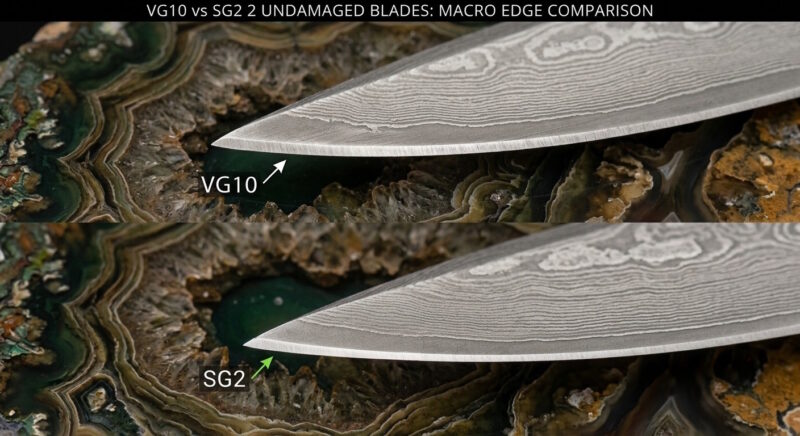
VG10 vs SG2: Which Steel Should You Buy?
Choose VG10 if:
- You cook mainly at home.
- You sharpen your own knives.
- You want excellent performance without paying premium prices.
- You value toughness and ease of maintenance.
- You’re buying your first high-quality Japanese knife.
VG10 offers one of the best performance-to-price ratios available.
Choose SG2 if:
- You want maximum edge retention.
- You cook every day.
- You work in a professional kitchen.
- You prefer premium Japanese knives.
- You don’t mind paying more for top-tier performance.
SG2 rewards careful users with exceptional cutting performance.
Frequently Asked Questions
Is SG2 better than VG10?
For edge retention and wear resistance, yes. SG2 is generally considered the more advanced steel due to its powder metallurgy construction and higher hardness.
Is VG10 still a good knife steel?
Absolutely. VG10 remains one of the best-balanced stainless steels for kitchen knives and continues to be used by many leading Japanese knife manufacturers.
Which steel stays sharp longer?
SG2 typically holds its edge significantly longer than VG10, especially during heavy or professional kitchen use.
Which steel is easier to sharpen?
VG10 is easier to sharpen and is a better choice for beginners or anyone who prefers quick maintenance.
Which steel is better for home cooks?
For most home kitchens, VG10 offers outstanding value and easier maintenance. SG2 becomes more attractive for enthusiastic cooks who prepare food frequently or simply enjoy the longest possible edge life.
VG10 vs SG2 – Which Should You Choose?
| Category | Winner |
|---|---|
| Hardness | 🏆 SG2 |
| Edge Retention | 🏆 SG2 |
| Wear Resistance | 🏆 SG2 |
| Toughness | 🏆 VG10 |
| Corrosion Resistance | 🤝 Tie |
| Sharpening | 🏆 VG10 |
| Home Cooking | 🏆 VG10 |
| Professional Kitchens | 🏆 SG2 |
Final Verdict: VG10 vs SG2
VG10 and SG2 are both exceptional Japanese knife steels, but they are designed for different priorities.
VG10 has stood the test of time because it strikes an excellent balance between sharpness, toughness, corrosion resistance, and ease of sharpening. It remains one of the best choices for home cooks who want premium performance without the higher cost of powder metallurgy steels.
SG2 builds upon those strengths with modern powder metallurgy technology. Its finer carbide structure, higher hardness, and outstanding wear resistance allow it to maintain a razor-sharp edge for much longer, making it a favorite among professional chefs and serious knife enthusiasts.
For most home users, the performance gap is noticeable but not dramatic. The easier sharpening and lower cost of VG10 often make it the smarter purchase.
For professionals or passionate cooks who demand maximum cutting performance and are willing to invest in a premium blade, SG2 is one of the finest stainless kitchen knife steels available today.
Final Recommendation
- Choose VG10 if you want a dependable, easy-to-maintain premium Japanese knife with excellent value.
- Choose SG2 (R2) if you want maximum edge retention, premium cutting performance, and one of the best stainless steels available for high-end kitchen knives.
No matter which you choose, buying from a reputable manufacturer with excellent heat treatment will have just as much impact on performance as the steel itself.
This article is for independent informational purposes only and is not affiliated with, sponsored by, or endorsed by any steel manufacturer. All product names, trademarks, and registered trademarks are the property of their respective owners.