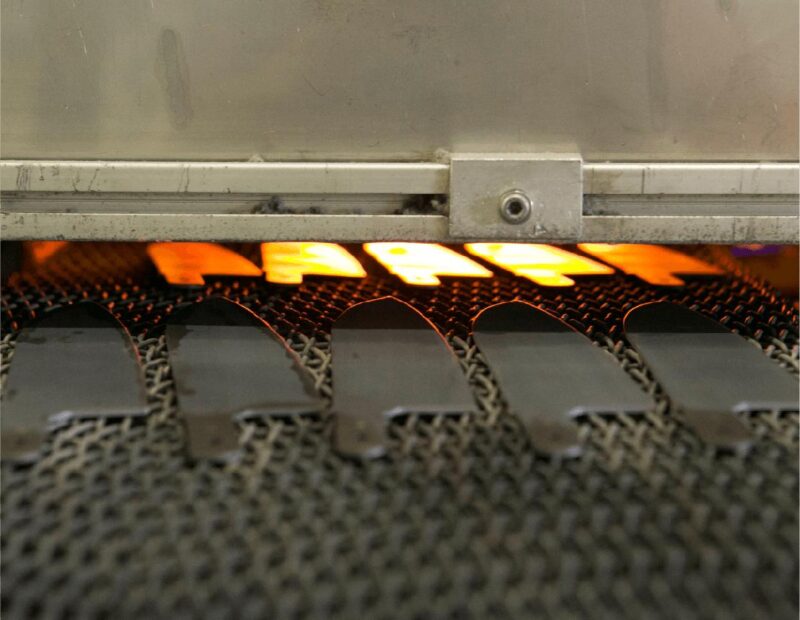
Different Heat Treatment Methods Explained
An Independent Guide
Quick Answer
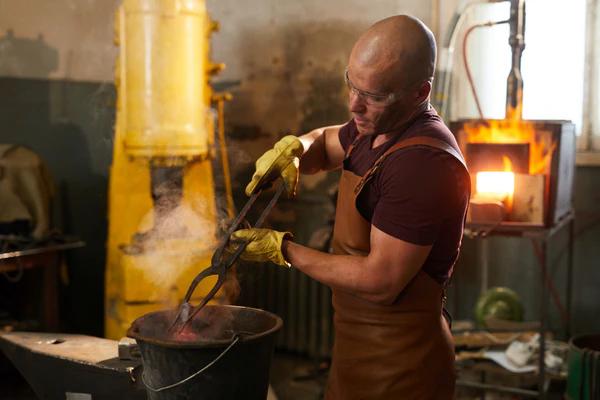
Heat treatment is the process of heating and cooling steel under controlled conditions to achieve specific mechanical properties such as hardness, toughness, wear resistance, and edge retention. Common heat treatment methods include annealing, normalizing, hardening, quenching, tempering, and cryogenic treatment. The quality of heat treatment often has a greater impact on knife performance than the steel type itself.
Introduction
When knife enthusiasts discuss blade performance, conversations often focus on steel types such as N690, MagnaCut, M390, S35VN, or D2. While steel composition is important, experienced knife makers know that heat treatment is equally critical.
In fact, a properly heat-treated mid-range steel can outperform a poorly treated premium steel.
Heat treatment determines how the internal structure of steel develops. By carefully controlling temperature, cooling rates, and tempering cycles, manufacturers can dramatically alter a blade’s hardness, toughness, corrosion resistance, and cutting performance.
Understanding different heat treatment methods helps explain why two knives made from the same steel can perform very differently in real-world use.
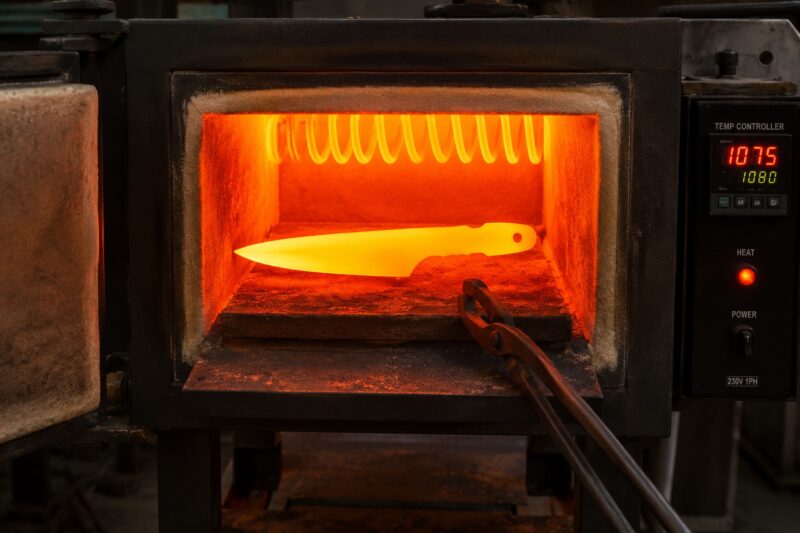
What Is Heat Treatment?
Heat treatment refers to a series of controlled heating and cooling operations used to change the physical and mechanical properties of steel.
The process allows manufacturers to:
- Increase hardness
- Improve toughness
- Enhance wear resistance
- Improve dimensional stability
- Reduce internal stresses
- Optimize edge retention
Without proper heat treatment, even the highest-quality steel cannot achieve its full potential.
Why Heat Treatment Matters in Knives
Knife performance depends heavily on balancing several competing properties.
A blade that is extremely hard may have excellent edge retention but become brittle.
A blade that is extremely tough may resist breakage but dull quickly.
Heat treatment helps manufacturers find the optimal balance between:
- Hardness
- Toughness
- Wear resistance
- Corrosion resistance
- Edge stability
This balance is what separates an average knife from an exceptional one.
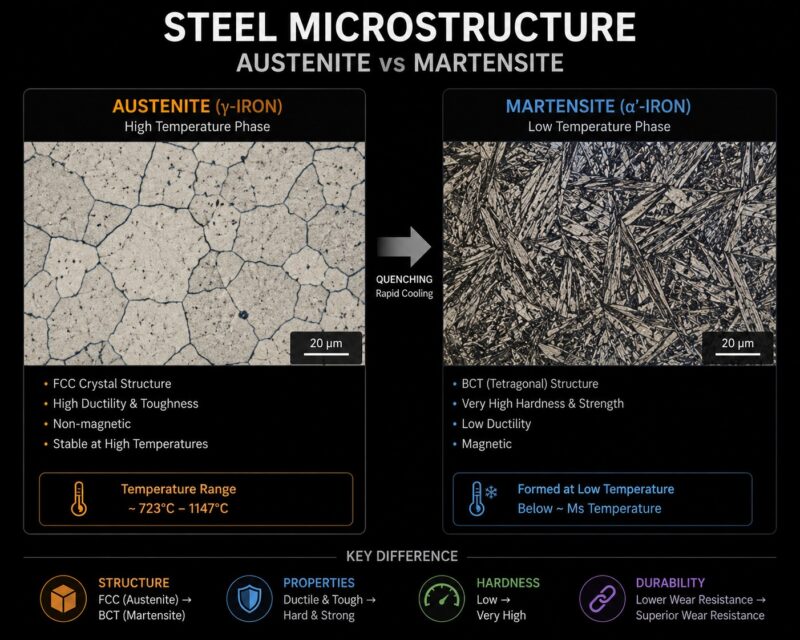
Understanding Steel Microstructure
To understand heat treatment, it’s helpful to understand steel’s internal structure.
Steel consists primarily of iron and carbon, but its microscopic structure changes depending on temperature and cooling speed.
The most important structures include:
Ferrite
Soft and ductile.
Pearlite
Moderately hard and strong.
Austenite
High-temperature structure that forms during heating.
Martensite
Extremely hard structure created through rapid cooling.
Carbides
Hard particles that improve wear resistance and edge retention.
Heat treatment manipulates these structures to achieve desired performance.
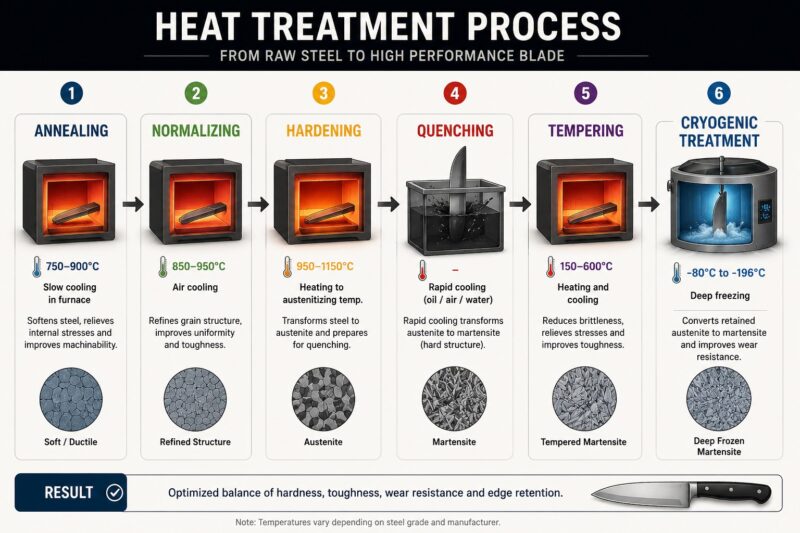
Annealing
Annealing is often the first major heat treatment step.
Purpose
Annealing softens steel and relieves internal stresses.
Process
Steel is heated to a specific temperature and then cooled very slowly.
Benefits
- Improves machinability
- Reduces hardness
- Relieves stress
- Refines grain structure
Knife makers often anneal steel before machining, grinding, or shaping blades.
Normalizing
Normalizing is used to improve steel uniformity.
Purpose
Create a consistent grain structure throughout the steel.
Process
Steel is heated above its critical temperature and allowed to cool in still air.
Benefits
- Grain refinement
- Improved toughness
- Better consistency
- Reduced internal stress
Many bladesmiths perform normalizing before hardening.
Hardening
Hardening is one of the most important stages in knife manufacturing.
Purpose
Increase hardness and wear resistance.
Process
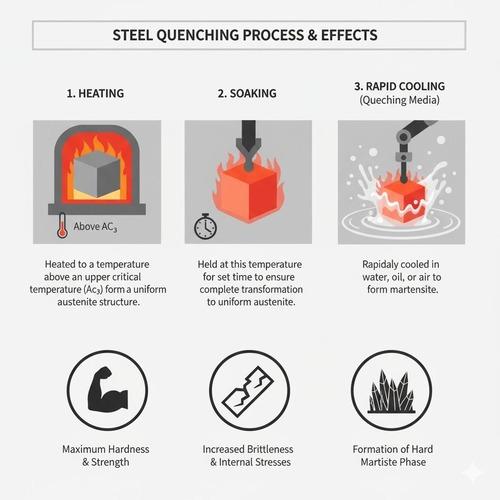
Steel is heated until it transforms into austenite.
The temperature varies depending on steel type.
Examples:
- 1095: approximately 1475°F (800°C)
- N690: approximately 1920°F–1975°F (1050°C–1080°C)
- M390: approximately 2100°F (1150°C)
At this stage, steel becomes ready for quenching.
Quenching
Quenching rapidly cools steel after hardening.
Purpose
Transform austenite into martensite.
Common Quenching Media
Water Quenching
Fastest cooling.
Advantages:
- Maximum hardness
Disadvantages:
- High cracking risk
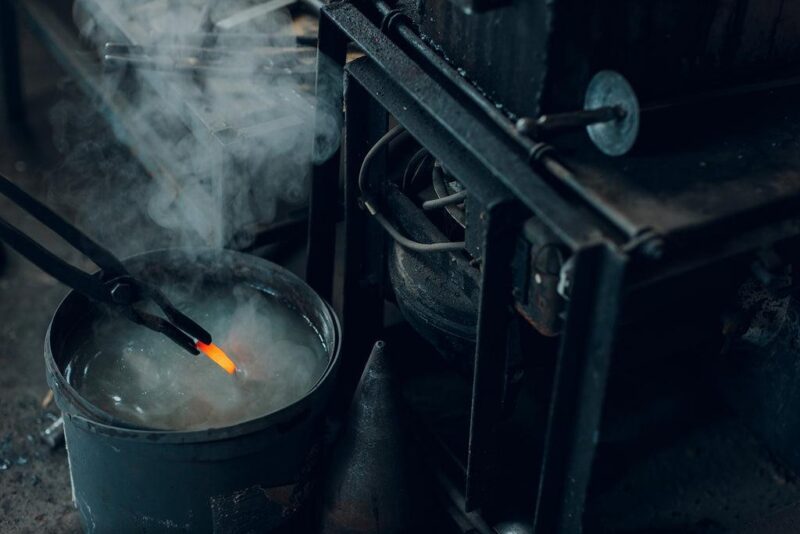
Oil Quenching
Most common for knife steels.
Advantages:
- Lower stress
- Reduced cracking
Disadvantages:
- Slightly slower cooling
Air Quenching
Used for many stainless steels.
Advantages:
- Lower distortion
- Better dimensional stability
Examples:
- N690
- AEB-L
- CPM MagnaCut
Plate Quenching
Common in premium stainless steels.
Advantages:
- Uniform cooling
- Reduced warping
Widely used for M390 and MagnaCut.
Tempering
After quenching, steel is extremely hard but often brittle.
Tempering solves this problem.
Purpose
Reduce brittleness while maintaining hardness.
Process
Steel is reheated to a lower temperature and held for a specific period.
Benefits
- Increased toughness
- Reduced internal stress
- Improved durability
Most knife steels receive multiple tempering cycles.
Cryogenic Treatment
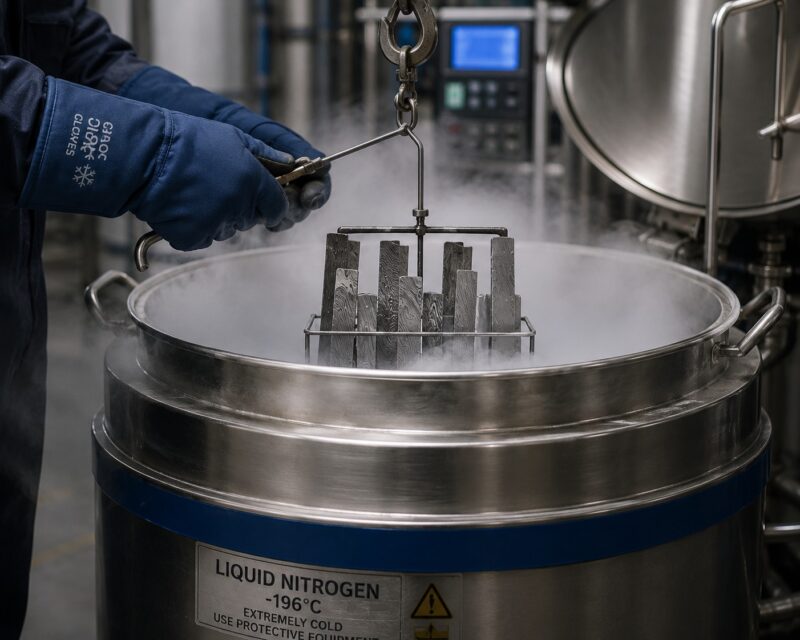
Cryogenic treatment is often considered an advanced heat treatment step.
Purpose
Convert retained austenite into martensite.
Process
Steel is cooled to extremely low temperatures, often:
-80°C to -196°C
using liquid nitrogen.
Benefits
- Increased hardness
- Improved wear resistance
- Better edge retention
- Enhanced dimensional stability
Cryogenic treatment is especially beneficial for premium steels such as:
- M390
- S35VN
- MagnaCut
- Elmax
Check Our Guide Cryogenic Treatment Explained:
Differential Heat Treatment
Traditional Japanese swords often use differential heat treatment.
Purpose
Create different hardness levels within the same blade.
Process
The edge cools faster than the spine.
Result
- Hard cutting edge
- Tough flexible spine
This method creates the visible hamon line found on many traditional blades.
Austempering
Austempering is a specialized heat treatment process.
Purpose
Create bainite instead of martensite.
Benefits
- Excellent toughness
- Reduced distortion
- Good wear resistance
Although less common in knives, it is used in certain industrial applications.
Marquenching
Marquenching minimizes stress during cooling.
Advantages
- Reduced distortion
- Reduced cracking
- Improved dimensional control
Useful for precision components and high-performance tools.
Sub-Zero Treatment vs Cryogenic Treatment
These processes are often confused.
Sub-Zero Treatment
Typically between:
-70°C and -80°C
Provides partial conversion of retained austenite.
Cryogenic Treatment
Typically:
-196°C
Provides deeper transformation and greater performance benefits.
Heat Treatment and Knife Performance
Hardness
Higher hardness generally improves:
- Edge retention
- Wear resistance
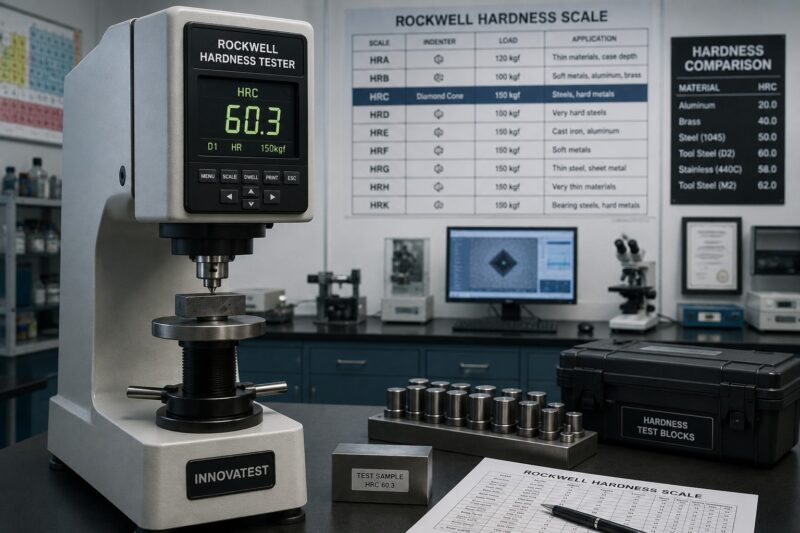
Measured using the Rockwell Hardness Scale (HRC).
Most premium knives fall between:
58–64 HRC
Toughness
Toughness helps prevent:
- Chipping
- Cracking
- Breakage
Heat treatment strongly influences toughness.
Edge Retention
Edge retention depends on:
- Steel composition
- Carbide structure
- Heat treatment quality
Even premium steels require proper heat treatment to perform well.
Corrosion Resistance
Although primarily determined by chemistry, heat treatment can influence corrosion behavior by affecting carbide distribution.
Check Our Guide Carbon Steel vs Stainless Steel Knives
Heat Treatment Examples in Popular Knife Steels
N690
Typical hardness:
58–61 HRC
Known for:
- Corrosion resistance
- Easy sharpening
- Balanced performance
M390
Typical hardness:
60–62 HRC
Known for:
- Exceptional edge retention
- High wear resistance
MagnaCut
Typical hardness:
60–64 HRC
Known for:
- Excellent toughness
- Outstanding corrosion resistance
- Balanced super-steel performance
D2
Typical hardness:
59–62 HRC
Known for:
- Strong wear resistance
- Semi-stainless characteristics
Check Our Guide D2 Steel Review
Common Heat Treatment Mistakes
Poor heat treatment can cause:
- Soft edges
- Excessive brittleness
- Warping
- Cracking
- Poor edge retention
This is why reputable manufacturers invest heavily in heat treatment expertise.
Common Myths About Heat Treatment
Myth #1: Harder Always Means Better
False.
Excessive hardness can reduce toughness.
Myth #2: All Manufacturers Use the Same Heat Treatment
False.
Heat treatment recipes vary significantly.
Myth #3: Steel Type Is More Important Than Heat Treatment
False.
Heat treatment often has an equal or greater impact on performance.
Myth #4: Cryogenic Treatment Makes Any Steel Superior
False.
Cryogenic treatment enhances performance but cannot compensate for poor heat treatment.
Final Verdict
Heat treatment is one of the most important factors in knife performance. While steel composition provides the foundation, heat treatment unlocks the steel’s true potential.
Processes such as annealing, normalizing, hardening, quenching, tempering, and cryogenic treatment allow manufacturers to optimize hardness, toughness, edge retention, and durability.
When evaluating a knife, remember that steel type is only part of the story. A well-executed heat treatment can transform a good steel into an exceptional blade, while poor heat treatment can limit even the most advanced super steel.
For knife enthusiasts, understanding different heat treatment methods provides valuable insight into why some blades outperform others and why craftsmanship remains just as important as steel selection.
Frequently Asked Questions
What is heat treatment in knife making?
Heat treatment is the controlled heating and cooling of steel to improve hardness, toughness, wear resistance, and overall blade performance.
What is the purpose of quenching?
Quenching rapidly cools steel to transform austenite into martensite, significantly increasing hardness.
Why is tempering necessary after quenching?
Tempering reduces brittleness and internal stress while preserving much of the steel’s hardness.
Does cryogenic treatment improve knife performance?
Yes. Cryogenic treatment can improve hardness, wear resistance, edge retention, and dimensional stability.
Which heat treatment process is most important?
Hardening and tempering are the most critical steps because they directly determine hardness and toughness.
Can poor heat treatment ruin premium steel?
Absolutely. Even the best steel can perform poorly if heat treatment is not properly executed.
https://yashkadesigns.com/special-knives
https://www.heattreattoday.com/processes-lp
This article is for independent informational purposes only and is not affiliated with, sponsored by, or endorsed by any steel manufacturer. All product names, trademarks, and registered trademarks are the property of their respective owners.