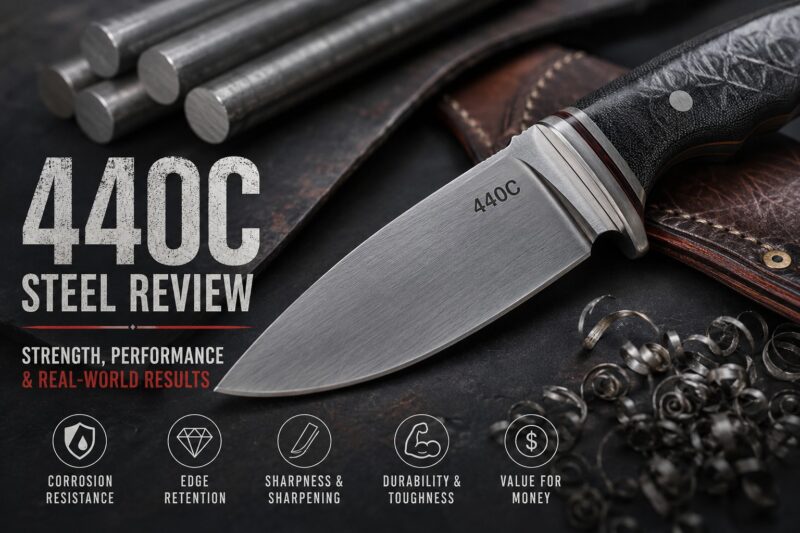
440C Steel Review
An Independent Guide
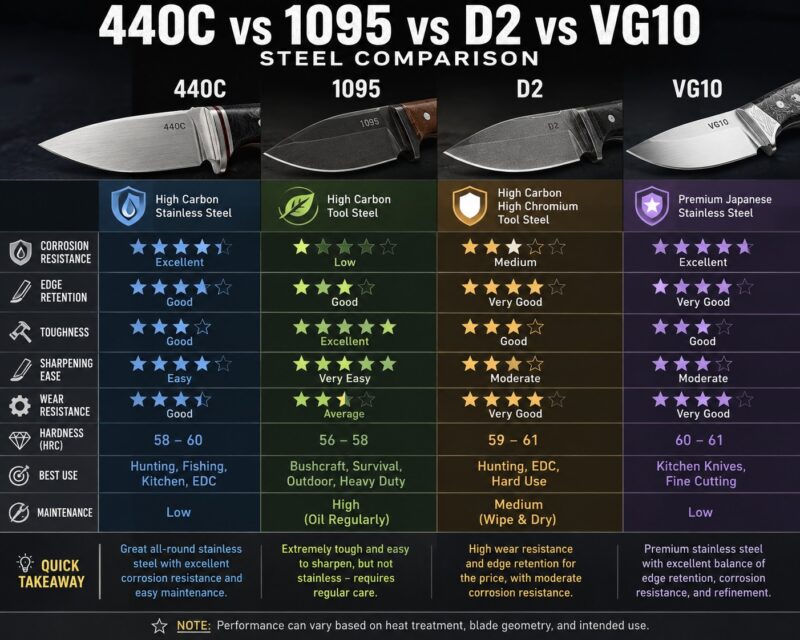
440C Steel Comparison Table
| Steel | Corrosion Resistance | Edge Retention | Toughness | Sharpening Ease | Best Use |
|---|---|---|---|---|---|
| 440C | Excellent | Good | Good | Easy | Hunting, Fishing, Kitchen, EDC |
| 1095 | Low | Good | Excellent | Very Easy | Bushcraft, Survival, Outdoor |
| D2 | Medium | Very Good | Good | Moderate | Hunting, EDC |
| VG10 | Excellent | Very Good | Good | Moderate | Kitchen Knives |
| AUS-8 | Good | Good | Good | Easy | EDC, Budget Knives |
| S35VN | Excellent | Excellent | Very Good | Moderate | Premium EDC, Hunting |
| MagnaCut | Outstanding | Excellent | Excellent | Moderate | Premium All-Purpose Knives |
Quick Summary
- Choose 440C if you want excellent corrosion resistance, easy maintenance, and reliable all-around performance.
- Choose 1095 if toughness is your top priority.
- Choose D2 for better edge retention at a moderate price.
- Choose VG10 for kitchen knives and fine slicing performance.
- Choose S35VN for a premium balance of toughness and edge retention.
- Choose MagnaCut if you want one of the best modern knife steels available today.
Introduction
In the world of knife steels, few names are as recognizable as 440C. Long before modern powder metallurgy steels like MagnaCut, M390, S35VN, and CPM 20CV entered the market, 440C was considered one of the premium stainless steels available for knives.
For decades, knife makers used 440C to create hunting knives, folding knives, kitchen knives, diving knives, and outdoor tools. Even today, despite competition from newer steel technologies, 440C remains widely used because of its excellent corrosion resistance, good edge retention, ease of maintenance, and affordable price.
Many knife enthusiasts wonder whether 440C is outdated or if it still deserves consideration when purchasing a knife. The answer depends largely on how the knife will be used.
In this comprehensive 440C steel review, we’ll explore its chemical composition, performance characteristics, advantages, disadvantages, and ideal applications to determine whether 440C remains a worthwhile knife steel in 2026.
What Is 440C Steel?
440C is a high-carbon martensitic stainless steel developed specifically for applications requiring wear resistance and corrosion resistance.
It belongs to the 440 family of steels:
- 440A
- 440B
- 440C
Among these three grades, 440C contains the highest carbon content and offers the best hardness and edge retention.
Typical composition includes:
- Carbon: 0.95–1.20%
- Chromium: 16–18%
- Manganese: 1.0%
- Silicon: 1.0%
- Molybdenum: 0.75%
The combination of high carbon and high chromium creates a steel capable of achieving excellent hardness while maintaining strong corrosion resistance.
440C Steel Performance Ratings
Edge Retention ★★★☆☆
Corrosion Resistance ★★★★★
Toughness ★★★☆☆
Sharpening Ease ★★★★☆
Wear Resistance ★★★★☆
Overall Value ★★★★☆
440C Steel at a Glance
| Property | Rating |
|---|---|
| Corrosion Resistance | Excellent |
| Edge Retention | Good |
| Toughness | Moderate |
| Wear Resistance | Good |
| Sharpening Ease | Easy |
| Stainless | Yes |
| Best Uses | Hunting, Fishing, Kitchen, EDC |
Why 440C Became Popular
Before the rise of modern “super steels,” 440C was often considered the benchmark for quality stainless knife steel.
Manufacturers appreciated it because it offered:
- Good edge retention
- Excellent corrosion resistance
- Reliable heat treatment
- Affordable production costs
- Easy polishing
Consumers appreciated it because knives made from 440C resisted rust and required minimal maintenance.
For many years, owning a 440C knife was considered a sign of quality.
Is 440C Stainless Steel?
Quick Answer:
440C is a high-carbon stainless steel known for excellent corrosion resistance, good edge retention, easy maintenance, and affordable pricing. While modern premium steels may outperform it in some areas, 440C remains a reliable choice for hunting knives, kitchen knives, fishing knives, and everyday carry knives.
Yes.
440C is a true stainless steel.
With approximately 17% chromium, it easily exceeds the minimum chromium threshold required for stainless classification.
This makes it highly resistant to:
- Rust
- Staining
- Moisture damage
- Food acids
For users who dislike maintaining carbon steel knives, 440C is an attractive option.
Hardness of 440C Steel
Most knife makers heat treat 440C between:
57–60 HRC
Some custom makers may push hardness slightly higher.
At these hardness levels, 440C offers a balanced combination of:
- Edge retention
- Corrosion resistance
- Sharpenability
- Durability
The quality of heat treatment significantly affects final performance.
A properly heat-treated 440C blade can outperform poorly treated premium steels.
Edge Retention
Edge retention refers to how long a knife remains sharp during use.
440C provides respectable edge retention, though it is no longer considered exceptional compared to modern premium steels.
Compared with:
- 1095
- 420HC
- 440A
- AUS-6
440C generally performs better.
However, compared with:
- D2
- S35VN
- MagnaCut
- M390
440C loses its edge more quickly.
Despite this, many users find its real-world performance more than adequate for everyday tasks.
Check our guide 1095 Steel Review
Check our Guide D2 Steel Review
Corrosion Resistance
One of the strongest characteristics of 440C is corrosion resistance.
Its high chromium content provides excellent protection against moisture and environmental exposure.
This makes 440C particularly suitable for:
- Fishing knives
- Kitchen knives
- Marine environments
- Humid climates
Users who live near the ocean often prefer stainless steels like 440C because maintenance requirements are minimal.
Toughness
Toughness refers to a steel’s ability to resist chipping, cracking, and breaking.
440C provides moderate toughness.
While it is not as tough as:
- 1095
- CPM 3V
- A2
it performs adequately for most cutting tasks.
For everyday knife use, toughness is generally sufficient.
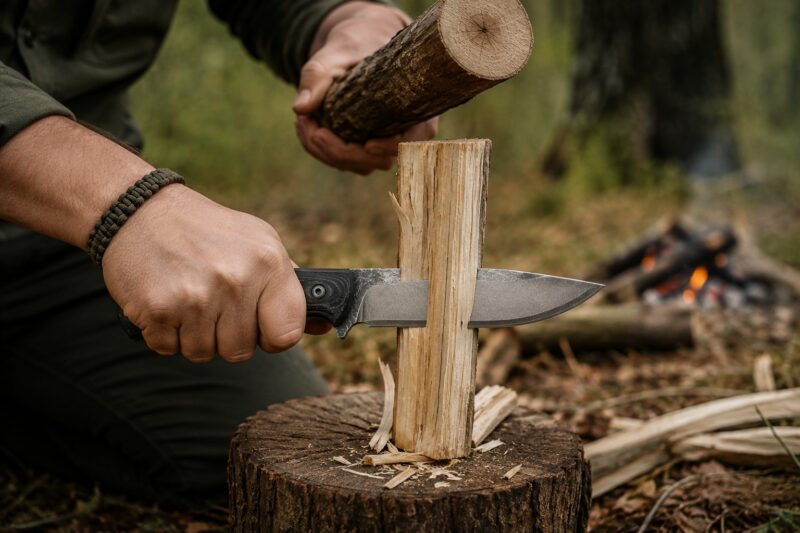
However, it is not typically the first choice for extreme batoning or heavy impact work.
Wear Resistance
440C contains large chromium carbides that contribute to wear resistance.
This allows the edge to resist abrasion during cutting.
Materials such as:
- Cardboard
- Rope
- Leather
- Food products
can be cut effectively while maintaining a useful edge.
Wear resistance is one reason 440C remained popular for so many years.
Sharpening Characteristics
A major advantage of 440C is its relatively easy sharpening.
Compared with highly wear-resistant modern steels, 440C can usually be sharpened more quickly.
Many users appreciate this balance.
A steel that sharpens easily often proves more practical than one that remains dull for long periods because it is difficult to restore.
Recommended sharpening tools include:
- Diamond stones
- Ceramic stones
- Water stones
A properly sharpened 440C blade can achieve excellent cutting performance.
Check Our Ultimate Guide to Caring…
440C for Hunting Knives
440C has long been used for hunting knives.
Hunters appreciate:
- Corrosion resistance
- Easy maintenance
- Reliable sharpness
- Good toughness
Field dressing often exposes knives to blood, moisture, and organic materials.
440C handles these conditions very well.
For hunters who do not want to constantly oil their blades, 440C remains a practical choice.
🔪 Looking for a Professional-Grade Hunting Knife?
https://yashkadesigns.com/hunting-knives
440C for Fishing Knives
Fishing environments are notoriously difficult on knife steels.
Saltwater and moisture accelerate corrosion.
Because of its strong stainless properties, 440C performs well around water.
Many anglers choose 440C for:
- Fillet knives
- Bait knives
- General fishing tools
While modern steels may offer improvements, 440C remains a proven option.
440C for Kitchen Knives
Kitchen applications are another area where 440C excels.
Benefits include:
- Corrosion resistance
- Easy cleaning
- Good sharpness
- Food safety
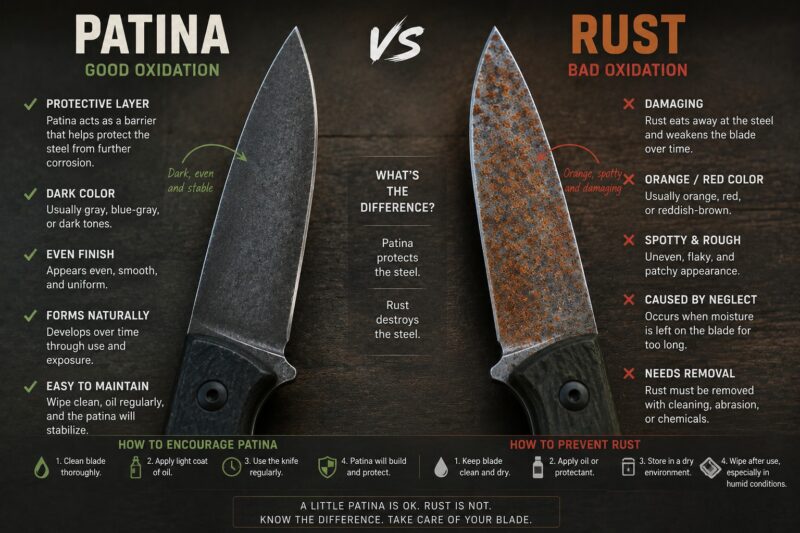
Unlike carbon steels, 440C does not readily develop patina or rust.
This makes it appealing for cooks who prioritize convenience.
Many production kitchen knives continue to use 440C successfully.
440C for Folding Knives
440C became extremely popular in folding knives during the 1980s and 1990s.
Reasons included:
- Easy maintenance
- Good edge retention
- Affordable manufacturing
- Reliable performance
Many classic folding knife designs were built around 440C.
Even today, numerous manufacturers continue using it for budget and mid-range folders.
440C for Everyday Carry (EDC)
EDC users often prioritize convenience.
A knife carried daily may be exposed to:
- Sweat
- Rain
- Humidity
- Food preparation
440C handles these conditions well.
Its combination of corrosion resistance and reasonable edge retention makes it a practical EDC steel.
Why Some Knife Makers Still Use 440C
Despite newer steel technologies, many knife makers continue working with 440C because it offers a proven balance of characteristics.
Advantages include:
- Easy machining
- Reliable heat treatment
- Attractive polished finish
- Excellent corrosion resistance
- Affordable cost
For many applications, these advantages outweigh the benefits of more expensive steels.
Is 440C Outdated?
This question appears frequently in knife discussions.
The answer depends on expectations.
If your goal is maximum edge retention regardless of cost, newer steels often outperform 440C.
However, if you value:
- Corrosion resistance
- Easy sharpening
- Affordability
- Proven reliability
440C remains highly relevant.
A steel does not become obsolete simply because newer alternatives exist.
The continued popularity of 440C demonstrates its practical value.
Heat Treatment Matters More Than Steel Name
Many buyers focus exclusively on steel composition.
In reality, heat treatment often matters more.
A properly heat-treated 440C knife can outperform a poorly treated premium steel.
When purchasing a knife, consider:
- Manufacturer reputation
- Heat-treatment quality
- Intended use
These factors often influence performance more than steel choice alone.
440C vs 1095 Steel
One of the most common comparisons in the knife world is 440C versus 1095.
440C Advantages
- Stainless steel
- Excellent corrosion resistance
- Lower maintenance
- Better performance in humid environments
1095 Advantages
- Greater toughness
- Easier field sharpening
- Better for heavy survival use
- Often preferred for bushcraft knives
Hunters and bushcrafters who don’t mind occasional maintenance often choose 1095. Users who prioritize rust resistance usually prefer 440C.
440C vs D2 Steel
D2 is another popular knife steel frequently compared with 440C.
440C
- Better corrosion resistance
- Easier maintenance
- Easier polishing
- Better for wet environments
D2
- Better edge retention
- Higher wear resistance
- Superior cutting longevity
D2 generally stays sharp longer, but 440C requires less maintenance.
For fishing knives and kitchen knives, 440C often has the advantage.
For hunting knives focused on extended cutting performance, D2 may be preferable.
440C vs VG10 Steel
VG10 has become one of the most popular Japanese stainless steels.
440C
- Less expensive
- Easier manufacturing
- Proven reliability
VG10
- Better edge retention
- Finer edge potential
- Popular in premium kitchen knives
VG10 typically outperforms 440C in cutting performance but comes at a higher cost.
440C vs AUS-8
These steels are frequently found in budget and mid-range knives.
440C
- Higher hardness potential
- Better wear resistance
- Better edge retention
AUS-8
- Slightly tougher
- Easier sharpening
- Excellent value
Most knife enthusiasts consider properly heat-treated 440C the superior performer overall.
440C vs MagnaCut
MagnaCut represents modern steel technology.
MagnaCut Advantages
- Outstanding corrosion resistance
- Excellent toughness
- Superior edge retention
- Better overall balance
440C Advantages
- Lower cost
- Easier availability
- Proven track record
- Easier polishing
While MagnaCut clearly outperforms 440C technically, many users may never notice enough practical difference to justify the additional expense.
Real-World Corrosion Resistance
Corrosion resistance is one area where 440C continues to impress.
Many users report decades of service with minimal rust issues.
440C performs well in:
- Humid climates
- Kitchens
- Fishing environments
- Coastal areas
- Everyday carry applications
Basic cleaning after use is usually sufficient.
Unlike carbon steels, 440C rarely develops rust when properly maintained.
Does 440C Rust?
Technically, yes.
All steels can rust under the right conditions.
However, 440C is highly resistant to corrosion.
Rust usually occurs only when:
- Saltwater exposure is ignored
- The blade remains dirty for extended periods
- Storage conditions are extremely humid
For most users, rust is rarely a concern.
Sharpening 440C Steel
One reason 440C remains popular is its balance between edge retention and sharpening difficulty.
Many users find it easier to sharpen than:
- D2
- M390
- S35VN
- MagnaCut
Recommended sharpening progression:
Basic Sharpening
- 400 grit for repairs
- 1000 grit for edge creation
- 3000 grit for refinement
Finishing
- 5000–8000 grit
- Leather strop
440C responds well to traditional sharpening methods.
Recommended Edge Angles
Hunting Knives
18–20 degrees per side
Kitchen Knives
15–18 degrees per side
EDC Knives
18–22 degrees per side
Fishing Knives
17–20 degrees per side
The proper angle depends on intended use and desired durability.
Maintaining a 440C Knife
Maintenance is straightforward.
After Use
- Wash with warm water
- Dry thoroughly
- Store clean
Long-Term Storage
- Keep dry
- Avoid prolonged moisture exposure
- Apply light oil if desired
Unlike carbon steels, regular oiling is generally unnecessary.
Best Uses for 440C Steel
440C performs particularly well in several categories.
Hunting Knives
Hunters appreciate:
- Corrosion resistance
- Easy maintenance
- Reliable cutting performance
Fishing Knives
The stainless properties make 440C an excellent fishing steel.
Kitchen Knives
440C performs well in food preparation because it resists staining and corrosion.
Folding Knives
Many classic folding knives have relied on 440C for decades.
Everyday Carry Knives
Its combination of corrosion resistance and reasonable edge retention makes it practical for daily carry.
Applications Where 440C Is Less Ideal
Although versatile, 440C is not perfect.
Heavy Survival Knives
Steels like 1095 and CPM 3V offer greater toughness.
Extreme Batoning
440C is not designed for repeated heavy impact.
Maximum Edge Retention
Modern steels such as M390, MagnaCut, and S35VN outperform 440C.
Common Myths About 440C Steel
Myth #1: 440C Is Cheap Steel
False.
440C was once considered a premium knife steel and still performs well today.
Myth #2: 440C Is Obsolete
False.
While newer steels exist, 440C remains a practical choice for many users.
Myth #3: 440C Won’t Hold an Edge
False.
Properly heat-treated 440C offers respectable edge retention.
Myth #4: All 440 Steel Is the Same
False.
440A, 440B, and 440C have different compositions and performance characteristics.
440C is generally considered the highest-performing member of the family.
Buying Guide: What to Look for in a 440C Knife
Not all 440C knives are equal.
Important factors include:
Heat Treatment
The most important factor affecting performance.
Blade Geometry
A well-designed blade often matters more than steel choice.
Manufacturer Reputation
Choose makers known for quality heat treatment.
Intended Use
Match the knife design to your actual needs.
Is 440C Steel Worth It in 2026?
For many users, yes.
440C remains attractive because it offers:
✓ Excellent corrosion resistance
✓ Good edge retention
✓ Easy sharpening
✓ Low maintenance
✓ Affordable pricing
✓ Proven reliability
Not everyone needs the latest super steel.
Many users simply want a dependable knife that performs well without constant maintenance.
440C continues to deliver exactly that.
Pros
✔ Excellent corrosion resistance
✔ Easy maintenance
✔ Good edge retention
✔ Easy sharpening
✔ Affordable
✔ Widely available
Cons
✘ Lower toughness than 1095
✘ Edge retention below modern super steels
✘ Not ideal for extreme survival abuse
Final Verdict
440C may no longer dominate the knife industry the way it once did, but it remains one of the most practical stainless knife steels available.
Its combination of corrosion resistance, ease of maintenance, affordability, and proven performance ensures that it continues to be used in hunting knives, kitchen knives, fishing knives, and EDC folders worldwide.
If you want a knife that resists rust, sharpens relatively easily, and offers reliable real-world performance without the premium price tag of modern super steels, 440C remains an excellent choice.
For many knife users, it provides exactly the balance they need.
If you’re looking for a practical stainless steel that balances corrosion resistance, edge retention, affordability, and ease of maintenance, 440C remains one of the best all-around choices available. For many hunters, anglers, home cooks, and everyday users, it continues to deliver reliable real-world performance decades after its introduction.
Looking for a handmade knife crafted by an experienced knife maker? Browse our collection of custom hunting knives, kitchen knives, and outdoor knives at Yashka Designs.
FAQ Section
Is 440C steel good for knives?
Yes. 440C is a high-quality stainless steel known for its corrosion resistance, durability, and practical edge retention.
Is 440C better than 1095?
440C offers superior corrosion resistance, while 1095 provides greater toughness and easier field sharpening.
Does 440C steel rust?
440C is highly resistant to rust but can corrode under extreme neglect or prolonged saltwater exposure.
Is 440C good for hunting knives?
Yes. Its corrosion resistance and reliable cutting performance make it a popular hunting knife steel.
Is 440C good for kitchen knives?
Absolutely. 440C resists staining and corrosion, making it well suited for kitchen use.
Is 440C better than D2?
440C offers better corrosion resistance, while D2 generally provides better edge retention.
Can beginners sharpen 440C?
Yes. 440C is relatively easy to sharpen compared with many modern premium steels.
Is 440C still relevant in 2026?
Yes. Despite newer steel technologies, 440C remains a dependable and practical choice.
https://en.wikipedia.org/wiki/440C
Related Knife Steel Articles
https://yashkadesigns.com/utilitypetty-knives
This article is for independent informational purposes only and is not affiliated with, sponsored by, or endorsed by any steel manufacturer. All product names, trademarks, and registered trademarks are the property of their respective owners.