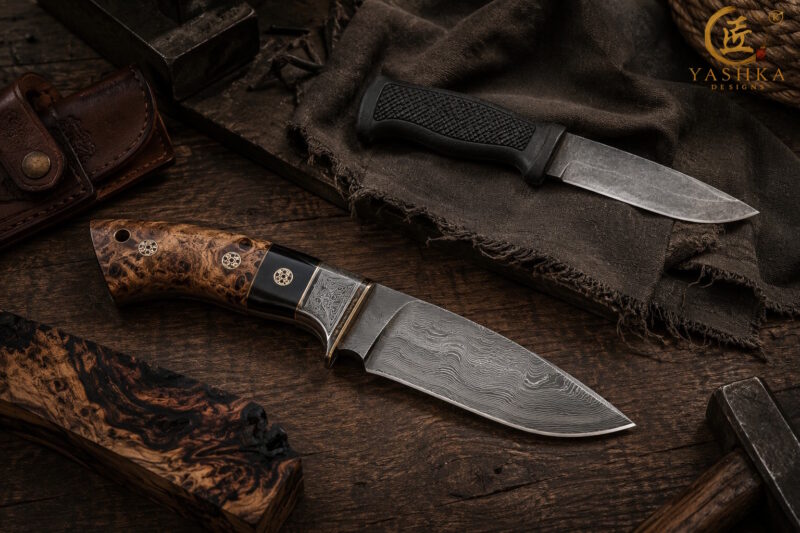
What Affects the Price of a Handmade Knife
An Independent Guide
When shopping for a handmade knife, many buyers are surprised by the wide range of prices available. One custom knife may cost $50, while another seemingly similar knife can sell for $500, $1,000, or even several thousand dollars. This often leads to a common question:
What actually affects the price of a handmade knife?
The answer is more complex than many people realize. A handmade knife is not simply a piece of sharpened steel. It is the result of material selection, craftsmanship, skill, experience, specialized equipment, and many hours of labor.
Whether you are purchasing a custom kitchen knife, hunting knife, bushcraft knife, or collector’s piece, understanding what influences pricing can help you make a more informed buying decision.
In this guide, we’ll break down the major factors that determine the cost of a handmade knife and explain why quality craftsmanship is often worth the investment.
🔪 Looking for a Professional-Grade Handmade 3-Inch Paring Knife?
At Yashka Designs, we handcraft premium Damascus Paring Knives. We combine ultra-sharp steel cores (60+ HRC) with stunning, one-of-a-kind stabilized wood and resin handles. High performance meets functional art.
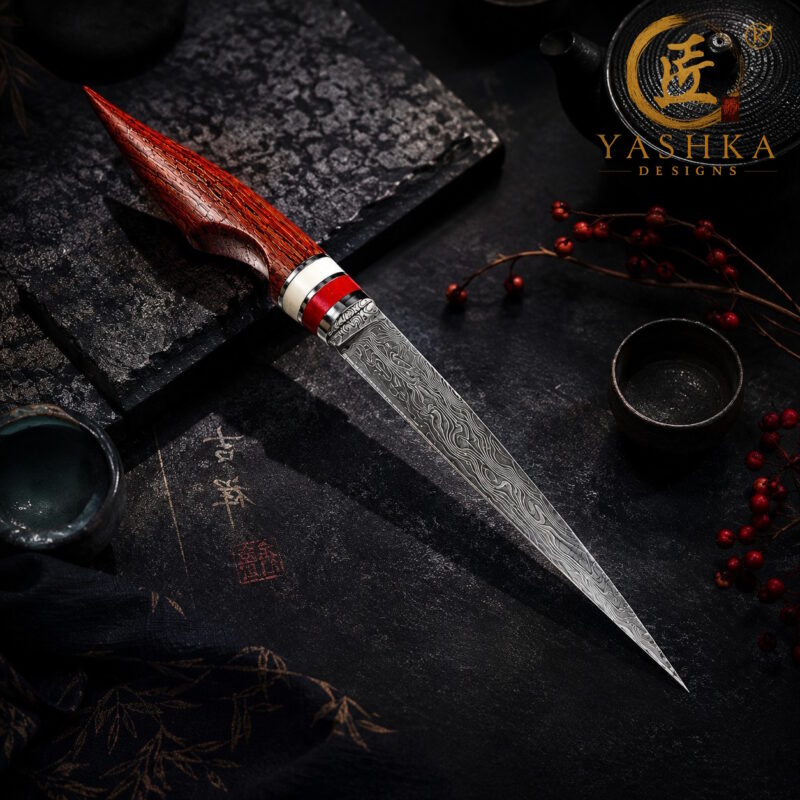
https://yashkadesigns.com/damascus-paring-knife-home-kitchen-cooking-tool
Handmade vs. Mass-Produced Knives
Before discussing specific pricing factors, it’s important to understand the difference between handmade and factory-made knives.
Mass-produced knives are manufactured using automated machinery and assembly-line processes. Thousands of identical knives can be produced with minimal labor costs.
Handmade knives are different.
A custom knife maker typically handles many or all stages of production personally:
- Design
- Profiling
- Grinding
- Heat treatment
- Handle shaping
- Finishing
- Sharpening
- Inspection
This hands-on approach naturally increases production time and cost.
Steel Selection
One of the most significant factors affecting price is the type of steel used.
Different steels vary greatly in cost, availability, performance, and difficulty of machining.
Budget-Friendly Steels
Examples include:
- 420HC
- 440A
- 5Cr15MoV
These steels are inexpensive and relatively easy to work with.
Mid-Range Steels
Popular options include:
- 9Cr18MoV
- 14C28N
- AEB-L
- N690
These offer an excellent balance of performance and affordability.
Check Our Guide AEB-L Steel Review
Premium Steels
High-end custom knives often use:
- CPM Magnacut
- CPM S35VN
- CPM S90V
- Elmax
- M390
- ZDP-189
Premium steels are significantly more expensive and often require specialized grinding equipment and heat-treatment procedures.
The steel itself may account for only part of the final price, but it is still an important factor.
Check Our Guide M390 Steel Review
Heat Treatment Quality
Many knife enthusiasts consider heat treatment more important than steel selection itself.
Heat treatment determines:
- Hardness
- Toughness
- Edge retention
- Corrosion resistance
A skilled maker invests substantial time testing and refining heat-treatment protocols.
Professional heat treatment may include:
- Controlled-temperature ovens
- Multiple temper cycles
- Cryogenic treatment
- Hardness testing
These processes increase production costs but dramatically improve performance.
Check Our Guide Cryogenic Treatment Explained
Blade Size
Larger knives generally require:
- More steel
- More grinding time
- More finishing work
An 8-inch chef knife usually costs more to produce than a 4-inch utility knife.
Similarly, a large hunting or camp knife requires more labor and material than a smaller everyday carry blade.
Blade Geometry
Many buyers focus on steel while overlooking blade geometry.
Creating a high-performance cutting tool requires precision.
Thin kitchen knife grinds often demand:
- Careful measurements
- Additional grinding time
- Extensive hand finishing
Achieving excellent cutting performance is a skill developed over years of experience.
The more refined the geometry, the more labor is typically involved.
Damascus Steel
Damascus steel is one of the most recognizable features in the custom knife world.
Its distinctive layered patterns can significantly increase the price of a knife.
Why?
Because Damascus production is labor intensive.
The process often involves:
- Stacking steel layers
- Forge welding
- Folding
- Twisting
- Pattern development
- Acid etching
Each step requires skill and additional labor.
Complex Damascus patterns may take many extra hours to produce.
Laminated Steel Construction
Many Japanese-style knives feature laminated construction.
Common examples include:
- San Mai
- Three-layer construction
- Multi-layer Damascus cladding
This method combines different steels to achieve desired performance characteristics.
Laminated construction adds complexity and labor, increasing the final price.
Check Our Guide What Is San Mai Steel?
Handle Materials
Handle materials vary enormously in cost.
Affordable Materials
- Walnut
- Beech
- Oak
- Basic Micarta
Premium Materials
- Desert Ironwood
- Ebony
- Stabilized burl wood
- Mammoth tooth
- Carbon fiber
- Exotic hardwoods
Rare and exotic materials can dramatically increase knife prices.
Some premium handle blocks alone may cost more than an entire budget knife.
Stabilized Wood
Many high-end makers use stabilized wood.
This process involves impregnating wood with resin under vacuum pressure.
Benefits include:
- Improved durability
- Water resistance
- Dimensional stability
However, stabilized materials are considerably more expensive than untreated wood.
Mosaic Pins and Decorative Hardware
Decorative elements can also affect pricing.
Popular upgrades include:
- Mosaic pins
- Corby bolts
- Brass pins
- Stainless hardware
- Decorative spacers
- Custom filework
While these details may seem minor, they require additional materials and labor.
For collectors, such features often add significant value.
Check Our Guide Mosaic Pins for Knife Handles
Handmade Handles
Handle construction is surprisingly labor intensive.
A quality handle requires:
- Precise fitting
- Shaping
- Sanding
- Finishing
- Polishing
Many makers spend several hours on the handle alone.
Poor handle fit can ruin an otherwise excellent knife, so experienced makers devote considerable attention to this stage.
Hand Finishing
One major difference between inexpensive and premium handmade knives is the quality of finishing.
High-end makers often hand-finish:
- Blade faces
- Spine
- Choil
- Handle contours
This work can consume many hours.
The smoother and more refined the finish, the greater the labor investment.
Time Investment
Labor is one of the largest contributors to price.
A simple knife may require:
- 4–6 hours
A premium custom knife may require:
- 10–30 hours
Complex collector pieces can require significantly more.
When purchasing a handmade knife, you are not just paying for materials—you are paying for skilled labor and expertise.
Experience of the Maker
A beginner maker and a master craftsman may spend similar amounts on materials.
The difference is experience.
Experienced makers often offer:
- Better geometry
- Better fit and finish
- Better heat treatment
- Better consistency
Years of practice increase both quality and value.
Buyers are often willing to pay more for proven craftsmanship.
Reputation and Demand
Reputation plays a major role in pricing.
Well-known makers often have:
- Waiting lists
- Limited production
- Strong collector demand
When demand exceeds supply, prices naturally rise.
This occurs in many crafts, not just knife making.
Custom Design Work
Custom orders usually cost more than standard models.
Custom requests may involve:
- Unique blade shapes
- Special dimensions
- Personalized engraving
- Custom handle materials
Each modification increases design and production time.
Equipment Costs
Professional knife makers invest heavily in equipment.
Common expenses include:
- Belt grinders
- Heat-treatment ovens
- Drill presses
- Surface grinders
- Dust collection systems
- Sharpening equipment
Many workshops represent tens of thousands of dollars in investment.
These costs are reflected in product pricing.
Shop Consumables
Many buyers overlook consumable costs.
Makers regularly purchase:
- Abrasive belts
- Sandpaper
- Drill bits
- Finishing compounds
- Epoxy
- Etchants
These expenses accumulate quickly over time.
Packaging and Presentation
Premium knife makers often provide:
- Gift packaging
- Protective sheaths
- Storage boxes
- Maintenance instructions
High-quality presentation increases perceived value and adds production costs.
Warranty and Customer Support
Many reputable makers stand behind their work.
Support may include:
- Sharpening services
- Repairs
- Warranty coverage
- Maintenance advice
Providing long-term customer support requires additional resources.
Country of Production
Production costs vary by region.
Makers operating in countries with higher labor and operating costs may charge more than those in regions with lower expenses.
However, location alone does not determine quality.
Craftsmanship remains the most important factor.
Artistic Value
Some knives transcend utility and become works of art.
These pieces may feature:
- Intricate Damascus patterns
- Rare materials
- Hand engraving
- Sculpted handles
In such cases, buyers are paying for artistic expression as much as cutting performance.
Scarcity
Limited production increases value.
A maker producing 50 knives annually will often command higher prices than one producing thousands.
Collectors frequently seek rare pieces that are difficult to obtain.
Scarcity can significantly influence market value.
Why Cheap Handmade Knives Can Be Expensive Later
Buying the cheapest option is not always economical.
Poorly made knives may suffer from:
- Weak heat treatment
- Poor geometry
- Handle failure
- Edge retention problems
Many buyers eventually replace inexpensive knives with higher-quality alternatives.
Investing in quality from the beginning often saves money over time.
The Real Value of a Handmade Knife
When evaluating price, it is important to look beyond materials.
A handmade knife represents:
- Design knowledge
- Technical skill
- Years of experience
- Careful craftsmanship
- Attention to detail
The value lies not only in what the knife is made from but also in who made it and how it was made.
Final Thoughts
The price of a handmade knife is influenced by many factors, including steel selection, heat treatment, blade geometry, handle materials, labor, craftsmanship, reputation, and artistic detail.
Two knives may appear similar in photographs yet differ dramatically in performance, durability, and craftsmanship.
Understanding these factors helps buyers make informed decisions and appreciate the true value behind custom knives. Whether you’re purchasing a kitchen knife, hunting knife, or collector’s piece, investing in quality craftsmanship often results in a tool that can serve for decades and become something truly special.
A handmade knife is more than a cutting tool—it’s the product of skill, experience, and dedication. That is ultimately what determines its value.
https://www.etsy.com/shop/YashkaDesigns?section_id=27406941
What Affects the Price of a Handmade Knife
What Affects the Price of a Handmade Knife? A Complete Guide for Buyers and Collectors
When shopping for a handmade knife, many buyers are surprised by the wide range of prices available. One custom knife may cost $150, while another seemingly similar knife can sell for $500, $1,000, or even several thousand dollars. This often leads to a common question:
What actually affects the price of a handmade knife?
The answer is more complex than many people realize. A handmade knife is not simply a piece of sharpened steel. It is the result of material selection, craftsmanship, skill, experience, specialized equipment, and many hours of labor.
Whether you are purchasing a custom kitchen knife, hunting knife, bushcraft knife, or collector’s piece, understanding what influences pricing can help you make a more informed buying decision.
In this guide, we’ll break down the major factors that determine the cost of a handmade knife and explain why quality craftsmanship is often worth the investment.
Handmade vs. Mass-Produced Knives
Before discussing specific pricing factors, it’s important to understand the difference between handmade and factory-made knives.
Mass-produced knives are manufactured using automated machinery and assembly-line processes. Thousands of identical knives can be produced with minimal labor costs.
Handmade knives are different.
A custom knife maker typically handles many or all stages of production personally:
- Design
- Profiling
- Grinding
- Heat treatment
- Handle shaping
- Finishing
- Sharpening
- Inspection
This hands-on approach naturally increases production time and cost.
Steel Selection
One of the most significant factors affecting price is the type of steel used.
Different steels vary greatly in cost, availability, performance, and difficulty of machining.
Budget-Friendly Steels
Examples include:
- 420HC
- 440A
- 5Cr15MoV
These steels are inexpensive and relatively easy to work with.
Mid-Range Steels
Popular options include:
- 9Cr18MoV
- 14C28N
- AEB-L
- N690
These offer an excellent balance of performance and affordability.
Check Our Guide 14C28N and Other Swedish Knife Steels Review
Premium Steels
High-end custom knives often use:
- CPM Magnacut
- CPM S35VN
- CPM S90V
- Elmax
- M390
- ZDP-189
Premium steels are significantly more expensive and often require specialized grinding equipment and heat-treatment procedures.
The steel itself may account for only part of the final price, but it is still an important factor.
Heat Treatment Quality
Many knife enthusiasts consider heat treatment more important than steel selection itself.
Heat treatment determines:
- Hardness
- Toughness
- Edge retention
- Corrosion resistance
A skilled maker invests substantial time testing and refining heat-treatment protocols.
Professional heat treatment may include:
- Controlled-temperature ovens
- Multiple temper cycles
- Cryogenic treatment
- Hardness testing
These processes increase production costs but dramatically improve performance.
Blade Size
Larger knives generally require:
- More steel
- More grinding time
- More finishing work
An 8-inch chef knife usually costs more to produce than a 4-inch utility knife.
Similarly, a large hunting or camp knife requires more labor and material than a smaller everyday carry blade.
Blade Geometry
Many buyers focus on steel while overlooking blade geometry.
Creating a high-performance cutting tool requires precision.
Thin kitchen knife grinds often demand:
- Careful measurements
- Additional grinding time
- Extensive hand finishing
Achieving excellent cutting performance is a skill developed over years of experience.
The more refined the geometry, the more labor is typically involved.
Damascus Steel
Damascus steel is one of the most recognizable features in the custom knife world.
Its distinctive layered patterns can significantly increase the price of a knife.
Why?
Because Damascus production is labor intensive.
The process often involves:
- Stacking steel layers
- Forge welding
- Folding
- Twisting
- Pattern development
- Acid etching
Each step requires skill and additional labor.
Complex Damascus patterns may take many extra hours to produce.
Laminated Steel Construction
Many Japanese-style knives feature laminated construction.
Common examples include:
- San Mai
- Three-layer construction
- Multi-layer Damascus cladding
This method combines different steels to achieve desired performance characteristics.
Laminated construction adds complexity and labor, increasing the final price.
Handle Materials
Handle materials vary enormously in cost.
Affordable Materials
- Walnut
- Beech
- Oak
- Basic Micarta
Premium Materials
- Desert Ironwood
- Ebony
- Stabilized burl wood
- Mammoth tooth
- Carbon fiber
- Exotic hardwoods
Rare and exotic materials can dramatically increase knife prices.
Some premium handle blocks alone may cost more than an entire budget knife.
Stabilized Wood
Many high-end makers use stabilized wood.
This process involves impregnating wood with resin under vacuum pressure.
Benefits include:
- Improved durability
- Water resistance
- Dimensional stability
However, stabilized materials are considerably more expensive than untreated wood.
Mosaic Pins and Decorative Hardware
Decorative elements can also affect pricing.
Popular upgrades include:
- Mosaic pins
- Corby bolts
- Brass pins
- Stainless hardware
- Decorative spacers
- Custom filework
While these details may seem minor, they require additional materials and labor.
For collectors, such features often add significant value.
Handmade Handles
Handle construction is surprisingly labor intensive.
A quality handle requires:
- Precise fitting
- Shaping
- Sanding
- Finishing
- Polishing
Many makers spend several hours on the handle alone.
Poor handle fit can ruin an otherwise excellent knife, so experienced makers devote considerable attention to this stage.
Hand Finishing
One major difference between inexpensive and premium handmade knives is the quality of finishing.
High-end makers often hand-finish:
- Blade faces
- Spine
- Choil
- Handle contours
This work can consume many hours.
The smoother and more refined the finish, the greater the labor investment.
Time Investment
Labor is one of the largest contributors to price.
A simple knife may require:
- 4–6 hours
A premium custom knife may require:
- 10–30 hours
Complex collector pieces can require significantly more.
When purchasing a handmade knife, you are not just paying for materials—you are paying for skilled labor and expertise.
Experience of the Maker
A beginner maker and a master craftsman may spend similar amounts on materials.
The difference is experience.
Experienced makers often offer:
- Better geometry
- Better fit and finish
- Better heat treatment
- Better consistency
Years of practice increase both quality and value.
Buyers are often willing to pay more for proven craftsmanship.
Reputation and Demand
Reputation plays a major role in pricing.
Well-known makers often have:
- Waiting lists
- Limited production
- Strong collector demand
When demand exceeds supply, prices naturally rise.
This occurs in many crafts, not just knife making.
Custom Design Work
Custom orders usually cost more than standard models.
Custom requests may involve:
- Unique blade shapes
- Special dimensions
- Personalized engraving
- Custom handle materials
Each modification increases design and production time.
Equipment Costs
Professional knife makers invest heavily in equipment.
Common expenses include:
- Belt grinders
- Heat-treatment ovens
- Drill presses
- Surface grinders
- Dust collection systems
- Sharpening equipment
Many workshops represent tens of thousands of dollars in investment.
These costs are reflected in product pricing.
Shop Consumables
Many buyers overlook consumable costs.
Makers regularly purchase:
- Abrasive belts
- Sandpaper
- Drill bits
- Finishing compounds
- Epoxy
- Etchants
These expenses accumulate quickly over time.
Packaging and Presentation
Premium knife makers often provide:
- Gift packaging
- Protective sheaths
- Storage boxes
- Maintenance instructions
High-quality presentation increases perceived value and adds production costs.
Warranty and Customer Support
Many reputable makers stand behind their work.
Support may include:
- Sharpening services
- Repairs
- Warranty coverage
- Maintenance advice
Providing long-term customer support requires additional resources.
Country of Production
Production costs vary by region.
Makers operating in countries with higher labor and operating costs may charge more than those in regions with lower expenses.
However, location alone does not determine quality.
Craftsmanship remains the most important factor.
Artistic Value
Some knives transcend utility and become works of art.
These pieces may feature:
- Intricate Damascus patterns
- Rare materials
- Hand engraving
- Sculpted handles
In such cases, buyers are paying for artistic expression as much as cutting performance.
Scarcity
Limited production increases value.
A maker producing 50 knives annually will often command higher prices than one producing thousands.
Collectors frequently seek rare pieces that are difficult to obtain.
Scarcity can significantly influence market value.
Why Cheap Handmade Knives Can Be Expensive Later
Buying the cheapest option is not always economical.
Poorly made knives may suffer from:
- Weak heat treatment
- Poor geometry
- Handle failure
- Edge retention problems
Many buyers eventually replace inexpensive knives with higher-quality alternatives.
Investing in quality from the beginning often saves money over time.
The Real Value of a Handmade Knife
When evaluating price, it is important to look beyond materials.
A handmade knife represents:
- Design knowledge
- Technical skill
- Years of experience
- Careful craftsmanship
- Attention to detail
The value lies not only in what the knife is made from but also in who made it and how it was made.
Final Thoughts
The price of a handmade knife is influenced by many factors, including steel selection, heat treatment, blade geometry, handle materials, labor, craftsmanship, reputation, and artistic detail.
Two knives may appear similar in photographs yet differ dramatically in performance, durability, and craftsmanship.
Understanding these factors helps buyers make informed decisions and appreciate the true value behind custom knives. Whether you’re purchasing a kitchen knife, hunting knife, or collector’s piece, investing in quality craftsmanship often results in a tool that can serve for decades and become something truly special.
A handmade knife is more than a cutting tool—it’s the product of skill, experience, and dedication. That is ultimately what determines its value.
FAQ
Frequently Asked Questions
Why are handmade knives more expensive than factory knives?
Handmade knives require significantly more labor, individual craftsmanship, premium materials, and attention to detail than mass-produced knives.
Does better steel always mean a more expensive knife?
Not necessarily. While premium steels increase costs, heat treatment, blade geometry, and craftsmanship often have an even greater impact on overall value.
Why does Damascus steel cost more?
Damascus steel requires additional manufacturing steps, including forge welding, pattern creation, and acid etching, which increase labor and production time.
Do exotic handle materials affect knife prices?
Yes. Materials such as desert ironwood, stabilized burl wood, ebony, carbon fiber, and mammoth tooth can significantly increase the cost of a handmade knife.
How much of a handmade knife’s price is labor?
Labor is often the largest component of the price. A custom knife maker may spend anywhere from several hours to dozens of hours producing a single knife.
Does a famous knife maker charge more?
Usually. Established makers often have strong reputations, waiting lists, and collector demand, which can increase prices.
Are handmade knives worth the investment?
For many buyers, yes. Handmade knives often provide superior craftsmanship, performance, durability, and uniqueness compared to factory-made alternatives.
What is the most important factor in a handmade knife’s quality?
Many knife experts consider heat treatment and blade geometry to be the most important factors affecting real-world performance.
Do custom knives hold their value?
High-quality knives from respected makers often retain value well and may even appreciate over time, especially if production is limited.
What should I look for when comparing handmade knife prices?
Consider steel type, heat treatment, craftsmanship, fit and finish, handle materials, maker reputation, and overall design rather than focusing solely on price.
This article is for independent informational purposes only and is not affiliated with, sponsored by, or endorsed by any steel manufacturer. All product names, trademarks, and registered trademarks are the property of their respective owners.