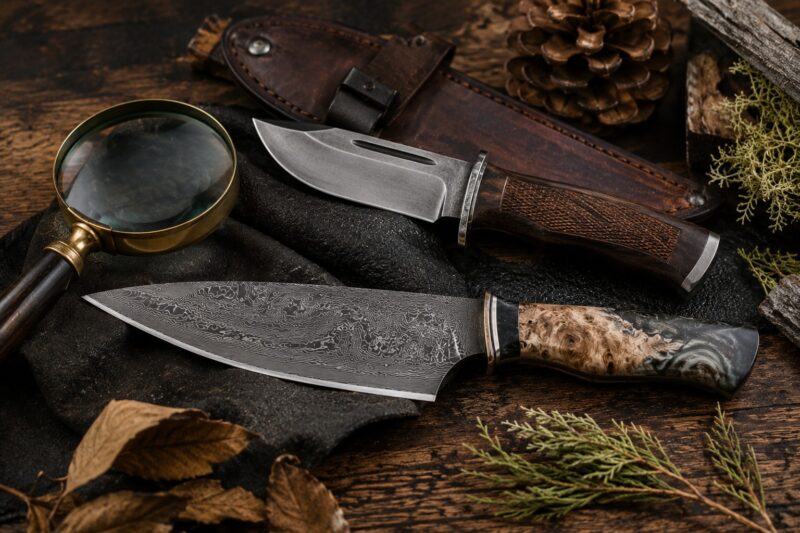
High-Quality Kitchen or Hunting Knife
An Independent Guide
The knife market has never been larger. From budget imports to premium custom blades, buyers have thousands of options available. Unfortunately, photographs and marketing descriptions can sometimes make a mediocre knife appear exceptional.
Whether you’re shopping for a chef knife, hunting knife, bushcraft knife, or handmade custom blade, knowing how to identify quality can save you money and ensure years of reliable performance.
A truly high-quality knife is more than just sharp. It combines proper steel selection, expert heat treatment, thoughtful design, ergonomic handling, and superior craftsmanship.
In this guide, we’ll explore the most important signs that separate premium knives from average ones and help you choose a knife that delivers real value.
🔪 Looking for a Professional-Grade Knife?
At Yashka Designs, we handcraft premium Knives. High performance meets functional art.
https://yashkadesigns.com/exclusive-chef-knives
Why Knife Quality Matters
A quality knife offers numerous benefits:
- Better cutting performance
- Improved edge retention
- Greater durability
- Enhanced safety
- More comfortable handling
- Easier maintenance
- Longer lifespan
A well-made knife can serve for decades and often becomes a favorite tool that sees daily use.
1. Quality Steel Selection
The foundation of every knife is its steel.
While steel alone does not determine performance, it plays a major role in durability and cutting ability.
Popular Kitchen Knife Steels
- VG10
- AEB-L
- 14C28N
- 9Cr18MoV
- SG2
- Magnacut
- M390
Popular Hunting Knife Steels
- 1095
- 52100
- CPM 3V
- Magnacut
- S35VN
- Elmax
A reputable maker will clearly identify the steel used.
Be cautious of knives marketed as “surgical steel” or “premium stainless steel” without specifying the actual alloy.
2. Proper Heat Treatment
Many knife experts consider heat treatment more important than steel selection.
Heat treatment affects:
- Hardness
- Toughness
- Edge retention
- Corrosion resistance
A premium knife maker invests significant effort into optimizing heat-treatment protocols.
Even expensive steel can perform poorly if heat treated incorrectly.
3. Excellent Blade Geometry
Blade geometry determines how efficiently a knife cuts.
Many buyers focus exclusively on steel while overlooking this critical factor.
A high-quality knife should:
- Slice smoothly
- Require minimal force
- Pass through material efficiently
Kitchen knives benefit from thinner grinds, while hunting knives often require slightly more robust geometry for durability.
4. Consistent Edge Grind
Inspect the cutting edge carefully.
A quality knife should have:
- Symmetrical bevels
- Consistent grind lines
- Even sharpening
Uneven edges can negatively affect cutting performance and sharpening ease.
High-end makers spend considerable time ensuring consistency throughout the blade.
5. Comfortable Handle Design
A knife may have excellent steel but still perform poorly if the handle is uncomfortable.
Signs of a quality handle include:
- Secure grip
- Comfortable contours
- Proper balance
- Smooth transitions
The knife should feel natural in the hand without creating pressure points.
6. Proper Balance
Balance greatly influences user comfort.
A well-balanced knife feels lighter and more controlled during use.
Kitchen knives typically balance near the pinch grip area, while hunting knives may balance slightly farther back depending on intended use.
Good balance reduces fatigue during extended cutting sessions.
7. High-Quality Handle Materials
Premium knives often feature durable and attractive handle materials.
Common options include:
Natural Materials
- Walnut
- Ebony
- Desert Ironwood
- Stabilized burl wood
Synthetic Materials
- Micarta
- G10
- Carbon fiber
These materials provide durability, stability, and aesthetic appeal.
Check Our Guide Knife Handle Materials Explained
8. Clean Fit and Finish
Fit and finish reveal a great deal about overall craftsmanship.
Inspect:
- Handle transitions
- Pins
- Spine
- Choil
- Blade surface
A quality knife should feel refined with no rough edges or gaps.
Attention to detail often separates premium knives from lower-quality alternatives.
9. Full Tang Construction (For Hunting Knives)
For outdoor and hunting applications, full tang construction is generally preferred.
A full tang provides:
- Increased strength
- Better durability
- Improved reliability
The steel extends through the entire handle, creating a stronger overall structure.
Many high-quality hunting knives feature this design.
Check Our Guide Knife Tang Types Explained
10. Smooth Spine and Choil
One sign of premium craftsmanship is a rounded spine and choil.
These areas contact the hand during extended use.
Rounded edges improve comfort significantly.
Custom knife makers often spend considerable time refining these details.
11. Strong Yet Thin Cutting Performance
A quality knife balances strength and cutting efficiency.
Poor knives often fall into one of two categories:
- Too thick to cut efficiently
- Too thin to remain durable
Experienced makers carefully optimize blade geometry for intended use.
This balance is one of the hallmarks of quality craftsmanship.
12. Reliable Corrosion Resistance
Kitchen knives frequently encounter:
- Water
- Acids
- Salt
Hunting knives face:
- Blood
- Moisture
- Outdoor environments
Quality stainless steels help resist corrosion and simplify maintenance.
For carbon steel knives, proper finishing and care become especially important.
13. Consistent Manufacturing Standards
Premium knife makers maintain consistency.
Signs include:
- Uniform bevels
- Precise handle shaping
- Repeatable quality
- Clean finishing
Consistency demonstrates experience and attention to detail.
14. Reputable Maker or Brand
The reputation of the maker matters.
Experienced makers typically provide:
- Proven designs
- Reliable heat treatment
- Better quality control
- Customer support
Researching the maker’s background can provide valuable insight before purchasing.
Customer reviews and long-term feedback are especially useful.
15. Real-World Performance
Ultimately, performance matters more than specifications.
A quality knife should:
- Cut effortlessly
- Hold an edge
- Sharpen easily
- Remain comfortable during use
The best knives excel in everyday tasks rather than simply looking impressive.
Signs of a High-Quality Kitchen Knife
For chef knives and Japanese kitchen knives, look for:
- Thin geometry
- Excellent food release
- Comfortable handle
- Fine edge stability
- High-quality steel
- Proper heat treatment
A good kitchen knife should make food preparation faster and more enjoyable.
Signs of a High-Quality Hunting Knife
For hunting and outdoor use, prioritize:
- Tough steel
- Full tang construction
- Secure grip
- Durable handle materials
- Corrosion resistance
- Reliable edge retention
A hunting knife must perform reliably under demanding conditions.
Handmade vs Factory-Made Quality
Not every handmade knife is superior.
Likewise, not every factory knife is inferior.
However, custom makers often provide:
- Better fit and finish
- Personalized designs
- Greater attention to detail
- Premium materials
The best custom knives combine performance with craftsmanship.
Check Our Guide Custom Knife vs Factory Knife
Common Red Flags
Be cautious if you encounter:
- Unspecified steel
- Unrealistic marketing claims
- Extremely low prices
- Poor finishing
- Uneven bevels
- Loose handles
- Unknown manufacturers
These warning signs may indicate lower overall quality.
Why Cheap Knives Often Cost More Later
Budget knives can seem attractive initially.
However, they often require:
- Frequent sharpening
- Replacement
- Repairs
A quality knife typically lasts longer and delivers a better overall ownership experience.
Quality Is More Than Steel
Many buyers focus solely on steel type.
In reality, quality depends on:
- Heat treatment
- Geometry
- Handle design
- Balance
- Craftsmanship
- Fit and finish
All of these factors work together to create a truly exceptional knife.
Final Thoughts
A high-quality kitchen or hunting knife is an investment in performance, durability, and craftsmanship. While marketing claims and flashy materials can attract attention, the true indicators of quality lie in proper steel selection, expert heat treatment, refined blade geometry, comfortable ergonomics, and attention to detail.
Whether you choose a handmade custom knife or a premium production model, understanding these signs will help you make a more informed purchase. The best knife is not necessarily the most expensive one—it is the knife that performs reliably, feels comfortable in your hand, and continues to serve you year after year.
When quality craftsmanship meets thoughtful design, a knife becomes more than just a tool. It becomes a trusted companion for the kitchen, the workshop, the hunting field, and everyday life.
Here’s a long-form SEO article suitable for your WordPress store. It targets keywords such as high quality kitchen knife, quality hunting knife, how to identify a good knife, custom knife quality, premium chef knife, and handmade hunting knife.
https://www.etsy.com/shop/YashkaDesigns?section_id=26912671
FAQ
What is the most important sign of a high-quality knife?
Proper heat treatment and blade geometry are often considered the most important factors because they directly affect cutting performance and durability.
Does expensive steel automatically mean a better knife?
No. Even premium steel can perform poorly if the heat treatment or blade geometry is not properly executed.
How can I tell if a hunting knife is high quality?
Look for full tang construction, durable steel, comfortable ergonomics, quality handle materials, and consistent craftsmanship.
What makes a kitchen knife high quality?
A quality kitchen knife should have excellent edge geometry, comfortable balance, reliable steel, and a properly heat-treated blade.
Are handmade knives better than factory knives?
Not always, but high-quality handmade knives often provide better fit and finish, customization options, and attention to detail.
What handle materials are best for quality knives?
Popular premium options include stabilized wood, desert ironwood, ebony, Micarta, G10, and carbon fiber.
How long should a quality knife last?
With proper care and maintenance, a high-quality knife can last for decades or even a lifetime.
Why is blade geometry important?
Blade geometry determines how efficiently a knife cuts and often has a greater impact on performance than steel selection alone.
Should a hunting knife be full tang?
For demanding outdoor use, full tang construction is generally preferred because it provides greater strength and durability.
How do I avoid buying a low-quality knife?
Choose reputable makers, verify steel specifications, inspect fit and finish, and read customer reviews before purchasing.
This article is for independent informational purposes only and is not affiliated with, sponsored by, or endorsed by any steel manufacturer. All product names, trademarks, and registered trademarks are the property of their respective owners.