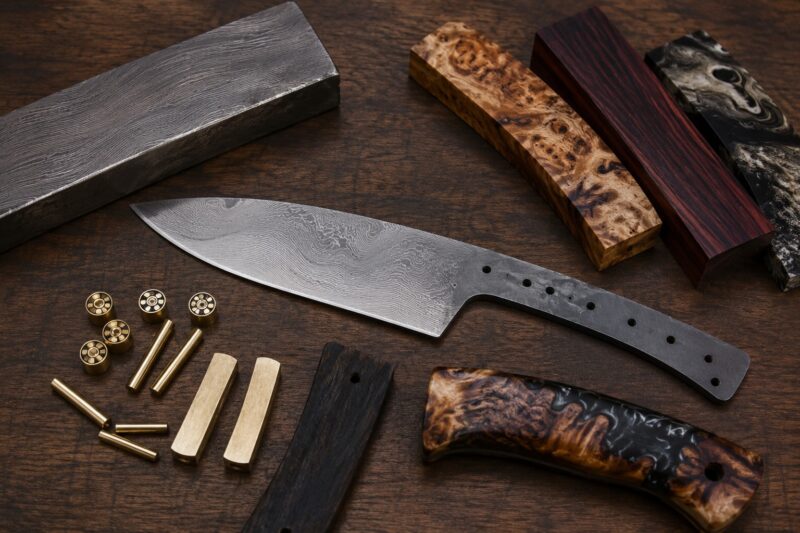
Introduction
How a Handmade Knife Is Made
An Independent Guide
A handmade knife is much more than a cutting tool. It is the result of craftsmanship, precision, experience, and countless hours of work. Unlike factory-produced knives that are manufactured by machines in large quantities, a handmade knife is carefully created by a skilled maker who pays attention to every detail.
Many knife enthusiasts appreciate handmade knives because they offer superior quality, unique designs, and a personal touch that mass-produced products simply cannot match. Whether used for hunting, camping, bushcraft, cooking, or collecting, a well-made handmade knife can last for generations.
But what actually goes into making a handmade knife?
In this article, we’ll explore the complete knife-making process, from selecting the steel to the final sharpening and inspection. Understanding this process will help you appreciate the craftsmanship behind every custom knife and explain why handmade knives are valued by outdoor enthusiasts and collectors around the world.
⸻
Step 1: Choosing the Right Steel
Every great knife begins with quality steel.
The blade steel determines how well a knife performs, how long it stays sharp, how resistant it is to corrosion, and how durable it will be under demanding conditions.
Knife makers carefully select steel based on the intended purpose of the knife. Some of the most popular choices include:
High Carbon Steel
High carbon steels are known for excellent edge retention and toughness. They are favored by many bushcraft and outdoor enthusiasts because they are easy to sharpen and perform exceptionally well in the field.
Advantages include:
• Excellent cutting performance
• Easy maintenance in the field
• Superior toughness
However, carbon steels require proper care to prevent rust.
Stainless Steel
Modern stainless steels offer excellent corrosion resistance while maintaining strong cutting performance.
Benefits include:
• High rust resistance
• Lower maintenance requirements
• Excellent durability
Stainless steels are often preferred for hunting, fishing, and everyday carry knives.
Damascus Steel
Damascus steel is admired for its beautiful patterns and unique appearance.
Created by forging multiple layers of steel together, Damascus blades combine artistic beauty with practical performance, making them popular among collectors and gift buyers.
The steel selection process lays the foundation for the knife’s final characteristics and overall performance.
⸻
Step 2: Designing the Knife
Before any steel is cut, the knife maker develops a design.
This stage requires balancing aesthetics, ergonomics, and functionality.
Several factors are considered:
• Blade length
• Blade thickness
• Blade shape
• Intended use
• Handle design
• Weight distribution
• Overall balance
Popular blade shapes include:
Drop Point
One of the most versatile blade designs available. Ideal for hunting, outdoor use, and everyday tasks.
Clip Point
Offers a fine tip suitable for precision work.
Tanto
Designed for strength and piercing capabilities.
Skinner
Optimized for processing game animals.
Many custom makers create templates that allow them to reproduce successful designs while still offering unique variations for customers.
⸻
Step 3: Cutting the Blade Profile
Once the design is finalized, the blade profile is cut from a steel bar.
The maker transfers the design onto the steel and removes excess material using various tools such as:
• Bandsaws
• Angle grinders
• Plasma cutters
• Waterjet cutting systems
At this stage, the knife begins to take its recognizable shape.
The blade profile includes:
• Cutting edge
• Spine
• Tang
• Choil
• Handle section
Accuracy is extremely important because mistakes made here can affect the entire project.
⸻
Step 4: Grinding the Blade
Grinding is one of the most critical stages of knife making.
This process creates the blade geometry that ultimately determines cutting performance.
Using belt grinders and specialized equipment, the maker carefully removes material to create the bevels.
Common grind types include:
Flat Grind
Provides excellent cutting performance and versatility.
Hollow Grind
Produces a very sharp edge suitable for slicing tasks.
Convex Grind
Offers superior durability and strength.
Scandi Grind
Popular among bushcraft enthusiasts because it is easy to maintain and sharpen.
Grinding requires patience and precision. Removing too much material can ruin the blade.
Experienced knife makers often spend years mastering this skill.
⸻
Step 5: Drilling and Tang Preparation
Before heat treatment, necessary holes are drilled into the tang.
These holes are used for:
• Pins
• Mosaic pins
• Corby bolts
• Lanyard tubes
Proper tang preparation ensures a secure and long-lasting handle attachment later in the process.
The maker also smooths and refines the tang to eliminate unnecessary stress points.
⸻
Step 6: Heat Treatment
Heat treatment is often considered the heart of knife making.
Even the best steel can perform poorly if heat treatment is not done correctly.
This process involves carefully controlled heating and cooling cycles that optimize the steel’s structure.
The typical process includes:
Hardening
The blade is heated to a specific temperature and then rapidly cooled.
This increases hardness and edge retention.
Tempering
After hardening, the blade is reheated at a lower temperature.
Tempering reduces brittleness while maintaining strength.
The final hardness is usually measured using the Rockwell Hardness Scale (HRC).
Proper heat treatment balances:
• Edge retention
• Toughness
• Durability
• Resistance to chipping
Many experienced makers consider heat treatment one of the most important aspects of knife performance.
Check Our Guide What Is HRC? Understanding Rockwell Hardness in Kitchen Knives
⸻
Step 7: Finish Grinding
After heat treatment, the blade undergoes finish grinding.
This stage refines:
• Edge geometry
• Surface finish
• Symmetry
• Overall appearance
Because the blade is now hardened, grinding becomes more challenging.
The maker must carefully avoid overheating the steel, which could negatively affect the heat treatment.
Precision and experience are essential during this phase.
⸻
Step 8: Hand Sanding
Hand sanding transforms a rough blade into a refined piece of craftsmanship.
This process can take several hours depending on the desired finish.
The maker gradually works through finer grit abrasives to remove scratches and improve surface quality.
Common finishes include:
Satin Finish
Elegant and practical.
Mirror Polish
Highly reflective and visually impressive.
Stonewashed Finish
Provides a rugged appearance while helping hide scratches.
Hand sanding is often one of the most time-consuming steps in knife making.
⸻
Step 9: Creating the Handle
The handle greatly influences comfort, control, and appearance.
A beautiful blade deserves an equally impressive handle.
Popular handle materials include:
Stabilized Wood
Combines natural beauty with improved durability.
Exotic Hardwood
Offers unique grain patterns and character.
Micarta
Extremely durable and weather resistant.
G10
Lightweight, strong, and highly practical.
The maker carefully shapes the handle scales to fit both the tang and the human hand.
Comfort is a major priority because a knife should feel natural during extended use.
Check Our Guide Mosaic Pins for Knife Handles
⸻
Step 10: Handle Assembly
Once the handle scales are prepared, they are permanently attached to the tang.
This process typically involves:
• Industrial epoxy
• Pins
• Corby bolts
• Mosaic pins
The combination of adhesives and mechanical fasteners creates a strong, long-lasting bond.
After assembly, the handle is shaped and refined until it achieves the desired ergonomic profile.
Attention to detail at this stage greatly affects the final user experience.
⸻
Step 11: Final Shaping and Finishing
With the handle installed, the knife enters its final shaping stage.
The maker smooths all transitions between materials and refines every contour.
This process improves:
• Comfort
• Balance
• Appearance
• Overall craftsmanship
Small details often distinguish exceptional handmade knives from ordinary production models.
⸻
Step 12: Sharpening the Edge
A knife is only as good as its edge.
Sharpening is the final step that transforms the blade into a cutting tool.
The maker carefully establishes the final edge geometry using specialized sharpening systems.
The goal is to create:
• Consistent edge angles
• Excellent cutting performance
• Long-lasting sharpness
A properly sharpened handmade knife should effortlessly cut paper, rope, leather, and other materials.
⸻
Step 13: Quality Control and Inspection
Before the knife reaches its new owner, it undergoes thorough inspection.
The maker checks:
• Blade symmetry
• Handle fit
• Finish quality
• Edge sharpness
• Balance
• Overall appearance
Any imperfections are corrected before the knife is considered complete.
This level of individual inspection is one reason why handmade knives often exceed the quality standards of mass-produced alternatives.
⸻
Why Handmade Knives Cost More
Some people wonder why handmade knives command higher prices than factory knives.
The answer lies in the process.
A handmade knife requires:
• Premium materials
• Specialized equipment
• Years of experience
• Significant labor
• Individual attention
Unlike factory production, every knife receives direct hands-on involvement from the maker.
Customers are not only purchasing a tool—they are investing in craftsmanship, quality, and uniqueness.
⸻
The Value of Handmade Craftsmanship
A handmade knife reflects the skill and dedication of its maker.
Each knife carries subtle details that machines cannot replicate.
Whether crafted for hunting, camping, bushcraft, everyday carry, or collecting, a quality handmade knife is designed to serve reliably for many years.
Many owners eventually pass their knives down to future generations, turning them into family heirlooms rather than disposable tools.
⸻
Conclusion
The journey from raw steel to finished blade is a complex and rewarding process.
Every stage—from steel selection and design to heat treatment, handle creation, sharpening, and final inspection—plays a critical role in the performance and beauty of the finished knife.
Understanding how a handmade knife is made helps explain why custom knives are so highly valued by outdoor enthusiasts, hunters, collectors, and craftsmen alike.
When you hold a handmade knife, you are holding far more than steel and wood. You are holding hours of skilled work, attention to detail, and a commitment to quality that cannot be mass-produced.
A truly handmade knife is not simply made—it is crafted.
FAQ
What steel is commonly used for handmade knives?
Handmade knives can be made from many different steels, including high-carbon steel, stainless steel, Damascus steel, and laminated steel. The choice depends on the intended use, desired edge retention, corrosion resistance, and ease of sharpening.
How long does it take to make a handmade knife?
The process can take anywhere from several hours to several days. Forging, grinding, heat treatment, handle fitting, and finishing all require careful attention to detail to ensure a high-quality final product.
What is the difference between a forged knife and a stock-removal knife?
A forged knife is shaped by heating and hammering steel into its final form. A stock-removal knife is made by cutting and grinding the blade from a flat piece of steel. Both methods can produce excellent knives when performed correctly.
Why is heat treatment important in knife making?
Heat treatment determines the hardness, toughness, and edge retention of the blade. Proper heat treatment is one of the most critical steps in creating a durable and high-performing knife.
What materials are used for knife handles?
Knife handles can be made from hardwoods, stabilized wood, micarta, G10, carbon fiber, bone, horn, or synthetic materials. Each offers different aesthetics, durability, and grip characteristics.
How is a knife handle attached to the blade?
Depending on the knife design, handles may be attached using pins, mosaic pins, rivets, bolts, epoxy adhesive, or traditional Japanese hidden-tang construction methods.
What are mosaic pins?
Mosaic pins are decorative metal pins used in custom knife handles. They contain intricate internal patterns and add both visual appeal and structural strength to the finished knife.
How sharp is a handmade knife?
A properly made handmade knife is typically sharpened to a razor-sharp edge before delivery. The exact sharpness depends on the blade geometry and intended use.
Can handmade knives be used every day?
Yes. Handmade knives are designed for practical use and can serve as reliable kitchen, hunting, outdoor, or utility tools when properly maintained.
How should I care for a handmade knife?
Keep the blade clean and dry after use, avoid dishwashers, store it safely, and sharpen it regularly. Carbon steel knives should be lightly oiled to help prevent corrosion.
https://yashkadesigns.com/handmade-chinese-knives
https://www.etsy.com/shop/YashkaDesigns?section_id=57669328
From Raw Steel to Razor-Sharp Perfection: How a Handmade Knife Is Made
This article is for independent informational purposes only and is not affiliated with, sponsored by, or endorsed by any steel manufacturer. All product names, trademarks, and registered trademarks are the property of their respective owners.