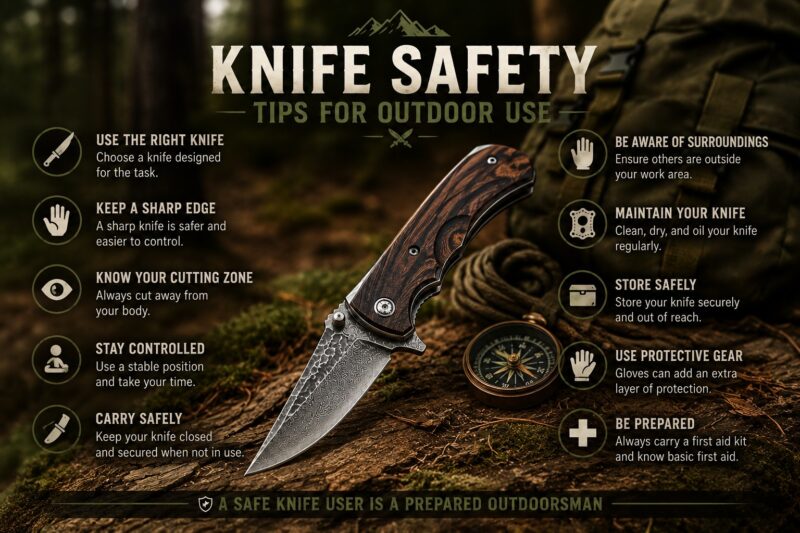
Knife safety tips for outdoor use
A quality knife is one of the most valuable tools you can carry outdoors. Whether you’re hunting, camping, fishing, hiking, or practicing bushcraft, a reliable knife helps with countless tasks, from preparing food and processing game to building shelters and cutting rope.
However, a knife is only as useful as it is safe. Every year, outdoor enthusiasts suffer preventable injuries due to improper knife handling, poor maintenance, unsafe cutting techniques, or simply a lack of awareness.
The good news is that knife safety is not complicated. By following a few proven principles, you can dramatically reduce the risk of accidents while improving your efficiency and confidence in the field.
In this guide, we’ll cover essential knife safety tips for outdoor use, helping hunters, campers, bushcrafters, and outdoor adventurers stay safe while getting the most from their knives.
🔪 Looking for a Professional-Grade Hunting Knife?
https://yashkadesigns.com/hunting-knives
Why Knife Safety Matters Outdoors
In a controlled kitchen environment, a minor cut may be inconvenient.
In the wilderness, the consequences can be much more serious.
A deep cut can lead to:
- Significant blood loss
- Infection
- Reduced mobility
- Difficulty completing outdoor tasks
- Emergency evacuation situations
Because outdoor environments are often remote, prevention becomes even more important.
Good knife safety habits protect both you and the people around you.
Choose the Right Knife for the Task
One of the most common causes of knife accidents is using the wrong knife.
Different knives are designed for different purposes.
Hunting Knives
Ideal for:
- Field dressing game
- Skinning
- Processing meat
Bushcraft Knives
Ideal for:
- Carving wood
- Feather sticks
- Shelter building
Camp Knives
Ideal for:
- Food preparation
- Utility tasks
- General campsite work
Using the proper knife reduces unnecessary force and increases control.
Always Use a Sharp Knife
Many beginners assume dull knives are safer.
The opposite is true.
A dull blade requires more pressure, making slips more likely.
Sharp knives:
- Cut more predictably
- Require less force
- Increase precision
- Improve control
Maintaining a sharp edge is one of the most important knife safety practices.
Inspect Your Knife Before Use
Before heading outdoors, inspect your knife carefully.
Check for:
- Loose handles
- Blade damage
- Chips or cracks
- Corrosion
- Loose sheath retention
Any defect can create a dangerous situation during use.
A quick inspection only takes a few minutes and may prevent injury.
Maintain a Safe Grip
Always hold your knife firmly.
Your grip should be secure but not overly tight.
A proper grip:
- Improves control
- Reduces fatigue
- Minimizes slipping
If your hands become wet, cold, muddy, or greasy, stop and clean them before continuing.
Know Your Cutting Zone
Experienced outdoorsmen follow a simple rule:
Never cut toward yourself.
Instead:
- Cut away from your body
- Keep limbs clear
- Maintain awareness of blade travel
Visualize where the blade will go if it slips.
If that path includes your hand, leg, or another person, change your position.
Respect the Blood Circle
The “blood circle” is a classic outdoor safety concept.
Extend your arm while holding the knife.
Rotate slowly in a full circle.
The area the knife can reach is your safety zone.
Ensure no people, pets, or equipment are inside this space before cutting.
This simple habit prevents many accidents.
Sit Down for Precision Work
When carving, whittling, or performing detailed tasks, consider sitting down.
A stable position offers:
- Better control
- Reduced fatigue
- Lower risk of slipping
Avoid performing detailed knife work while walking or standing on unstable ground.
Avoid Distractions
Knife accidents often occur when attention drifts.
Stay focused when using your knife.
Avoid:
- Looking at your phone
- Engaging in intense conversations
- Working in poor visibility
- Rushing
Concentration is one of the best safety tools available.
Learn Safe Carving Techniques
Wood carving is common during camping and bushcraft activities.
Safe carving methods include:
Push Cut
Controlled forward cutting motion.
Chest Lever Grip
Advanced bushcraft technique providing excellent control.
Thumb Push
Uses the thumb to guide blade movement carefully.
These methods reduce the chance of uncontrolled slips.
Use a Cutting Surface
Never cut materials while holding them in mid-air.
Instead use:
- Cutting boards
- Logs
- Tree stumps
- Stable work surfaces
A secure work area improves safety and cutting efficiency.
Carry Your Knife Properly
Proper carry methods are essential outdoors.
Fixed Blade Knives
Should always be carried in a secure sheath.
The sheath should:
- Fully cover the edge
- Retain the knife securely
- Prevent accidental removal
Folding Knives
Ensure the lock functions properly.
Check that the blade is fully closed before pocket carry.
Check Our Kitchen Knife Care Guide
Never Run With a Knife
This rule may sound obvious, but accidents still happen.
If you need to move:
- Sheath the knife.
- Secure it properly.
- Move to the new location.
Never walk with an exposed blade unless actively using it.
Practice Safe Knife Passing
When handing a knife to another person:
Option 1
Place the knife on a surface.
Allow the other person to pick it up.
Option 2
Offer the handle first.
Keep the edge pointed away.
Wait until the other person has a secure grip before releasing.
Use Protective Gloves When Appropriate
Gloves can provide additional protection during:
- Wood processing
- Game dressing
- Heavy-duty tasks
Cut-resistant gloves are especially useful for beginners.
However, gloves do not replace proper technique.
Be Extra Careful in Cold Weather
Cold temperatures reduce:
- Dexterity
- Grip strength
- Reaction time
Many outdoor knife injuries occur during winter.
Take extra precautions:
- Warm your hands
- Work slowly
- Use secure grips
Safe Game Processing
Hunters frequently use knives while field dressing game.
Important safety practices include:
- Work slowly
- Maintain blade awareness
- Keep hands behind the cutting edge
- Use proper field-dressing techniques
Fatigue after a successful hunt often contributes to accidents.
Stay focused until the job is complete.
Keep Your Knife Clean
A dirty knife is not just unsanitary.
Debris can affect:
- Grip
- Blade performance
- Corrosion resistance
Clean your knife after each use.
Pay special attention to:
- Blade surface
- Handle scales
- Lock mechanisms
- Sheath interiors
Prevent Rust and Corrosion
Corrosion weakens steel and can create unsafe conditions.
To prevent rust:
- Dry thoroughly
- Apply protective oil
- Store properly
- Avoid prolonged moisture exposure
This is especially important for carbon steel and Damascus steel knives.
Check Our Guide Best Hunting Knife Features Explained
Store Knives Safely at Camp
Never leave a knife lying around camp.
Instead:
- Return it to its sheath
- Store in a designated location
- Keep away from children
A consistent storage routine prevents accidental injuries.
Understand Your Knife’s Limitations
Knives are cutting tools.
They are not:
- Screwdrivers
- Pry bars
- Chisels
- Hammers
Misusing a knife increases the risk of breakage and injury.
Use the proper tool for each task.
Avoid Batoning Beyond Your Skill Level
Batoning wood can be useful in survival situations.
However, improper batoning can:
- Damage blades
- Cause loss of control
- Create flying debris
Practice with appropriate knives and safe techniques.
Sharpen Safely
Sharpening accidents are common.
When sharpening:
- Work slowly
- Maintain stable surfaces
- Keep fingers clear
- Use proper sharpening tools
A few extra minutes of caution can prevent serious cuts.
Teach Children Proper Knife Safety
Young outdoor enthusiasts should learn knife safety early.
Key lessons include:
- Respect the blade
- Proper carrying techniques
- Safe cutting methods
- Adult supervision
Building good habits early creates safer lifelong users.
Build Good Habits Through Repetition
Safe knife handling becomes automatic through repetition.
Develop routines such as:
- Inspecting before use
- Checking surroundings
- Using proper grips
- Cleaning after use
- Sheathing immediately after tasks
Consistency reduces mistakes.
Emergency Preparedness
Even experienced users can suffer accidents.
Carry a basic first-aid kit containing:
- Bandages
- Gauze
- Antiseptic wipes
- Medical tape
- Compression dressings
Preparation can make a significant difference if an injury occurs.
Conclusion
A knife is one of the most valuable tools in the outdoors, but it demands respect and responsibility. Whether you’re hunting, camping, fishing, or practicing bushcraft, safe knife handling should always be a priority.
By choosing the right knife, maintaining a sharp edge, practicing proper cutting techniques, carrying your knife safely, and developing good habits, you can greatly reduce the risk of accidents while enjoying all the benefits a quality knife provides.
The safest knife users aren’t necessarily the most experienced—they’re the ones who consistently follow proven safety principles every time they pick up a blade.
FAQ
Q: Why is a sharp knife safer than a dull knife?
A: A sharp knife requires less force and provides more predictable cuts, reducing the risk of slipping.
Q: What is the blood circle in knife safety?
A: The blood circle is the area a knife can reach when your arm is fully extended. Ensure no people are within this zone while using a knife.
Q: Should I cut toward or away from my body?
A: Always cut away from your body whenever possible to reduce injury risk.
Q: What is the safest way to carry a fixed-blade knife?
A: Carry it in a secure sheath that fully covers the blade and prevents accidental removal.
Q: How often should I inspect my outdoor knife?
A: Before every trip and before each extended use session.
Q: Are gloves recommended when using a knife outdoors?
A: Gloves can provide additional protection during certain tasks, but proper technique remains essential.
Q: Can rust affect knife safety?
A: Yes. Corrosion can weaken steel, reduce performance, and increase the likelihood of blade failure.
Q: What should I do if my knife becomes wet?
A: Dry it thoroughly as soon as possible and apply protective oil if needed.
Q: Is it safe to use a knife as a pry bar?
A: No. Knives are designed for cutting and should not be used for prying or similar tasks.
Q: What should be included in a knife-related first-aid kit?
A: Bandages, gauze, antiseptic wipes, medical tape, and compression dressings are recommended.
knife-safety-tips-for-outdoor-use