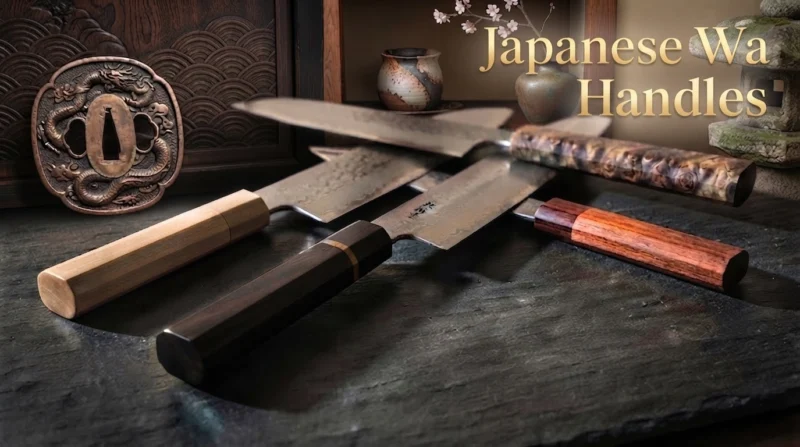
Japanese Wa Handles
A Wa handle is the traditional Japanese style of knife handle found on many Japanese kitchen knives. Unlike a Western-style handle, which normally surrounds a full tang with two scales and rivets, a Wa handle is usually a single piece of wood fitted over a concealed or partial tang.
At first glance, a Wa handle may look very simple. There are no visible rivets, no large metal bolster, and often no complicated contours. But that simplicity is intentional. A traditional Wa handle is designed to be lightweight, comfortable, easy to control, and relatively easy to replace.
The design also changes the way a Japanese knife feels in the hand.
Because a Wa handle can be considerably lighter than a Western-style handle, more of the knife’s weight remains toward the blade. For users who prefer a pinch grip and precise push or pull cuts, this can make the knife feel particularly agile and responsive.
Wa handles are commonly found on gyuto, santoku, nakiri, petty, kiritsuke, yanagiba, deba, usuba, and many other Japanese knife styles.
They are available in a remarkable range of materials and shapes. Traditional handles may use ho wood (Japanese magnolia) with a buffalo-horn ferrule, while modern Wa handles may use ebony, rosewood, walnut, stabilized wood, pakkawood, or resin-based materials.
So what exactly makes a Wa handle different?
How does a Wa handle affect knife balance?
Which Wa handle material is best?
And can you replace a damaged or uncomfortable Wa handle?
This guide explains everything you need to know before choosing, installing, replacing, or maintaining a Japanese Wa handle.
https://yashkadesigns.com/5-inch-wa-handle-replacement-2
1. Wa Handle vs Western Knife Handle
The easiest way to understand a Wa handle is to compare it with the Western-style handle found on many European and American kitchen knives.
A typical Western handle consists of two scales attached to a full tang with rivets. The steel of the blade continues through the entire handle, and the tang is usually visible along the top, bottom, or end of the handle.
A traditional Wa handle works differently.
The handle is generally made from a single block of material, and the tang extends into that block rather than being exposed around it. This is commonly described as a hidden-tang construction.
The result is a handle with a completely different visual appearance and, more importantly, a different weight distribution.
| Feature | Wa Handle | Western-Style Handle |
|---|---|---|
| Tang | Usually hidden/partial | Usually full tang |
| Handle construction | One-piece body | Two scales around tang |
| Rivets | Usually none | Usually 2–3 or more |
| Typical weight | Light | Heavier |
| Balance | Usually blade-forward | Usually closer to hand |
| Common materials | Wood, stabilized wood, resin | Micarta, pakkawood, G-10, wood, polymers |
| Common shapes | Octagonal, oval, D-shaped | Contoured, symmetrical |
| Replacement | Usually relatively straightforward | More involved |
| Traditional Japanese use | Very common | Common on modern/hybrid knives |
The difference is not simply cosmetic.
A Wa handle often gives a knife a lighter, more blade-oriented feeling. A Western handle tends to place more mass behind the blade.
Neither design is inherently superior.
They simply suit different preferences.
A cook who likes a strong, substantial grip may prefer a Western handle. Someone who uses a pinch grip and wants the blade to feel quick and precise may prefer a Wa handle.
The choice becomes especially noticeable during long preparation sessions, where even a relatively small difference in handle weight can change the overall feel of the knife.
Check Our Guide Mosaic Pins for Knife Handles
2. Hidden Tang Construction Explained
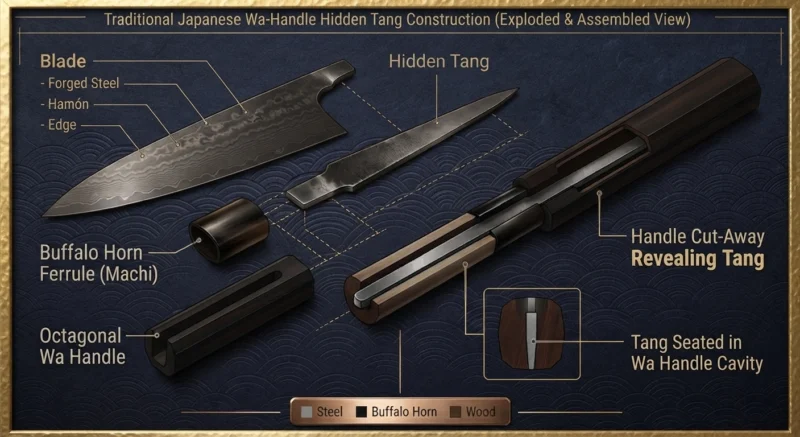
The hidden tang is one of the defining characteristics of a traditional Wa handle.
Instead of extending visibly through the handle, the tang enters a hole or slot inside the handle material.
The visible part of the knife therefore ends at the ferrule or handle itself. You don’t see steel running through the sides of the grip.
A simplified cross-section looks something like this:
Blade → tang → ferrule → handle body
The tang is usually narrower than the handle and extends into the handle for a significant distance.
The exact shape of the tang varies between knives and makers. Some tangs are relatively narrow and tapered, while others are wider or have more complex profiles.
The handle itself is prepared with an internal cavity that matches the tang.
Traditional Wa handle fitting may involve drilling a preliminary hole and then carefully fitting the tang. One traditional method involves heating the tang and seating it into the wooden handle, while modern makers may also use adhesives or sealants depending on the handle material and construction.
https://yashkadesigns.com/chef-knife-handle-for-japanese-kitchen-knives
Why use a hidden tang?
There are several reasons.
Lower weight
The handle does not contain a large steel tang running all the way to the butt.
That saves weight.
Blade-forward balance
With less weight behind the hand, the blade naturally contributes more to the overall balance.
Simple construction
A Wa handle can be made from one block rather than two scales, multiple rivets, and a full-tang assembly.
Easy replacement
One of the interesting advantages of a traditional Wa handle is that it can often be removed and replaced without replacing the entire knife.
This is particularly useful for expensive Japanese knives where the blade may remain perfectly functional for decades while the handle eventually becomes worn or damaged.
Check Our Guide Knife Handle Materials Explained
3. Traditional Japanese Wa Handle Materials
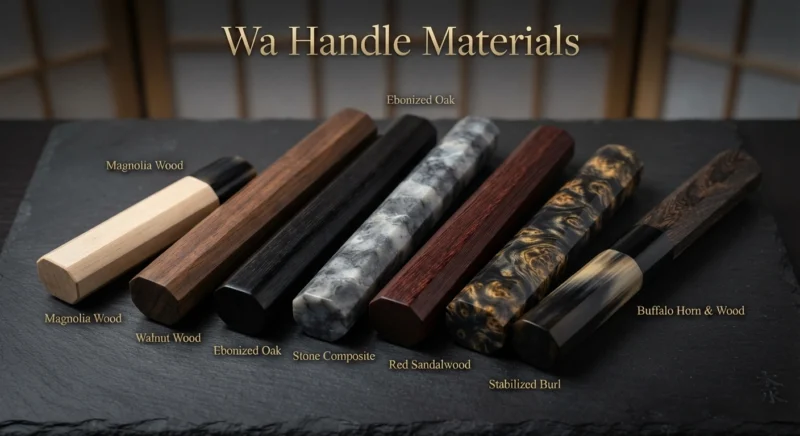
When people think of a traditional Wa handle, ho wood is probably the material that comes to mind first.
Ho wood is Japanese magnolia, generally associated with Magnolia obovata. It is light, relatively soft, fine-grained, and has a relatively neutral appearance and scent.
Traditional Wa handles made from ho wood are often paired with a darker ferrule, traditionally made from buffalo horn.
The contrast between pale wood and a dark ferrule has become one of the most recognizable Japanese knife-handle designs.
But ho wood is only the beginning.
Modern Wa handles can be made from many different materials, including:
- Magnolia
- Walnut
- Ebony
- Rosewood
- Cherry
- Yew
- Oak
- Stabilized wood
- Pakkawood
- Resin
- Wood/resin hybrids
- Synthetic composites
Each material changes the appearance, weight, durability, and feel of the Wa handle.
This is why choosing a Wa handle is not simply a question of choosing the most expensive wood.
The best Wa handle depends on what you want from the knife.
4. Magnolia vs Ebony vs Rosewood vs Walnut vs Stabilized Wood
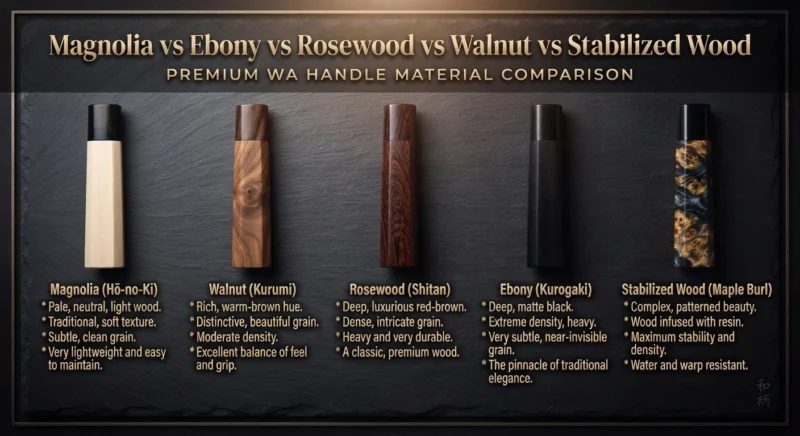
The material has a surprisingly large influence on the character of a Wa handle.
A lightweight magnolia handle can make a knife feel extremely blade-forward.
A dense ebony handle can move the balance noticeably toward the hand.
A walnut Wa handle sits somewhere between traditional lightweight magnolia and very dense exotic woods.
Stabilized wood adds another option by combining real wood with resin to improve dimensional stability.
Let’s look at the main choices.
Magnolia / Ho Wood
Magnolia is arguably the classic Wa handle material.
Its main advantage is its combination of low weight, fine texture, workability, and traditional appearance.
Because the material is relatively light, a magnolia Wa handle doesn’t add much weight behind the blade.
This is exactly what many users want from a traditional Japanese kitchen knife.
Magnolia is also relatively easy for a handle maker to shape and fit.
Its disadvantages are mostly related to its relatively soft nature.
It can dent more easily than harder woods, and untreated wood still needs to be kept reasonably dry.
Magnolia is an excellent choice if you want:
- A traditional Japanese appearance
- Very low handle weight
- A blade-forward knife
- A simple, understated handle
- Easy replacement
- A classic gyuto or nakiri setup
For a traditional Wa handle, magnolia is still difficult to beat.
https://yashkadesigns.com/chef-knife-replacement-wa-handle-diy
Ebony
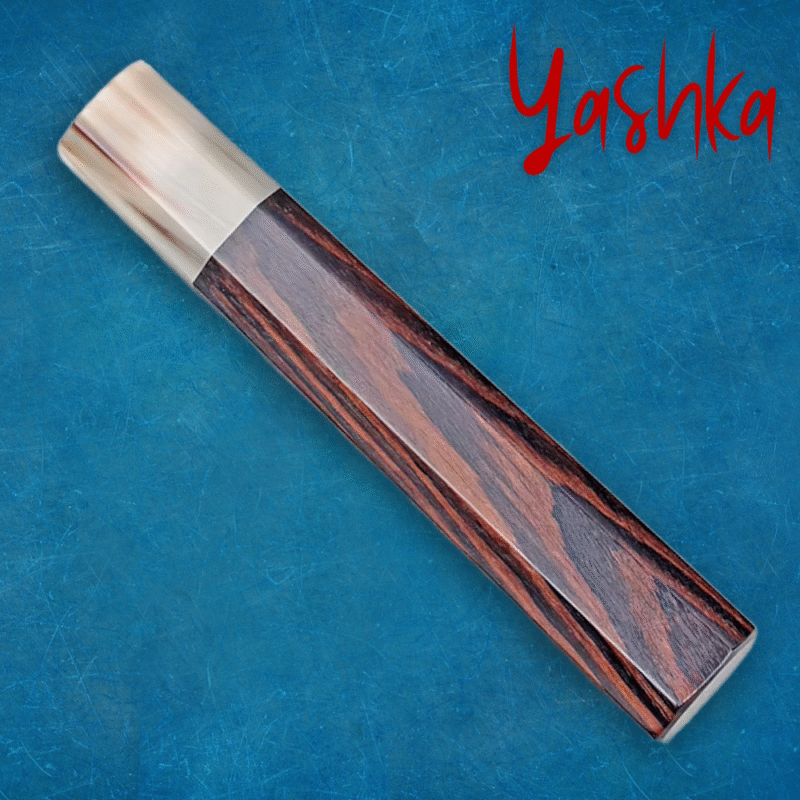
Ebony is almost the opposite of magnolia.
It is extremely dense and hard compared with traditional ho wood.
A black ebony Wa handle can look spectacular, particularly when paired with a high-end Japanese blade.
But that density comes with a trade-off: more weight.
A knife fitted with an ebony Wa handle may feel significantly different from the same knife fitted with magnolia.
The balance moves somewhat rearward.
That isn’t necessarily a disadvantage.
Some users actually prefer a slightly heavier handle because it gives the knife a more substantial feeling in the hand.
Ebony is especially attractive for:
- Premium Wa handles
- Custom knives
- Presentation knives
- Users who prefer heavier handles
- Dark, minimalist aesthetics
However, dense woods still need appropriate care. Hardness does not mean that the handle is immune to cracking or environmental changes.
https://yashkadesigns.com/chef-knife-rosewood-wa-handle
Rosewood
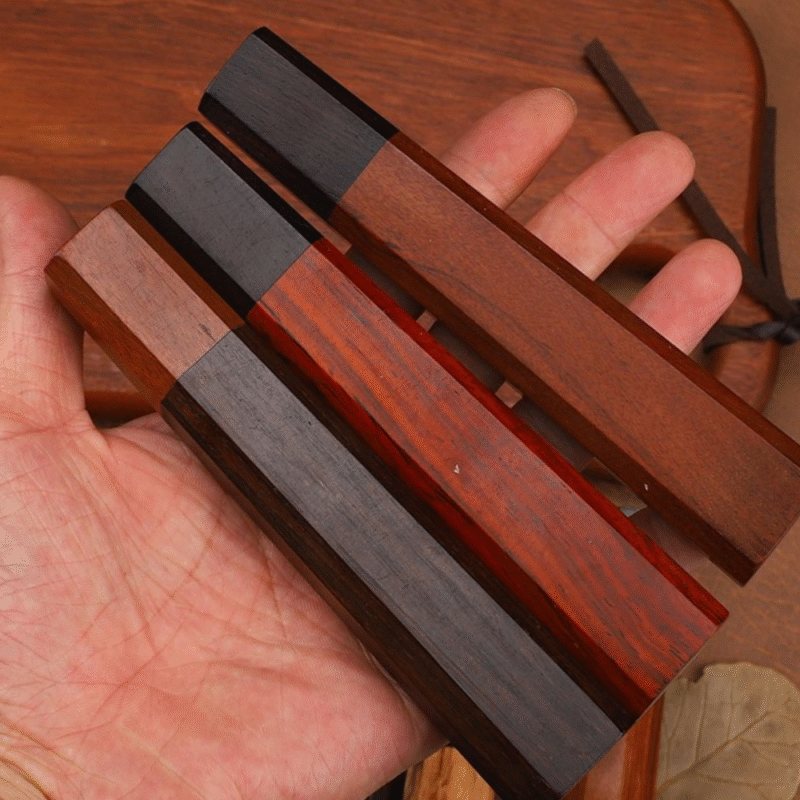
Rosewood is another popular premium handle material.
The term “rosewood” covers multiple species, and their properties can vary considerably.
Many rosewoods are dense, hard, and naturally rich in color. Their reddish-brown or dark brown appearance makes them particularly attractive for custom Wa handles.
Rosewood generally gives a knife more handle weight than magnolia.
It can therefore provide a different balance and a somewhat more substantial feel.
One important point is that some rosewood species are regulated under international trade rules. If you’re buying or selling a Wa handle made from a specific rosewood species, the exact species matters.
For knife makers and sellers, that is something worth checking before importing or exporting exotic hardwood.
Walnut
Walnut is an excellent middle-ground choice.
It is darker and more visually distinctive than traditional magnolia while generally remaining less dense than ebony.
A walnut Wa handle can therefore offer a good compromise between:
- Weight
- Appearance
- Durability
- Comfort
- Price
Walnut also has a familiar, natural appearance that works well with both traditional and modern Japanese knives.
For someone who wants a more distinctive Wa handle without going all the way to an extremely dense exotic wood, walnut can be an excellent option.
https://yashkadesigns.com/wa-handle-olive-wood
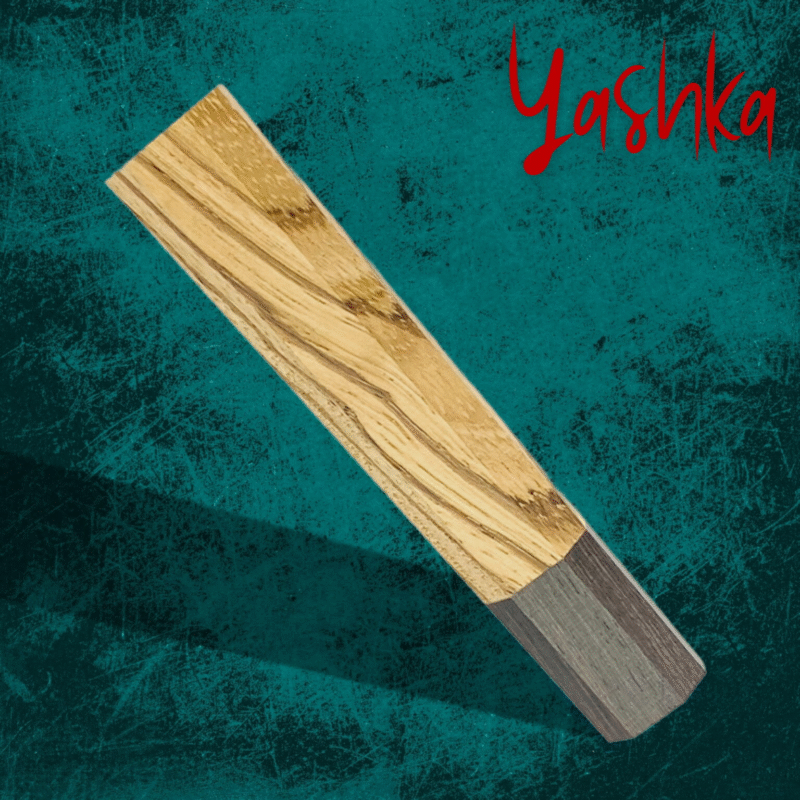
Stabilized Wood
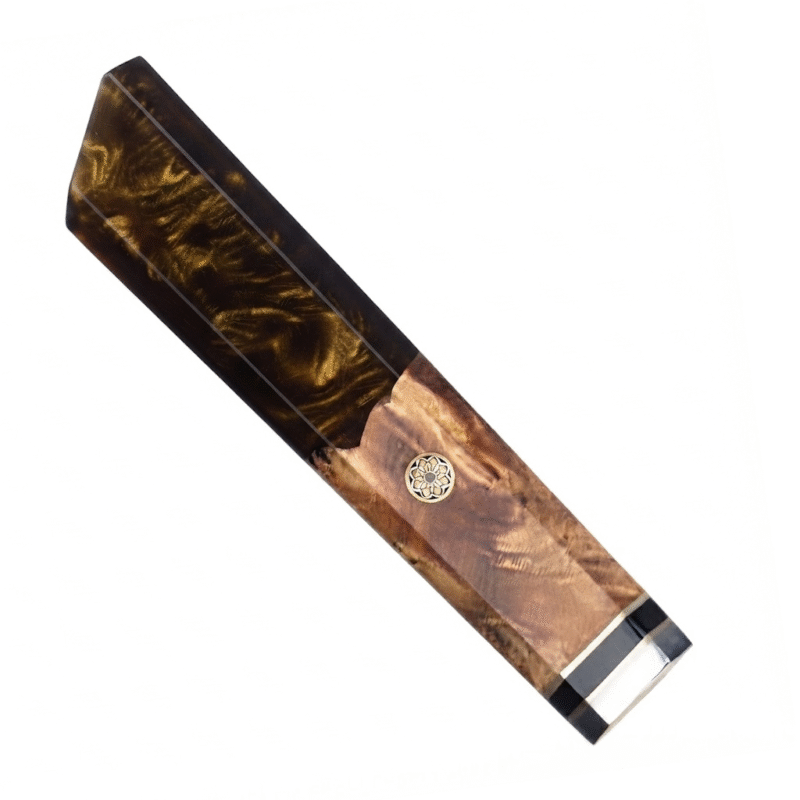
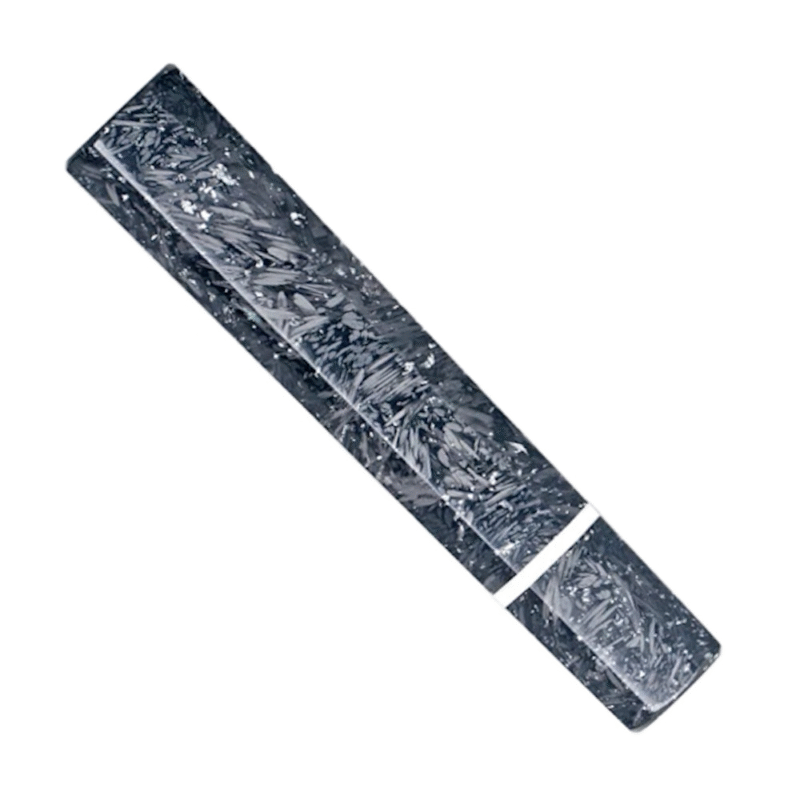
Stabilized wood is real wood that has been impregnated with resin, usually under controlled conditions, to improve dimensional stability.
The result retains much of the appearance and character of natural wood while behaving differently.
Stabilization can reduce the effects of moisture and humidity changes and can make the material more resistant to cracking, movement, and general wear.
Stabilized wood is particularly interesting for Wa handles because it combines two desirable characteristics:
natural appearance + improved stability.
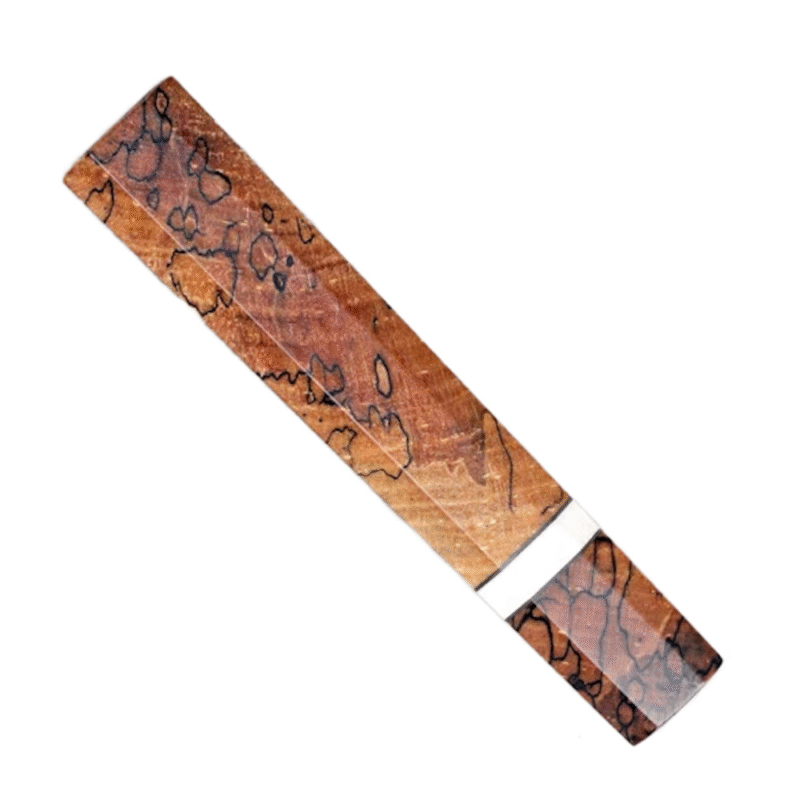
It can be made from many different woods, including burl and figured varieties.
This means a stabilized wood Wa handle can be extremely decorative without requiring quite as much maintenance as untreated natural wood.
However, stabilization does not magically turn every wood into an indestructible material.
The quality of the stabilization process matters, and the handle should still be treated as a knife handle rather than a piece of waterproof plastic.
https://yashkadesigns.com/birch-tree-replacement-knife-handle
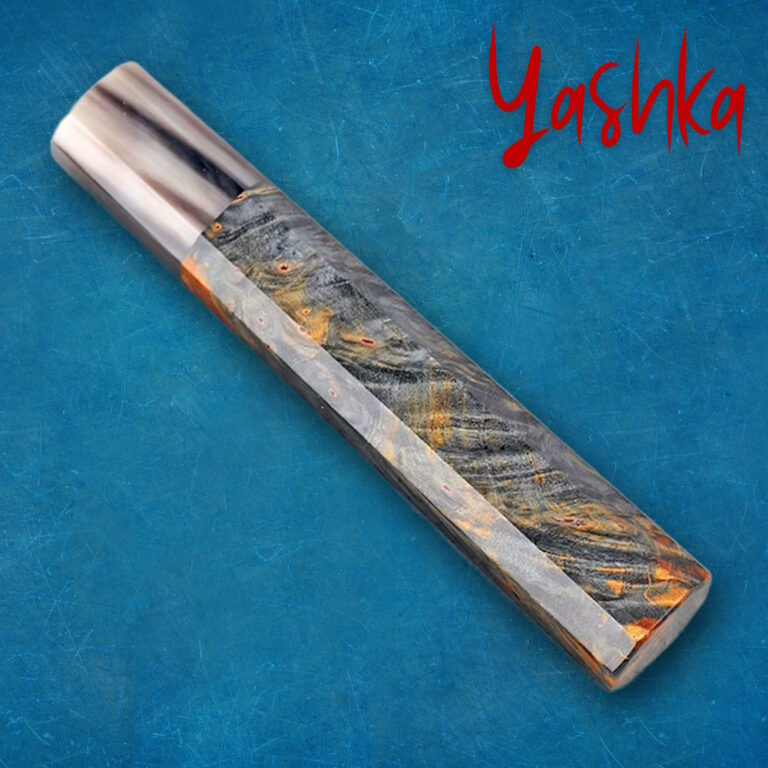
5. Natural Wood vs Stabilized Wood vs Resin
This is one of the most important choices when selecting a modern Wa handle.
Natural Wood
Natural wood gives the most traditional experience.
Every piece is different.
The grain, color, texture, and small variations make each Wa handle unique.
Natural wood also tends to have a warm, organic feeling in the hand.
The disadvantage is dimensional movement.
Wood responds to changes in moisture and humidity. If it repeatedly becomes wet and then dries, it can expand and contract.
Over time, this can contribute to:
- Cracks
- Gaps
- Ferrule movement
- Tang loosening
- Surface damage
This doesn’t mean natural wood is unsuitable for kitchen knives.
It simply means it should be cared for correctly.
Stabilized Wood
Stabilized wood attempts to reduce some of the weaknesses of natural wood.
The wood is impregnated with resin, making the material more dimensionally stable.
This is particularly useful for highly figured or unusual woods that might otherwise be more prone to movement.
A stabilized wood Wa handle can be a great choice if you want:
- Natural wood appearance
- Interesting grain
- Better dimensional stability
- Lower maintenance
- Custom appearance
For custom knives, stabilized burl wood is especially popular because the resin can highlight complex grain patterns.
https://yashkadesigns.com/wa-handle-red-replacement-handles
Resin and Synthetic Materials
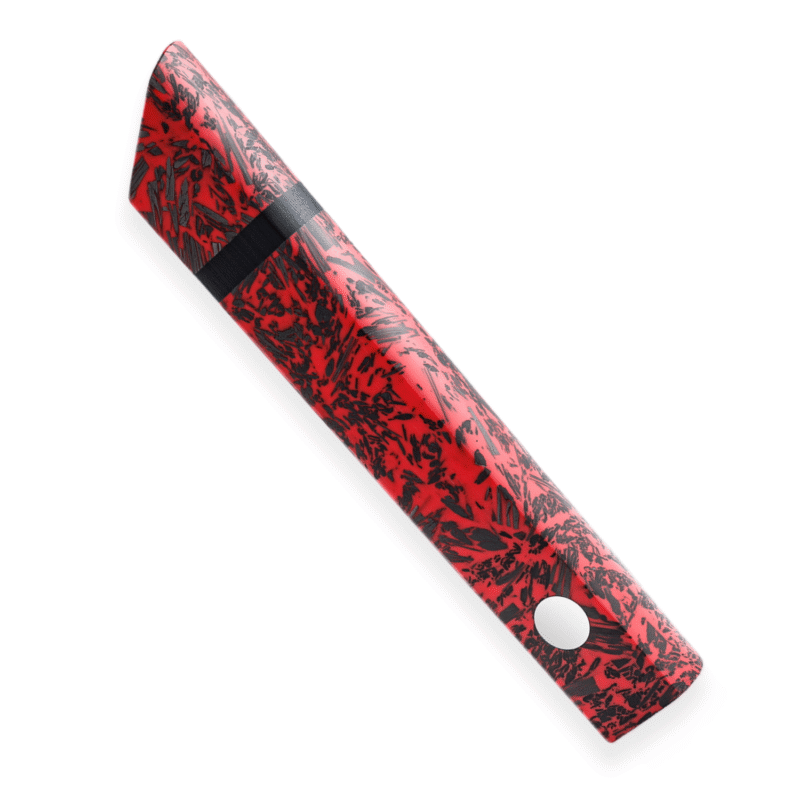
Resin-based materials offer a completely different approach.
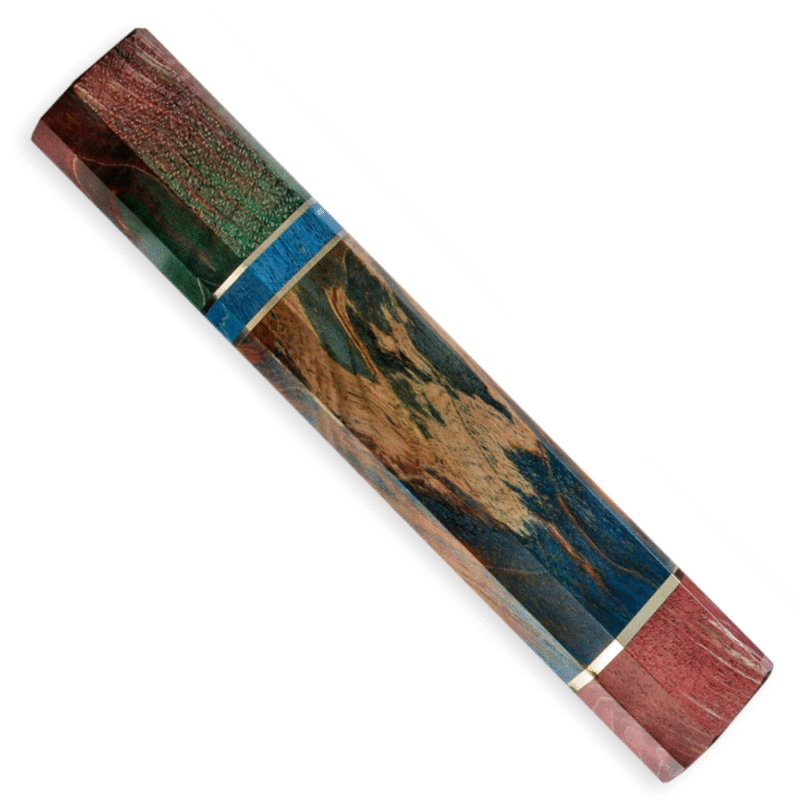
They are generally much less sensitive to moisture than untreated wood and can be produced in almost unlimited colors and patterns.
Modern Wa handles may use solid resin or combinations of wood and resin.
The advantages include:
- Good dimensional stability
- Easy cleaning
- Consistent appearance
- Many colors
- Low maintenance
- Resistance to moisture
The disadvantage is mostly aesthetic and tactile.
Some people simply prefer the warmth and natural feel of wood.
For others, a colorful resin Wa handle is exactly what makes a custom knife interesting.
6. Octagonal vs Oval vs D-Shaped Handles
The shape of a Wa handle is not just a matter of appearance.
It affects how your fingers interact with the handle and how easily you can determine the orientation of the blade without looking at it.
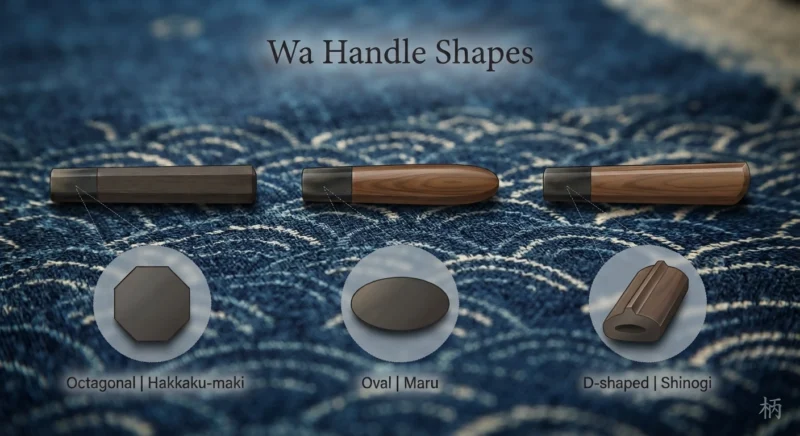
The three common shapes are:
- Octagonal
- Oval
- D-shaped
https://yashkadesigns.com/4-inch-chef-knife-replacement-wa-handle
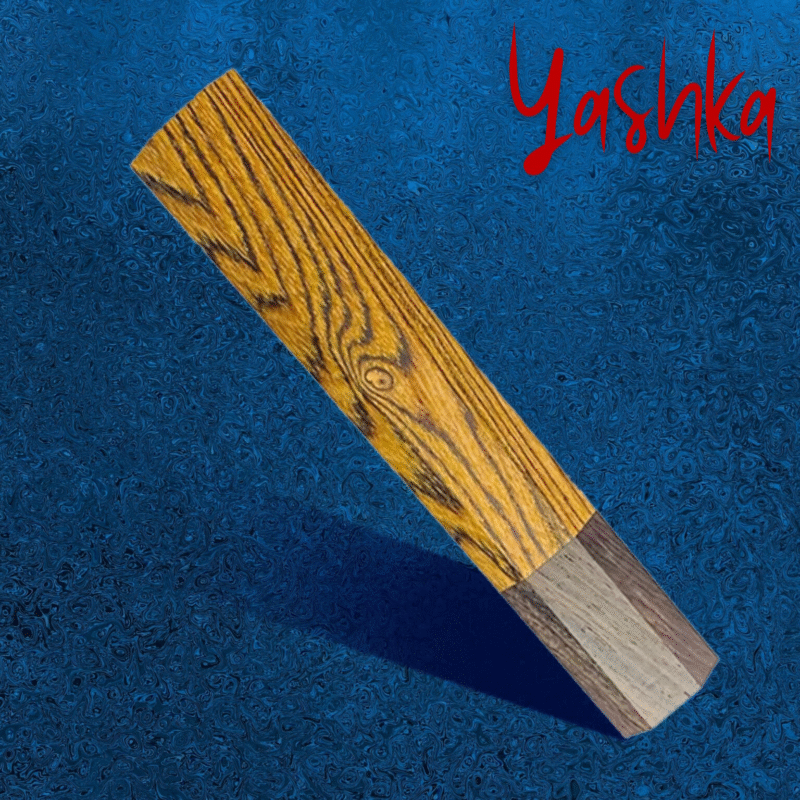
Octagonal Wa Handle
The octagonal Wa handle is one of the most versatile designs.
Instead of being completely round, the handle has eight relatively flat surfaces.
This gives the fingers clear reference points.
You can feel the orientation of the handle immediately.
An octagonal Wa handle is also symmetrical, making it suitable for both right- and left-handed users.
For that reason, it is an excellent general-purpose choice.
It works particularly well on:
- Gyuto
- Santoku
- Nakiri
- Petty
- Kiritsuke
- Many custom knives
If you are buying your first Wa handle and don’t know which shape to choose, octagonal is usually the safest choice.
Oval Wa Handle
An oval Wa handle has a softer and more rounded feel.
It is less angular than an octagonal handle and can feel very natural in the hand.
The absence of pronounced corners makes the grip comfortable for users who prefer a smoother shape.
Oval handles can also be symmetrical, making them suitable for either hand.
They are particularly appropriate when you want a traditional appearance but don’t want the distinct edges of an octagonal handle.
https://yashkadesigns.com/diy-kitchen-knives-replacement-wa-handle
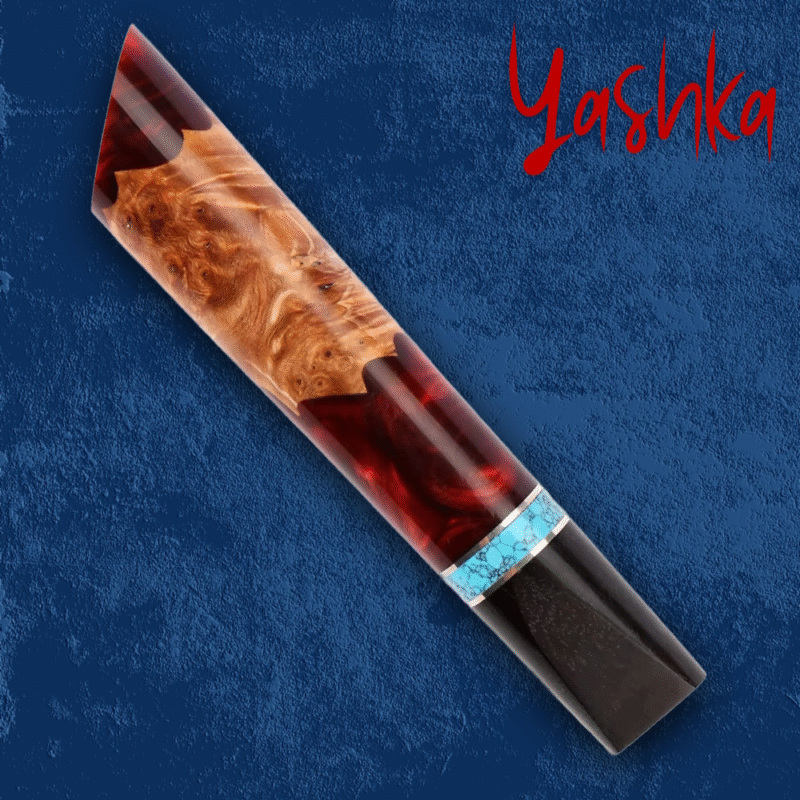
D-Shaped Wa Handle
A D-shaped Wa handle is asymmetrical.
One side is more rounded while the other has a defined ridge or flatter surface.
This shape can provide a very clear orientation point for the hand.
The important issue is handedness.
A right-handed D-shaped Wa handle may not feel correct in the left hand because the contour is designed around the opposite grip.
For that reason, D-shaped Wa handles should be selected carefully by left-handed users.
D-shaped handles are particularly common on traditional single-bevel knives such as:
- Yanagiba
- Usuba
- Deba
where the orientation of the blade is particularly important.
7. How Wa Handles Affect Knife Balance
One of the most important reasons people choose a Wa handle is balance.
A handle doesn’t just provide somewhere to hold the knife.
It changes the location of the knife’s center of gravity.
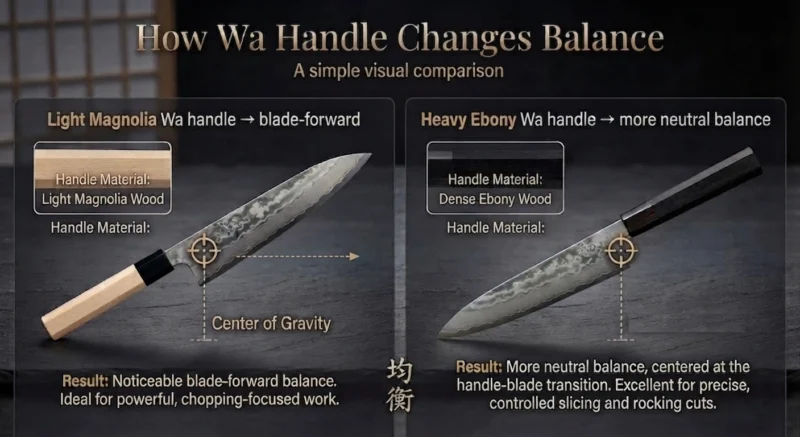
A lightweight magnolia Wa handle leaves more of the knife’s mass toward the blade.
A heavy ebony or rosewood Wa handle moves some of that mass backward.
This means that changing the handle can actually change the personality of an existing knife.
Imagine the same gyuto fitted with two handles:
Magnolia Wa handle → lighter, more blade-forward
Ebony Wa handle → heavier, more neutral
Neither is necessarily better.
The ideal balance depends on the user’s grip and cutting technique.
Wa Handle and Pinch Grip
Many Japanese kitchen knives are designed to be used with a pinch grip.
The thumb and index finger hold the blade near the heel while the remaining fingers wrap around the handle.
With this technique, the handle does not need to provide all the control.
The fingers mainly stabilize and guide the knife.
This is one reason the lightweight Wa handle works so well.
The hand controls the blade directly rather than relying on a heavy handle to determine the movement.
Blade-Forward Balance
A blade-forward knife can feel extremely responsive.
It may be particularly comfortable for:
- Push cuts
- Pull cuts
- Slicing
- Precision vegetable work
- Fish preparation
However, some users prefer neutral or slightly handle-heavy knives.
The best approach is therefore not to assume that blade-forward balance is automatically better.
It is better to think of it as a different cutting experience.
https://yashkadesigns.com/wa-knife-handle-replacement-handles
8. How a Wa Handle Is Installed
Installing a Wa handle requires more precision than simply drilling a hole and pushing the blade into it.
The internal cavity must correspond reasonably well with the tang.
The handle also needs to sit correctly against the ferrule and blade.
Traditionally, a handle maker may create a pilot hole and then carefully enlarge and shape the cavity until the tang fits correctly.
A traditional technique uses the heat of the tang to help burn or form the final portion of the cavity. This is one reason you may hear the term “burn-in” when discussing Japanese Wa handle installation.
The process must be controlled carefully.
Too much heat can damage the handle material.
Too much force can crack the ferrule or handle.
An incorrectly fitted tang can leave gaps or create an unstable connection.
Modern handle makers may instead use mechanical fitting, adhesives, sealants, or a combination of methods depending on the construction.
9. Friction Fit vs Epoxy Installation
There are several ways to secure a Wa handle.
Two of the most commonly discussed are friction fitting and adhesive/epoxy installation.
Friction Fit
A properly fitted traditional Wa handle can hold the tang securely through a tight mechanical fit.
The tang is seated deeply into the handle, and the geometry of the cavity and tang creates the required retention.
This approach has an important advantage:
The handle can potentially be removed and replaced later.
That is one of the reasons traditional Wa handles are so practical.
However, friction fit requires a properly made handle and correctly fitted tang.
It is not something to reproduce casually by making an oversized hole and relying on friction.
Epoxy Installation
Epoxy provides a stronger permanent bond between the tang and handle.
It can be particularly useful for:
- Modern handle materials
- Stabilized wood
- Resin handles
- Custom knife projects
- Handles where a permanent installation is preferred
However, a permanently bonded Wa handle is less convenient to replace.
If the handle becomes damaged, removing it can require cutting or destroying the handle.
Which Is Better?
There is no universal answer.
For a traditional Japanese knife, a properly executed traditional fit can be entirely appropriate.
For a custom knife maker, epoxy may provide a practical and reliable solution.
The important thing is that the installation should match the handle material, tang design, intended use, and skill of the person doing the work.
https://yashkadesigns.com/replacement-wa-handle-kitchen-knife-diy
10. Can You Replace a Japanese Wa Handle?
Yes.
This is one of the major advantages of a Wa handle.
If the blade is still in good condition but the handle has become:
- Cracked
- Loose
- Worn
- Damaged
- Uncomfortable
it may be possible to replace the handle without replacing the knife.
This is particularly attractive with expensive Japanese knives.
The blade is often the component that has the greatest long-term value.
A handle is replaceable.
Why Replace a Wa Handle?
You might replace a Wa handle because:
The wood cracked
Natural wood can crack after repeated exposure to moisture and humidity changes.
The handle became loose
A handle can loosen if the internal fit changes over time.
You want a different shape
Perhaps you started with a round handle and prefer an octagonal one.
You want a different balance
Replacing magnolia with ebony can add weight.
You want a different appearance
A new handle can completely change the appearance of a familiar knife.
You want a more durable material
Replacing untreated wood with stabilized wood or another material can reduce maintenance.
https://yashkadesigns.com/wa-handle
11. How to Choose the Right Handle for Gyuto, Nakiri, Santoku, Yanagiba, Deba, and Other Knives
There is no single Wa handle that is ideal for every Japanese knife.
The blade type, cutting technique, handedness, and intended use all matter.
Gyuto
The gyuto is one of the easiest knives to pair with a Wa handle.
An octagonal Wa handle is an excellent general-purpose choice.
Magnolia works well when you want low weight and traditional balance.
Walnut or stabilized wood can be chosen if you want more visual character.
Ebony can be used when you prefer a heavier handle.
Nakiri
A nakiri is often used for vegetables and benefits from precise control.
A lightweight Wa handle can complement the knife’s relatively compact blade.
Octagonal and oval handles are both good options.
For a traditional look, magnolia remains an excellent choice.
Santoku
A santoku is versatile, so the handle should usually be versatile as well.
An octagonal Wa handle is a very safe option.
The symmetrical shape works for either hand and provides good orientation.
Petty
A petty knife can work with a relatively small Wa handle.
Because the blade is short and light, handle weight can have a noticeable effect on balance.
A lightweight handle keeps the knife nimble.
Kiritsuke
A kiritsuke often benefits from the precision associated with a Wa handle.
An octagonal handle is a good choice for a symmetrical grip.
For traditional single-bevel or kiritsuke-style blades, the specific geometry of the knife should be considered before choosing the handle shape.
Yanagiba
Yanagiba knives are traditionally single-bevel slicing knives.
A D-shaped Wa handle is particularly common because it gives the user clear orientation and can be shaped for the dominant hand.
Right-handed and left-handed versions should not be treated as interchangeable.
For a left-handed yanagiba, look specifically for a left-handed Wa handle.
Deba
Deba knives are thick, heavy traditional Japanese knives.
The handle needs to provide secure control without making the knife unnecessarily cumbersome.
A traditional D-shaped or oval Wa handle can be appropriate depending on the maker and knife design.
Because a deba can experience greater forces than a delicate slicing knife, handle construction and tang fit are particularly important.
Usuba
A traditional usuba is another knife where a D-shaped Wa handle can make sense.
The knife is usually used with a highly controlled cutting technique, and the orientation of the blade matters.
The handle should complement that technique rather than simply being selected for appearance.
12. Handle Size and Tang Hole Considerations
A beautiful Wa handle is not necessarily the correct Wa handle for your knife.
The dimensions have to work.
When selecting a replacement Wa handle, pay attention to:
- Handle length
- Handle diameter
- Tang length
- Tang width
- Tang thickness
- Tang taper
- Ferrule dimensions
- Handle opening
- Blade heel dimensions
The tang hole is particularly important.
A Wa handle designed for one tang may not fit another knife correctly.
Even two knives that appear similar can have different tang dimensions.
This is why replacement Wa handles are often fitted individually rather than simply installed like a universal component.
Handle Length
A longer handle does not automatically provide more control.
It can add weight and change balance.
For a smaller petty knife, an oversized handle can feel awkward.
For a large gyuto or yanagiba, an undersized handle can feel cramped.
The handle should be proportionate to the blade and comfortable for the user’s hand.
Handle Diameter
Diameter affects grip comfort.
A very thin handle can feel precise but may be uncomfortable for larger hands.
A very thick handle can feel secure but may reduce the feeling of delicacy and control.
The ideal size is highly personal.
This is another reason custom Wa handles are so popular.
13. How to Maintain a Wooden Wa Handle
A natural wood Wa handle is not difficult to maintain.
It simply requires a little attention.
The most important rule is:
Keep it clean and dry.
Do not leave the knife submerged in water.
Do not leave a wet Wa handle sitting on the counter.
Do not put a natural wood Wa handle in the dishwasher.
After washing, dry the handle thoroughly.
Should You Oil a Wa Handle?
Occasional oiling can help maintain some natural wooden handles.
A food-safe mineral oil or another appropriate handle oil may be used depending on the wood and manufacturer’s recommendations.
You don’t need to soak the handle in oil.
A small amount applied to a clean, dry surface is generally sufficient.
The goal is maintenance, not saturation.
What About Magnolia?
Magnolia is relatively soft and traditional, so it can show wear.
Small marks are not necessarily a problem.
In fact, some users like the way a natural Wa handle develops character over time.
The important thing is to prevent prolonged moisture exposure.
14. Common Problems: Cracks, Loose Handles, Moisture, Tang Fit
Even a good Wa handle can eventually develop problems.
Understanding the causes makes them easier to prevent.
Cracked Handle
Cracks can occur when wood repeatedly absorbs and loses moisture.
They can also result from excessive mechanical stress or an improperly fitted tang.
If a crack appears near the ferrule, it deserves particular attention because this is an area where the handle is subjected to stress from the tang.
A small cosmetic surface mark is different from a structural crack.
If the handle is visibly moving or the crack is expanding, stop using the knife until the handle is inspected or replaced.
Loose Wa Handle
A loose handle is not something to ignore.
The handle should remain securely attached to the tang.
A loose Wa handle can affect control and may allow moisture to reach the internal tang.
Depending on the construction, the handle may be refitted or replaced.
Moisture Inside the Handle
Moisture entering the tang cavity can potentially contribute to corrosion of the hidden tang.
This is one reason proper fitting and sealing can matter.
A handle should not be repeatedly soaked.
If you notice water entering around the ferrule or the handle becoming loose after washing, investigate the problem rather than simply continuing to use the knife.
Tang Fit
A good Wa handle should fit the tang correctly.
An excessively loose cavity can make the handle unstable.
An excessively tight fit can place unnecessary stress on the handle material.
The solution is not simply “more epoxy.”
Good fitting begins with appropriate dimensions and careful installation.
15. Wa Handle Material Comparison Table
Here is a practical comparison of the most common materials.
| Wa Handle Material | Weight | Hardness | Moisture Stability | Maintenance | Appearance | Best For |
|---|---|---|---|---|---|---|
| Magnolia / Ho | Very light | Soft | Moderate | Moderate | Traditional, pale | Traditional Japanese knives |
| Walnut | Medium | Medium | Moderate | Moderate | Dark, natural | All-purpose/custom Wa handles |
| Rosewood | Medium–heavy | Hard | Good–moderate* | Low–moderate | Rich, reddish/brown | Premium/custom handles |
| Ebony | Heavy | Very hard | Good–moderate* | Moderate | Black, luxurious | Premium knives, heavier balance |
| Stabilized Wood | Varies | Varies | High | Low–moderate | Natural/figured | Custom and decorative handles |
| Pakkawood | Medium | High | High | Low | Wood-like | Frequent kitchen use |
| Resin | Varies | Varies | High | Low | Many colors/patterns | Modern/custom handles |
*Properties vary substantially between different wood species and individual pieces.
The table shows why there is no universal “best” Wa handle material.
If weight is your priority, magnolia is difficult to beat.
If appearance is the priority, ebony, rosewood, or figured stabilized wood may be more attractive.
If low maintenance is the priority, stabilized or resin-based materials can make more sense.
If you want the traditional Japanese experience, however, a simple magnolia Wa handle with a dark ferrule remains one of the most recognizable and functional combinations.
16. FAQ
What is a Wa handle?
A Wa handle is the traditional Japanese style of knife handle generally made from a single piece of material with a concealed or partial tang inserted into it. Wa handles are particularly common on Japanese kitchen knives.
Are Wa handles better than Western handles?
Not necessarily.
A Wa handle is generally lighter and tends to create a more blade-forward balance. A Western handle is usually heavier and often provides a more substantial, full-tang feel.
The better choice depends on your grip, cutting technique, and personal preference.
Why are Japanese knife handles so light?
Traditional Wa handles are often made from lightweight woods such as magnolia and use a hidden tang rather than a full tang.
This keeps handle weight low and allows the knife to remain relatively blade-forward.
What is the most traditional Wa handle material?
Ho wood, or Japanese magnolia, is one of the most traditional materials used for Japanese Wa handles.
It is lightweight, relatively soft, fine-grained, and well suited to traditional kitchen knives.
Is an octagonal Wa handle good for left-handed users?
Yes.
A symmetrical octagonal Wa handle can generally be used comfortably by both right- and left-handed users.
This is one reason octagonal Wa handles are such a versatile choice.
Are D-shaped Wa handles suitable for left-handed users?
A D-shaped Wa handle is usually handed.
If you are left-handed, look specifically for a left-handed D-shaped Wa handle.
Otherwise, an octagonal or symmetrical oval Wa handle may be a better choice.
Can I put a Wa handle on any Japanese knife?
Not automatically.
The tang dimensions, length, taper, ferrule size, and handle cavity all need to be compatible.
A replacement Wa handle may require fitting to the individual blade.
Can a Wa handle be removed?
Often, yes.
Traditional Wa handles can generally be removed and replaced more easily than a permanently riveted Western-style handle.
However, the exact removal method depends on how the handle was installed.
Does a Wa handle need epoxy?
Not always.
Traditional handles may use a tight mechanical fit, while modern handles may use adhesive or sealant.
The correct method depends on the construction and materials.
Are wooden Wa handles waterproof?
No.
Even durable natural woods should not be considered waterproof.
A wooden Wa handle can tolerate normal kitchen use when properly cared for, but prolonged soaking and dishwasher use should be avoided.
Can I wash a Wa handle under running water?
Yes, provided you wash it normally and dry it promptly.
The problem is not brief contact with water.
The problem is prolonged soaking and repeated moisture exposure.
Should I oil my Wa handle?
Natural wood may benefit from occasional food-safe oiling, depending on the wood and finish.
It is not necessary to constantly oil the handle.
Keeping it clean and dry is more important.
Is ebony better than magnolia for a Wa handle?
Not necessarily.
Ebony is much denser and harder, so it can produce a more substantial and luxurious handle.
Magnolia is much lighter and more traditional.
If you want a lightweight, blade-forward knife, magnolia may be the better choice.
If you prefer a heavier handle, ebony may be more appropriate.
What is the best Wa handle for a gyuto?
An octagonal Wa handle is an excellent general-purpose choice for a gyuto.
Magnolia provides a lightweight traditional setup, while walnut, stabilized wood, ebony, and other materials can be selected according to appearance and preferred balance.
What is the best Wa handle for a yanagiba?
A traditional D-shaped Wa handle is commonly associated with yanagiba knives.
The correct handedness is important, particularly for a single-bevel knife.
What is the best Wa handle material for a professional kitchen?
There is no universal answer.
Magnolia offers traditional feel and low weight, while stabilized wood, pakkawood, and resin-based materials can offer greater dimensional stability and easier maintenance.
The right choice depends on the working environment and how much maintenance you are willing to perform.
Can a cracked Wa handle be repaired?
Sometimes.
A minor cosmetic crack may not require immediate replacement, but a structural crack, especially around the ferrule or tang area, should be evaluated.
In many cases, replacing the Wa handle is the better long-term solution.
Does changing the Wa handle change the knife’s balance?
Yes.
Handle weight directly affects the knife’s center of gravity.
Replacing a very light magnolia Wa handle with a heavy ebony handle can move the balance toward the hand.
Why do some Wa handles have a dark ring at the front?
That is usually a ferrule.
Traditional Japanese Wa handles commonly use buffalo horn for the ferrule, although modern handles may use synthetic materials or other woods. The ferrule reinforces the front of the handle and provides a visual transition between the blade and handle.
Is a Wa handle stronger than a Western handle?
The two constructions distribute forces differently.
A Western full-tang handle is generally designed around a continuous steel tang and riveted scales.
A traditional Wa handle relies on the tang being securely seated inside the handle.
A Wa handle is excellent for normal kitchen-knife use, but it should not be treated as a heavy-duty pry bar or impact-tool construction.
17. Conclusion
A Wa handle is much more than a traditional-looking piece of wood attached to a Japanese knife.
Its construction changes the knife’s weight, balance, ergonomics, maintenance requirements, and even the way the knife feels during cutting.
The traditional Wa handle is deliberately simple: a lightweight handle body, a concealed tang, and often a ferrule at the junction with the blade.
That simplicity has proven remarkably effective.
A magnolia Wa handle keeps the knife light and blade-forward.
An ebony or rosewood Wa handle can add weight, durability, and a more luxurious appearance.
A walnut Wa handle offers a useful middle ground.
A stabilized wood Wa handle combines the appearance of natural wood with improved dimensional stability.
And modern resin and composite Wa handles provide even more options for users who prioritize low maintenance, durability, or unusual designs.
The shape matters just as much.
An octagonal Wa handle is versatile and generally suitable for both hands.
An oval Wa handle provides a softer, rounded grip.
A D-shaped Wa handle offers strong orientation and is particularly common on traditional single-bevel knives, but it should be selected according to handedness.
The most important thing is to choose the Wa handle according to the knife and the way you actually use it.
For a general-purpose gyuto, an octagonal magnolia Wa handle is a classic combination.
For a premium custom knife, stabilized wood, ebony, or rosewood may provide the appearance and weight you want.
For a traditional yanagiba or deba, the shape and handedness of the Wa handle become especially important.
And if an existing Wa handle becomes damaged, cracked, loose, or simply uncomfortable, you often don’t need to replace the entire knife. One of the great advantages of this traditional construction is that the Wa handle can often be replaced while the original blade remains in service.
Ultimately, there is no single best Wa handle.
The best Wa handle is the one that gives you the right combination of weight, balance, shape, material, comfort, durability, and maintenance for your particular knife.
That is exactly why Wa handles remain such an important part of Japanese knife culture—and why they continue to be popular far beyond Japan.