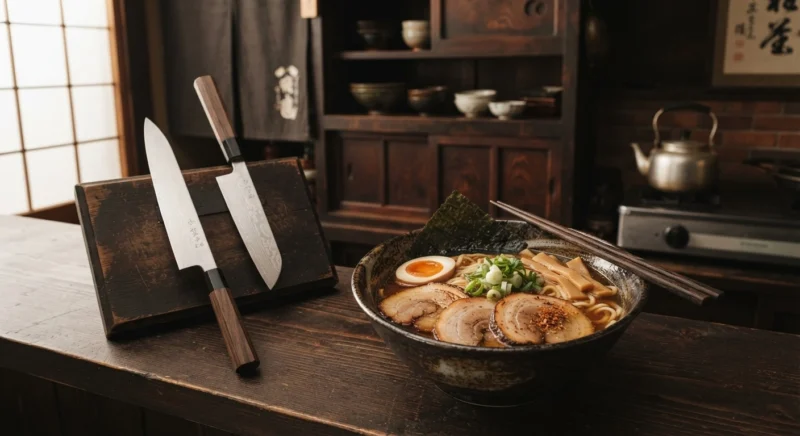
Authentic Japanese Ramen Recipe: Complete Guide to Preparation, Ingredients and Knife Skills
Few dishes represent Japanese cuisine as globally as Japanese ramen. Although ramen originally developed from Chinese-style wheat noodles, Japan transformed it into a unique culinary tradition with regional styles, carefully prepared broths, handmade toppings, and precise cooking techniques.
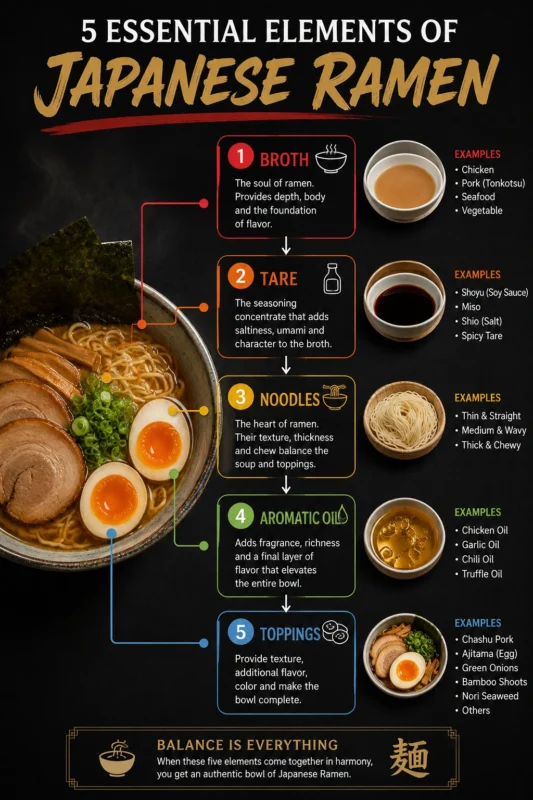
A great bowl of Japanese ramen is not simply noodles placed into soup. It is a balanced combination of five essential elements:
- Broth (soup base) – the foundation of flavor
- Tare (seasoning concentrate) – the main source of salt and umami
- Ramen noodles – texture and structure
- Aromatic oils – additional depth and fragrance
- Toppings – color, texture, and visual presentation
Making authentic Japanese ramen at home requires patience, quality ingredients, and proper preparation techniques. One of the most important but often overlooked aspects is knife skill. Preparing vegetables, meat, herbs, and toppings correctly can dramatically improve the final result.
For this reason, professional ramen chefs rely on high-quality Japanese kitchen knives, especially the Gyuto knife and Santoku knife, which provide the precision needed for preparing ingredients efficiently and beautifully.
The History and Tradition of Japanese Ramen
The story of Japanese ramen began in the late 19th and early 20th centuries when Chinese noodle dishes became popular in Japan. Over time, Japanese chefs adapted the dish using local ingredients, regional flavors, and traditional cooking methods.
Today, ramen has developed into a diverse culinary category with many regional variations.
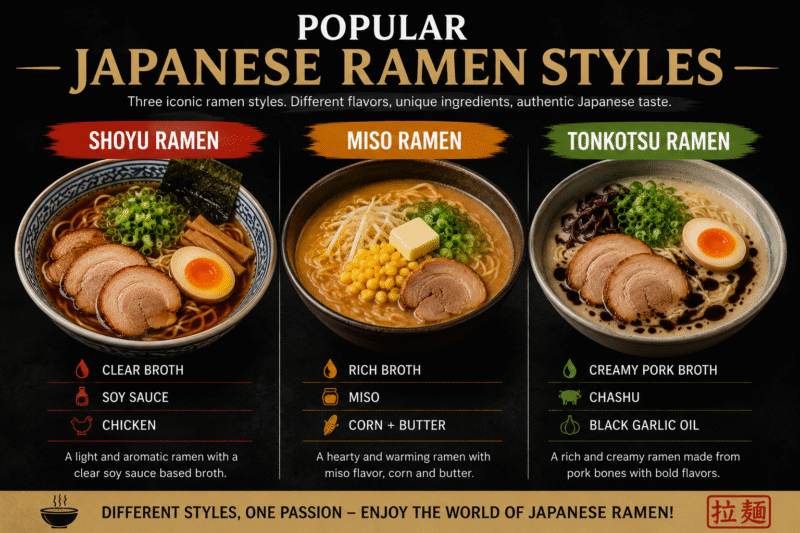
Some of the most famous styles include:
Shoyu Ramen (Soy Sauce Ramen)
Shoyu ramen uses soy sauce-based tare to create a clear, aromatic broth. It is one of the oldest and most traditional styles.
Typical characteristics:
- Clear chicken or seafood broth
- Soy sauce seasoning
- Bamboo shoots
- Green onions
- Chashu pork
- Soft-boiled egg
Miso Ramen
Originating from Hokkaido, miso ramen offers a richer and more powerful flavor profile.
Typical ingredients:
- Miso paste
- Pork or chicken broth
- Corn
- Butter
- Bean sprouts
- Ground meat
Tonkotsu Ramen
Tonkotsu ramen is famous for its creamy, cloudy pork bone broth.
The preparation requires hours of cooking to extract:
- Collagen
- Fat
- Marrow
- Rich pork flavor
The result is a thick, luxurious soup with intense umami.
Essential Ingredients for Authentic Japanese Ramen
The quality of ingredients determines the quality of your ramen. Traditional chefs carefully select every component.
1. Ramen Noodles
Noodles are the heart of the dish.
Traditional ramen noodles are made from:
- Wheat flour
- Water
- Salt
- Kansui (alkaline mineral water)
Kansui gives noodles their characteristic:
- Yellow color
- Firm texture
- Slight elasticity
Different broths require different noodle styles.
For example:
- Thin noodles → Tonkotsu ramen
- Medium curly noodles → Miso ramen
- Straight medium noodles → Shoyu ramen
2. Broth: The Foundation of Flavor
The broth is where most of the preparation time goes.
A traditional Japanese ramen broth may contain:
Chicken Broth
Common ingredients:
- Chicken carcasses
- Chicken wings
- Onion
- Garlic
- Ginger
- Green onion
Chicken broth creates a lighter but deeply flavored soup.
Pork Broth
Used mainly for tonkotsu-style ramen.
Ingredients:
- Pork bones
- Pork trotters
- Water
- Aromatic vegetables
The bones are boiled for many hours to release collagen and create a creamy texture.
Seafood Broth
Popular ingredients include:
- Kombu seaweed
- Dried sardines
- Bonito flakes
- Shrimp shells
Seafood adds natural umami and complexity.
3. Tare: The Secret Flavor Concentrate
Many people think broth is the only important element, but ramen chefs consider tare equally important.
Tare controls:
- Saltiness
- Umami
- Overall flavor balance
The three main types are:
Shoyu Tare
Made with:
- Japanese soy sauce
- Mirin
- Sake
- Dashi
Creates a balanced salty and savory flavor.
Miso Tare
Made with:
- White miso
- Red miso
- Garlic
- Ginger
- Sesame oil
Creates a rich and slightly sweet taste.
Shio Tare
A lighter seasoning made from:
- Salt
- Seafood extracts
- Chicken stock
- Dashi
Often used for clear ramen styles.
4. Essential Ramen Toppings
Toppings transform a simple bowl into a complete meal.
Popular toppings include:
Chashu Pork
Japanese ramen commonly uses thin slices of slow-cooked pork belly.
Preparation:
- Roll pork belly
- Tie with kitchen string
- Simmer with soy sauce, sake, sugar, and aromatics
- Slice thinly
A sharp knife is essential for creating clean slices.
Ajitama Egg (Japanese Marinated Egg)
The famous ramen egg has:
- Firm white exterior
- Soft creamy yolk
- Soy-based seasoning
Preparation:
- Boil eggs for 6–7 minutes
- Cool immediately
- Marinate in soy sauce mixture
Green Onions
Fresh green onions provide:
- Color
- Fresh aroma
- Mild sharpness
They should be sliced thinly and evenly.
This is where proper knife technique becomes important.
Bamboo Shoots (Menma)
Menma adds:
- Crunch
- Sweetness
- Fermented flavor
Usually prepared from fermented bamboo shoots.
Nori Seaweed
A sheet of nori adds:
- Ocean aroma
- Umami
- Visual appeal
Knife Skills: The Foundation of Great Ramen Preparation
Many home cooks focus only on ingredients but underestimate knife skills.
In Japanese cuisine, cutting technique affects:
- Texture
- Cooking time
- Appearance
- Flavor release
For preparing Japanese ramen, two knives are especially useful:
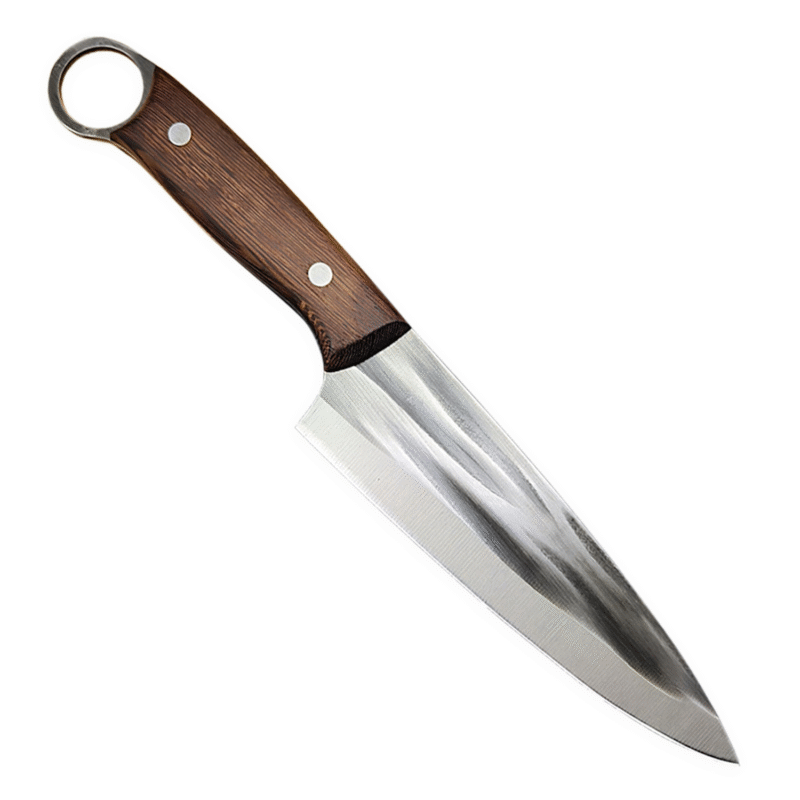
- Gyuto knife
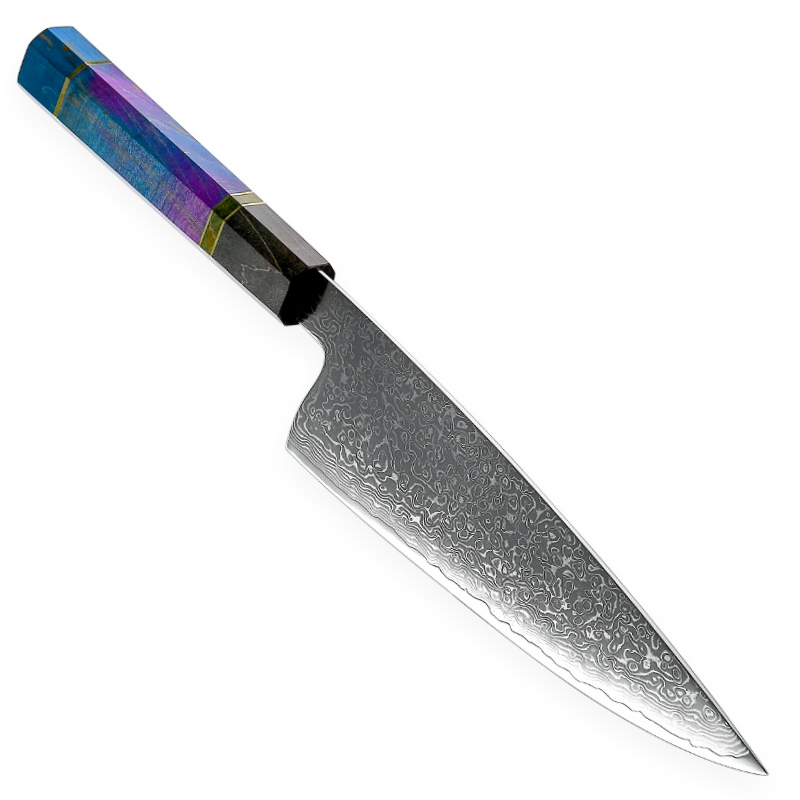
- Santoku knife
https://yashkadesigns.com/chef-knife-home-kitchen-meat
Why You Need a Gyuto Knife for Japanese Ramen Preparation
The Gyuto knife is the Japanese equivalent of a Western chef knife.
It is considered one of the most versatile Japanese kitchen knives.
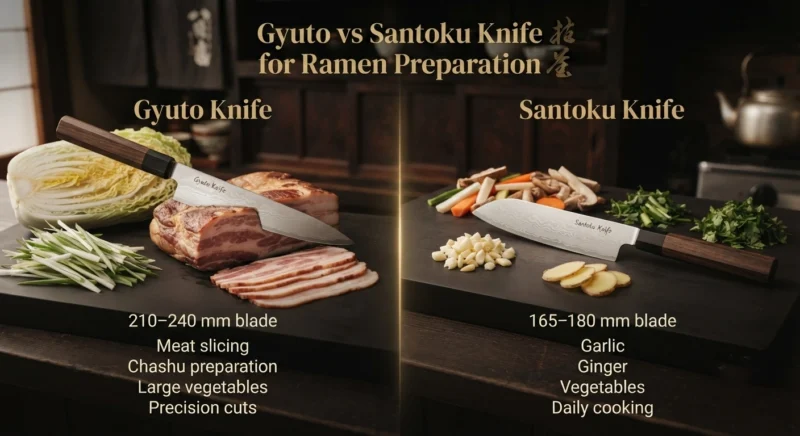
A typical Gyuto has:
- Long blade (210–240 mm)
- Sharp pointed tip
- Thin cutting edge
- Lightweight construction
For ramen preparation, a Gyuto knife is ideal for:
Cutting Meat
Preparing chashu requires precise slicing.
A sharp Gyuto allows you to:
- Slice pork cleanly
- Create uniform portions
- Avoid tearing the meat
Preparing Vegetables
A Gyuto knife works perfectly for:
- Cutting onions
- Chopping garlic
- Slicing cabbage
- Preparing carrots
- Cutting mushrooms
Its long blade allows smooth rocking motions.
Precision Cutting
Professional ramen toppings often require thin, consistent cuts.
Examples:
- Julienned vegetables
- Thin green onions
- Mushroom slices
- Garlic chips
A sharp Gyuto provides the control needed for these tasks.
https://yashkadesigns.com/damascus-chefs-knife-japanese-santoku-blade-home-kitchen-slicing-tool

Why You Need a Santoku Knife for Japanese Ramen
The Santoku knife means “three virtues,” referring to its ability to handle:
- Meat
- Fish
- Vegetables
It is one of the most popular Japanese knives for home cooks.
A Santoku knife is excellent for ramen preparation because it is:
- Easier to control
- Slightly shorter than Gyuto
- Comfortable for daily kitchen work
Santoku Knife Uses for Ramen
Vegetable Preparation
Santoku is excellent for:
- Slicing onions
- Chopping herbs
- Cutting vegetables for broth
The wide blade also helps transfer ingredients from cutting board to cooking pot.
Preparing Aromatics
Ramen depends heavily on aromatic ingredients:
- Garlic
- Ginger
- Shallots
- Green onions
A sharp Santoku allows fine chopping and releases maximum flavor.
Home Kitchen Advantage
For many home cooks, Santoku is the perfect everyday knife because it is compact and easy to handle.
A practical ramen kitchen setup would include:
- Gyuto knife (210 mm) for larger preparation tasks
- Santoku knife (165–180 mm) for vegetables and everyday cutting
Together, they cover almost every preparation step.
Step-by-Step Authentic Japanese Ramen Recipes
Now that we understand the essential components of ramen and the importance of proper knife skills, it is time to prepare several traditional styles.
A professional bowl of Japanese ramen requires balance. The goal is not simply to create a strong flavor, but to combine:
- Richness from broth
- Umami from tare
- Aroma from oils
- Texture from noodles
- Freshness from toppings
Below are three popular ramen recipes that can be prepared at home.
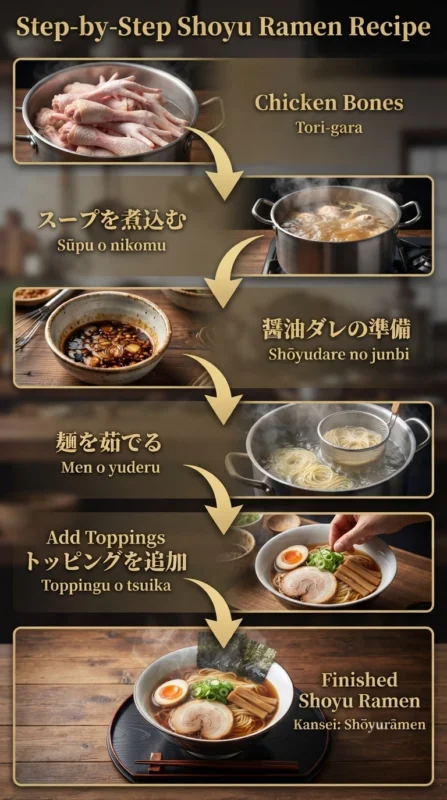
Recipe 1: Authentic Shoyu Ramen (Soy Sauce Ramen)
Shoyu ramen is one of the most classic styles of Japanese ramen. It features a clear, aromatic broth with a deep soy sauce flavor.
This style highlights the natural taste of chicken, vegetables, and seafood.
Ingredients
For Chicken Broth
- 1.5 kg chicken bones or carcasses
- 2 chicken wings
- 1 onion
- 1 piece of ginger
- 5 garlic cloves
- 2 green onions
- 2 liters water
For Shoyu Tare
- 100 ml Japanese soy sauce
- 30 ml mirin
- 30 ml sake
- 1 teaspoon sugar
- 10 g kombu seaweed
For Toppings
- Ramen noodles
- Chashu pork
- Soft-boiled eggs
- Green onions
- Bamboo shoots
- Nori seaweed
https://yashkadesigns.com/damascus-kitchen-knife-8-inch-butcher-cooking-tool
Preparation Steps
Step 1: Prepare the Chicken Broth
Clean the chicken bones and place them into a large pot.
Cover with cold water and slowly bring to a boil.
Remove any foam from the surface.
Add:
- Onion
- Ginger
- Garlic
- Green onions
Simmer for 4–6 hours.
The longer cooking time allows flavors to develop.
Strain the broth through a fine sieve.
The result should be a clean, golden soup.
Step 2: Prepare the Shoyu Tare
Combine:
- Soy sauce
- Mirin
- Sake
- Sugar
- Kombu
Heat gently for several minutes.
Do not boil aggressively because high heat can reduce the aroma of soy sauce.
Let the tare cool.
Step 3: Prepare the Toppings
Green Onions
Using a sharp Gyuto or Santoku knife:
- Wash green onions
- Remove damaged outer layers
- Slice diagonally into thin pieces
Thin slices create a more elegant presentation and distribute flavor evenly.
Chashu Pork
Slice chilled chashu pork into thin pieces.
A sharp Japanese knife helps create:
- Clean edges
- Even thickness
- Professional appearance
A dull knife can crush the meat fibers and ruin the texture.
Step 4: Assemble Shoyu Ramen
Add to the bowl:
- 2–3 tablespoons shoyu tare
- Hot chicken broth
- Cooked ramen noodles
- Chashu slices
- Egg
- Green onions
- Bamboo shoots
- Nori
Serve immediately.
The noodles should remain firm and the broth should be very hot.
Recipe 2: Authentic Miso Ramen
Miso ramen originated in Hokkaido and is famous for its rich, warming flavor.
This style is especially popular during colder seasons.
The combination of miso, garlic, butter, and vegetables creates a powerful bowl of Japanese ramen.
Ingredients
Miso Base
- 100 g miso paste
- 2 tablespoons sesame oil
- 2 cloves garlic
- 1 tablespoon grated ginger
- 1 tablespoon soy sauce
- 1 teaspoon sugar
Broth
- 1.5 liters chicken broth
- 200 ml pork broth (optional)
Toppings
- Corn
- Bean sprouts
- Green onions
- Chashu pork
- Butter
- Soft-boiled egg
Preparation Steps
Step 1: Prepare Aromatics
Using a Santoku knife:
Finely chop:
- Garlic
- Ginger
- Green onions
A Santoku knife is excellent for this because the shorter blade provides excellent control during detailed vegetable preparation.
Step 2: Create the Miso Base
Heat sesame oil in a pan.
Add:
- Garlic
- Ginger
Cook gently until fragrant.
Add miso paste and stir carefully.
Then add:
- Soy sauce
- Sugar
Cook for several minutes to develop deeper flavors.
Step 3: Combine With Broth
Add hot chicken broth.
Mix thoroughly until the miso dissolves completely.
Simmer gently.
Avoid boiling too aggressively because it can reduce the delicate aroma of miso.

Step 4: Prepare Vegetables
Miso ramen traditionally uses vegetables such as:
- Cabbage
- Corn
- Bean sprouts
- Green onions
A sharp Santoku knife allows you to create consistent cuts.
For example:
- Thin cabbage strips cook quickly
- Uniform carrots provide better texture
- Even onion slices release balanced sweetness
Step 5: Assemble Miso Ramen
Add:
- Miso broth
- Fresh ramen noodles
- Chashu pork
- Corn
- Bean sprouts
- Butter
- Green onions
- Egg
The butter slowly melts into the soup, creating a rich and creamy flavor.
Recipe 3: Tonkotsu-Style Ramen (Rich Pork Bone Ramen)
Tonkotsu is one of the most famous styles of Japanese ramen worldwide.
The signature feature is its creamy white broth created by boiling pork bones for many hours.
Ingredients
Broth
- 2 kg pork bones
- 1 pork trotter
- 1 onion
- 1 piece ginger
- 1 garlic bulb
- Water
Toppings
- Thin ramen noodles
- Chashu pork
- Black garlic oil
- Green onions
- Egg
- Sesame seeds
Preparation Steps
Step 1: Prepare Pork Bones
Wash pork bones thoroughly.
Boil them for 10 minutes.
Discard the water and clean the bones.
This removes impurities and creates a cleaner broth.
Step 2: Cook the Tonkotsu Broth
Add fresh water.
Boil strongly for 8–12 hours.
Unlike clear broths, tonkotsu requires vigorous boiling.
The high heat breaks down:
- Fat
- Collagen
- Marrow
This creates the famous creamy texture.
Step 3: Prepare Black Garlic Oil
Ingredients:
- Garlic
- Sesame oil
- Vegetable oil
Slice garlic thinly using a sharp Gyuto knife.
Slowly fry until dark and aromatic.
This oil adds a smoky, roasted flavor.
Step 4: Prepare the Final Bowl
Add:
- Tonkotsu broth
- Tare
- Thin noodles
- Chashu
- Egg
- Green onions
- Black garlic oil
Serve immediately.
https://yashkadesigns.com/hand-forged-santoku-knife
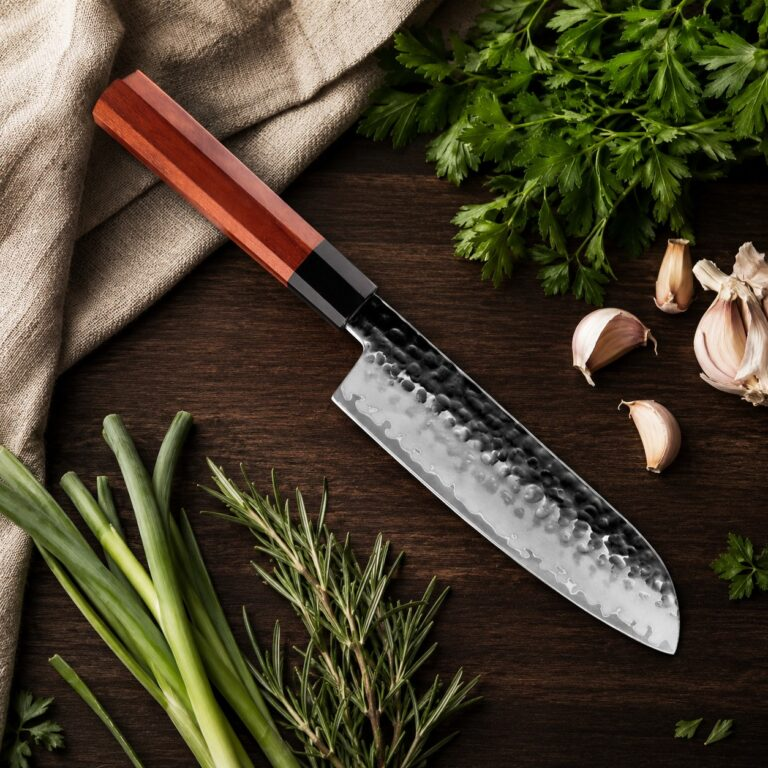
Advanced Knife Skills for Ramen Preparation
Traditional Japanese cooking focuses heavily on knife technique.
A good knife does not only make preparation easier — it improves the final dish.
Cutting Onions for Ramen
Onions are essential for broth.
Correct technique:
- Cut onion in half
- Make vertical cuts
- Slice horizontally
- Chop evenly
A Gyuto knife provides the blade length needed for smooth movement.
Julienning Vegetables
Many ramen toppings require thin strips.
Examples:
- Carrots
- Bamboo shoots
- Green onions
The goal:
- Equal thickness
- Clean edges
- Consistent cooking
A sharp Santoku knife is excellent for this type of precision work.
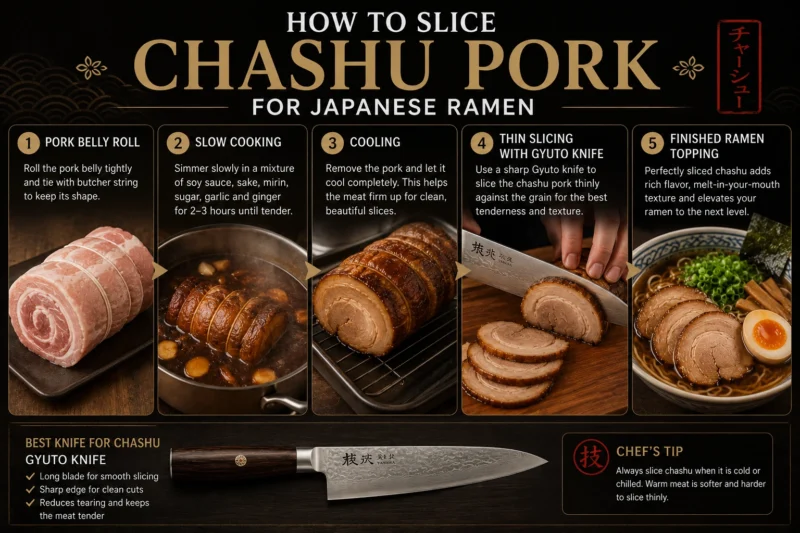
Slicing Meat Correctly
For chashu:
- Use a sharp blade
- Cut against the grain
- Maintain consistent thickness
A Japanese knife with a thin edge reduces pressure and prevents tearing.
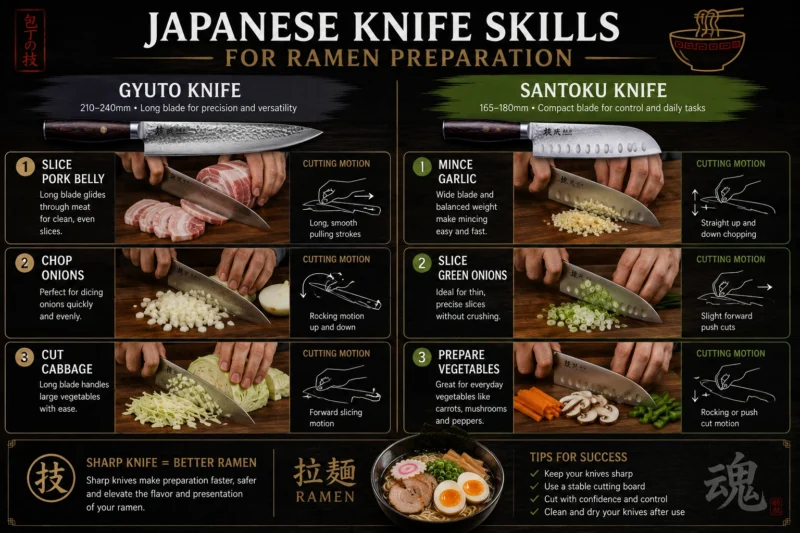
Gyuto vs Santoku for Making Japanese Ramen
Both knives are valuable, but they serve slightly different purposes.
| Task | Best Knife |
|---|---|
| Cutting large vegetables | Gyuto |
| Slicing chashu pork | Gyuto |
| Preparing broth ingredients | Gyuto |
| Daily vegetable preparation | Santoku |
| Garlic and ginger chopping | Santoku |
| Small kitchen tasks | Santoku |
For serious home ramen preparation, the ideal combination is:
Gyuto Knife (210–240 mm)
Best for:
- Meat preparation
- Large vegetables
- Professional cutting motion
Santoku Knife (165–180 mm)
Best for:
- Vegetables
- Aromatics
- Everyday cooking
Together, they create a complete Japanese kitchen setup.
How to Serve Japanese Ramen Like a Professional Chef
Presentation is an important part of Japanese cuisine.
A traditional ramen bowl should have:
Balanced Toppings
Avoid overcrowding.
A good arrangement includes:
- One or two slices of chashu
- Half egg
- Green onions
- Nori
- Bamboo shoots
Correct Temperature
Ramen should always be served very hot.
Warm bowls are often used in professional restaurants because they maintain temperature longer.
Eat Immediately
Ramen noodles continue absorbing liquid after serving.
For the best texture:
- Mix the tare
- Taste the broth
- Eat while hot
Common Mistakes When Making Homemade Ramen
1. Weak Broth
Solution:
- Use quality ingredients
- Cook long enough
- Balance seasoning carefully
2. Poor Knife Technique
Uneven cuts create uneven cooking.
A sharp Gyuto or Santoku knife improves:
- Speed
- Safety
- Appearance
3. Too Many Toppings
The best Japanese ramen focuses on balance.
Every ingredient should support the broth.
4. Overcooked Noodles
Ramen noodles should maintain texture.
Cook according to instructions and serve immediately.
Frequently Asked Questions About Japanese Ramen
What knife is best for making ramen at home?
A Gyuto knife and Santoku knife are the best choices.
Gyuto is ideal for meat, large vegetables, and precision slicing.
Santoku is excellent for vegetables, herbs, and everyday preparation.
Can I make authentic Japanese ramen without special equipment?
Yes.
A good pot, quality ingredients, and sharp Japanese kitchen knives are enough.
How long does ramen broth take to make?
Depending on the style:
- Chicken broth: 4–6 hours
- Tonkotsu broth: 8–12 hours
- Simple ramen broth: 1–2 hours
Is ramen healthy?
It depends on preparation.
Homemade ramen can be healthier because you control:
- Salt level
- Ingredients
- Fat content
- Vegetable quantity
Conclusion: Mastering Japanese Ramen at Home
Making authentic Japanese ramen is a combination of tradition, patience, and technique.
The most important elements are:
- Quality broth
- Balanced tare
- Fresh noodles
- Carefully prepared toppings
- Proper knife skills
Using the right tools makes the process easier and more enjoyable.
A quality Gyuto knife provides the versatility needed for meat preparation and large cutting tasks, while a Santoku knife offers excellent control for vegetables and everyday ingredients.
With the right ingredients, traditional recipes, and proper Japanese knife techniques, anyone can create a restaurant-quality bowl of Japanese ramen at home.