Kitchen Knife Care Guide
A quality kitchen knife is one of the most valuable tools in any kitchen. Whether you own a premium Japanese chef knife, a Damascus utility knife, or an everyday cooking knife, proper maintenance is essential for preserving its performance and appearance. Unfortunately, many knives lose their sharpness, develop rust, or suffer chips long before they should due to improper handling and storage.
Good Kitchen Knife Care is not complicated, but it does require consistency. By following a few simple habits, you can significantly extend the lifespan of your knives while maintaining their cutting performance and visual appeal.
In this comprehensive guide, you’ll learn how to prevent rust, avoid blade damage, maintain sharpness, and keep your kitchen knives performing like new for years to come.
Why Kitchen Knife Care Matters
Many people focus on buying a high-quality knife but overlook the importance of maintenance. Even the best steel can suffer damage if not cared for properly.
Proper Kitchen Knife Care helps:
- Maintain razor-sharp edges
- Prevent rust and corrosion
- Reduce the risk of chipping
- Improve cutting performance
- Increase safety during food preparation
- Extend the lifespan of the knife
- Protect your investment
A well-maintained knife not only performs better but also makes cooking more enjoyable and efficient.
Understanding What Damages Kitchen Knives
Before discussing maintenance techniques, it’s important to understand the most common causes of knife damage.
Moisture
Water is one of the biggest enemies of knife steel. Prolonged exposure to moisture can lead to staining, corrosion, and rust.
Hard Surfaces
Cutting on glass, marble, ceramic, or stone surfaces quickly dulls knife edges and can even cause chips.
Improper Storage
Throwing knives into drawers allows blades to strike other utensils, resulting in scratches and edge damage.
Incorrect Cutting Techniques
Twisting, prying, or forcing a blade through hard materials places unnecessary stress on the edge.
Understanding these risks is the first step toward effective Kitchen Knife Care.
How to Prevent Rust on Kitchen Knives
Rust is a common concern, especially for high-carbon steel knives. Fortunately, preventing rust is relatively simple.
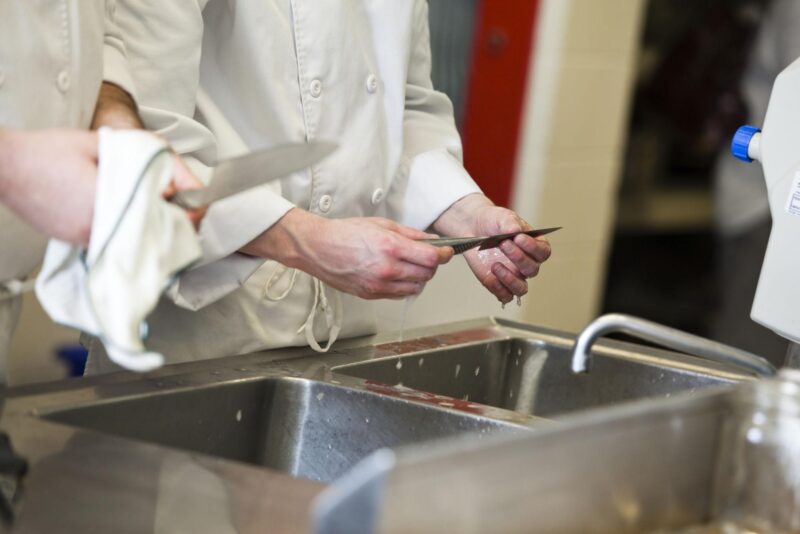
Wash Knives Immediately After Use
Food acids, salt, and moisture can accelerate corrosion if left on the blade.
After each use:
- Rinse the knife promptly.
- Wash with warm water and mild soap.
- Remove any food residue.
- Dry thoroughly.
Avoid leaving knives in the sink, where moisture and other utensils can cause damage.
Dry Completely
One of the most important Kitchen Knife Care habits is drying knives immediately after washing.
Use a clean, soft towel and pay special attention to:
- Blade surfaces
- Spine of the knife
- Handle junction
- Bolster area
Even stainless steel knives benefit from thorough drying.
Apply Food-Safe Oil When Necessary
Carbon steel knives may benefit from a light coating of food-safe mineral oil during long-term storage.
This protective layer helps reduce moisture exposure and prevents oxidation.
Never Put Knives in the Dishwasher
Dishwashers are responsible for countless damaged kitchen knives.
High temperatures, strong detergents, and constant movement create conditions that can harm both the blade and handle.
Dishwasher use may cause:
- Dull edges
- Rust spots
- Handle damage
- Blade discoloration
- Chips from contact with other utensils
Hand washing remains the safest cleaning method for any quality knife.
Check Our Guide How to Keep a Damascus Kitchen Knife Sharp
Choose the Right Cutting Board
Your cutting surface has a major impact on edge retention.
Best Cutting Board Materials
Wood Cutting Boards
Wood provides a forgiving surface that protects knife edges.
Popular options include:
- Maple
- Walnut
- Cherry
- Teak
End-Grain Boards
Many professional chefs prefer end-grain cutting boards because they are particularly gentle on knife edges.
Soft Composite Boards
High-quality composite boards offer a good balance between durability and edge protection.
Cutting Surfaces to Avoid
Never cut directly on:
- Glass
- Marble
- Granite
- Ceramic
- Stainless steel countertops
Proper cutting surfaces are a fundamental part of effective Kitchen Knife Care.
Preventing Chips and Edge Damage
Chipping often occurs when knives are used improperly or subjected to excessive force.
Avoid Hard Materials
Kitchen knives are designed for food preparation, not heavy-duty tasks.
Avoid cutting:
- Bones
- Frozen foods
- Hard pits
- Shells
- Thick cartilage
For these tasks, use specialized tools such as cleavers or bone saws.
Use Proper Cutting Techniques
Good technique helps protect the edge.
Practice:
- Smooth slicing motions
- Controlled chopping
- Straight downward cuts
Avoid:
- Twisting the blade
- Prying ingredients apart
- Scraping food with the cutting edge
These simple habits are essential for long-term Kitchen Knife Care.
The Importance of Regular Honing
Many people confuse honing with sharpening, but they serve different purposes.
What Is Honing?
Honing realigns the microscopic edge of the blade without removing significant metal.
Benefits include:
- Improved cutting performance
- Longer intervals between sharpening
- Better edge consistency
How Often Should You Hone?
For frequent home cooking:
- Once every few uses is often sufficient
For professional kitchens:
- Daily honing may be beneficial
Regular honing is one of the easiest ways to improve Kitchen Knife Care.
Sharpening Your Kitchen Knives
Eventually, every knife requires sharpening.
Signs Your Knife Needs Sharpening
Watch for:
- Difficulty slicing tomatoes
- Increased cutting pressure
- Tearing herbs
- Uneven cuts
- Reduced precision
Best Sharpening Method: Whetstones
Most knife enthusiasts prefer whetstones because they provide excellent control and preserve blade geometry.
Common grit levels include:
1000 Grit
Used for restoring dull edges.
3000–5000 Grit
Used for refining sharpness.
6000–8000 Grit
Used for polishing and finishing.
Whetstones produce superior results compared to most pull-through sharpeners.
Avoid Cheap Sharpening Devices
Low-quality sharpeners often remove excessive metal and can permanently alter the blade shape.
Investing in proper sharpening tools supports better Kitchen Knife Care over the long term.
Safe Knife Storage
Storage is often overlooked but plays a critical role in maintaining knife condition.
Magnetic Knife Strips
A popular option that:
- Protects the edge
- Keeps knives accessible
- Saves counter space
Wooden Knife Blocks
Knife blocks offer excellent protection when slots are clean and properly sized.
Blade Guards
Blade guards are ideal for:
- Drawer storage
- Travel
- Protecting individual knives
Knife Rolls
Professional chefs often use knife rolls to transport and store their collections safely.
Never toss knives loosely into a drawer where they can collide with other utensils.
Caring for Wooden Knife Handles
Many premium kitchen knives feature beautiful wooden handles that require occasional maintenance.
Keep Handles Dry
Prolonged moisture exposure can damage wood over time.
Use Mineral Oil
Occasional application of food-safe mineral oil helps preserve:
- Appearance
- Moisture resistance
- Durability
Avoid Harsh Chemicals
Strong cleaners can strip natural oils from wooden handles and accelerate wear.
Proper handle maintenance is another important aspect of complete Kitchen Knife Care.
Maintaining Damascus and Japanese Knives
Premium Japanese and Damascus knives often feature harder steels and thinner edges.
Extra Care Recommendations
- Use gentle cutting techniques
- Avoid lateral pressure
- Sharpen using whetstones
- Store carefully
- Clean immediately after use
These knives reward proper maintenance with exceptional cutting performance.
Common Kitchen Knife Care Mistakes
Many knife owners unknowingly reduce the lifespan of their blades.
Leaving Knives Wet
Moisture exposure increases the risk of rust and staining.
Using Incorrect Cutting Surfaces
Hard surfaces accelerate edge wear.
Storing Knives Improperly
Drawer storage without protection often causes chips and scratches.
Neglecting Sharpening
Allowing a knife to become excessively dull makes cutting more difficult and potentially less safe.
Avoiding these mistakes can dramatically improve knife longevity.
How Often Should You Maintain Your Knives?
A simple maintenance schedule can help keep your knives in excellent condition.
After Every Use
- Wash by hand
- Dry immediately
- Store safely
Weekly
- Inspect edges
- Hone if necessary
Monthly
- Check for rust spots
- Examine handles
- Clean storage areas
As Needed
- Sharpen when cutting performance declines
Consistent Kitchen Knife Care requires only a few minutes but delivers significant long-term benefits.
Check our Guide The Ultimate Guide to Caring for a Damascus Steel Knife
Final Thoughts
Proper Kitchen Knife Care is one of the best investments you can make in your kitchen tools. Whether you own an affordable utility knife or a premium Japanese chef knife, regular maintenance helps preserve performance, appearance, and durability.
By washing knives by hand, drying them immediately, using proper cutting boards, storing them safely, honing regularly, and sharpening when needed, you can prevent rust, chips, and unnecessary damage. These simple habits ensure that your knives remain sharp, safe, and reliable for years to come.
A quality kitchen knife is designed to be a long-term companion in the kitchen. With consistent Kitchen Knife Care, you can enjoy better cutting performance, greater safety, and a more enjoyable cooking experience every time you prepare a meal.