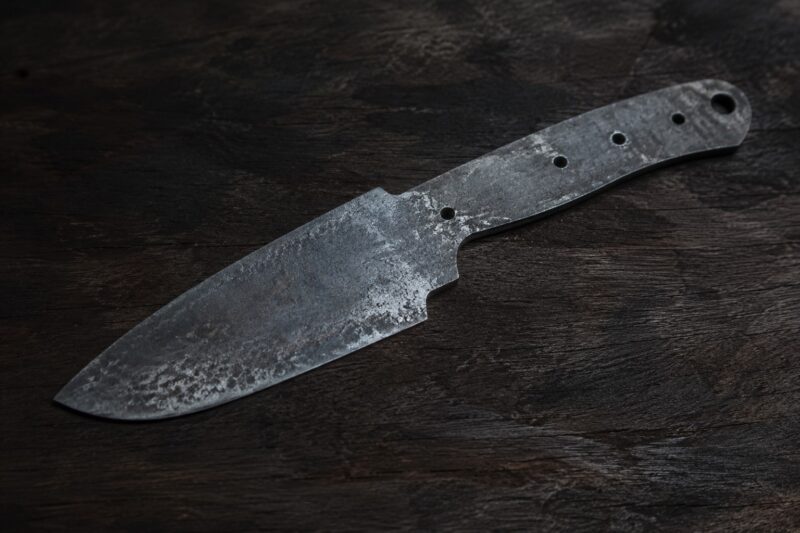
Carbon Steel Myths
An Independent Guide
Carbon steel knives are among the most misunderstood tools in the modern kitchen. Many buyers hesitate before choosing them because of conflicting information: “they rust instantly,” “they are too hard to maintain,” or “stainless steel is always better.”
At the same time, professional chefs and custom knife makers continue to choose carbon steel for one simple reason — performance matters more than convenience.
This guide breaks down every major myth about carbon steel, explains the real science behind it, and helps you decide whether it is right for your kitchen or collection.
If you sell or collect handmade knives, understanding carbon steel properly is essential for both SEO and customer education.
What Is Carbon Steel? (Simple Explanation)
Carbon steel is an iron-based alloy containing:
- Iron (Fe)
- Carbon (C)
The carbon content usually ranges between 0.5% and 1.5%.
Unlike stainless steel, it contains little chromium. Chromium is what creates corrosion resistance in stainless steel.
But here is the important truth:
👉 Carbon steel is not “worse” than stainless steel — it is simply less chemically protected but more performance-focused.
Common Knife Carbon Steels
| Steel Type | Origin | Key Features | Use Case |
|---|---|---|---|
| 1095 | USA | Simple, easy to sharpen | Outdoor / general knives |
| 52100 | Industrial | Tough, wear resistant | Chef knives, custom blades |
| O1 | Tool steel | Balanced performance | Workshop knives |
| Shirogami (White Steel) | Japan | Ultra pure, very sharp | Sushi / precision knives |
| Aogami (Blue Steel) | Japan | Edge retention + hardness | High-end chef knives |
Each steel behaves differently — so “carbon steel” is not one material but a family of performance steels.
Myth 1: Carbon Steel Rusts Immediately
This is the most damaging misconception.
Carbon steel does NOT rust instantly.
Rust requires:
- Moisture
- Oxygen
- Time
If you wash and dry a knife normally, nothing happens.
Real-world reality:
- Rinsing under water → safe
- Cutting food → safe
- Leaving wet overnight → risk
- Long exposure to moisture → rust spots
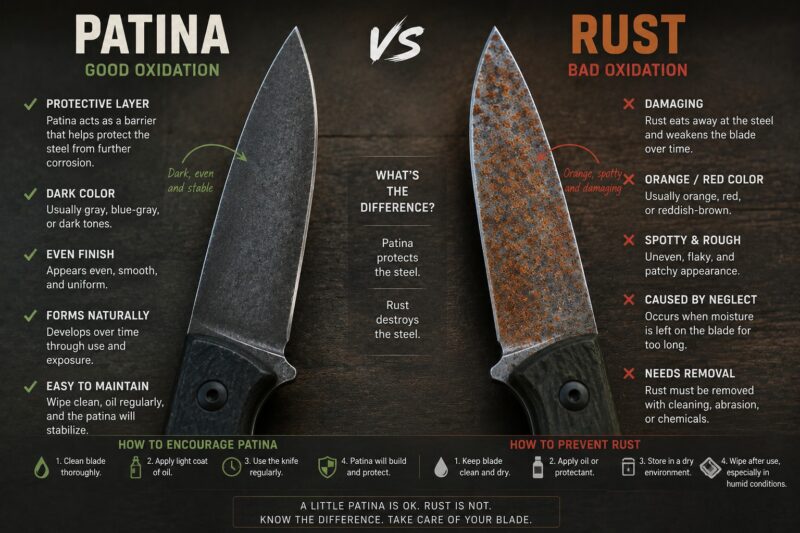
Rust vs Patina (Important Difference)
| Feature | Rust | Patina |
|---|---|---|
| Color | Orange / red | Grey / blue / dark |
| Effect | Damaging | Protective |
| Texture | Flaky | Smooth |
| Action needed | Remove immediately | Leave it |
👉 Patina is NOT damage — it is natural protection.
Patina often becomes part of the blade’s personality and aesthetic value.
Myth 2: Stainless Steel Is Always Better
This is one of the most common marketing-driven myths.
The truth is:
👉 Stainless steel is easier, not better.
Carbon Steel vs Stainless Steel Knives
Carbon vs Stainless Steel Comparison
| Feature | Carbon Steel | Stainless Steel |
|---|---|---|
| Sharpness potential | Very high | High |
| Ease of sharpening | Easy | Medium / hard |
| Rust resistance | Low | High |
| Edge “feel” | Very precise | Slightly duller |
| Maintenance | Moderate | Low |
| Professional use | Very common | Very common |
Key Insight
Stainless steel is designed for convenience.
Carbon steel is designed for performance.
That is the real difference.
Myth 3: Carbon Steel Requires High Maintenance
This myth scares beginners unnecessarily.
The reality: maintenance is minimal.
Simple maintenance routine:
- Wash after use
- Dry immediately
- Store in dry place
That’s it.
What actually causes problems:
- Leaving knives in sinks overnight
- Dishwasher use (for ANY knife)
- Storing wet blades in sheaths
- Long-term humidity exposure
These are user issues, not material issues.
Maintenance effort comparison
| Task | Carbon Steel | Stainless Steel |
|---|---|---|
| Washing | Always required | Always required |
| Drying | Required immediately | Recommended |
| Oiling | Optional | Rare |
| Special care | Low | Very low |
👉 The difference in real life is seconds per use, not hours of maintenance.
Myth 4: Carbon Steel Is Outdated
Carbon steel is often wrongly labeled as “old technology.”
In reality, it is still used in:
- Japanese sushi knives
- High-end custom chef knives
- Traditional forging workshops
- Artisan blades worldwide
Why professionals still use it
Because carbon steel provides:
- Superior edge sharpness
- Better sharpening feedback
- Cleaner slicing performance
- More control over geometry
Modern steels may be more resistant, but carbon steel still wins in cutting performance categories.
How to Choose a Custom Knife Maker
Myth 5: Carbon Steel Does Not Hold an Edge
This is partially misunderstood.
Edge retention depends on:
- Heat treatment
- Hardness (HRC)
- Steel type
- Usage style
Real performance behavior
- Carbon steel = extremely sharp edge
- Stainless steel = longer lasting “usable” edge
Carbon steel edges feel sharper, even if they need touch-ups sooner.
Important clarification:
Edge retention ≠ sharpness quality
Carbon steel often delivers:
- sharper cutting feel
- more precise slicing
- better control in fine work
Myth 6: Carbon Steel Is Brittle
This is false when steel is properly made.
Brittleness depends on:
- Heat treatment quality
- Blade geometry
- Tempering process
Reality:
A well-made carbon steel knife can be:
- Tough
- Flexible under normal use
- Resistant to chipping
Cheap knives fail due to bad manufacturing — not steel type.
Myth 7: Carbon Steel Is Only for Experts
This myth is harmful to beginners.
Carbon steel is actually great for learning because it:
- Sharpens easily
- Shows wear clearly
- Teaches maintenance habits
- Reacts predictably
Beginner advantage:
Using carbon steel forces users to:
- Dry knives properly
- Respect blade care
- Learn sharpening faster
This builds long-term skill.
Myth 8: Patina Means Damage
This is one of the most misunderstood topics.
Patina is:
- Stable oxidation layer
- Protective coating
- Natural aging process
Rust is:
- Active corrosion
- Expanding damage
- Must be removed
Patina formation sources:
- Onions
- Meat
- Vinegar
- Air exposure
- Moisture cycles
Many knife owners even force patina for aesthetics.
Myth 9: Carbon Steel Is Hard to Sharpen
This is actually the opposite of reality.
Carbon steel is one of the easiest steels to sharpen.
Why it sharpens easily:
- Lower alloy complexity
- Fewer carbides
- Fast burr formation
- Excellent stone feedback
Sharpening comparison
| Steel type | Difficulty |
|---|---|
| Carbon steel | Easy |
| Basic stainless | Medium |
| Powder steel | Hard |
👉 For learning sharpening, carbon steel is ideal.
Myth 10: All Carbon Steel Knives Age the Same
False.
Carbon steel develops unique character based on:
- Food type
- Cleaning habits
- Acid exposure
- Humidity
- Frequency of use
Aging styles:
- Light grey patina → vegetables
- Dark uniform patina → meat
- Spotty patterns → mixed use
- Forced patina → artistic finish
Each knife becomes visually unique.
Quick Q&A
Is carbon steel good for kitchen knives?
Yes — especially for chefs who value sharpness and control.
Does carbon steel rust easily?
Only if left wet for long periods.
Is carbon steel better than stainless steel?
It depends — carbon steel is sharper, stainless is easier to maintain.
Can beginners use carbon steel knives?
Yes, and it often improves knife care habits.
Why does carbon steel change color?
That is patina, a protective natural layer.
Do professional chefs use carbon steel?
Yes, many high-end chefs prefer it.
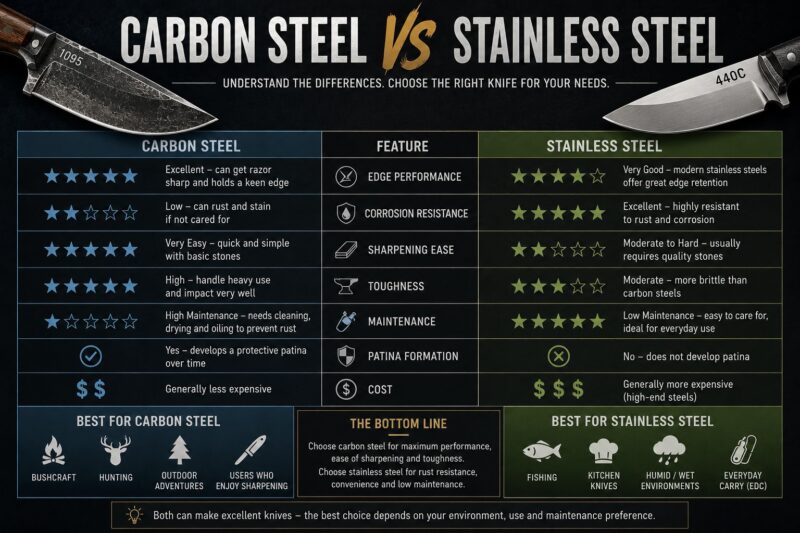
Carbon Steel vs Stainless Steel (At a Glance)
| Factor | Carbon Steel | Stainless Steel |
|---|---|---|
| Sharpness | ⭐⭐⭐⭐⭐ | ⭐⭐⭐⭐ |
| Maintenance | Medium | Low |
| Rust resistance | Low | High |
| Sharpening ease | Very easy | Medium/hard |
| Professional use | Very high | Very high |
Why Carbon Steel Is Perfect
- Traditional forging compatibility
- Beautiful patina development
- Superior sharpening experience
- Artisan-level edge control
- Long-term collectible value
Each knife becomes not just a tool, but a personal object that evolves with its owner.
Who Should Choose Carbon Steel?
Choose carbon steel if you:
- Enjoy cooking regularly
- Appreciate craftsmanship
- Want razor-sharp performance
- Don’t mind basic maintenance
- Like tools that develop character
Who Should Avoid Carbon Steel?
Avoid carbon steel if you:
- Never want to dry your knife
- Expect dishwasher use
- Prefer zero-maintenance tools
- Rarely use kitchen knives
Final Conclusion
Carbon steel is not dangerous, outdated, or overly difficult.
It is simply a performance-focused material that rewards proper care with exceptional results.
Most myths come from misunderstanding rather than real experience.
When used correctly, carbon steel offers:
- Superior sharpness
- Easy sharpening
- Beautiful aging (patina)
- Professional-level performance
https://yashkadesigns.com/diy-blades-and-handles
https://yashkadesigns.ecrater.com/c/2444222/cleaver-knives
This article is for independent informational purposes only and is not affiliated with, sponsored by, or endorsed by any steel manufacturer. All product names, trademarks, and registered trademarks are the property of their respective owners.