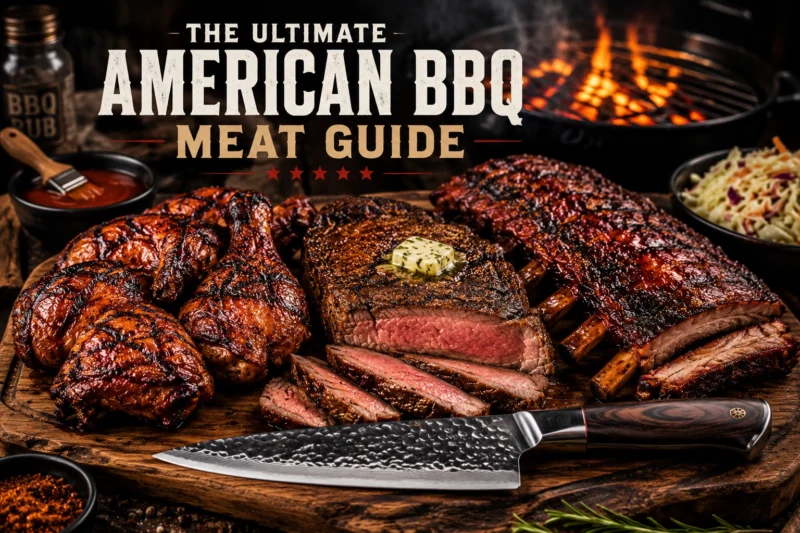
American BBQ
Learn how to prepare chicken, steak, and ribs for American BBQ with professional cutting techniques, seasoning tips, grilling and smoking methods, and the best knives for every type of meat. Includes 8 BBQ recipes for chicken, steak, ribs, and classic American barbecue.
American BBQ is about much more than putting meat on a hot grill. Great barbecue begins before the fire is lit—with choosing the right cut, trimming it correctly, cutting it properly, seasoning it well, and preparing it with the right knife.
Whether you are grilling chicken thighs, preparing steaks for a backyard barbecue, trimming pork ribs, or slicing smoked beef, knife skills have a direct effect on the final result.
The right cut creates more consistent cooking. Proper trimming helps seasoning reach the meat. Uniform pieces cook at the same rate. And after cooking, slicing meat correctly can make the difference between a tender, juicy bite and a tough one.
In this complete American BBQ guide, you’ll learn how to prepare four of the most popular barbecue foods:
- Chicken
- Steak
- Pork ribs
- BBQ-style beef
You’ll also discover the best knives for BBQ preparation, how to trim and cut each type of meat, how to season it, and how to cook it.
The guide includes two recipes for each category, giving you eight practical American BBQ recipes to try at home.
Check Our Guide All Kinds of Knife Sharpening Tools
What Makes Great American BBQ?
American barbecue has many regional traditions, but several principles apply almost everywhere.
Great BBQ depends on:
- Quality meat
- Proper trimming
- Good knife skills
- Balanced seasoning
- Correct cooking temperature
- Patience
- Proper resting
- Correct slicing
The knife is particularly important because meat preparation begins before cooking.
A sharp knife allows you to remove unwanted fat without wasting meat, separate individual portions, trim connective tissue, and create consistent pieces.
For cooked meat, the knife becomes equally important. Brisket, steak, ribs, and chicken should not all be sliced in the same way.
https://yashkadesigns.com/handmade-chinese-knives
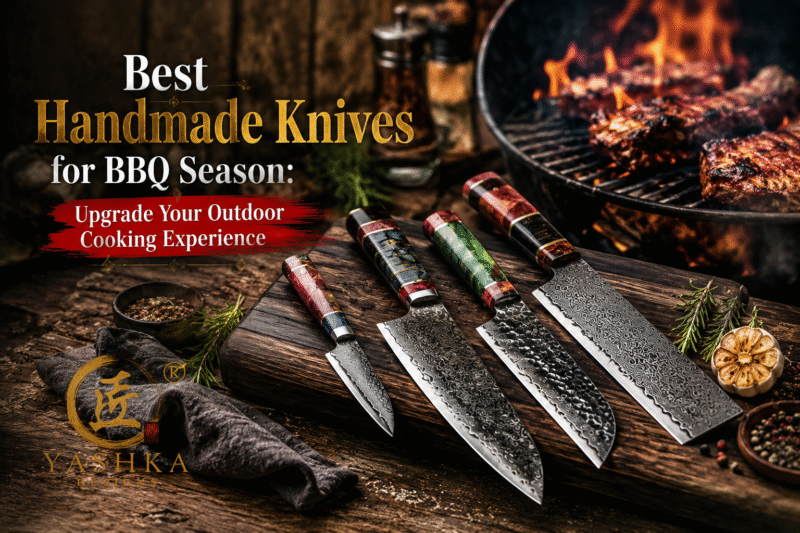
The Best Knives for American BBQ Preparation
You don’t need a huge collection of knives to prepare BBQ.
A few well-chosen knives can handle almost everything.
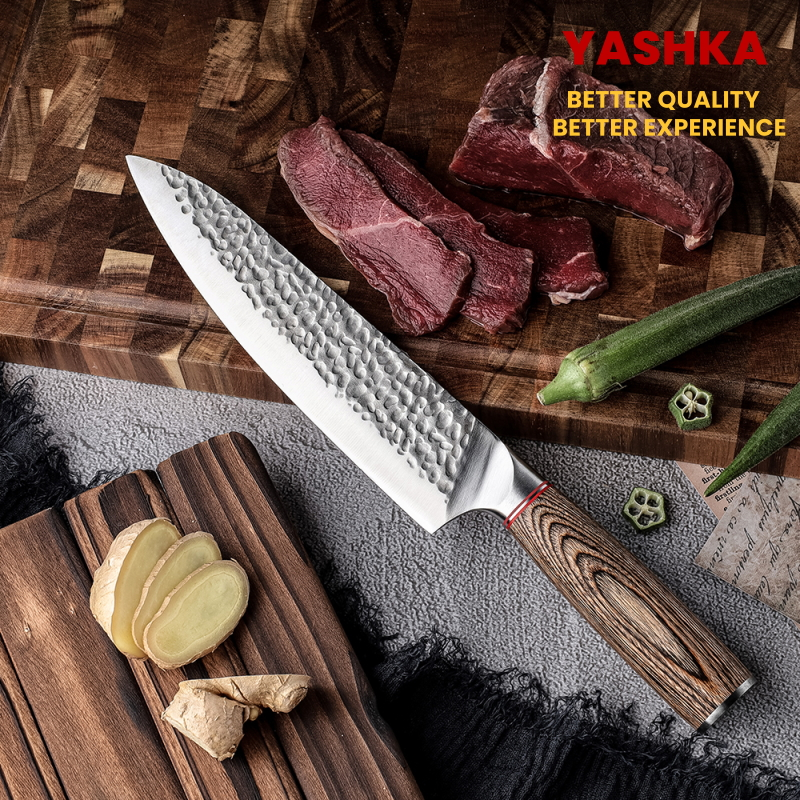
1. Chef Knife
An 8-inch chef knife is one of the most useful knives in a BBQ kitchen.
It is excellent for:
- Cutting vegetables for marinades
- Chopping garlic
- Preparing onions
- Trimming smaller pieces of meat
- Cutting cooked chicken
- General preparation
However, a chef knife isn’t always the best choice for trimming large pieces of meat.
https://yashkadesigns.com/boning-knife-chef-butcher-kitchen-home
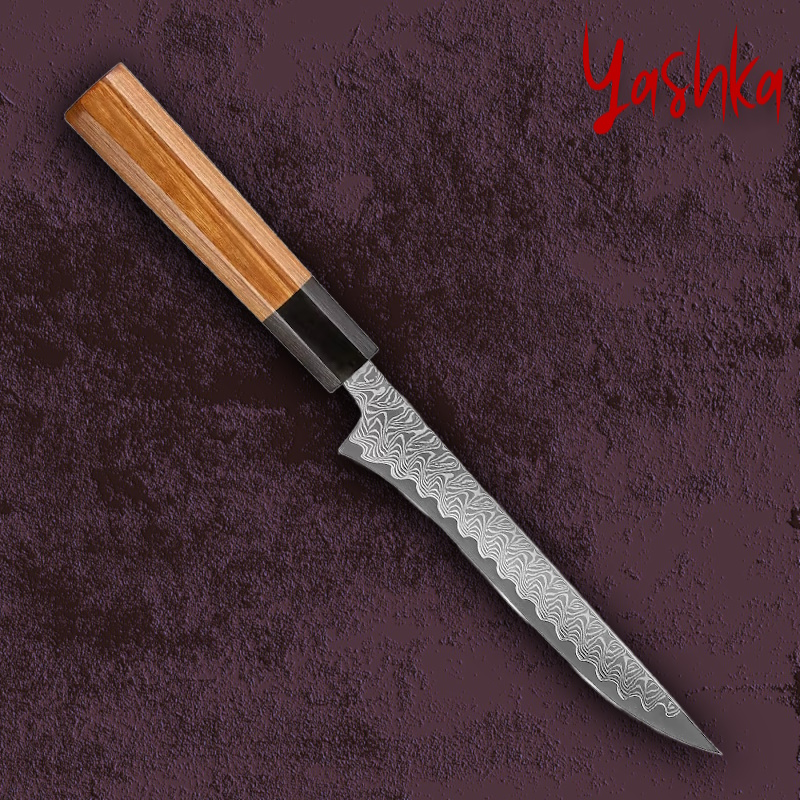
2. Boning Knife
A boning knife is one of the most useful specialist knives for meat preparation.
Its narrow blade allows you to work around:
- Bones
- Joints
- Connective tissue
- Fat deposits
A boning knife is particularly useful for chicken and ribs.
A slightly flexible blade works well when following the contours of bones, while a stiffer boning knife can be better for heavier meat trimming.
https://yashkadesigns.com/handmade-curved-butcher-knife
3. Breaking Knife
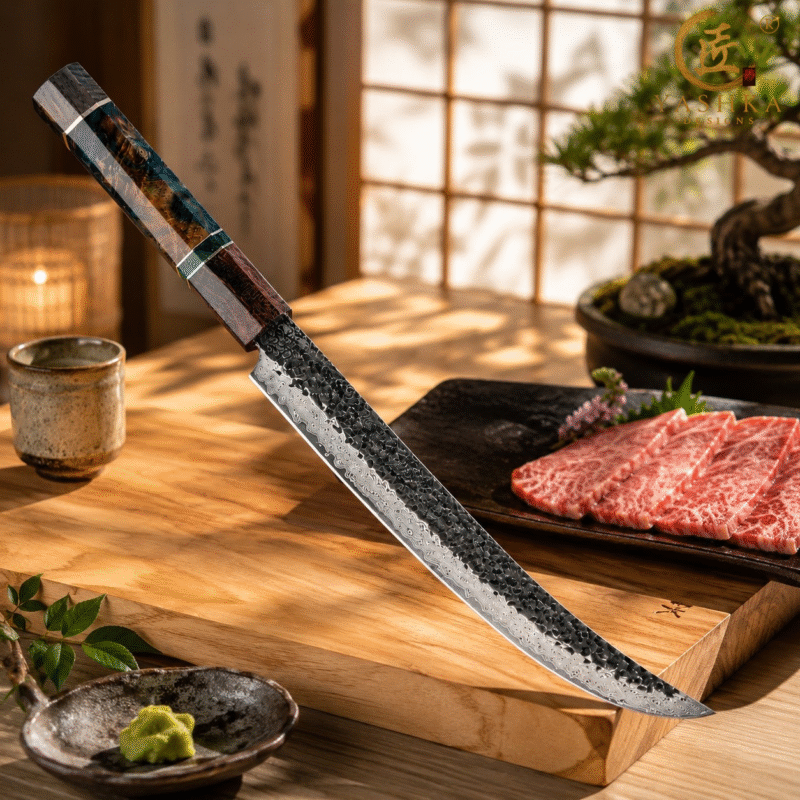
A breaking knife is designed for larger meat-processing tasks.
Its long, curved blade is useful for:
- Breaking down large cuts
- Removing fat
- Separating muscle groups
- Processing larger pieces of beef
For the average home BBQ cook, this isn’t essential, but it becomes extremely useful when preparing large cuts.
4. Slicing Knife
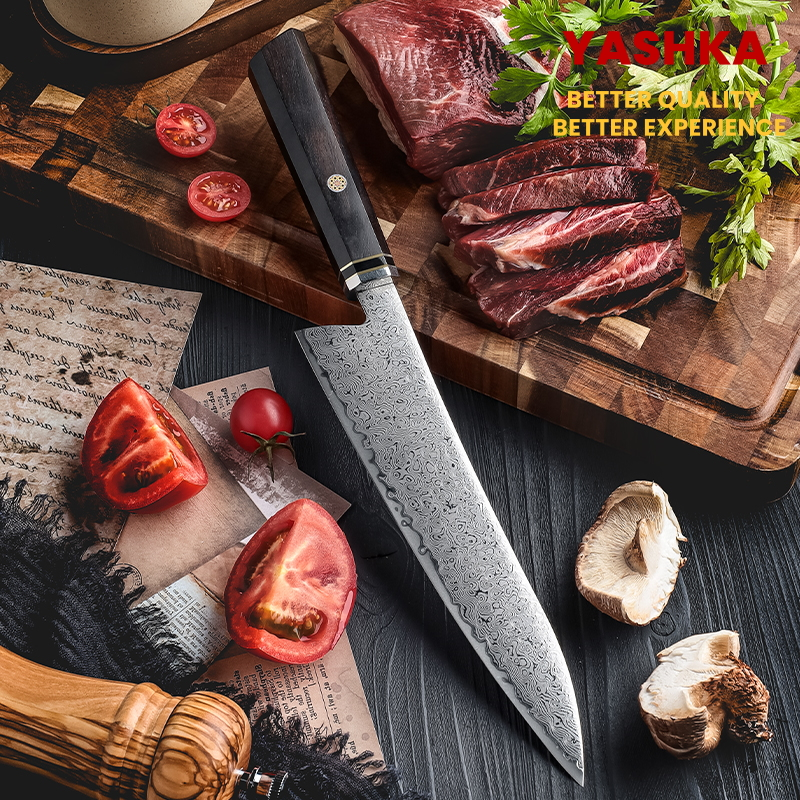
A long slicing knife is extremely useful after cooking.
It is ideal for:
- Brisket
- Large steaks
- Roast beef
- Smoked pork
- BBQ chicken
A long, thin blade allows you to make long, clean slices without excessive sawing.
https://yashkadesigns.com/7-inch-damascus-cleaver-knife
5. Meat Cleaver
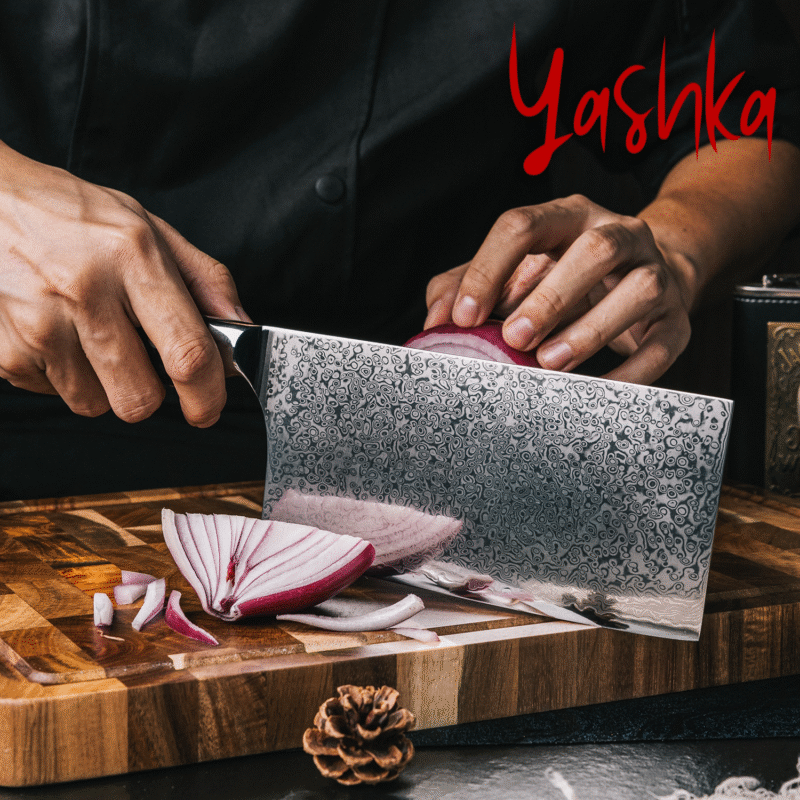
A heavy cleaver can be useful for certain preparation tasks, but it isn’t necessary for most BBQ cooking.
A cleaver is particularly useful when working with:
- Large bones
- Poultry joints
- Large cuts of meat
For precision trimming, however, a boning knife is usually the better tool.
The Best Knife Setup for Home BBQ
If you only want three knives, choose:
1. 8-inch Chef Knife
For vegetables and general preparation.
2. Boning Knife
For chicken, ribs, and meat trimming.
3. Slicing Knife
For slicing cooked meat.
This combination covers most American BBQ preparation.
Check Our Guide Best Handmade Knives for BBQ Season
Meat Preparation Safety
Before learning cutting techniques, remember several basic rules.
Keep Meat Cold
Cold meat is generally easier to trim and cut.
Fat becomes firmer when chilled, making it easier to remove cleanly.
Use a Stable Cutting Board
Place a damp towel or non-slip mat underneath the board.
Never trim meat on an unstable surface.
Keep Your Knife Sharp
A sharp knife gives you greater control.
A dull knife requires more pressure and is more likely to slip.
Separate Raw Meat and Ready-to-Eat Foods
Use appropriate food-safety practices and clean surfaces thoroughly after handling raw meat.
How to Prepare Chicken for BBQ
Chicken is one of the easiest meats for beginners and one of the most versatile foods for American BBQ.
Popular BBQ chicken cuts include:
- Whole chicken
- Chicken thighs
- Chicken drumsticks
- Chicken wings
- Chicken breasts
- Chicken quarters
For grilling, chicken thighs and drumsticks are particularly forgiving because dark meat stays juicy during longer cooking.
How to Cut a Whole Chicken for BBQ
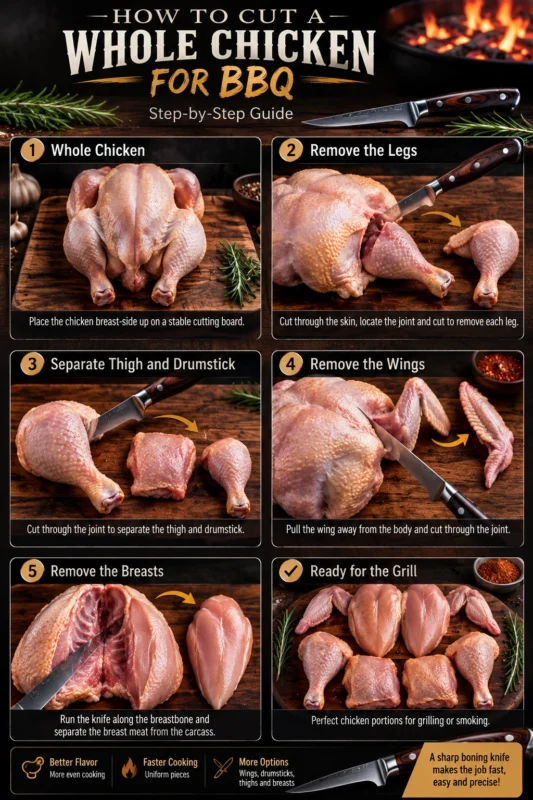
A boning knife is ideal for breaking down a whole chicken.
Step 1: Remove the Legs
Place the chicken breast-side up.
Pull one leg away from the body.
Cut through the skin between the leg and breast.
Locate the joint and cut through it.
Repeat on the other side.
Step 2: Separate Thigh and Drumstick
Find the joint between the thigh and drumstick.
Cut directly through the joint.
This creates two separate pieces.
Step 3: Remove the Wings
Pull the wing away from the body.
Cut through the joint.
Step 4: Remove the Breasts
Run the knife along the breastbone.
Use controlled strokes to separate the breast meat from the carcass.
How to Cut Chicken Breast for BBQ
Chicken breast is often grilled whole, but it can also be cut into:
- Cutlets
- Strips
- Cubes
- Butterfly portions
Butterflying Chicken Breast
Place the breast flat on the cutting board.
Hold the knife parallel to the board.
Cut horizontally through the thickest part, stopping before cutting completely through.
Open the breast like a book.
This creates a thinner, more uniform piece that cooks faster.
How to Cut Chicken Thighs
Chicken thighs can be prepared bone-in or boneless.
For boneless thighs:
- Remove excess fat.
- Flatten the meat.
- Trim uneven edges.
- Leave the thigh whole for grilling.
For skewers, cut into approximately 1½-inch pieces.
Uniform pieces cook more evenly.
Best Knife for Chicken Preparation
The boning knife is the specialist choice.
For general cutting, use an 8-inch chef knife.
For breaking down a whole chicken, however, a boning knife provides much better control around joints and bones.
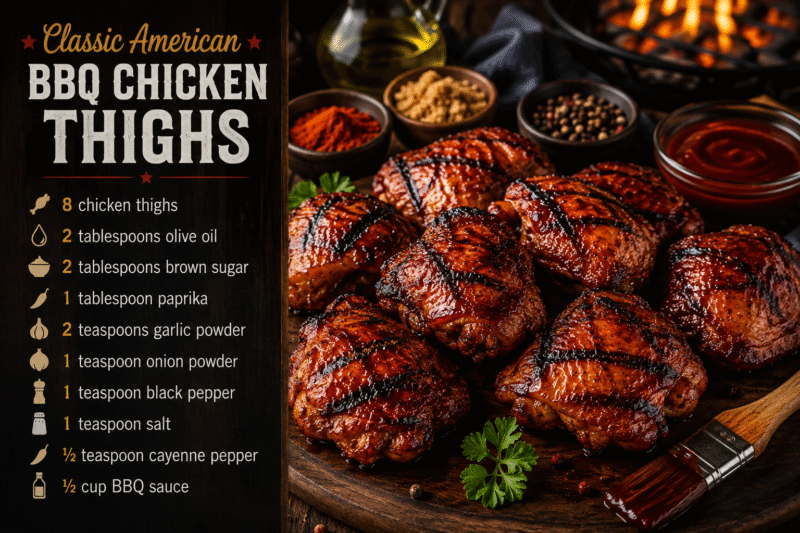
BBQ Chicken Recipe #1: Classic American BBQ Chicken Thighs
Ingredients
- 8 chicken thighs
- 2 tablespoons olive oil
- 2 tablespoons brown sugar
- 1 tablespoon paprika
- 2 teaspoons garlic powder
- 1 teaspoon onion powder
- 1 teaspoon black pepper
- 1 teaspoon salt
- ½ teaspoon cayenne pepper
- ½ cup BBQ sauce
Preparation
Pat the chicken dry.
Trim large pieces of excess fat while leaving enough skin and fat to maintain moisture.
Combine the dry seasonings.
Coat the chicken with olive oil and seasoning.
For the best flavor, refrigerate for at least 1 hour.
Grilling
Preheat the grill.
Place the chicken skin-side down over direct heat initially to develop color.
Move the chicken to indirect heat and continue cooking until fully cooked.
Brush with BBQ sauce during the final stage.
Avoid adding sugary BBQ sauce too early because it can burn.
Allow the chicken to rest before serving.
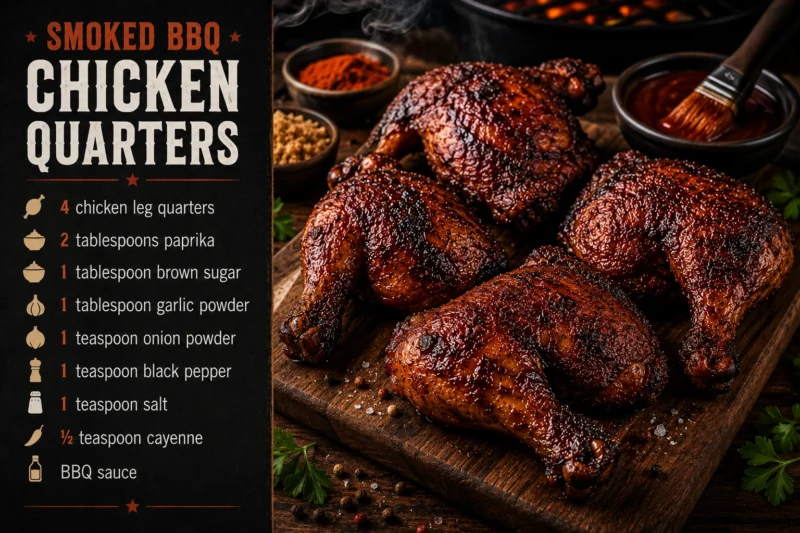
BBQ Chicken Recipe #2: Smoked BBQ Chicken Quarters
Chicken quarters are excellent for smoking because the combination of thigh and drumstick stays juicy.
Ingredients
- 4 chicken leg quarters
- 2 tablespoons paprika
- 1 tablespoon brown sugar
- 1 tablespoon garlic powder
- 1 teaspoon onion powder
- 1 teaspoon black pepper
- 1 teaspoon salt
- ½ teaspoon cayenne
- BBQ sauce
Preparation
Trim excess skin and fat.
Pat chicken dry.
Apply the dry rub generously.
Allow the chicken to sit refrigerated for several hours or overnight.
Smoking
Prepare the smoker according to its instructions and use a suitable smoking wood.
Smoke the chicken until cooked through and tender.
Brush with BBQ sauce toward the end.
Rest before serving.
The result should have:
- Smoky flavor
- Crisp skin
- Juicy dark meat
- Sweet and spicy BBQ glaze
How to Prepare Steak for BBQ
Steak is different from chicken because the cutting technique after cooking can be just as important as preparation before grilling.
Popular BBQ steaks include:
- Ribeye
- New York strip
- Sirloin
- T-bone
- Porterhouse
- Flank steak
- Skirt steak
How to Trim Steak
Not every steak requires extensive trimming.
Ribeye, for example, benefits from its internal marbling.
Remove only excessive external fat or tough pieces of connective tissue.
Don’t remove valuable marbling.
Marbling is the intramuscular fat that contributes to:
- Flavor
- Juiciness
- Tenderness
How to Cut Steak Against the Grain
This is one of the most important meat-cutting techniques.
Muscle fibers run in a particular direction.
If you slice parallel to those fibers, the pieces can feel tougher.
When you cut across the fibers, you shorten them.
This makes the meat easier to chew.
How to Find the Grain
Before cooking, inspect the surface of the meat.
Look for lines running through the muscle.
Remember the direction.
After cooking, the grain can sometimes be harder to see.
If necessary, make a small cut to identify it.
Best Knife for Slicing Steak
A sharp slicing knife or chef knife is ideal.
For large steaks, a long slicing knife provides the cleanest results.
Avoid sawing aggressively.
Use smooth, controlled strokes.
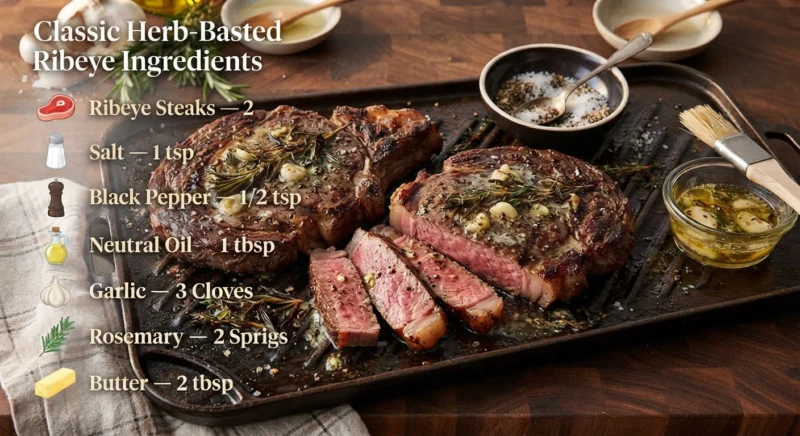
BBQ Steak Recipe #1: Classic Grilled Ribeye
Ingredients
- 2 ribeye steaks
- Salt
- Black pepper
- 1 tablespoon neutral oil
- Garlic
- Fresh rosemary or thyme
- Butter
Preparation
Take the steaks out of the refrigerator before cooking and allow them to lose some of their chill.
Pat dry.
Season generously with salt and freshly ground black pepper.
Grilling
Preheat the grill until very hot.
Lightly oil the steaks.
Place them on the grill.
Develop a strong crust.
Turn as necessary to achieve even browning.
Cook to your preferred internal temperature using a reliable thermometer.
For a medium-rare steak, many cooks target approximately 130–135°F (54–57°C) after resting, but actual cooking time varies according to thickness and grill temperature.
Resting
Rest the steak before slicing.
This allows the temperature to stabilize and helps retain juices.
Slice across the grain.
Serve immediately.
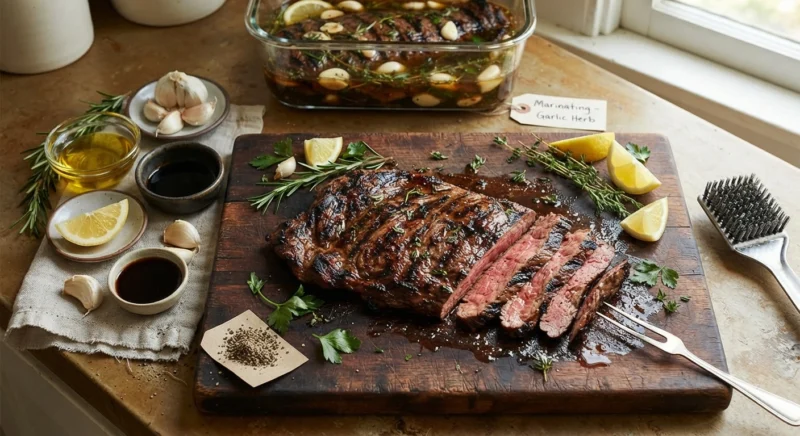
BBQ Steak Recipe #2: Grilled Flank Steak with Garlic Herb Marinade
Flank steak is leaner than ribeye and benefits particularly from proper marinating and slicing.
Marinade
- ¼ cup olive oil
- 3 tablespoons soy sauce
- 2 tablespoons lemon juice
- 4 garlic cloves
- 1 tablespoon Worcestershire sauce
- 1 teaspoon black pepper
- Fresh herbs
Marinate the steak for several hours.
Grilling
Remove excess marinade.
Grill over high heat.
Avoid overcooking because flank steak is relatively lean.
Rest the steak.
Then identify the grain and slice very thinly across it.
This is one of the most important steps in preparing flank steak.
How to Prepare Ribs for BBQ
Ribs require more preparation than steak.
The most common American BBQ rib types are:
- Baby back ribs
- Spare ribs
- St. Louis-style ribs
Baby Back Ribs
Baby back ribs come from the upper part of the rib cage.
They are:
- Smaller
- Leaner
- Tender
- Faster cooking
Spare Ribs
Spare ribs come from the lower rib area.
They are:
- Larger
- Meatier
- Richer
- Higher in fat
They are particularly popular for traditional BBQ.
St. Louis-Style Ribs
St. Louis ribs are trimmed spare ribs with a more uniform rectangular shape.
This makes them:
- Easier to cook evenly
- Easier to portion
- Attractive for presentation
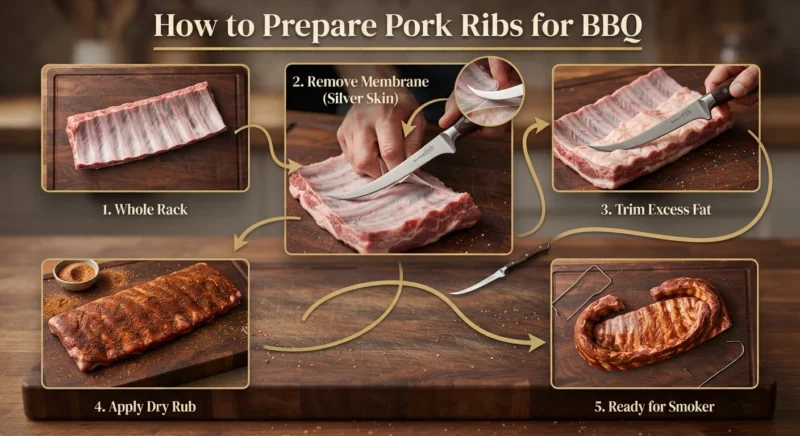
How to Remove the Membrane from Ribs
One of the most important preparation steps is removing the tough membrane from the bone side.
Step 1
Place the ribs bone-side up.
Step 2
Use the tip of a boning knife to gently lift the membrane at one corner.
Step 3
Grip the membrane with a paper towel.
Step 4
Pull slowly across the rack.
If necessary, use the knife to loosen stubborn sections.
How to Trim Ribs
Remove:
- Large pieces of loose fat
- Flaps of meat
- Excess connective tissue
Try to create a relatively even rack.
Do not aggressively remove meat from between the bones.
Best Knife for Rib Preparation
A boning knife is ideal.
Its narrow blade provides excellent control when:
- Removing membrane
- Trimming fat
- Cleaning edges
A chef knife can be used for larger cuts, but a boning knife gives better precision.
BBQ Ribs Recipe #1: Classic Dry-Rub Pork Ribs
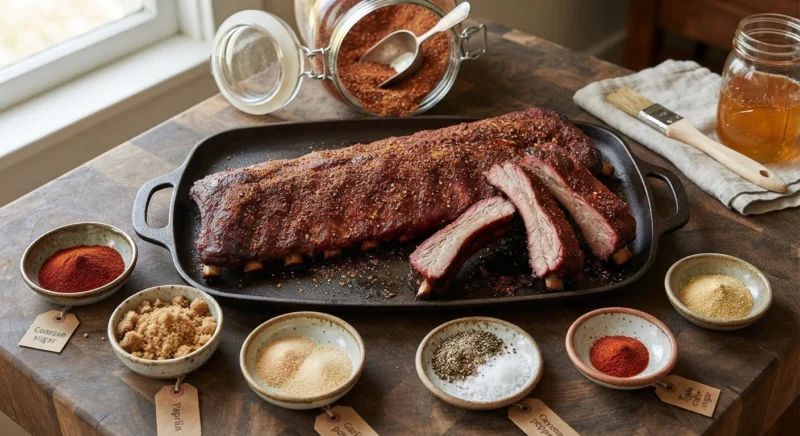
Ingredients
- 1 rack spare ribs
- 2 tablespoons paprika
- 2 tablespoons brown sugar
- 1 tablespoon garlic powder
- 1 tablespoon onion powder
- 1 teaspoon black pepper
- 1 teaspoon salt
- ½ teaspoon cayenne
- ½ teaspoon mustard powder
Preparation
Remove the membrane.
Trim excess fat.
Pat ribs dry.
Apply a thin layer of mustard or another suitable binder if desired.
Apply the dry rub generously.
Allow the ribs to rest refrigerated for several hours or overnight.
Smoking
Smoke according to your smoker’s recommended temperature and method.
A low-and-slow cooking process allows connective tissue to soften gradually.
During cooking, monitor:
- Internal temperature
- Tenderness
- Bark development
Avoid relying exclusively on a fixed cooking time because rack size and cooking conditions vary.
Finishing
Apply BBQ sauce during the final stage if you want saucy ribs.
Return the ribs to the heat briefly to set the glaze.
Rest before cutting.
BBQ Ribs Recipe #2: Sweet & Smoky BBQ Ribs
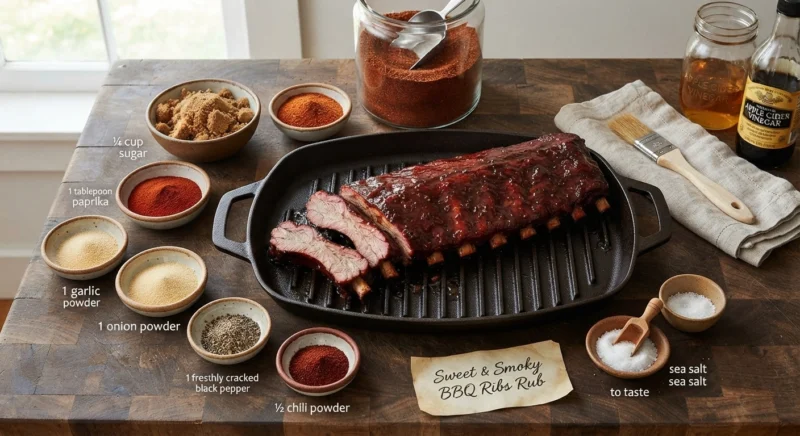
Dry Rub
- ¼ cup brown sugar
- 1 tablespoon smoked paprika
- 1 teaspoon garlic powder
- 1 teaspoon onion powder
- 1 teaspoon black pepper
- ½ teaspoon chili powder
- Salt to taste
Sauce
- 1 cup BBQ sauce
- 2 tablespoons honey
- 1 tablespoon apple cider vinegar
- 1 teaspoon smoked paprika
Mix the sauce.
Prepare and smoke the ribs using the same general method.
Brush the sauce on during the finishing stage.
The result should be:
- Sweet
- Smoky
- Slightly acidic
- Rich
- Sticky
How to Cut Cooked Ribs
After resting, place the ribs bone-side up.
Look for the spaces between the bones.
Using a sharp knife, cut between the bones.
Try to make one clean downward cut.
A dull knife may require excessive pressure and can crush the meat.
Check Our Guide The Ultimate Guide to Vegetable Preparation
BBQ Beef Preparation
Although steak is already covered above, beef BBQ includes several additional cuts that deserve attention.
Popular American BBQ beef includes:
- Brisket
- Beef ribs
- Tri-tip
- Chuck roast
- Flank steak
- Sirloin
Brisket is particularly important in American BBQ culture.
How to Prepare Brisket
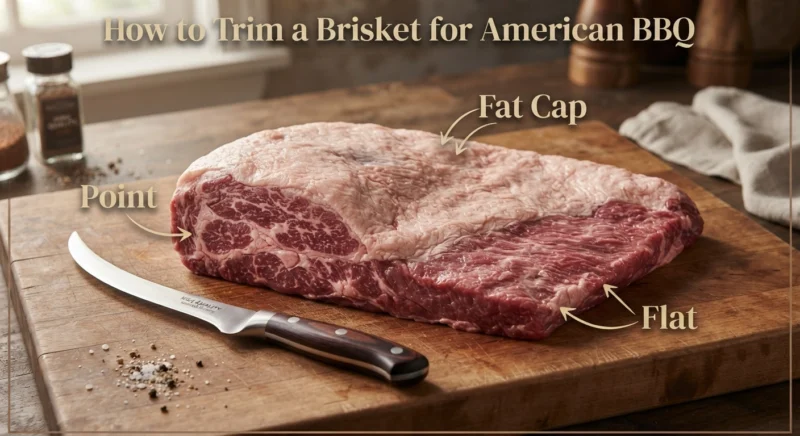
Brisket typically contains two major muscles:
- Flat
- Point
It also has a substantial fat layer.
Proper trimming is essential.
How to Trim Brisket
Start with the fat cap.
Remove thick, hard pieces of external fat.
Leave a reasonable layer of softer fat.
The goal is not to remove every gram of fat.
Instead, create an even surface that allows:
- Seasoning
- Smoke
- Heat
to interact consistently with the meat.
Best Knife for Brisket Trimming
A long, sharp slicing or brisket-trimming knife works well.
A narrow boning knife can also be useful for detailed trimming.
The blade should be:
- Sharp
- Thin
- Long enough for controlled strokes
How to Slice Brisket
Brisket contains different muscle grain directions.
This makes slicing particularly important.
After cooking:
- Identify the grain.
- Separate the flat and point if necessary.
- Slice the flat across the grain.
- Adjust the cutting direction as the grain changes.
Slices should be thick enough to remain intact but thin enough to chew easily.
American BBQ Seasoning Basics
You don’t need complicated seasoning for great BBQ.
A basic dry rub often contains:
- Salt
- Black pepper
- Paprika
- Garlic powder
- Onion powder
- Brown sugar
- Chili powder
Different meats benefit from different balances.
Best Seasoning for Chicken
Chicken works well with:
- Paprika
- Garlic
- Onion
- Black pepper
- Brown sugar
- Cayenne
Best Seasoning for Steak
For high-quality steak, simplicity often works best.
Use:
- Salt
- Black pepper
- Garlic
This allows the flavor of the beef to remain dominant.
Best Seasoning for Ribs
Ribs work particularly well with:
- Brown sugar
- Paprika
- Garlic
- Onion
- Black pepper
- Chili
Best Seasoning for Brisket
A traditional Texas-style approach can be remarkably simple:
Salt + coarse black pepper
The long cooking process and smoke provide much of the flavor.
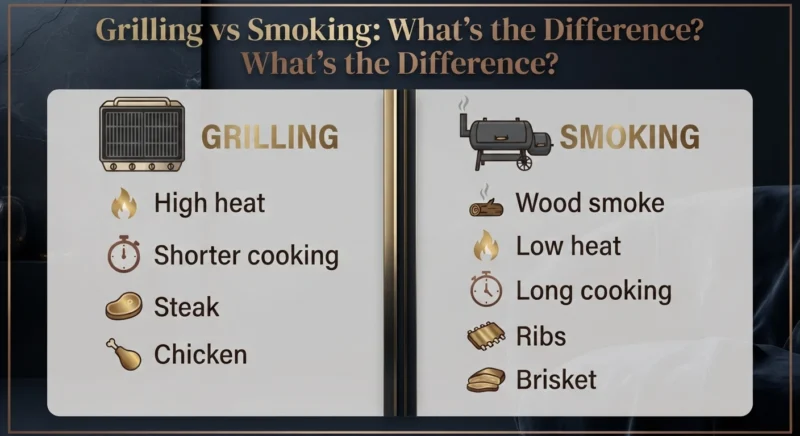
Grilling vs Smoking
American BBQ includes both grilling and smoking, but they are not identical techniques.
Grilling
Usually:
- Higher heat
- Shorter cooking time
- Direct heat
Ideal for:
- Steak
- Chicken
- Burgers
Smoking
Usually:
- Lower temperature
- Longer cooking time
- Indirect heat
- Wood smoke
Ideal for:
- Ribs
- Brisket
- Large cuts of pork
- Chicken
Direct vs Indirect Heat
Understanding this distinction is essential.
Direct Heat
Food is positioned directly above the heat source.
Best for:
- Searing steak
- Browning chicken
- Finishing vegetables
Indirect Heat
Food is positioned away from the primary heat source.
Best for:
- Large chicken pieces
- Ribs
- Brisket
- Long cooking
A two-zone grill gives you both options.
Why Meat Should Rest After BBQ
Resting is often overlooked.
After cooking, meat should generally be allowed to rest before cutting.
This provides time for:
- Internal temperature to stabilize
- Juices to redistribute
- Texture to become more consistent
If you cut immediately, more liquid may escape onto the cutting board.
How to Slice Different BBQ Meats
Different meats require different cutting strategies.
| Meat | Best Cutting Direction | Recommended Knife |
|---|---|---|
| Chicken breast | Across muscle fibers | Chef knife |
| Chicken thighs | Across grain when slicing | Chef knife |
| Ribeye | Across grain | Slicing knife |
| Flank steak | Thinly across grain | Slicing knife |
| Ribs | Between bones | Boning/chef knife |
| Brisket | Across grain | Long slicing knife |
Common BBQ Meat Preparation Mistakes
Mistake 1: Using a Dull Knife
A dull blade makes trimming difficult.
Keep your BBQ knives sharp.
Mistake 2: Removing Too Much Fat
Fat contributes flavor and moisture.
Trim strategically rather than aggressively.
Mistake 3: Cutting Steak With the Grain
This can make even a tender steak seem chewy.
Always identify the grain before slicing.
Mistake 4: Cutting Meat Immediately
Give cooked meat time to rest.
Mistake 5: Applying BBQ Sauce Too Early
Many sauces contain sugar.
High heat can burn sugar before the meat is finished.
Apply sauce toward the end when appropriate.
How to Choose a BBQ Knife
When choosing a knife for BBQ preparation, consider four factors.
Blade Length
Longer blades are useful for:
- Brisket
- Large roasts
- Slicing steaks
Shorter blades provide greater control for:
- Chicken
- Detailed trimming
Blade Flexibility
Flexible blades work well for:
- Chicken
- Fish
- Following bones
Stiffer blades are better for:
- Heavy trimming
- Larger cuts
Edge Retention
BBQ preparation can involve a lot of cutting.
A steel with good edge retention can reduce the frequency of sharpening.
Popular steels include:
- VG10
- AUS-10
- 14C28N
- S35VN
- M390
- X50CrMoV15
The ideal choice depends on whether you prioritize edge retention, toughness, corrosion resistance, or ease of sharpening.
BBQ Knife Maintenance
After preparing raw meat:
- Wash the knife thoroughly.
- Dry it immediately.
- Do not leave it soaking.
- Store it safely.
- Sharpen when necessary.
Avoid putting quality knives in the dishwasher.
The combination of heat, detergents, and movement can damage both the blade and handle.
The Best BBQ Knife Collection for Home Cooks
If you regularly prepare American BBQ, consider building a small specialized collection.
Essential Knife #1: Chef Knife
For:
- Vegetables
- Garlic
- Herbs
- General preparation
Essential Knife #2: Boning Knife
For:
- Chicken
- Ribs
- Fat trimming
- Bone work
Essential Knife #3: Slicing Knife
For:
- Steak
- Brisket
- Roast beef
- Large cooked meats
This three-knife combination is enough for most backyard BBQ cooks.
Frequently Asked Questions
What is the best knife for BBQ meat?
A combination of a chef knife, boning knife, and slicing knife covers most BBQ preparation tasks.
What knife is best for cutting chicken?
A chef knife is excellent for general chicken preparation, while a boning knife is better for breaking down a whole chicken and working around bones.
What knife is best for trimming ribs?
A narrow boning knife provides excellent control when removing the membrane and trimming connective tissue.
What knife is best for cutting steak?
A sharp slicing knife or chef knife works well. For large steaks and roasts, a long slicing knife is particularly useful.
Should I cut steak before or after grilling?
Most steaks are best grilled whole and sliced after resting. This helps retain moisture and develops a better crust.
Some recipes, such as skewers or stir-fry, require cutting before cooking.
How do you cut steak to make it tender?
Identify the direction of the muscle fibers and slice across the grain rather than parallel to it.
This shortens the muscle fibers and makes the steak easier to chew.
Should you remove the membrane from ribs?
Yes. The tough membrane on the bone side can interfere with texture and seasoning. Removing it is a common preparation step for BBQ ribs.
What is the best knife for brisket?
A long, sharp slicing knife is ideal for cooked brisket. A boning or trimming knife can be useful during preparation.
What is the difference between grilling and BBQ?
Grilling generally uses higher heat and shorter cooking times, while traditional American BBQ often uses lower temperatures, indirect heat, and longer cooking times, frequently with smoke.
Can I use a chef knife to trim meat?
Yes, especially for smaller pieces. However, a boning or trimming knife provides better control for detailed meat preparation.
Final American BBQ Preparation Checklist
Before you start cooking, make sure you have:
Meat
- Fresh chicken
- Quality steak
- Pork ribs
- Optional brisket or other beef
Knives
- Chef knife
- Boning knife
- Slicing knife
Equipment
- Stable cutting board
- Grill or smoker
- Meat thermometer
- Tongs
- BBQ brush
Seasoning
- Salt
- Black pepper
- Paprika
- Garlic powder
- Onion powder
- Brown sugar
- Chili powder
Preparation
- Trim meat
- Remove rib membrane
- Identify steak grain
- Apply seasoning
- Preheat grill or smoker
- Cook using appropriate heat
- Rest meat
- Slice correctly
Final Thoughts: Great BBQ Starts With Preparation
The best American BBQ doesn’t begin when the meat hits the grill.
It begins at the cutting board.
Learning how to trim chicken, prepare steak, remove rib membranes, slice brisket, and cut cooked meat correctly gives you greater control over the entire cooking process.
A sharp, appropriate knife is one of the most important tools in that process.
For most home BBQ cooks, a practical setup starts with three knives:
Chef knife + boning knife + slicing knife.
The chef knife handles general preparation and vegetables. The boning knife handles chicken, ribs, and detailed trimming. The slicing knife finishes the job by producing clean, consistent slices of steak, brisket, and other cooked meats.
Once your knife skills improve, BBQ preparation becomes faster, safer, and more precise.
And the difference shows on the plate.
How to Prepare Chicken, Steak & Ribs for BBQ: Cutting Techniques, Knives & Recipes
The Ultimate American BBQ Meat Guide