
The Different Types of Kitchen Knives And Their Uses
Although you can presumably do most of the tasks in your kitchen using just a chef’s knife, it is best to have a more complete set containing distinct types of kitchen knives. Having the right knife in your hands will lead to a feeling like you are a more confident and creative chef. You will no longer worry about how to precisely and quickly make a cut.
This article is going to introduce the most widespread types of kitchen knives out there to you. Also, you will get to know what these knives are able to do. In the end, according to what your task and preferences are, you can pick the right kitchen knives to add to your kitchen set of knives.
Let us read on to get to know the most popular kitchen knives:
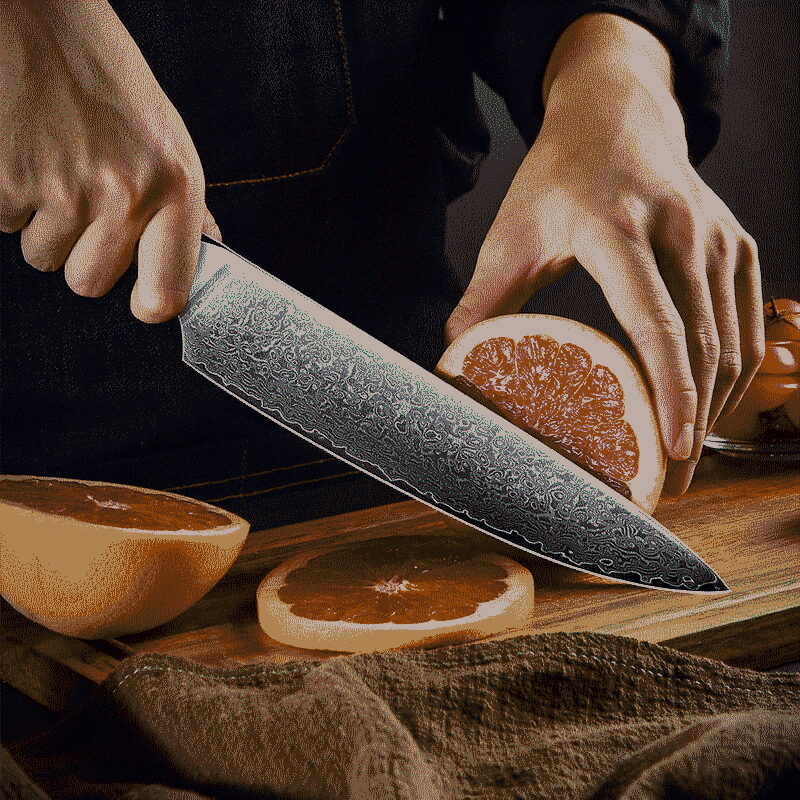
Chef’s Knife
The chef’s knife is the primary, multipurpose kitchen knife chefs love to use. You can handle a huge majority of your kitchen tasks with the help of a single chef’s knife, as it can be used to chop and dice vegetables, herbs, and fruits. It can even be used to cut different sorts of meat and fish.
The chef’s knives are usually 8 to 10 inches long and come with rounded tips. Though strong and versatile, the chef’s knife is not the best option for precision-demanding jobs you may have in your kitchen.
Carving Knife
Carving knives are long and precise tools you can use once you cook a big piece of meat. They are narrow for precision. Also, you can benefit from its length for slicing wider pieces of meat. Some types of carving knives come with indentations on one side of their blades, hence making it easier to release each cut slice.
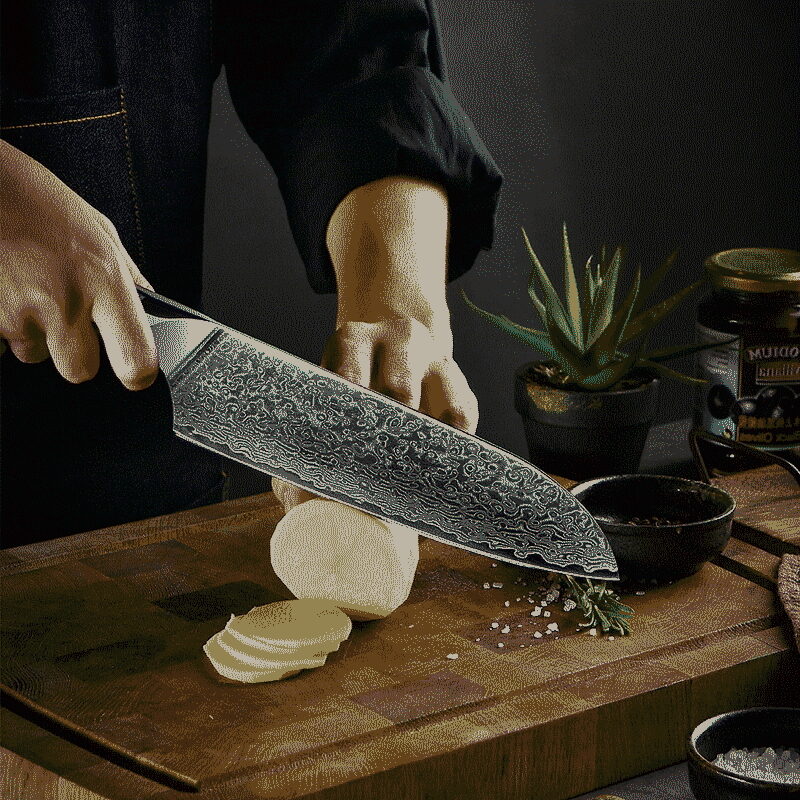
Santoku Knife
Like the chef’s knife, the Santoku knife is also a kind of all-purpose knife you can use for diverse intentions in your kitchen. The Santoku knife can be used to chop, dice, and mince ingredients effortlessly, as well as slice cheese. The blade of the Santoku knife is almost straight and comes with small indentations that make it smoother for the food to slide off.
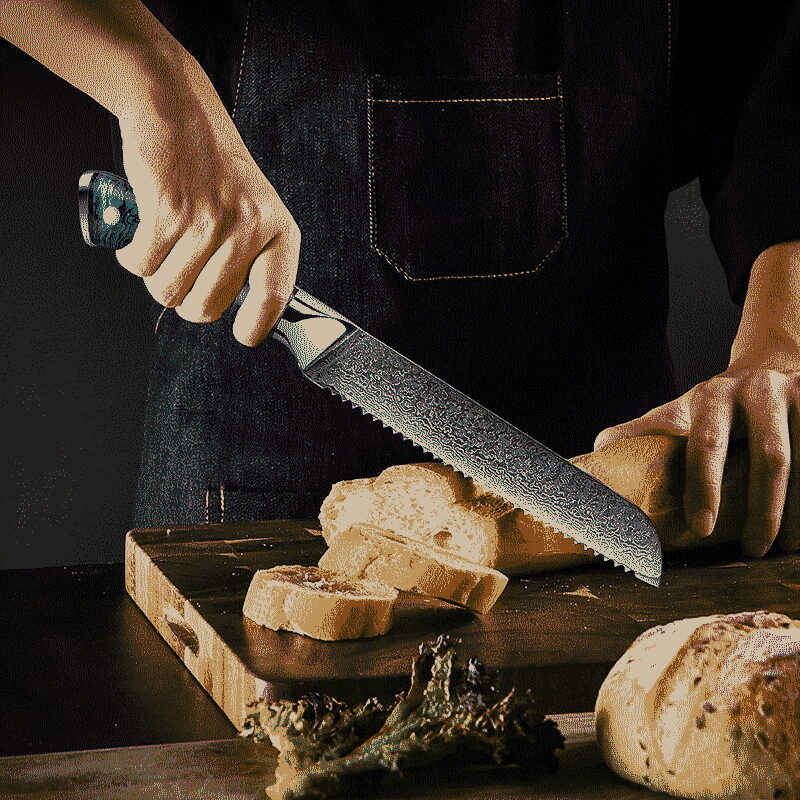
Bread Knife
Bread knives are known for their serrated edges and length. These knives can smoothly penetrate through soft and crusty bread, without ruining the structure. It is a good piece of advice to use bread knives just as you use a saw. Moving a bread knife back and forth can help you efficiently slice bread and other baked goods such as cakes.
Other than bread, this kitchen knife model can be used to cut through fruits with thick crusts such as melons in which usual knives get stuck. Also, you can use a bread knife to slice tomatoes and bars of chocolate into smaller pieces effortlessly.
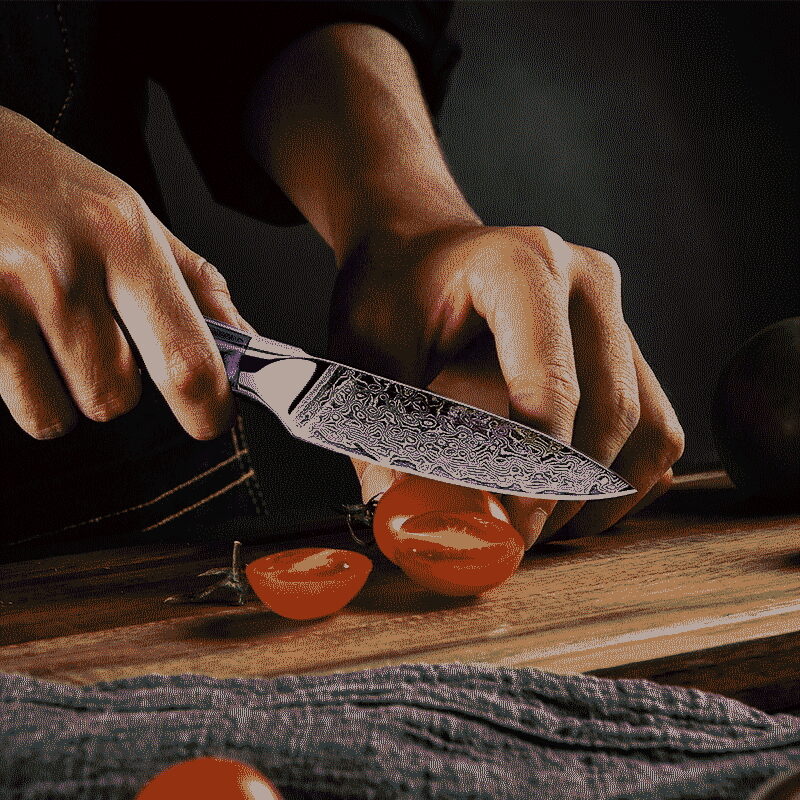
Paring Knife
Coming in both straight and serrated shapes, paring knives are small kitchen knives that offer a thin, yet extremely sharp blade. Though being small, paring knives are probably one of the best kitchen knives you can use to peel, chop, slice, mince, and remove seeds.
If you are dealing with fruits or tend to cut hot peppers, then you should go with paring knives. Though you can use them for almost anything, paring knives are not the best option to work with when dealing with large pieces of meat or produce.
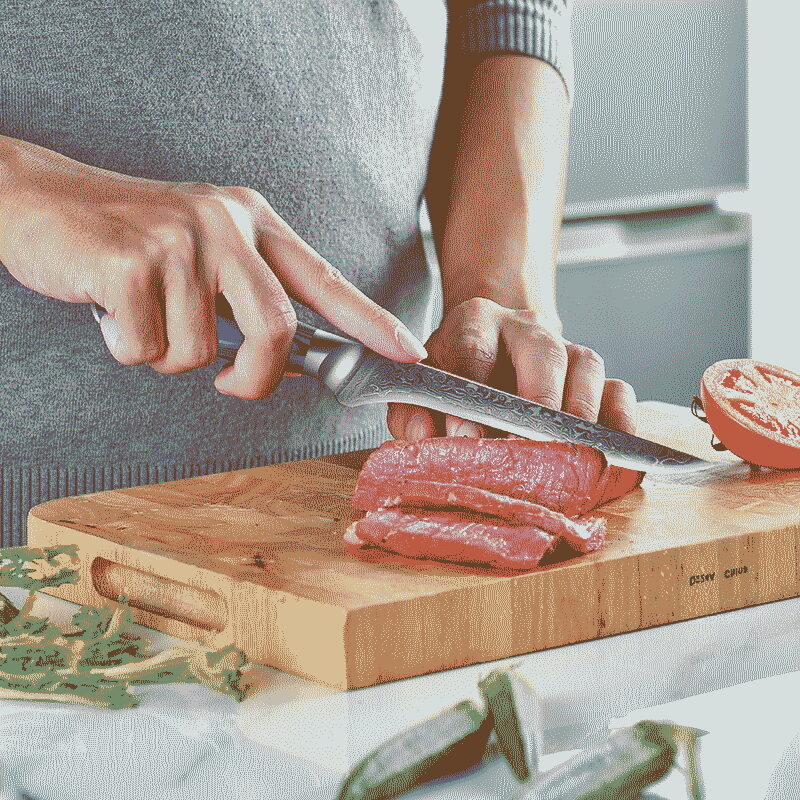
Boning Knife
What’s special about boning knives is that they are equipped with extremely narrow and flexible blades whose broadness reduces gradually while getting closer to the tip. You can use a boning knife to efficiently debone chunks of meat and minimize the waste as much as possible.
What sets apart boning knives from other kitchen knives is that they can cut through tough connective joints much more smoothly. It is just enough to cut around the bones, not into them. Also, you can use a boning knife to easily separate the flesh of a fish from its skin.
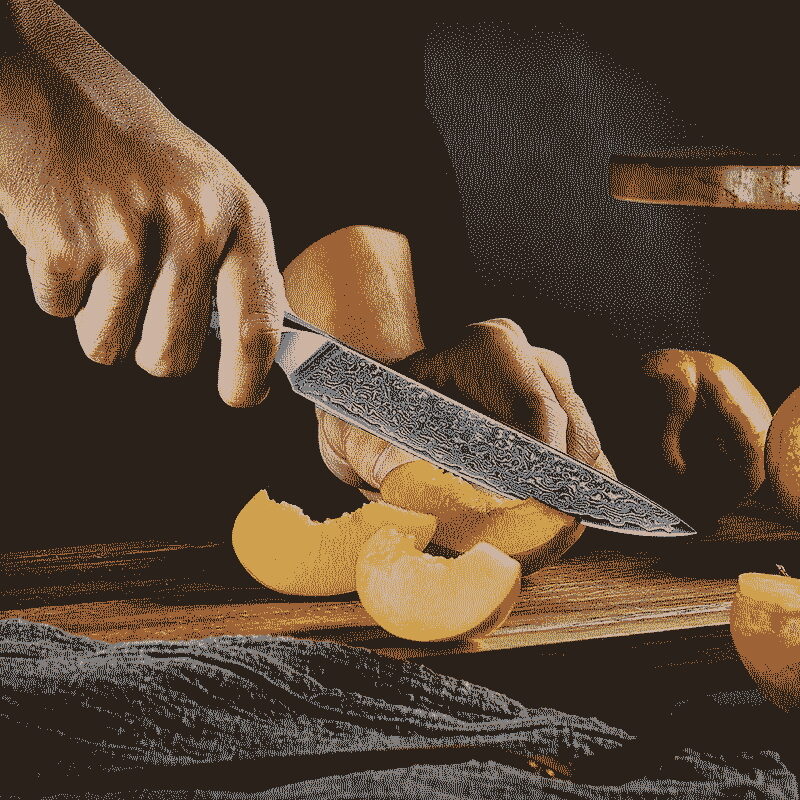
Utility Knife
Compared to chef’s knives, utility knives are smaller in size. They are just slightly bigger than paring knives. If you have small to midsize vegetables and pieces of meat, then utility knives may well come in handy for you. Also, the utility knives equipped with serrated blades can help you slice sandwiches too.
Utility knives that come with straight blades are best for peeling vegetables and fruits, though in this case, a paring knife can also be a great option.
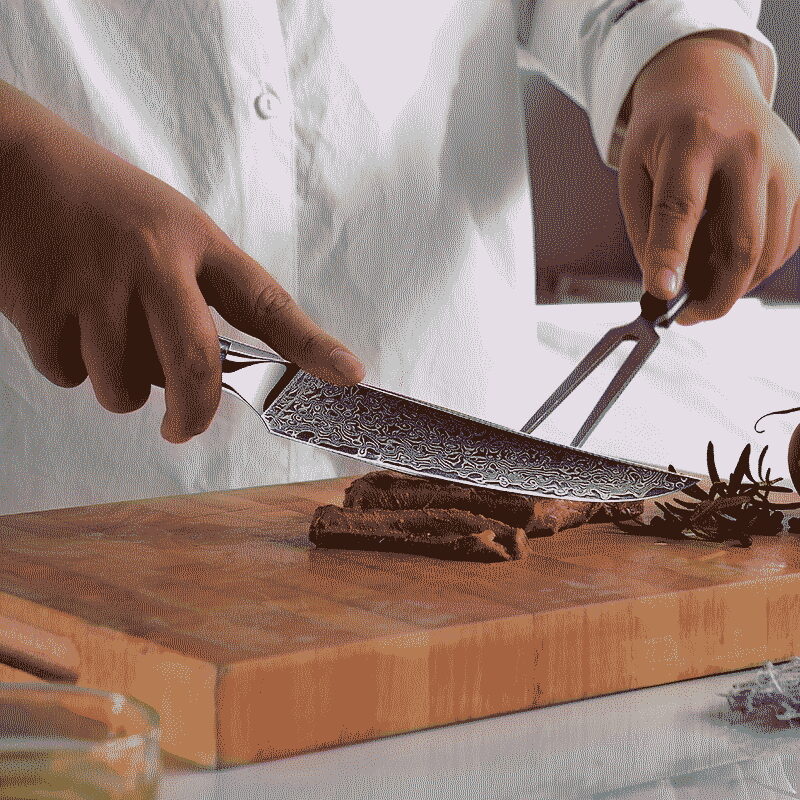
Steak Knife
Steak knives are primarily used not for cooking, but for the sake of eating. They are usually placed on the table whenever steak is present there. The blades of steak knives are as sharp and strong as you can easily cut your steak into several pieces with ease. Steak knives are typically sold in packages. They come with either serrated or straight edges.
Kitchen Shears
Scissors are what crosses your mind once you see kitchen shears, as they are at first sight nothing like a knife. Kitchen shears are used to cut herbs off their vines, chop salad particles, and even open up the packing of previously processed foods. In addition to that, kitchen shears can be used to cut bacon into multiple pieces while making pasta or salad.
Kitchen shears are even able to cut canned or jarred goods, such as jarred chilies. Also, big pieces of meat are easy to cut into tiny chunks as long as you have kitchen shears.
Sharpener
If you have some kitchen knives in your inventory, then a sharpener is mandatory for your collection. There are various types of sharpeners you can use. One simple model is actually sharpening stones; like small metal bricks, sharpening stones have coarse and fine grit that can make the blades very sharp. You should take your blade at an angle and draw it down to the sharpening stone. This way, not only can you have more precise control over the sharpening process, but you can also sharpen various types of kitchen knives including chef’s knife, paring knife, and even kitchen shears.
Another popular type of sharpener is called whetstone. Though using whetstones takes a little more precision and practice, the results are satisfying as you will face extremely sharp edges.
Additionally, there are more affordable, manual sharpeners on the market. Though they are suitable enough to perform your tasks, you can also purchase an electric sharpener if you need more sharpening power.
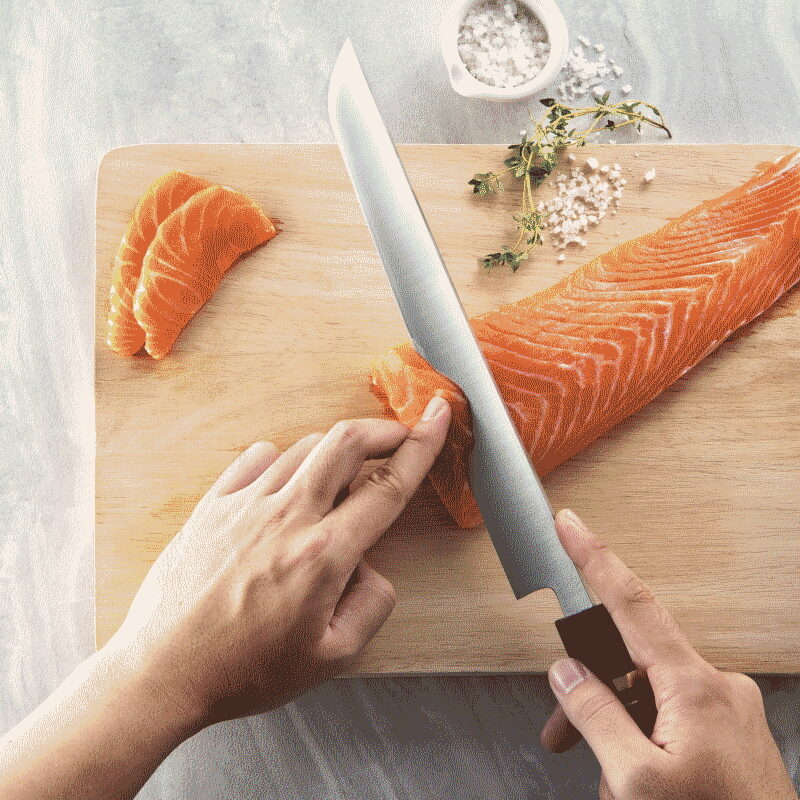
Salmon Slicer
This type of knife has been specially designed to slice smoked meat, salmon, and ham. There are a lot of dimples designed on the side of the blade. These dimples can prevent the slices of salmon or meat from being adhered to.
Tourné Knife
This kind of kitchen knife is known for its short blade that is curved, just like a bird’s beak. You may first get perplexed about how to use it, but the rounded design is advantageous to work with rounded materials and create circular shapes.
You can use a Tourné knife to prepare potatoes to boil and make them crispy. Also, you can remove the peel from citrus, onions, and ginger root.
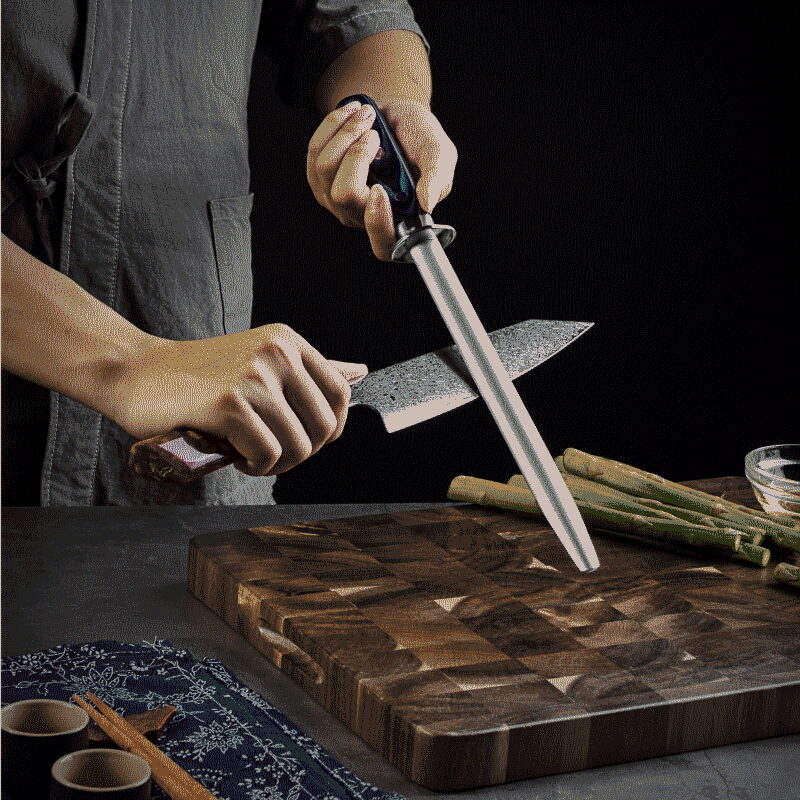
Honing Steel
Honing steels are in fact a kind of long metal rod that can modify the edge of the kitchen knives’ blades either before or after the usage. Keep in mind that honing steel does not sharpen the blade or remove any metal; in fact, it just aligns and modifies the position of the edge of the knife to enhance its performance.
However, on the other hand, there are sharpening steel rods that are designed solely for the sake of sharpening the blades. Therefore, you should not confuse the honing steel with sharpeners.
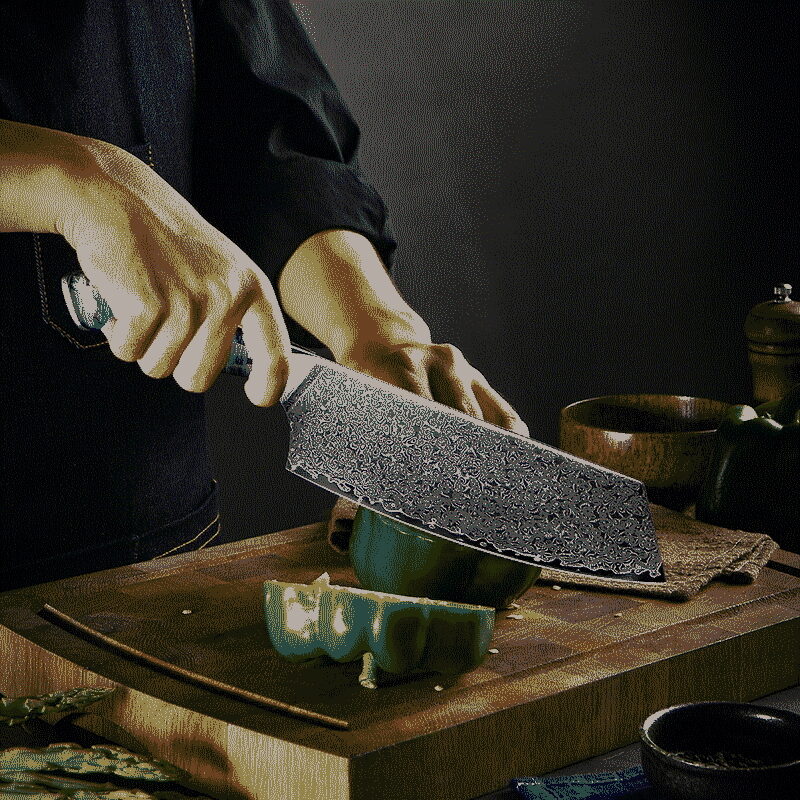
Meat Cleaver
This is a large knife coming with a big rectangular-shaped blade that offers various functions. It is essentially manufactured to chop through strong bones. The flat side of the meat cleaver can be used to crush garlic, hence making it easier to remove the peels prior to mincing it.
Many chefs tend to use the meat cleaver just like a chef’s knife to chop vegetables, slice meat, or almost anything else. Meat cleavers are offered in different sizes and weights, so you will feel comfortable choosing one based on your preferences.
Though the blade is almost huge and functional, it might be frightening and a little dangerous for some. You should use this knife cautiously.
Frozen Food Knife (Reito)
Reito has been designed for the purpose of cutting frozen foods. The knives that are designed for frozen foods usually come with a sturdy blade along with coarse, saw-shaped edges.
Also, there are other models of Reitos that are similar to strong, thick, and large chef’s knives without a saw-shaped edge for semi-frozen foods.
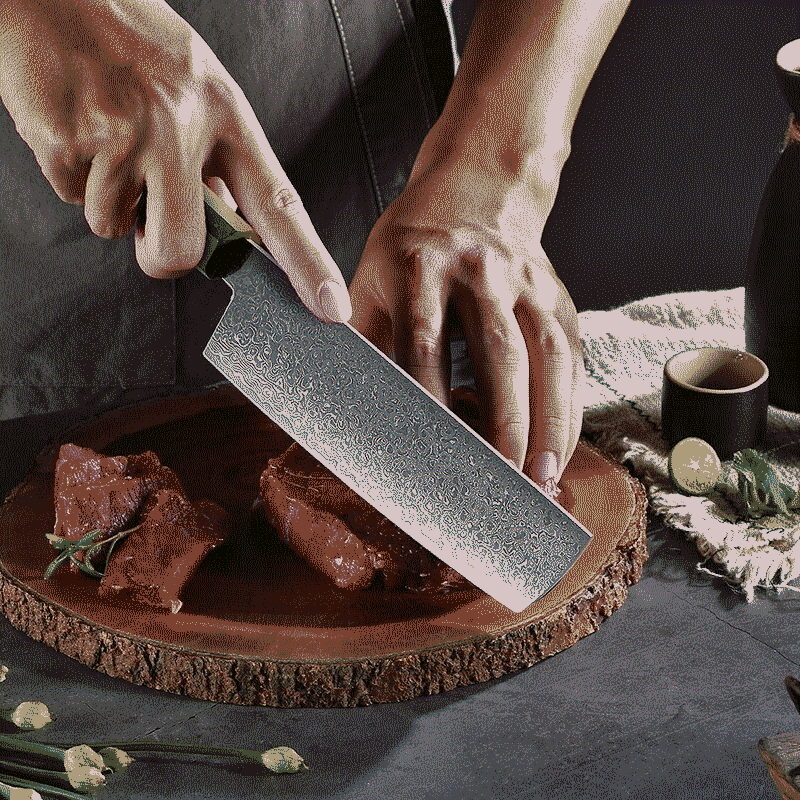
Nakiri Bocho
Nakiri Bocho is a Japanese-style knife that is primarily used for cutting vegetables. The blade of Nakiri Bocho is thin and wide. The tip is also squared-off. The long, straight blade of this kitchen knife is specifically designed to chop vegetables. Even if you are an inexperienced chef, you can use Nakiri Bocho to halve long vegetables with ease, including eggplants or carrots. Also, if you are going to make thin slices of cucumber or tomatoes, this type of knife is one of the best options to go with.
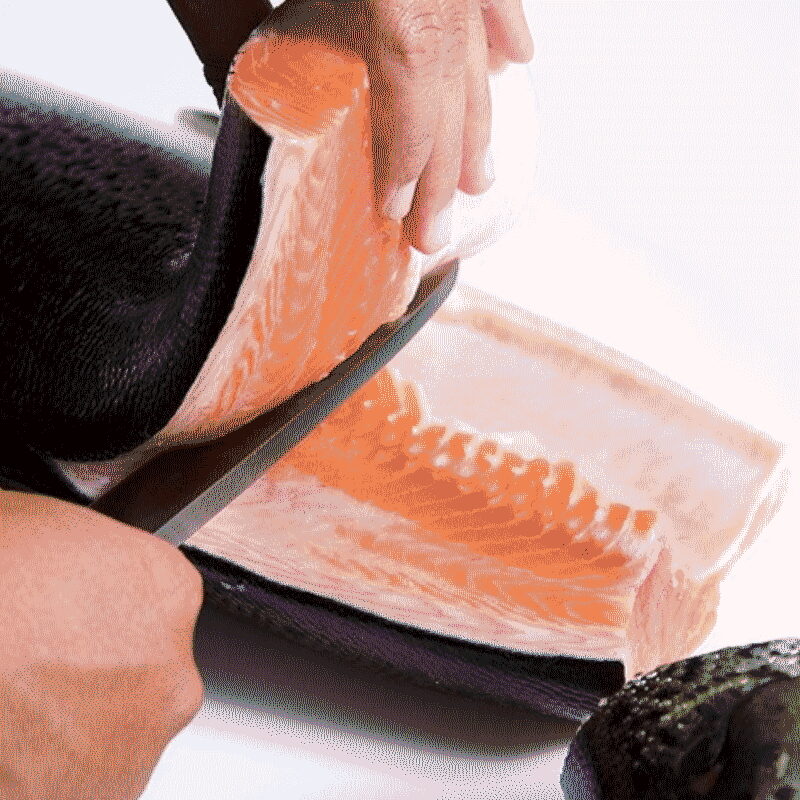
Deba
Deba knives are among the best options to cut fish and also for slight mincing. The back part of the blade is useful for copping thin bones. Debas with thicker and heavier blades offer durable edges, making the knife suitable for cutting fishes, and chickens, in addition to filleting tasks. The history of Deba knives roots back in the Edo era in Sakai, Japan.

Filleting Knife,Butcher Knife
The Fillet knife is apparently very analogous to the boning knife. However, there are some subtle differences if you watch closely. Although the boning knife is designed to separate the meat and bone from each other, the fillet knife is made to cut thin slices of fish. That is why they are thinner, longer, and more flexible. However, boning knives are essentially thicker and stronger.
Despite all that, the differences between the fillet knife and the boning knife are so small that you can interchangeably use them. Some knife makers tend to blend the properties of the two knives in one knife, resulting in the boning-fillet knives.
https://yashkadesigns.com/https-yashkadesigns-com-shop/