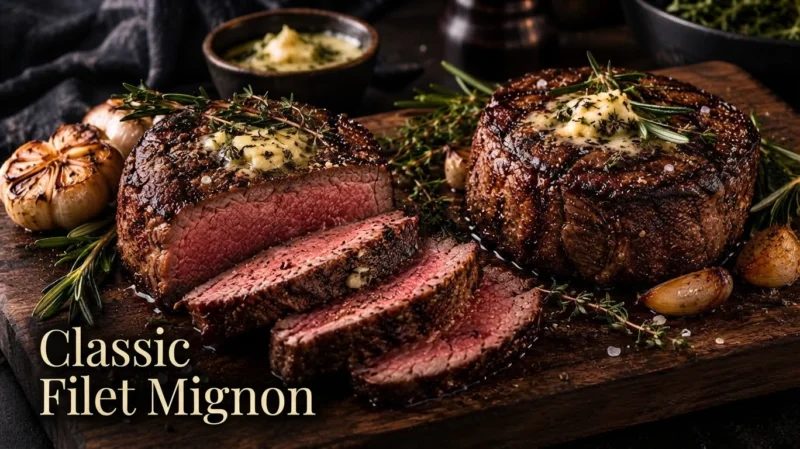
Classic Filet Mignon Recipe
Filet mignon is one of the most tender and elegant cuts of beef you can cook at home. Because it contains very little connective tissue and comes from a muscle that does relatively little work, a properly cooked filet mignon has an exceptionally soft, buttery texture.
The key to a great filet mignon is not complicated seasoning or a long ingredient list. It comes down to choosing a good steak, getting the surface properly browned, controlling the internal temperature, and allowing the meat to rest before serving.
This classic filet mignon recipe uses a simple pan-searing method followed by a short finish in the oven. Garlic, butter, and fresh herbs add flavor without covering up the character of the beef.
Why This Filet Mignon Recipe Works
Filet mignon is naturally mild compared with cuts such as ribeye or New York strip. That makes technique especially important.
A good filet mignon should have:
- A deeply browned exterior
- A tender, juicy center
- A simple seasoning that enhances the beef
- Enough resting time to retain its juices
- A temperature matched to your preferred level of doneness
The combination of a hot skillet and a short oven finish gives you control over both the crust and the center.
Butter, garlic, and herbs are added toward the end rather than at the beginning. This prevents the butter and garlic from burning while the steak develops its initial crust.
Check Our Guide Classic Beef Tenderloin: How to Cook a Perfect Tender, Juicy Beef Tenderloin
What Is Filet Mignon?
Filet mignon is a portion of the tenderloin, a long, relatively inactive muscle located along the spine of the animal.
Because the muscle does not perform much heavy work, it contains less connective tissue than many other beef cuts. This is the main reason tenderloin is so soft.
The trade-off is flavor.
Compared with a well-marbled ribeye, filet mignon usually contains considerably less intramuscular fat. It therefore has a cleaner, more delicate beef flavor and relies more heavily on proper browning, seasoning, and accompanying ingredients for additional depth.
Ingredients
For the Steak
- 2 filet mignon steaks, about 1½ to 2 inches thick
- 1 tablespoon neutral high-heat cooking oil
- 1 teaspoon kosher salt, or to taste
- ½ teaspoon freshly ground black pepper, or to taste
For the Butter Baste
- 2 tablespoons unsalted butter
- 2 garlic cloves, lightly crushed
- 2 sprigs fresh thyme
- 1 small sprig fresh rosemary
The ingredient list is intentionally short. Filet mignon is an expensive cut, so the goal is to enhance the beef rather than bury it under a complicated sauce.
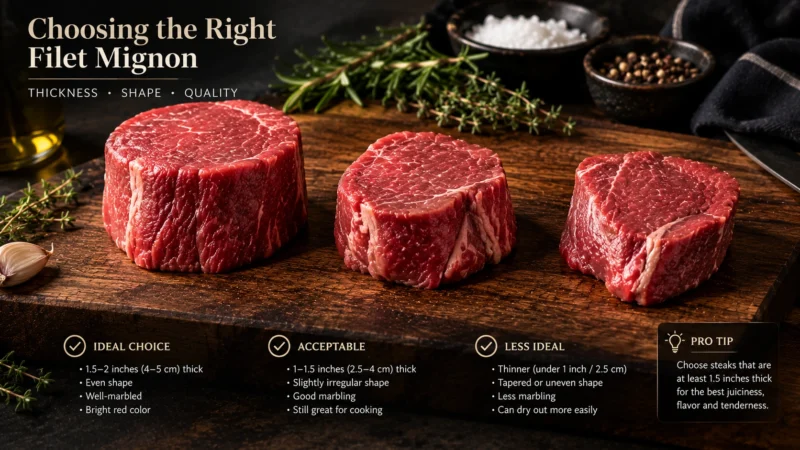
Choosing the Best Filet Mignon
Thickness matters more than many people realize.
A filet that is approximately 1½ to 2 inches thick gives you enough time to develop a browned exterior without overcooking the center.
Look for steaks that are:
- Evenly shaped
- Thick and compact
- Fresh-looking
- Firm to the touch
- Free from excessive surface moisture
Some filet mignons are cut from the center of the tenderloin and have a particularly uniform cylindrical shape. These are excellent for pan cooking because they tend to cook more evenly.
Marbling is generally less pronounced in filet mignon than in ribeye or strip steak, so don’t expect the same fat distribution you would see in heavily marbled cuts.
Should Filet Mignon Be Room Temperature Before Cooking?
There is no need to leave a steak sitting at room temperature for a long period.
Instead, remove the steaks from the refrigerator while you prepare the skillet and season them shortly before cooking.
The most important factor is controlling the final internal temperature, not trying to warm the entire steak to room temperature.
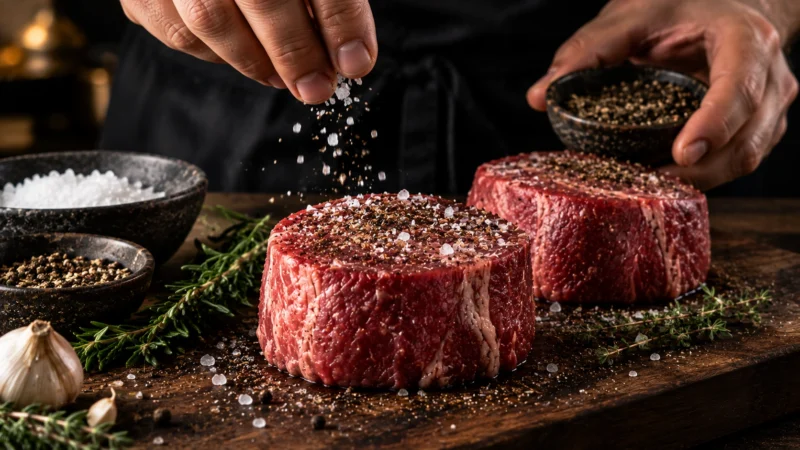
Prepare the Steaks
Pat the filet mignon thoroughly dry with paper towels.
This step is important because surface moisture must evaporate before the steak can develop strong browning.
Season all sides generously with salt and freshly ground black pepper.
Press the seasoning gently against the surface so it adheres to the meat.
Do not add butter to the pan at this stage. Butter contains milk solids that can burn at the high temperatures needed for the initial sear.
Heat the Skillet
A heavy skillet works particularly well for filet mignon.
Cast iron is an excellent choice because it retains heat well, but a heavy stainless-steel skillet can also produce excellent results.
Place the skillet over medium-high to high heat and allow it to become properly hot.
Add the oil only once the pan is heated.
The oil should shimmer but should not be smoking aggressively.
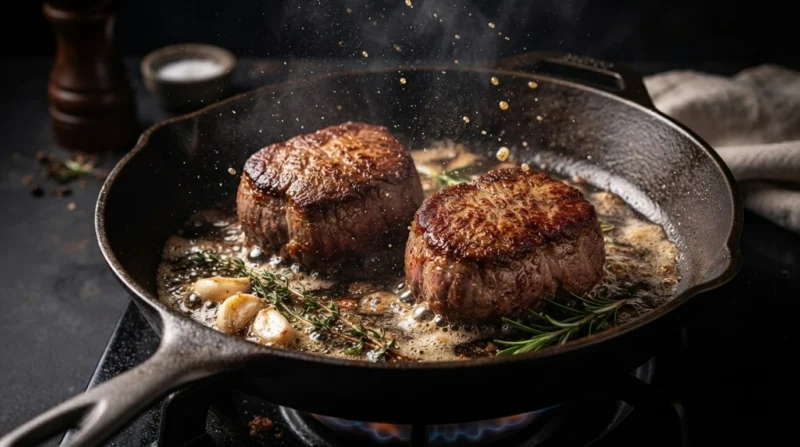
Sear the Filet Mignon
Place the steaks carefully into the hot skillet.
You should hear an immediate, strong sizzling sound.
Sear the first side for approximately 2 to 3 minutes without moving the steak unnecessarily.
The objective is to develop a deep brown crust.
Turn the steaks and sear the second side for another 2 to 3 minutes.
Do not continuously flip the steak while trying to create the crust. Give each surface enough uninterrupted contact with the pan to brown properly.
Use tongs rather than a fork when handling the steaks. Piercing the meat can release juices unnecessarily.
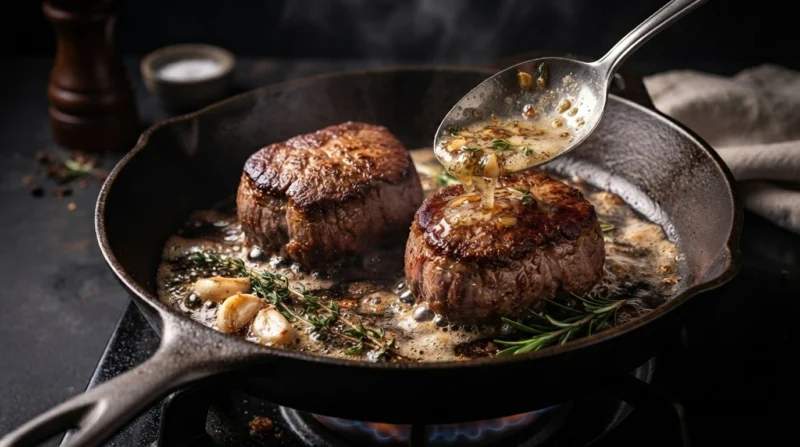
Add Butter, Garlic, and Herbs
Once both sides have developed a good crust, reduce the heat slightly.
Add the butter, crushed garlic, thyme, and rosemary.
As the butter melts, tilt the skillet slightly and use a spoon to repeatedly baste the steaks with the hot butter.
Basting adds another layer of flavor while helping the surface remain rich and aromatic.
The garlic and herbs should become fragrant but should not be allowed to burn.
If the butter is browning very rapidly or the garlic is becoming dark, reduce the heat immediately.
Finish in the Oven
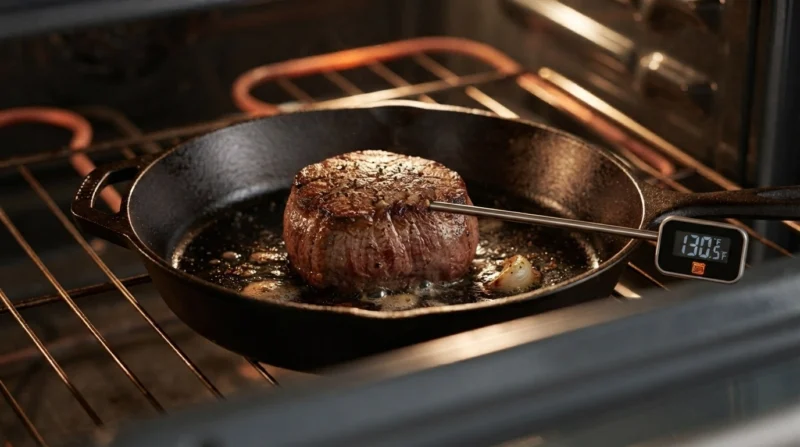
For thick filet mignon, transferring the skillet to a preheated oven makes it easier to finish the center without excessively darkening the crust.
Place the skillet in a preheated 400°F (200°C) oven.
The exact cooking time will depend on:
- Steak thickness
- Starting temperature
- Skillet temperature
- Desired doneness
- Individual oven performance
For this reason, an instant-read thermometer is far more reliable than a fixed cooking time.
Internal Temperatures for Filet Mignon
Use the following temperatures as practical targets:
| Doneness | Approximate Final Temperature |
|---|---|
| Rare | 120–125°F (49–52°C) |
| Medium-rare | 130–135°F (54–57°C) |
| Medium | 140–145°F (60–63°C) |
| Medium-well | 150–155°F (66–68°C) |
| Well-done | 160°F+ (71°C+) |
For a classic filet mignon, medium-rare is a particularly popular choice because it preserves the tender texture of the cut.
Remember that the steak can continue to rise in temperature slightly while resting, so remove it from the heat before it reaches your exact final target.
Rest the Steak
Transfer the filet mignon to a plate or cutting board and let it rest for approximately 5 to 10 minutes.
Resting gives the temperature time to stabilize and allows the juices to redistribute within the meat.
Avoid immediately cutting into the steak after it leaves the skillet.
Those few minutes of patience can make a noticeable difference in the final texture.
How to Tell When Filet Mignon Is Done
The most dependable method is an instant-read thermometer.
Insert the thermometer horizontally into the thickest part of the steak rather than touching the skillet or passing through the meat.
For thick filet mignon, check the temperature before you think the steak is finished. You can always return it to the heat if necessary, but you cannot undo overcooking.
Why Color Alone Is Not Reliable
The interior color of beef can vary for several reasons and is not a precise measurement of temperature.
A thermometer gives you an objective measurement and makes it much easier to reproduce the same result every time.
How to Slice Filet Mignon
Filet mignon is often served whole because individual steaks are already relatively small.
If you want to slice it, use a sharp chef’s knife or carving knife and make clean cuts across the steak.
A sharp knife is especially useful here because it allows you to cut through the tender meat without crushing it.
Serve the slices immediately after resting.
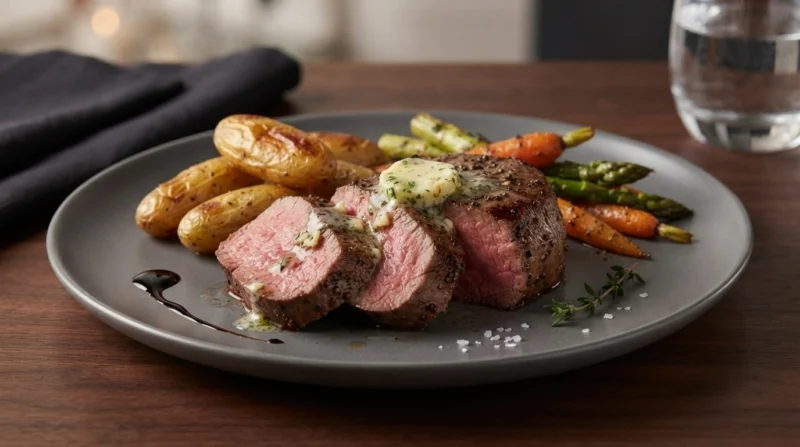
Classic Serving Ideas
Because filet mignon has a delicate flavor, classic side dishes work exceptionally well.
Consider serving it with:
- Crispy roasted potatoes
- Mashed potatoes
- Creamed spinach
- Roasted asparagus
- Green beans
- Sautéed mushrooms
- Roasted carrots
- A simple green salad
For a richer presentation, add a small spoonful of the garlic-herb butter from the pan over the finished steak.
Sauce Ideas for Filet Mignon
Filet mignon can be served without sauce, but several classic sauces complement it beautifully.
Red Wine Sauce
A reduced red wine sauce adds acidity and depth while complementing the beef.
Peppercorn Sauce
A creamy peppercorn sauce provides a stronger contrast to the mild flavor of tenderloin.
Mushroom Sauce
Mushrooms bring earthy, savory flavors that pair naturally with filet mignon.
Garlic Herb Butter
For the simplest option, spoon the browned butter from the skillet directly over the steak.
You can also prepare compound butter with softened butter, garlic, parsley, thyme, and black pepper.
Check Our Guide Perfect New York Strip Steak: How to Cook a Juicy, Tender Steak at Home
Common Filet Mignon Mistakes
1. Starting With a Wet Steak
Excess surface moisture prevents efficient browning.
Always pat the steaks dry before seasoning.
2. Using Too Much Oil
You only need enough oil to create a thin film across the cooking surface.
Too much oil can make the cooking environment unnecessarily messy and can interfere with clean browning.
3. Adding Butter Too Early
Butter can burn at the temperature required for the initial sear.
Add it after the steak has developed its crust.
4. Cooking by Time Alone
A recipe may say to cook a steak for a particular number of minutes, but thickness and starting temperature can vary considerably.
Use internal temperature as your primary guide.
5. Constantly Moving the Steak
Frequent movement can interfere with crust formation.
Allow the steak to remain in contact with the skillet long enough to brown properly.
6. Cutting Into the Steak Immediately
Give the filet several minutes to rest before slicing.
7. Overcooking It
This is probably the most important mistake to avoid.
Filet mignon is prized for tenderness. Cooking it substantially beyond medium can make the texture firmer and drier while also diminishing one of the main advantages of the cut.
Cast Iron vs. Stainless Steel
Both types of skillet can produce excellent filet mignon.
Cast Iron
Cast iron retains heat exceptionally well and is particularly useful when you want a strong sear.
Its weight and heat retention also make it well suited to transferring the steak directly from stovetop to oven.
Stainless Steel
A heavy stainless-steel skillet also produces excellent browning.
It responds more quickly to changes in burner temperature, which can be useful when controlling the butter-basting stage.
The technique matters more than the material.
Can You Cook Filet Mignon Without an Oven?
Yes.
A thick filet can be cooked entirely on the stovetop using a combination of searing and controlled heat.
After searing both sides, reduce the heat and continue cooking while turning the steak periodically until it reaches the desired internal temperature.
The oven method is simply an easy way to finish thicker steaks evenly.
Reverse Searing Filet Mignon
Another excellent technique is reverse searing.
Instead of beginning in a hot skillet, the steak is gently brought toward its target temperature in a low oven and then finished with a very hot sear.
This approach can provide particularly precise control over the interior of a thick steak.
However, the classic sear-then-finish method remains one of the easiest approaches for a home cook.
https://yashkadesigns.com/8-inch-kiritsuke-chef-knife
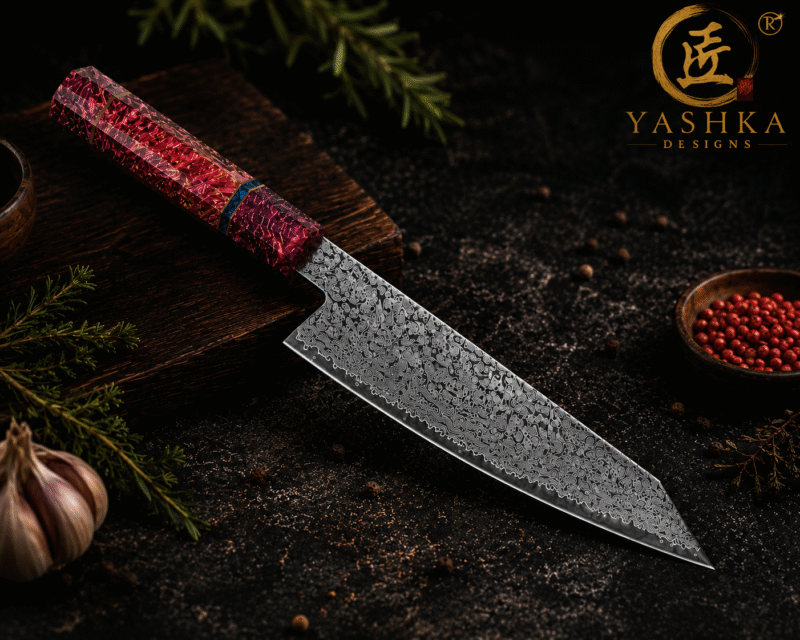
What Knife Should You Use to Cut Filet Mignon?
A properly sharpened chef’s knife is usually more than capable of slicing filet mignon cleanly.
The important factor is sharpness rather than a specialized steak knife.
A dull knife can compress the meat and make clean slicing more difficult.
For larger roasts or a whole tenderloin, a longer slicing or carving knife can make the job easier.
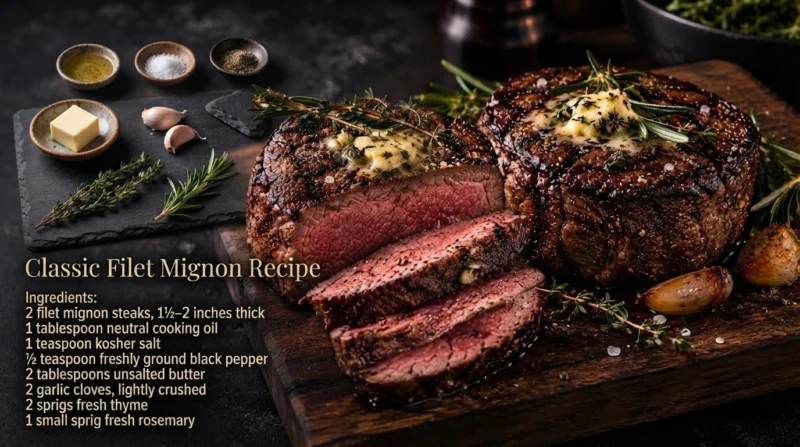
Classic Filet Mignon Recipe
Ingredients
- 2 filet mignon steaks, 1½–2 inches thick
- 1 tablespoon neutral cooking oil
- 1 teaspoon kosher salt
- ½ teaspoon freshly ground black pepper
- 2 tablespoons unsalted butter
- 2 garlic cloves, lightly crushed
- 2 sprigs fresh thyme
- 1 small sprig fresh rosemary
Instructions
- Prepare the steaks. Pat the filet mignon completely dry with paper towels.
- Season. Season all sides generously with salt and freshly ground black pepper.
- Heat the skillet. Place a heavy oven-safe skillet over medium-high to high heat. Allow it to become thoroughly hot.
- Add oil. Add the cooking oil and swirl to coat the surface.
- Sear the first side. Place the steaks in the skillet and cook for approximately 2–3 minutes without moving them unnecessarily.
- Turn the steaks. Sear the opposite side for another 2–3 minutes.
- Add butter and aromatics. Reduce the heat slightly and add butter, garlic, thyme, and rosemary.
- Baste. Tilt the skillet and repeatedly spoon the melted butter over the steaks for about 1 minute.
- Finish in the oven. Transfer the skillet to a preheated 400°F (200°C) oven.
- Check temperature. Begin checking the steaks with an instant-read thermometer before you expect them to be finished.
- Remove from heat. Take the steaks out when they are slightly below your desired final temperature.
- Rest. Allow the filet mignon to rest for 5–10 minutes.
- Serve. Spoon some of the garlic-herb butter over the steaks and serve with your favorite sides.
Recipe Tips
Use thick steaks. A 1½–2-inch filet is easier to sear properly than a very thin steak.
Dry the surface. Browning starts with a dry surface.
Use a thermometer. It is the simplest way to avoid accidentally overcooking an expensive cut of beef.
Add butter later. This protects the butter from burning during the initial high-heat sear.
Rest before serving. Give the steak several minutes to settle after cooking.
Keep the seasoning simple. Filet mignon does not need a complicated spice mixture.
Check Our Guide Best Steak and Beef Recipes: 15 Easy & Delicious Beef Recipes
Frequently Asked Questions
What is the best way to cook filet mignon?
Pan-searing followed by a short oven finish is one of the most reliable methods. It creates a browned crust while allowing you to control the internal temperature.
Is filet mignon better medium-rare or medium?
Many people prefer medium-rare because it preserves the exceptionally tender texture of the tenderloin. However, the ideal temperature is ultimately a matter of personal preference.
Should filet mignon be seasoned before cooking?
Yes. Salt and pepper can be applied shortly before cooking. Pat the steak dry first so the surface can brown effectively.
Should I use butter or oil for filet mignon?
Use high-heat cooking oil for the initial sear and add butter later for flavor and basting.
How long should filet mignon rest?
About 5–10 minutes is generally sufficient for individual steaks.
Can filet mignon be grilled?
Absolutely. Filet mignon works very well on a hot grill. The same principle applies: create a good exterior sear while monitoring the internal temperature carefully.
Why is my filet mignon tough?
The most common reason is overcooking. Tenderloin has very little connective tissue, so its texture is naturally soft, but excessive cooking can make it firmer and drier.
Do I need to marinate filet mignon?
No. A good filet mignon does not require a marinade. Salt, pepper, high-heat browning, and a finishing butter are enough for a classic preparation.
Final Thoughts
Classic filet mignon is a good example of how excellent ingredients do not require complicated cooking.
A thick, well-prepared tenderloin steak needs only a few basic ingredients: salt, pepper, oil, butter, garlic, and fresh herbs. The real difference comes from technique.
Dry the steak thoroughly, build a strong crust in a hot skillet, add the butter and aromatics at the right moment, monitor the internal temperature, and allow the meat to rest.
Once you understand those fundamentals, cooking restaurant-quality filet mignon at home becomes surprisingly straightforward.
And because the method is so simple, it is easy to adapt. Serve it with roasted vegetables and potatoes for a classic steak dinner, pair it with a wine reduction for something more elegant, or keep it minimal and let the tenderloin itself take center stage.
https://ask.fsis.usda.gov/article/What-is-a-safe-internal-temperature-for-cooking-meat-and-poultry